
Date: October 13, 2025
By Thorsten Meyer | ThorstenMeyerAI.com
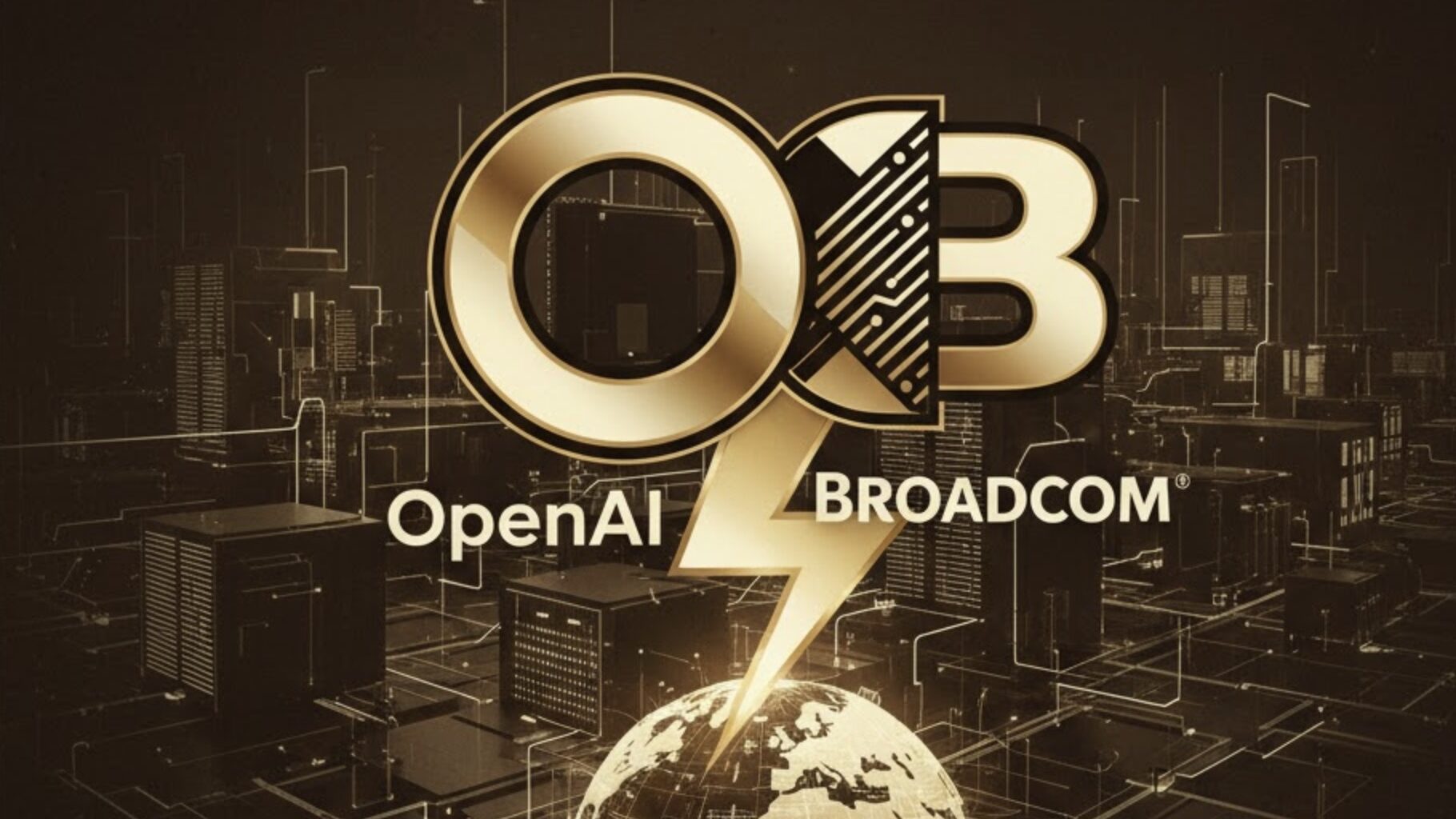
OpenAI and Broadcom have unveiled a historic collaboration to deploy 10 gigawatts (GW) of OpenAI-designed AI accelerators, signaling a decisive shift toward vertical integration in AI infrastructure. The multi-year project will roll out between 2026 and 2029, positioning Broadcom as OpenAI’s strategic manufacturing and connectivity partner.
The End of Dependence on Nvidia
This collaboration represents OpenAI’s boldest step yet to diversify away from Nvidia’s dominant GPU ecosystem. By co-designing accelerators optimized for its own models, OpenAI gains both cost control and architectural freedom.
The accelerators will embed neural sparsity, memory optimization, and distributed inference orchestration at the hardware level—features designed to maximize efficiency for GPT-6 and future multimodal models.
10 GW of Compute Power
At 10 GW, this infrastructure rivals the power consumption of a mid-sized nation. OpenAI plans to deploy the systems in data centers across North America and Europe, in line with its ongoing energy partnerships with Sur Energy and ExaGrid Renewables.
Broadcom’s Strategic Role
Broadcom will not only fabricate custom silicon but also integrate advanced interconnects (PCIe Gen7, 1.6Tb optical links) and rack-level cooling systems to handle unprecedented thermal loads. This could make Broadcom the connective tissue of OpenAI’s compute future.
A Shift in the AI Supply Chain
If successful, this collaboration could mark the start of a post-GPU era—where large AI labs design, optimize, and deploy their own chips at scale. Nvidia may remain a leader, but OpenAI is clearly aiming to own the stack, from architecture to execution.

MX3 M.2 AI Accelerator
- High-Performance AI Processing: Handles demanding AI workloads efficiently
- Flexible System Integration: Fits M.2 M-key slots, supports Linux
- Energy Efficient Design: Delivers high performance with low power use
As an affiliate, we earn on qualifying purchases.
As an affiliate, we earn on qualifying purchases.

The AI Data Center Engineering Handbook: Designing High-Performance GPU Clusters, AI Networks, and Scalable Cloud Infrastructure
As an affiliate, we earn on qualifying purchases.
As an affiliate, we earn on qualifying purchases.
As an affiliate, we earn on qualifying purchases.

Broadcom and the New AI Chip Race: How Custom ASICs, Google’s TPUs, Meta’s AI Plans, and the Demand for Powerful Silicon Could Shape the Future of Artificial Intelligence
As an affiliate, we earn on qualifying purchases.
As an affiliate, we earn on qualifying purchases.