
Labor unions are actively updating their strategies to protect workers from automation, AI, and robotics. They’re pushing for retraining programs, safety nets, and job security measures. Unions also advocate for transparency from companies and encourage workers’ voices in decision-making. International cooperation helps establish fair standards. If you want to understand how unions are shaping their responses and fighting for workers’ rights in this changing landscape, explore further insights below.
Key Takeaways
- Unions are updating policies to advocate for retraining, job security, and fair treatment amid automation and AI integration.
- They are partnering with policymakers to develop regulations that balance technological progress and workers’ protections.
- Unions utilize digital platforms and data-driven advocacy to stay proactive and influence automation policies.
- They push for transparency from companies regarding AI impacts and demand safeguards against layoffs.
- Unions promote continuous education and reskilling initiatives to help workers adapt to changing job markets.
Evolving Strategies in Response to Technological Change
How are labor unions adapting their strategies to keep pace with rapid technological change? You’re likely aware that automation, AI, and robotics are reshaping workplaces fast. Unions are responding by revising policies to better protect workers, pushing for stronger safety nets, and advocating for retraining programs. They’re increasing efforts to give workers a voice in how technology impacts their jobs, organizing forums, and negotiations that focus on job security amid automation. Additionally, unions are partnering with policymakers to develop regulations that balance technological progress with worker protections. By embracing digital communication platforms and data-driven advocacy, they’re staying relevant and proactive. These evolving strategies aim to ensure workers aren’t left behind as industries undergo transformative change. Utilizing self watering plant pots as a metaphor, unions are also exploring innovative ways to “nurture” and sustain the workforce through these technological shifts.
Protecting Worker Rights Amidst Automation

As automation accelerates across industries, protecting worker rights has become more vital than ever. You need strong policies that ensure fair treatment and job security in an evolving landscape. Unions are pushing for regulations that require companies to provide retraining programs, so workers can adapt to new roles created by automation. They’re also advocating for transparency, demanding companies disclose how AI and robots impact employment decisions. Worker protections must include safeguards against arbitrary layoffs and ensure access to benefits during transitions. You should support initiatives that give workers a voice in automation policies, empowering them to influence how these technologies are implemented. Ultimately, safeguarding rights means balancing technological progress with fair labor standards to prevent exploitation and preserve dignity in the workplace. Emphasizing the importance of dog names can also help foster a positive work environment by boosting morale among employees navigating changes.
Challenges Faced by Different Sectors and Worker Groups

Different sectors and worker groups face unique challenges as automation advances. Blue-collar workers, like factory and warehouse employees, worry about losing jobs to robots and automated systems, risking economic instability. Skilled trades may see reduced demand as AI handles complex tasks, creating job insecurity. Service industry workers face automation threats from self-service kiosks and delivery drones, impacting employment rates. White-collar workers in administrative roles risk displacement by AI-driven data analysis and decision-making tools. Low-income and marginalized groups often experience the most significant adverse effects, with fewer resources to adapt or retrain. Industries heavily reliant on routine tasks, such as manufacturing and logistics, are hit hardest, leading to increased inequality across sectors. Addressing these sector-specific challenges requires targeted responses from unions and policymakers.
The Role of International Cooperation and Policy Reform
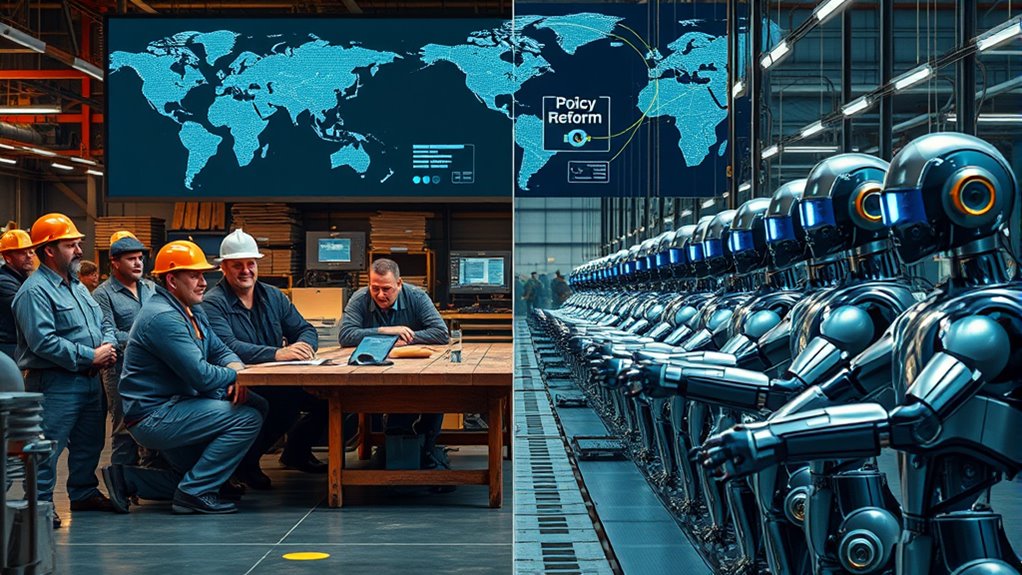
International cooperation and policy reform are crucial for addressing the global challenges posed by automation. You need coordinated efforts to ensure fair labor standards, social safety nets, and worker protections across borders. Without collaboration, countries risk deepening economic disparities and social unrest. Imagine a table where nations share resources and strategies:
| Country | Policy Focus | Key Initiatives |
|---|---|---|
| USA | Worker retraining | Public investment in reskilling |
| Germany | Social safety nets | Strengthening unemployment benefits |
| Japan | Automation regulation | Ethical AI guidelines |
| China | Industrial adaptation | State-supported innovation |
| EU | Cross-border standards | Harmonized labor protections |
This imagery shows how unified policies can balance technological progress with worker welfare, fostering resilience worldwide. Collaboration efforts are essential to adapt effectively to rapid technological changes and ensure inclusive growth.
Future Outlook: Adapting and Innovating for a Changing Workforce
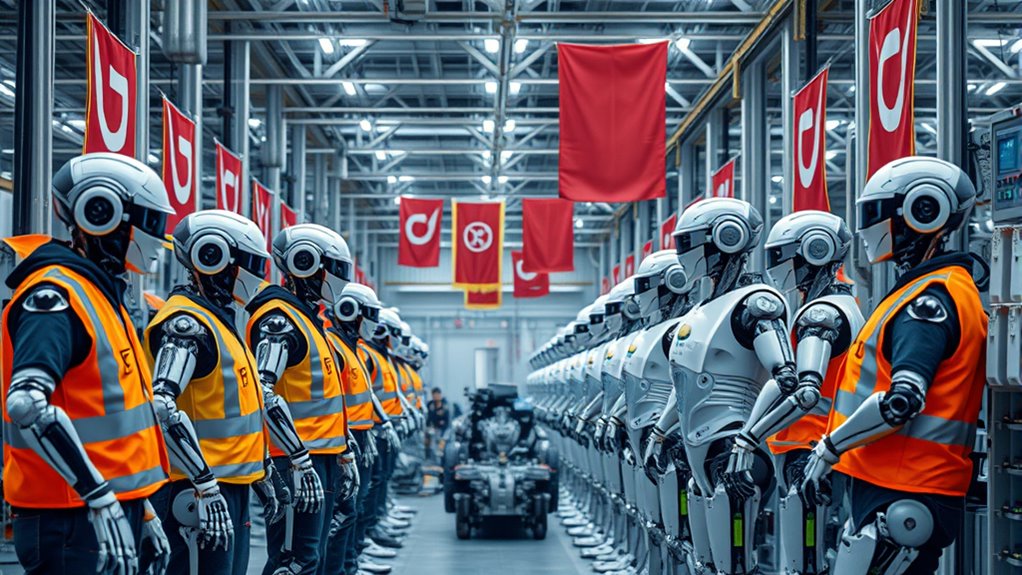
To navigate the rapid changes brought by automation, workers and organizations must focus on continuous adaptation and innovation. You can stay ahead by embracing new skills, advocating for flexible policies, and collaborating with tech developers. Here are four ways to prepare:
- Invest in ongoing education and training programs to keep pace with evolving technologies.
- Promote workplace policies that support job transitions and reskilling initiatives.
- Foster partnerships between unions, companies, and governments to develop fair automation strategies.
- Encourage innovation in job roles, creating new opportunities rather than solely replacing existing ones.
- Understanding the importance of contrast ratio and color accuracy can help workers and designers better adapt to new visual and technical standards in automated systems.
Frequently Asked Questions
How Do Unions Plan to Retrain Displaced Workers Effectively?
You can expect unions to focus on retraining displaced workers through targeted education programs, partnerships with training institutions, and policy advocacy. They’re working to develop accessible, skill-specific courses that help workers shift into new roles within growing industries. By actively pushing for funding, workplace training, and innovative learning platforms, unions aim to empower workers to stay relevant and secure in an evolving job market.
What Specific Policies Are Being Proposed to Regulate AI in Workplaces?
You are proposing policies that set clear standards for AI transparency, enforce strict regulations on data privacy, and mandate bias mitigation to guarantee fairness. You advocate for establishing oversight bodies that monitor AI deployment, creating accountability mechanisms that hold companies responsible for AI-related harms, and promoting worker involvement in decision-making processes. These policies aim to foster responsible AI use, protect workers’ rights, and ensure technology benefits everyone fairly.
How Are Small and Independent Unions Adapting to Automation Challenges?
You might notice small and independent unions are adapting by focusing on strengthening worker voices and advocating for policy changes that protect jobs. They organize training programs to help members gain new skills, push for fair automation policies, and collaborate with larger unions for collective bargaining power. These unions also emphasize transparency about automation’s impact, ensuring workers have a say in how technological changes are implemented and managed in their workplaces.
What Role Do Governments Play in Supporting Union-Led Automation Resistance?
Governments support union-led automation resistance by implementing policies that protect workers’ rights and facilitate fair transitions. They can provide funding for retraining programs, enforce labor standards, and create regulations that hold companies accountable for automation impacts. By advocating for inclusive policies, governments help strengthen unions’ efforts to safeguard jobs, promote worker voice, and guarantee economic stability amid rapid technological changes. Your government’s active role is crucial for balanced progress.
How Will Automation Impact Union Membership and Bargaining Power Long-Term?
Automation will likely decrease union membership and bargaining power over time as jobs become more automated and workers are displaced. You might find it harder to organize or negotiate for better conditions if fewer workers remain in traditional roles. However, unions are adapting by pushing for policies that protect jobs and giving workers a platform to voice concerns about AI and automation’s impact, aiming to maintain influence in evolving labor markets.
Conclusion
As you navigate this brave new world, remember that unions are fighting tooth and nail to safeguard workers’ rights amidst the rise of AI and robots. It’s clear that change is the only constant, and by working together and staying adaptable, you can turn challenges into opportunities. Don’t let the tide sweep you away—embrace innovation and help shape a future where technology and workers thrive side by side.