
Listen free for 30 days with Audible
Thousands of audiobooks and originals — cancel anytime.
Start your free trialAs an affiliate, we earn on qualifying purchases.
Introduction – from choice overload to AI curation
Online shopping offers millions of products, but abundance comes at a price: choice overload. Research on decision psychology shows that when confronted with too many similar options, people feel overwhelmed and often postpone or abandon purchases. An influential experiment found that shoppers presented with six jam varieties bought far more jam than those offered 24 varieties, highlighting how fewer choices can boost conversioncognitive-clicks.com. Modern e‑commerce replicates this dilemma, and surveys show the problem cuts across verticals: 77 % of consumers report feeling overwhelmed by too many options, 84 % are likely to abandon carts due to holiday shopping stress, and 75 % worry about making the right decisioncampaignbrief.comaccenture.com. Within specific categories, 30‑40 % of shoppers say they struggle to make decisions because of too many productspro.morningconsult.com. Electronics shoppers particularly crave clarity; 71 % feel overwhelmed by information and think options are too similarlbbonline.com.
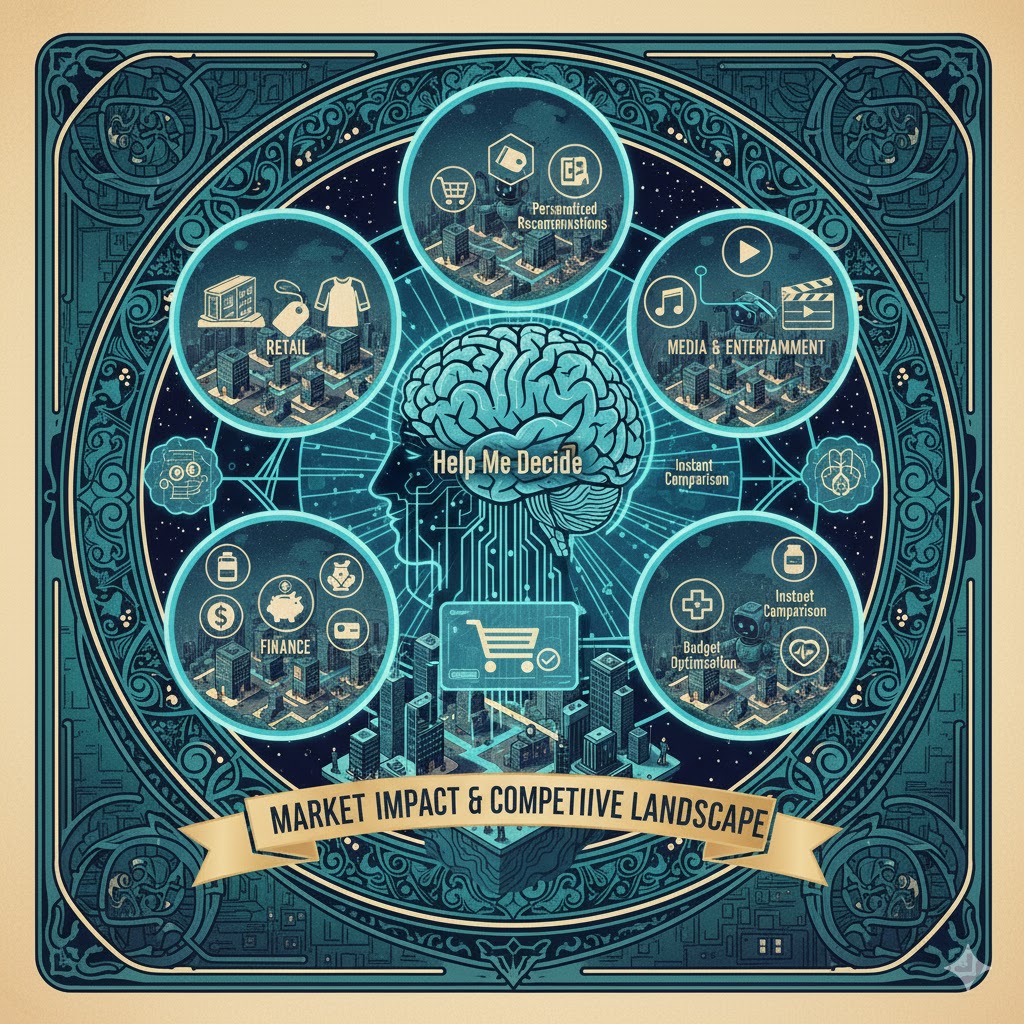
To address choice overload, Amazon introduced Help Me Decide, an AI‑powered decision tool integrated into the Amazon app and mobile browser for U.S. shoppers (2025). After a user browses several similar items, a “Help Me Decide” button appears. Tapping the button triggers an AI system that analyses the shopper’s search terms, browsing history, purchase history, preferences and reviews and returns three curated recommendations: a Top Pick, an Upgrade Pick, and a Budget Pickaboutamazon.comaboutamazon.com. The tool uses generative AI models built on AWS services such as Amazon Bedrock, SageMaker and OpenSearchtechcrunch.com. Amazon frames it as a way to save customers time and give them confidence by narrowing the field to a single “best” option with a brief explanationaboutamazon.com. The illustration below (generated for this report) contrasts the old experience of scrolling through pages of identical air fryers with the new AI‑assisted approach of receiving one top pick and two alternatives.

This report examines the market impact of Help Me Decide, analysing how various retail verticals could benefit or face challenges, and how the tool reshapes competition. It synthesises survey data, psychological research and competitor developments to provide actionable insights for retailers, brands and content creators.
As an affiliate, we earn on qualifying purchases.
Market context – why simplified choices matter
Choice overload and consumer behaviour
- High abandonment due to overwhelm: Accenture’s 2025 holiday shopping study found that 86 % of consumers feel overwhelmed by too many options and 84 % are likely to abandon a purchase due to holiday shopping stressaccenture.comcampaignbrief.com. The same survey noted that 85 % of shoppers abandon carts due to frustration or indecisionaccenture.com.
- Consumers want simple AI tools: Two‑thirds of consumers surveyed in the Accenture study have used generative AI in the last three months, up from 39 % the previous yearaccenture.com. One in three shoppers wants AI tools that simplify transactions and recommend productsaccenture.com.
- Growth of AI‑assisted shopping: Adobe’s holiday forecast notes that traffic from AI‑powered chat services to U.S. retail sites grew 1,300 % year‑over‑year in 2024 and is expected to rise 520 % in 2025. Over one‑third of surveyed consumers have used AI for online shopping, mainly for research (53 %), product recommendations (40 %), deal finding (36 %) and gift inspiration (30 %)news.adobe.com.
- Consumer anxiety across categories: Morning Consult research shows that too many choices is a top barrier across categories. Shoppers feel most overwhelmed in beauty/personal care and consumer electronics, while clothing causes less stresspro.morningconsult.com. Gen X and older adults are particularly overwhelmed by electronics and appliances; younger consumers experience more comfort with abundant optionspro.morningconsult.com.
Implications for retailers and brands
- Conversion uplift through curated picks: Psychological studies indicate that offering a few curated choices significantly increases conversions. In the jam study, 30 % of shoppers purchased when presented with six options versus 3 % when offered 24cognitive-clicks.com. Another study found that 64 % of lost conversions occur because users abandon before beginning their search due to overwhelmgokickflip.com. Tools that reduce decision complexity can thus drive sales.
- Shifting from SEO to “Generative Engine Optimisation”: Accenture advises retailers to transition from traditional search‑engine optimisation to generative engine optimisation, aligning content so that AI systems can understand natural language queries and deliver personalized recommendationsaccenture.com.
As an affiliate, we earn on qualifying purchases.
How Help Me Decide works and who benefits
Mechanism and data sources
Help Me Decide appears after a user looks at multiple similar items without purchasing. When tapped, Amazon’s AI models combine multiple signals:
- User context: search queries, browsing patterns, prior purchases, Prime membership status, preferences and ratingsaboutamazon.com;
- Product attributes: features, specifications, price, reviews and ratings;
- Comparison of alternatives: the AI uses LLMs on AWS’s Bedrock, SageMaker and OpenSearch to rank products, summarise pros and cons and generate a concise rationaletechcrunch.comeweek.com.
The tool outputs three recommendations:
- Top Pick: a product that best balances price, features and quality, matched to the customer’s context;
- Budget Pick: a lower‑cost alternative that still meets key requirementsaboutamazon.com;
- Upgrade Pick: a higher‑end option with enhanced features or qualityaboutamazon.com.
Each pick includes a brief explanation of why it suits the user. Amazon states that the tool aims to save time and provide confidence, aligning with survey findings that many shoppers desire AI assistanceaboutamazon.com.
Vertical-by-vertical impact and opportunities
The tool’s benefits and risks vary across product categories:
1. Consumer electronics and appliances
- High complexity and spec‑driven decisions: Electronics and appliances often involve technical specifications, which many shoppers find overwhelming. LBBOnline reports that 85 % of electronics shoppers value facts and figures, yet 71 % feel overwhelmed by similar optionslbbonline.com. Help Me Decide can parse specs (e.g., processor speed, display size, energy efficiency) and highlight the most relevant attributes, making it ideal for this category.
- Reducing research fatigue: Consumers currently rely on multiple review sites, YouTube videos and forum posts. With Amazon’s tool, they can receive a curated pick without leaving the platform, potentially decreasing external referral traffic and shifting the competitive advantage to brands with clear attribute data.
- Competitive response: Competitors like Google’s AI Mode for shopping also target electronics. Google’s AI Mode uses Gemini models and the Shopping Graph to identify features (e.g., waterproof, pockets), update dynamic panels of products and enable agentic checkoutblog.google. Retailers should ensure their product data is structured and accessible to multiple AI engines.
2. Home and kitchen
- Choice overload in commoditized goods: Categories like small kitchen appliances (air fryers, coffee makers) have dozens of similar SKUs. The illustration above shows a shopper facing pages of identical air fryers. A curated top pick reduces friction and can accelerate sales.
- Potential shift in competitive dynamics: Brands may fight for the “Top Pick” slot by optimizing product pages and reviews. A strong brand with hundreds of positive reviews and an appealing price may consistently become the top pick, squeezing out niche players.
3. Beauty and personal care
- High subjective preferences and brand loyalty: Morning Consult finds that beauty and personal care is one of the categories where choice overload is felt most acutelypro.morningconsult.com. Noli, an AI‑powered beauty startup backed by L’Oreal, demonstrates how AI can improve personalisation by asking about skin tone, hair type and preferences and returning targeted recommendationscampaignbrief.com. Help Me Decide could similarly tailor picks based on skin type, ingredients, or concerns. The tool may also highlight cruelty‑free or sustainable options for values‑driven shoppers.
- Opportunity for brands: Beauty brands with rich ingredient information, clear benefits and high ratings may gain more exposure. However, privacy concerns (discussed later) could be pronounced in this sensitive category.
4. Fashion and apparel
- Lower perceived overload: According to Morning Consult, clothing and apparel cause less decision difficulty than electronics or beautypro.morningconsult.com. Many shoppers enjoy browsing styles and rely on sizing, fit and aesthetic. Still, narrowing choices may benefit time‑pressed shoppers.
- Integration with virtual try‑on: Google’s AI Mode includes virtual try‑on using generative AI to simulate clothing on different body shapesblog.google. If Amazon incorporates similar features, Help Me Decide could recommend a top pick while showing how it looks on the user, increasing confidence.
5. Outdoors, sports and camping
- Functional differentiation: Outdoor gear requires matching products to use cases (e.g., backpacking vs. car camping). Consumers often consult expert guides. Help Me Decide could summarise features such as weight, material durability and weather resistance, helping novices choose appropriate gear.
- Impact on specialized retailers: Niche outdoor retailers differentiate through expertise and personalised advice. If Amazon’s AI replicates this expertise, some shoppers may bypass specialty stores. However, specialty retailers could integrate AI tools (either via Amazon or third‑party providers) to maintain competitiveness.
6. Groceries and everyday essentials
- Low‑risk items and subscription models: Shoppers may not need AI assistance for low-cost staples. However, for choosing between similar cereals or cleaning products, the tool may highlight price per unit or brand sustainability. In grocery, convenience and delivery speed often matter more than choice reduction.
Potential benefits and strategic considerations for verticals
- Increased conversion and average order value (AOV): By delivering a targeted top pick and presenting higher‑priced upgrade options, the tool may nudge some shoppers to spend more. For example, a buyer seeking a budget laptop may discover the upgrade pick offers longer battery life and better reviews at a slightly higher price, thus increasing AOV.
- Higher review incentives: Because the tool relies on review content, brands may invest more in encouraging authentic reviews. Quality and quantity of reviews become critical to win the top pick.
- Reduced reliance on long comparison lists: Affiliate and review sites that generate income via long “best X” lists may see reduced traffic if shoppers skip external research. Content creators should adapt by offering deeper context (e.g., how a product performs in specific tasks) rather than listing dozens of options. The report’s introduction emphasises that structural information and parseable attributes will feed AI engines.
As an affiliate, we earn on qualifying purchases.
Competitive landscape – AI‑powered shopping beyond Amazon
While Help Me Decide marks a significant move by Amazon, other retail players and technology companies are also investing heavily in AI shopping. Understanding this competitive context reveals the broader shift toward agentic commerce.
Walmart and ChatGPT partnership
In 2024, Walmart partnered with OpenAI to integrate ChatGPT into its iOS app, enabling shoppers to describe their needs (e.g., ingredients for Taco Tuesday) and have the AI curate a list, add items to cart and complete checkout via voiceeweek.com. The feature extends to complex tasks like planning a barbecue or purchasing school supplies. Walmart emphasises that this AI‑first approach is designed to transform the search bar into an interactive conversation. It also suggests that voice‑enabled shopping may become a differentiator in offline settings.
Google’s AI Mode and Shopping Graph
Google launched an AI Mode in its shopping experience built on the Gemini model and Shopping Graph (with >50 billion product listings). Users can ask natural‑language questions (e.g., “travel bag for quick trips that is waterproof, fits under a seat and has a laptop sleeve”), and the AI runs multiple queries to identify relevant features and update a dynamic panel of productsblog.google. Google also offers agentic checkout (tracking prices and purchasing when conditions are met) and virtual try‑on for apparelblog.google. These features position Google to compete with Amazon for search‑driven shopping.
Vertical‑specific competitors
- Noli (beauty/personal care): The L’Oreal‑backed beauty platform uses AI to ask personalised questions about skin tone, hair type and preferences and recommends products, aiming to reduce the risk of mis‑purchasing and increase user confidencecampaignbrief.com. Its success underscores how AI curation could become standard in beauty.
- Stitch Fix and other subscription services: Clothing subscription companies already use data and algorithms to deliver curated outfits. While not generative AI, these services demonstrate consumer willingness to outsource choice.
Implications for competition
- Escalation of AI arms race: Retailers like Walmart and technology giants like Google are racing to deploy AI‑first shopping experiences. Amazon’s tool leverages its internal data advantage (purchases, browsing, reviews), while Google benefits from the scale of web search and product graph. For retailers, this means that winning visibility within AI systems becomes as important as traditional search ranking.
- Platform lock‑in and user data: AI‑powered recommendations rely heavily on user data. This could strengthen platform lock‑in as shoppers may be less inclined to switch to another retailer once an AI knows their preferences. However, privacy concerns may also intensify.
Ethical and privacy considerations
Data collection and transparency
Help Me Decide uses deep behavioural data (search, browsing and purchase history) to deliver recommendationsaboutamazon.com. Critics note that the tool may steer consumers toward products that maximise Amazon’s profits rather than purely serving the user. Articles caution about the potential for bias and opaque algorithms that could favour Amazon’s private‑label productswebpronews.com. Additionally, as the AI uses personal shopping data, there are privacy implications if data is misused or misinterpreted.
Consumer trust and control
Amazon emphasises that recommendations include a rationale, but the explanation is still generated by an AI model. Consumers may not understand the underlying criteria. To build trust, Amazon and competitors should:
- Provide transparent metrics (e.g., relevance factors, review sentiment);
- Allow users to adjust preferences (price range, brand loyalty, sustainability);
- Offer opt‑outs or data privacy controls;
- Highlight biases (e.g., sponsored positions).
Impact on small sellers and market fairness
If the algorithm consistently favours established brands or Amazon’s own products, smaller sellers may struggle to gain visibility. This could exacerbate marketplace inequities. Regulators may scrutinise such tools under antitrust or consumer protection frameworks.
Recommendations and strategies for retailers, brands and content creators
For retailers and marketplaces
- Invest in product data quality: Provide comprehensive, structured attribute information (specifications, materials, use cases) so that AI systems can surface your products as relevant. Use standardized schemas and rich media.
- Enhance review authenticity and volume: Encourage verified reviews and respond to feedback. Ratings and sentiment analysis heavily influence AI recommendations.
- Prepare for multi‑agent ecosystems: Ensure product listings are accessible via multiple AI systems (Amazon, Google, ChatGPT). Consider open APIs and syndication.
- Balance curation with diversity: Offer top picks but still allow users to explore the full catalogue. Provide filters and transparent sorting options to maintain trust.
- Monitor bias and fairness: Audit AI outputs to ensure that private‑label or promoted items are not unduly favoured. Implement fairness checks and disclose sponsored placements.
For brands and manufacturers
- Optimize for AI recommendation: Tailor titles, descriptions and bullet points to highlight key differentiators. Include data that aligns with likely consumer intents (e.g., “quiet motor,” “eco‑friendly materials”).
- Leverage storytelling and brand values: AI may summarise rationales; ensure your product narrative (e.g., sustainability, social impact) is clear and credible.
- Build direct channels: Since AI tools reduce the need for comparison sites, brands should invest in direct relationship channels (newsletters, loyalty programs) to maintain customer engagement.
For content creators and publishers
- Shift from long lists to deep dives: With AI offering one‑tap recommendations, generic “Top 10” lists may lose appeal. Focus on contextual content—how a product performs in real‑world tasks, who it is best for, and how it compares over time.
- Supply structured data: Use structured markup (e.g., JSON‑LD) and consistent formatting so AI agents can parse attributes.
- Develop affiliate partnerships across multiple platforms: Diversify away from exclusive reliance on Amazon affiliate links. Explore partnerships with other retailers (e.g., Walmart, Best Buy) and emerging AI marketplaces.
- Educate audiences about AI tools: Provide guidance on using Help Me Decide and similar tools responsibly. Encourage readers to cross‑check recommendations.
Conclusion – an AI‑curated shopping future
Help Me Decide represents a pivotal moment in e‑commerce’s shift from search‑based browsing to AI‑curated purchasing. By combining user context with product attributes, Amazon aims to mitigate choice overload and boost conversion. The tool’s initial U.S. rollout underscores Amazon’s strategy to keep shoppers within its ecosystem, but it will influence the broader retail landscape. Vertical‑specific impacts vary: categories with high complexity and spec differentiation (electronics, appliances, beauty) stand to benefit most, while low‑risk staples may see modest gains.
Competitors like Walmart and Google are deploying their own AI shopping experiences, foreshadowing an “agentic commerce” landscape where recommendations and purchases occur within conversational interfaces. This environment rewards retailers and brands that invest in high‑quality data, review management and fairness auditing. Content creators must adapt by producing structured, context‑rich content that AI systems can ingest. Ethical and privacy considerations will be paramount; transparent algorithms and user control over data will distinguish trusted platforms.
In essence, the AI assistant will not just help customers decide what to buy—it will reshape how markets function, how products are discovered and how consumers build trust. Retail stakeholders who proactively adapt to this new paradigm will be best positioned to thrive.
Flea & tick season Picks
flea and tick prevention
As an affiliate, we earn on qualifying purchases.