Introduction: When Work Ends, What Begins?
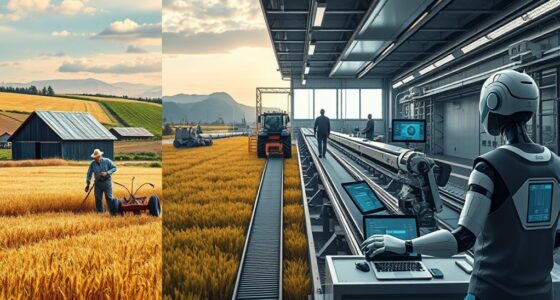
For centuries, identity has been bound to work. “What do you do?” was another way of asking, “Who are you?” But as automation absorbs the routines of labor, humanity faces an existential mirror. If machines do the work, what remains distinctly ours?
From Efficiency to Meaning
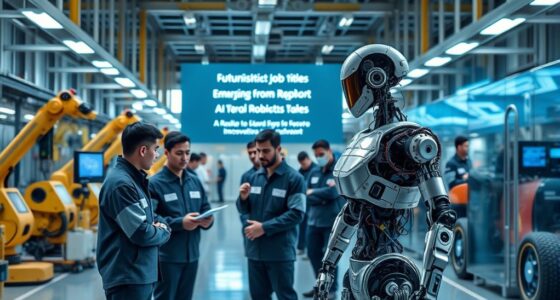
Automation perfects efficiency but not essence. When production is abundant, meaning becomes scarce. The challenge of the post-labor society is not material—it’s spiritual. We must rediscover purpose beyond productivity.
The New Human Priorities
In this future, purpose migrates to areas machines cannot simulate: empathy, creativity, and transcendence. Art, care, and exploration will define the next civic renaissance. The most advanced economies will be those that cultivate inner wealth as rigorously as material prosperity.
“Automation ends work. It does not end wonder.”
Education as Identity Formation
Education will shift from teaching skills to nurturing consciousness. Instead of preparing for jobs, we will prepare for journeys. Philosophy, psychology, and systems thinking will return to the center of curricula. The goal will be not employability but self-realization.
AI as Mirror, Not Rival
AI forces us to confront what intelligence truly means. In reflecting our behavior, it reveals our biases, values, and vulnerabilities. The next evolution of coexistence is not competition but co-reflection—using AI to understand ourselves more deeply.
Conclusion: Toward a Civilization of Purpose
Humanity’s next chapter will not be written by machines, but by what we choose to do once freed from necessity. Our task is to design a civilization that values consciousness as much as code. In that choice lies the future of meaning itself.
As an affiliate, we earn on qualifying purchases.
As an affiliate, we earn on qualifying purchases.
philosophy books on purpose and meaning
As an affiliate, we earn on qualifying purchases.
As an affiliate, we earn on qualifying purchases.
As an affiliate, we earn on qualifying purchases.