
TL;DR
Anthropic’s $65 billion Series H isn’t just a valuation milestone; it’s a strategic move to secure the compute infrastructure needed for scaling Claude. The focus is on chips, memory, and power capacity—making this a massive infrastructure financing story in AI’s history.
When a private company hits a $965 billion valuation, you’d expect just bragging rights. But behind the headlines lies a different story. Anthropic’s latest funding round isn’t about just inflating the valuation numbers—it’s about laying down the physical foundation for AI’s future. Think massive chips, huge data centers, and endless power.
In this article, you’ll learn why this isn’t a typical funding round. It’s a multi-billion-dollar bet on infrastructure—on chips, memory, and capacity—paving the way for the next era of AI scaling. The real story is about how much this company is preparing to spend on the hardware that makes Claude run at a scale previously unthinkable.
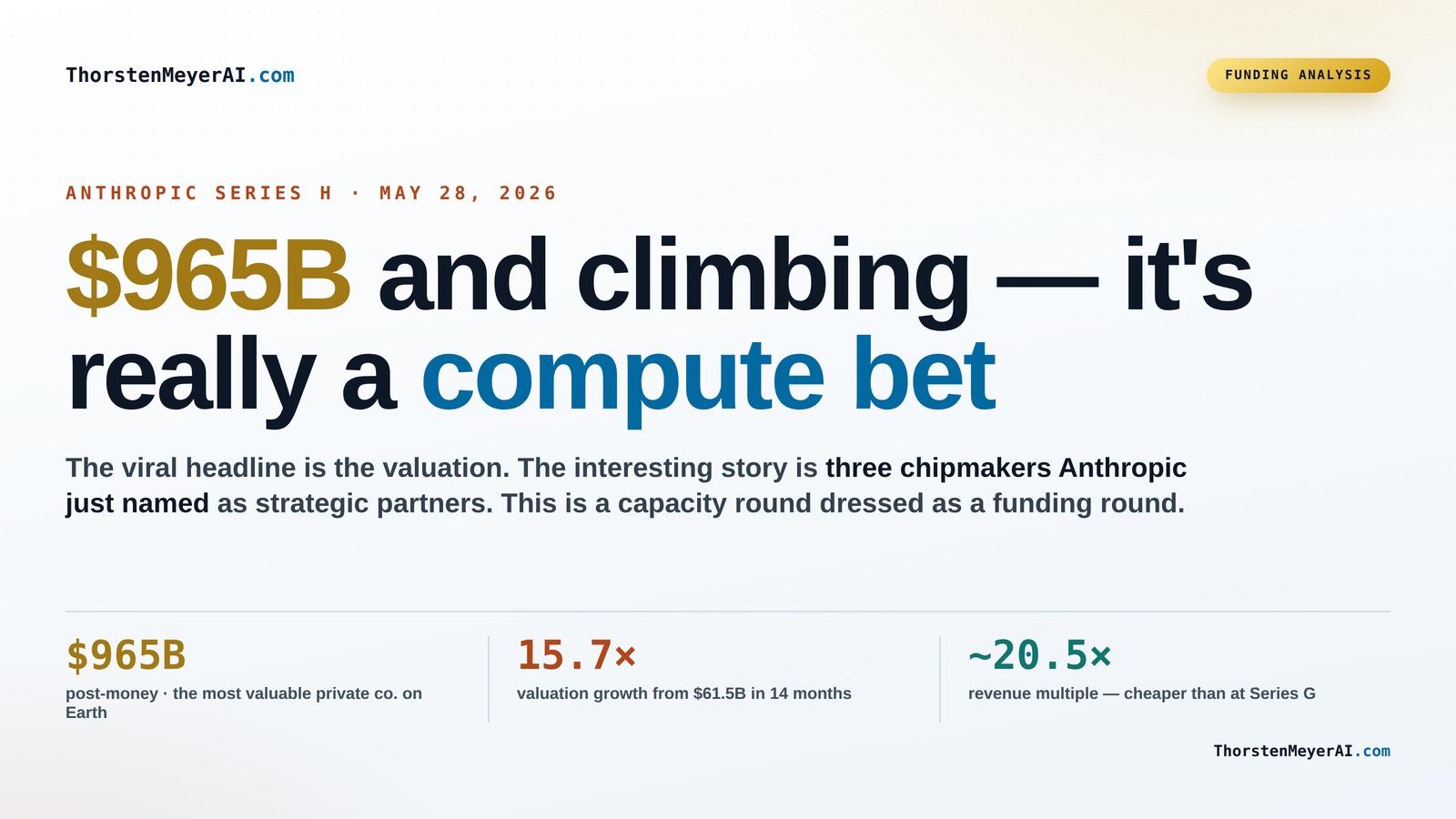
$965B and climbing — it’s really a compute bet
The viral headline is the valuation. The interesting story is in the press release’s middle paragraphs — and in three chipmakers Anthropic just named as strategic partners. This is a capacity round dressed as a funding round.
The numbers nobody can quite parse in sequence
Read together they describe a trajectory with no precedent in enterprise software. Read individually, each looks like a typo.

AI Chip Design: From Transistors to Neural Networks
As an affiliate, we earn on qualifying purchases.
As an affiliate, we earn on qualifying purchases.
From $61.5B to $965B in fourteen months
Salesforce took roughly two decades to reach revenue numbers Anthropic just blew past. The sequence below is the part most coverage skips — it’s not the size, it’s the shape.
Anthropic’s valuation ladder · Mar 2025 → May 2026
Five rounds, fourteen months. Bar height is the valuation; the climb itself is the story. Tap any milestone for context.

Valiant Power Rack Mount Power Strip – 240V 30A Single Phase PDU with Built-in Surge Protector, Volt & Amp Meter for Data Center – 19” Metal Housing, Ears & Fittings Included, 6’ Cable, 6 Outlets
- Reliable Power Distribution: Supports 120V, 125V, or 240V at 15/30A
- Built-in Surge Protector: Minimizes overloads for safety and equipment protection
- Monitoring Displays: Includes volt and amp meters for load monitoring
As an affiliate, we earn on qualifying purchases.
As an affiliate, we earn on qualifying purchases.
The multiple actually got cheaper
Bubbles look like multiples expanding while revenue lags. Anthropic’s pattern is the inverse — the valuation tripled, but revenue grew faster, and the multiple compressed.
Revenue-to-valuation multiple · Series G → Series H
Same company, three months apart. The denominator (revenue) is outrunning the numerator (valuation) — exactly the opposite of what a bubble narrative predicts.

ADATA DDR5 5600 SO-DIMM Memory Module – 16GB High Bandwidth Laptop Memory Module (RAM) – High-Speed 5600MHz – Automatic Error Correction – Compatible with AMD & Intel Platforms – AD5S560016G-S
- High-Speed DDR5 Memory: 5600MHz high bandwidth performance
- Large Capacity: 16GB memory module
- Compact Design: Slim SO-DIMM form factor
As an affiliate, we earn on qualifying purchases.
As an affiliate, we earn on qualifying purchases.
10+ gigawatts and three chipmakers
When you name Micron, Samsung & SK hynix alongside your equity backers, you’re saying the binding constraint isn’t demand or model quality — it’s the physical supply of memory chips. The Series H is a capacity round.
Compute commitments backing Anthropic’s capacity bet
$200B+ in announced compute spend across multi-year contracts. The $65B Series H raise has to be read against that bill, not against operating losses.

Sovereign AI: Building Sovereign AI Compute Unions for Digital Sovereignity.
As an affiliate, we earn on qualifying purchases.
As an affiliate, we earn on qualifying purchases.
A genuinely durable bet — or a structural exposure?
Both readings can be true at once. The answer arrives over the next 18–24 months as the gigawatts come online and either fill with paying demand or don’t.
Revenue growth has no precedent in B2B software ($1B → $47B in 17 months). The multiple is compressing, not expanding. Claude is the only frontier model on all 3 major clouds. Enterprise AI spend share went from ~10% to >65% in a year. Compute commitments are tied to specific contracts with capacity dates.
20× revenue is not cheap by any historical software-investing standard. Revenue is reported gross of cloud-reseller pass-throughs, which inflates the top line. Profitability is 2 years out. Amodei’s own warning: a 12-month delay in AI progress “would make him bankrupt” — the compute commitments are a structural exposure to demand persistence.
The valuation race — and the IPO context
Anthropic shipped Opus 4.8 the same morning as Series H — not a coincidence. One week after OpenAI filed confidentially for IPO. The late-2026 frame is set: two frontier AI companies racing to public markets, each pitching durability.
Key Takeaways
- Anthropic’s $965 billion valuation is driven by a massive push to secure compute infrastructure, not just a company valuation.
- Over 10 gigawatts of compute commitments from chipmakers and hyperscalers signal a focus on hardware capacity as the bottleneck for AI growth.
- Rapid revenue growth—over 5× in four months—has actually decreased the valuation multiple, indicating real scaling power.
- Major strategic investors like Amazon and partners such as Micron highlight a focus on supply chain and hardware capacity, not just software.
- This round signals a shift: AI companies are investing heavily in physical infrastructure—chips, memory, and power—to enable the next leap in AI capabilities.
Why a $965B valuation is really a compute investment
The headline number — $965 billion — sounds like a valuation record. But dig deeper, and it’s clear this round is primarily about securing the physical stuff needed for AI growth. Think of it as a giant infrastructure project, not just a funding milestone. The core idea: to run models like Claude at a scale that demands a mountain of chips, memory, and power.
Anthropic’s focus on chipmakers like Micron, Samsung, and SK hynix signals a dependence on high-speed memory and storage. The company is betting that hardware bottlenecks—slow chips, limited memory—are the real constraint between today’s revenue and tomorrow’s AI capabilities. This isn’t just about funding; it’s about building the physical backbone for future AI dominance. The tradeoff here is significant: investing heavily in hardware infrastructure can divert resources from pure software development, but it’s a strategic move to ensure that AI models can scale without hitting physical limits. This shift could accelerate AI capabilities but also introduces risks related to supply chain disruptions and hardware obsolescence, making timing and partnerships critical for success.

The numbers tell the real story: revenue, valuation, and capacity
Anthropic’s revenue skyrocketed from about $1 billion in late 2024 to a reported $47 billion run rate in early May 2026. That’s a 5.4× jump in just four months. This rapid revenue growth indicates that demand for their AI models is exploding, and the valuation reflects investor confidence in this trajectory. However, the key insight lies in how this growth impacts valuation multiples.
Meanwhile, the valuation tripled—from $380 billion in February to nearly a trillion. But here’s the twist: the multiple—valuation divided by revenue—actually shrank from 27× to around 20.5×. This means that while the valuation is soaring, the market is recognizing that revenue is growing faster than the valuation, signaling a shift from hype to tangible scaling power. The decreasing multiple suggests that investors are increasingly valuing actual revenue growth over speculative future potential. It underscores a critical implication: the real value now hinges on how fast revenue can sustain and justify these large valuations, which is directly linked to the capacity of AI infrastructure to support this growth.

This isn’t just money for AI models—it’s infrastructure for scale
The $65 billion raised isn’t just classic venture funding. A large chunk, around $15 billion, already came from hyperscalers like Amazon—$5 billion alone. These commitments are earmarked for cloud infrastructure, chips, and data centers.
Think of it as a giant construction project: each dollar is a brick or a beam, pushing capacity forward. The strategic partners—Nvidia, Microsoft, Amazon—are not just investors but backbone providers for the hardware needed to run Claude at internet scale. This infrastructure focus has profound implications: it means that future AI capabilities will depend heavily on the physical capacity of data centers, hardware, and network infrastructure. The tradeoff here is that this approach requires immense upfront investment and long-term planning, but it promises to unlock a new level of AI performance that software alone cannot achieve. Without this hardware backbone, the advancements in models could plateau, making infrastructure the bottleneck that determines AI’s true potential.

Chips, memory, and power: the real bottlenecks in AI growth
AI models like Claude are demanding more than just big datasets—they require an endless supply of chips, memory, and electricity. Anthropic’s partnerships with Micron, Samsung, and SK hynix aren’t incidental; they are strategic bets on the supply chain’s ability to scale.
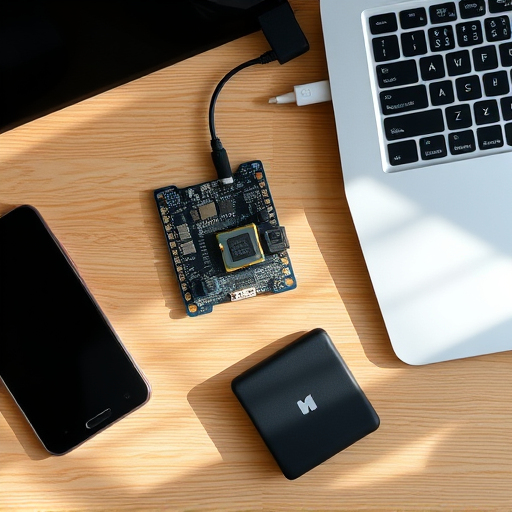
For example, a typical large AI training run consumes gigawatts of power and thousands of high-speed chips. If supply chains falter—say, a shortage of advanced memory modules—the entire AI pipeline slows down, risking delays and increased costs. These hardware components are not just passive elements; they are active enablers that define how quickly and efficiently models can be trained and deployed. The physical reality of data centers humming with cooling fans, blinking servers, and heated silicon underscores that the AI revolution is fundamentally a hardware revolution. The tradeoffs include over-reliance on supply chains, which could lead to bottlenecks if demand outpaces production, and the challenge of balancing energy consumption with environmental concerns—all critical factors shaping AI’s trajectory.
What this means for Claude’s future and AI’s infrastructure race
Anthropic’s massive raise signals a shift: AI companies are now investing heavily in physical infrastructure, not just software. The goal: scale Claude to handle hundreds of billions of parameters, with the capacity to serve millions of users worldwide.
Imagine Claude as a giant brain that needs a vast network of highways—chips, memory, data centers—to think faster and smarter. This round shows that AI’s next leap will be driven by hardware capacity, not just clever algorithms. The implications are far-reaching: a focus on infrastructure means that future AI capabilities will be limited less by software innovation and more by the physical hardware that supports it. This could lead to increased competition for hardware manufacturing, more strategic partnerships, and higher costs—tradeoffs that might slow down deployment but ultimately enable more powerful models. For users, this could mean more reliable, faster AI services, but it also raises questions about scalability and environmental impact.

What everyone gets wrong about billion-dollar AI rounds
Many see these huge valuations as bubbles. But in Anthropic’s case, the focus on compute capacity flips that narrative. It’s a strategic move to secure the hardware needed for AI’s next phase. This approach underscores a fundamental shift in how AI companies are valued: not solely by their current revenue or user base, but by their ability to build and scale the physical infrastructure necessary for future growth.
Think of it like investing in the roads and bridges for a city’s growth, not just buying fancy cars. The real value lies in the infrastructure that supports future traffic and commerce. This infrastructure-centric view means that the valuation now reflects confidence in the hardware ecosystem and supply chain resilience, rather than just software innovation. It also introduces new risks—if supply chains fail or hardware costs skyrocket, the entire AI growth story could be threatened. Recognizing this, investors and companies are now prioritizing long-term hardware partnerships and capacity planning, which could redefine how success is measured in AI.
So, when you hear about a $965 billion valuation, remember: the real investment is in the physical hardware—chips, memory, power—that will keep AI scaling for years to come. This shift from hype to tangible infrastructure could reshape the entire AI industry’s valuation paradigm.
Frequently Asked Questions
Why is this round called a ‘compute deal’ instead of just a funding round?
Because most of the capital is earmarked for hardware—chips, memory, data centers—rather than just software development. It’s about building the physical infrastructure needed to run and scale models like Claude at a global level.How can Anthropic justify a $965 billion valuation?
The valuation reflects expectations of explosive revenue growth and the strategic investments in hardware capacity. It’s a bet that infrastructure bottlenecks—chips, memory, power—are the key to unlocking AI’s next phase.Is the $47 billion revenue figure actual or annualized?
It’s an annualized run-rate, meaning the company is currently generating revenue at that level when projecting current growth over a year. This rapid increase signals a scaling engine in motion, not just a snapshot.Why are Amazon, Micron, Samsung, and SK hynix important?
They are strategic partners providing the hardware backbone—chips, memory, and cloud capacity—that Anthropic needs to scale Claude and other models. Their commitments show a focus on supply chain resilience for AI infrastructure.Does this mean Anthropic is preparing for an IPO?
Not necessarily. The round signals a focus on infrastructure and scaling. While it hints at readiness for public markets, the primary goal appears to be securing hardware capacity to support massive AI growth.Conclusion
This isn’t just about a big valuation; it’s a blueprint for AI’s future. Anthropic’s massive funding is a clear signal: the race for AI dominance hinges on physical hardware—chips, memory, and power—more than ever. The real question isn’t just how big Claude will get, but how fast supply chains and infrastructure can keep up.
As we watch this infrastructure blitz unfold, one thing’s clear: the future of AI depends on the bridges we build beneath the models’ brains. It’s a massive, physical race that could shape AI for decades. Are you ready for the hardware-powered leap?