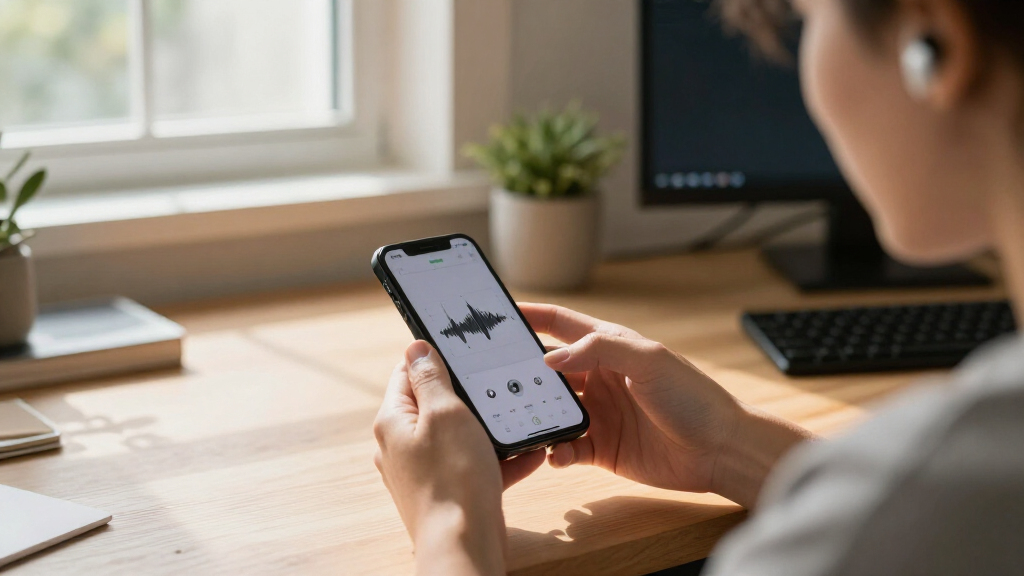

TL;DR

Get business pricing on tech for your team
- Business-only prices and quantity discounts
- Tax-exempt purchasing
- Multiple users, one account, clear invoices
A Hugging Face headline describes Phonon TTS as a launch of high-quality on-device speech that tops benchmarks. The available information contains no article body, benchmark results, comparisons, or technical details to verify that claim.
The headline presents Phonon TTS as a text-to-speech development focused on running speech generation on-device. That generally means processing on a local device rather than relying on a remote service, but the supplied information does not specify supported devices, whether processing is fully local, or what hardware the system requires.
Hugging Face’s headline also says the system tops the benchmarks. No benchmark names, scores, competing systems, test conditions or evaluation dates are included in the available material. The statement is therefore an attributed claim in the headline, not a result that can be checked from the details provided.
The headline does not say whether Phonon TTS is available to download, how it is licensed, which languages or voices it supports, or whether the announcement concerns a model, an application or both. Those points remain unconfirmed in the material supplied for this report.
Phonon TTS: on-device speech with a benchmark claim to verify
Hugging Face’s headline presents Phonon TTS as high-quality speech generation on-device that tops benchmarks. The supplied information has no results or product details to confirm the claim.
What the announcement says
The available item is a headline about Phonon TTS, local speech generation and benchmark leadership.
Text to speech
Phonon TTS is presented as a system that turns text into spoken audio.
On-device focus
The headline describes speech generation on-device, but does not say how much processing happens locally.
“Tops the benchmarks”
This is a headline claim; no benchmark names, scores or comparison details were supplied.
Why local speech can matter
On-device generation may suit users who need speech without an internet connection or prefer local processing.
- Speech when a connection is unavailable
- Audio generated locally
- Latency, privacy, cost and device resources depend on implementation
- Offline operation and hardware support are unconfirmed
Evidence readers need
Different measures can lead to different conclusions; a result on one does not establish an overall advantage.
Name the benchmarks, competing systems, scores and test conditions.
Clarify whether the claim concerns quality, naturalness, intelligibility, speed or memory use.
Provide availability, licensing, supported languages, voices and device requirements.
The Stakes for Local Speech Tools
On-device speech generation can matter to users who need speech when an internet connection is unavailable, or who prefer audio to be generated locally. It can also change the practical trade-offs around latency, privacy, device resources and cost. Whether Phonon TTS delivers those benefits depends on implementation details that are not available in the headline.
The benchmark claim could help readers compare speech systems, but only if the evaluations identify what was measured and how. Speech quality, naturalness, intelligibility, speed and memory use are different measures; a lead on one would not establish an overall advantage. Without scores and test conditions, readers cannot tell what “tops” means or whether the comparison applies to their devices and languages.
Products Worth Considering

Bose SoundLink Flex Bluetooth Speaker (2nd Gen) – Portable Outdoor Speaker with Hi‑Fi Audio, Waterproof and Dustproof, USB‑C, Up to 12 Hours

EcoFlow Delta 3 Max Portable Power Station – 2048 Wh LiFePO4 Battery, 2400 W Output (3400 W X‑Boost)

Anker SOLIX S2000 Solar Powered Generator, 2010 Wh, 1500 W
As an affiliate, we earn on qualifying purchases.
What the Announcement Establishes
The supplied Hugging Face item contains a headline only: “A Closer Look at Phonon TTS. Launching High-Quality On-Device Speech That Tops the Benchmarks.” It establishes that the announcement is framed around Phonon TTS, local speech generation and a benchmark lead. It provides no publication date, author details or article text.
Text-to-speech systems turn written text into spoken audio. An on-device design places some or all of that work on the user’s hardware. The headline does not specify the architecture or confirm how much processing is local, so those general characteristics should not be read as verified details about this particular system.
Benchmark and Release Details Missing
The key uncertainty is the evidence behind the headline’s benchmark claim. No evaluation results or methodology are available here, and there is no information about the systems used for comparison. It is also unclear whether the reported advantage concerns speech quality, speed, resource use or another metric.
The available material does not confirm release timing, access, licensing, hardware requirements, supported languages or voice options. It also does not establish whether the speech model operates entirely offline. Until those details are published, readers cannot determine how broadly the announcement applies or reproduce its comparisons.
Details Needed to Assess Phonon
The next useful update would provide the full announcement, including dated benchmark tables, comparison systems, evaluation methods and device specifications. That would let readers judge the performance claim in context and distinguish measured results from promotional wording.
Release notes or a product page would clarify availability, licensing, supported languages and whether processing works offline. Until those details are accessible, the confirmed development is limited to Hugging Face’s headline announcement and its stated benchmark positioning.
Where I land
I read this as a potentially useful announcement whose most consequential claim is still unsupported by the details available here. On-device speech could offer practical advantages, but the headline alone does not establish Phonon TTS’s quality, privacy properties or performance against other systems.
The strongest counterargument is that Hugging Face’s full post may contain benchmark evidence and implementation details that are absent from the supplied excerpt. If it publishes reproducible comparisons across relevant devices, languages and speech measures, alongside clear availability and licensing information, I would reassess the claim on that evidence. For now, I would treat “tops the benchmarks” as a headline assertion rather than a verified conclusion.
Source: Hugging Face
Key Questions
What is Phonon TTS?
Phonon TTS is presented in a Hugging Face headline as an on-device text-to-speech system. The supplied information does not include further product or technical details.
Has Phonon TTS been shown to top benchmarks?
The headline says it “tops the benchmarks,” but the available material includes no scores, benchmark names or evaluation methods. The claim cannot be verified from the information provided.
Can I download or use Phonon TTS now?
The available headline does not give release information, access links or licensing terms, so availability is unclear.
Does Phonon TTS work fully offline?
The headline describes on-device speech, but it does not explain whether all processing happens locally or identify supported hardware. Fully offline operation is not confirmed.
Source: Hugging Face