
TL;DR

Get business pricing on tech for your team
- Business-only prices and quantity discounts
- Tax-exempt purchasing
- Multiple users, one account, clear invoices
Anthropic has published a headline describing early progress on using Claude to accelerate drug development. The article body was not available, so the methods, evidence, partners and any measured gains cannot be confirmed from the material provided.
The headline identifies Anthropic, its Claude AI system and an effort focused on accelerating drug development. It describes the progress as early, which signals a preliminary stage rather than a demonstrated change in how medicines are developed. No article text was available to substantiate further details.
The supplied material does not identify research partners, drugs, diseases, experiments or development stages. It also gives no performance measures, comparison with existing approaches, or account of whether researchers tested Claude’s output in laboratory or clinical settings. Those details are needed to assess what the reported progress amounts to.
There is no attributable quotation or named researcher in the material provided. Anthropic’s headline is the only available characterization of the work; it is not enough to establish that Claude produced a treatment candidate, improved its odds of success or reduced the time or cost of development.
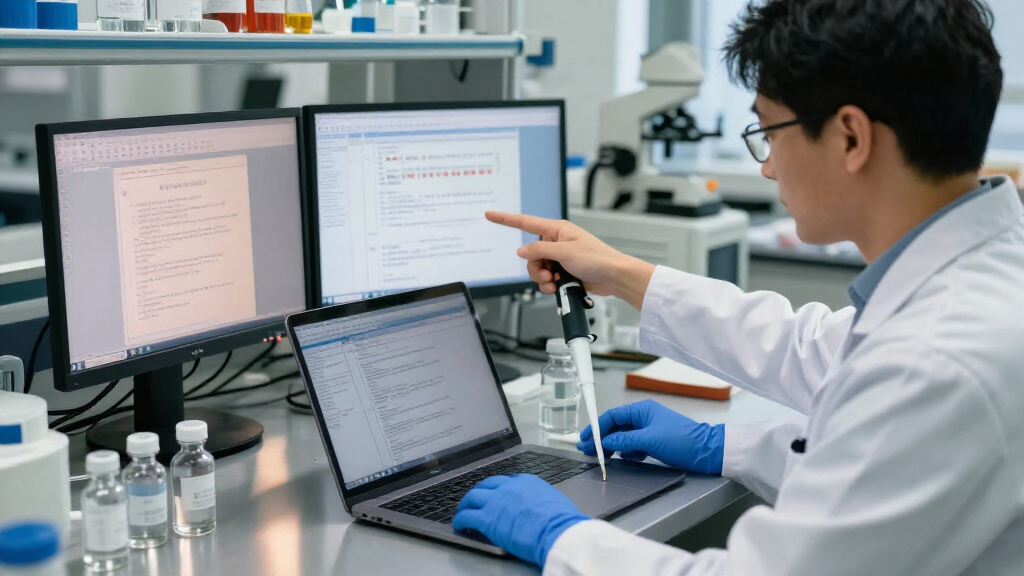
Early Progress on Accelerating Drug Development With Claude
Anthropic has described early work aimed at using Claude to accelerate drug development. The headline points to a consequential research goal, but the article details needed to judge the work were not available in the supplied material.
What we know—and what we don’t
The headline links Anthropic, Claude and an effort focused on drug development. It does not establish what the work achieved.
A stated research goal
Anthropic reports early progress on work intended to accelerate drug development with Claude.
The specific task
The material does not say whether Claude reviewed research, generated hypotheses, designed compounds or supported another task.
The outcome
No drug candidate, disease area, experiment, development stage or measured gain is identified.
Drug research is a long chain
Progress on one research task is not the same as progress toward an approved medicine. Claims of acceleration need a clear stage and a meaningful comparison.
Identify targets
Explore biological mechanisms and potential points of intervention.
Develop candidates
Design and refine possible compounds or treatment approaches.
Test and validate
Assess results through research, including safety and efficacy studies.
Evaluate outcomes
Measure whether findings hold up and support later development.
Key project details remain open
Without the article body, the central claims cannot be assessed or placed on a more precise timeline.
- Task: What did Claude do?
- People: Who evaluated its work?
- Methods: What data and approach were used?
- Benchmark: What conventional process was the comparison?
- Results: Were time, accuracy or other gains measured?
- Validation: Were findings reproducible or independently reviewed?
- Application: Was there laboratory or clinical testing?
- Scope: Which drug, disease or development stage was involved?
What would make the claim testable?
A fuller report could show whether this early effort has practical value beyond a demonstration.
Name the task
Specify what Claude handled, the research setting and the people involved.
Show the comparison
Report the benchmark, outcomes and any time or accuracy gains against existing methods.
Test reproducibility
Explain independent assessment and whether results hold in real research settings.
An early signal, not a demonstrated shortcut
The headline shows interest in applying Claude to drug research. The available information does not show that AI has shortened the path to a medicine, produced a treatment candidate or improved its chances of success.
A useful improvement to a single research task could still save time. I would update this assessment with reproducible results, a clear comparison to existing methods and evidence that gains hold in practical research.
Key questions
Answers reflect only the material supplied for this infographic.
What did Anthropic announce?
The headline reports early progress on accelerating drug development with Claude. The underlying article details were not provided.
Did Claude develop a drug?
The material does not say that Claude developed a drug or identify a candidate.
How much faster could development become?
No time savings or comparison baseline is reported, so the effect on speed is unknown.
Has the work been independently validated?
No independent review, laboratory validation or clinical testing is described in the supplied material.
How AI Could Affect Drug Research
Drug development involves many stages, from identifying possible biological targets and designing candidate compounds to testing safety and efficacy. If Claude can reliably assist with specific research tasks, it could help scientists review information, develop hypotheses or organize work. The headline does not say which, if any, of these tasks the project addressed.
The distinction matters because progress in a research workflow is not the same as progress toward an approved medicine. Any claim of faster development would need to specify the stage measured and compare results with a meaningful baseline. Evidence of laboratory validation, reproducibility and downstream outcomes would help readers judge whether the work has practical value beyond an early demonstration.
Products Worth Considering

DJI Osmo Mobile 8 Standard Combo Phone Gimbal Stabilizer

Amazon Kindle Paperwhite Signature Edition (12th Generation, 2024), 32 GB, Metallic Black

Bose QuietComfort True Wireless Earbuds with Active Noise Cancellation, Black
As an affiliate, we earn on qualifying purchases.
From Early Work to Medical Evidence
Drug development typically requires multiple rounds of research and testing, with findings evaluated for safety and effectiveness before a medicine can reach patients. AI tools may support parts of that work, but their usefulness depends on the task, the quality of their outputs and independent evaluation.
Here, the supplied headline frames Anthropic’s effort as early progress. Without the article body, it is not possible to place the work on a more precise timeline or compare it with earlier milestones. No results, publication, regulatory step or clinical outcome are provided.
Evidence and Project Details Missing
The available material leaves the central questions unanswered: what Claude did, who evaluated its work, what data or methods were used, and what “accelerating” means in this project. There is no reported time saving, accuracy measure or comparison with a conventional research process.
It is also unclear whether the progress concerns a research prototype, a collaboration with drug developers or work that has been independently reviewed. No candidate drug, disease area or human study is identified. These points cannot be inferred from the headline alone.
Awaiting Results and Methods
The next useful milestone would be a fuller account from Anthropic describing the project’s methods, collaborators and results, including the task Claude handled and the benchmark used to evaluate it. Independent assessment would help establish whether the reported progress is reproducible.
Until those details are available, the development is best understood as an early report of work in this area. The material provided does not state when additional findings will be released or whether the effort has moved into laboratory or clinical testing.
Where I land
I read this as an early signal of interest in applying Claude to drug research, not as evidence that AI has shortened the path to a medicine. The headline identifies a relevant goal, but the missing methods and results make it impossible to judge the scale or reliability of the progress.
The strongest counterargument is that useful improvements to one research task could save time even if they do not immediately produce a drug. I would revise my assessment if Anthropic or independent researchers reported reproducible results, a clear comparison with existing methods and evidence that the gains hold in real research settings.
Source: Anthropic
Key Questions
What did Anthropic announce?
Anthropic’s headline reports early progress on accelerating drug development with Claude. The supplied information does not include the underlying article details.
Did Claude develop a drug?
The available material does not say that Claude developed a drug or identify a drug candidate. It only describes early progress on work related to drug development.
How much faster could drug development become?
No time savings or comparison baseline is provided, so the effect on development speed is unknown.
Has the work been independently validated?
The supplied material does not describe independent review, laboratory validation or clinical testing.
Source: Anthropic