
TL;DR

Get tech for your team delivered free — and shop member deals
- Fast, free delivery on millions of items
- Access to Prime Big Deal Days deals on October 6–7
- Prime Video, Amazon Music and more included
SenseTime has announced SenseMart OS, a platform it describes as bringing embodied intelligence into retail. The available announcement provides no product specifications, deployment details, customer names or performance figures, so its practical capabilities remain unclear.
The announcement identifies SenseMart OS as SenseTime’s retail initiative and frames it around embodied intelligence—AI connected to systems that can perceive or act in physical environments. The available information does not explain which devices the operating system supports, what tasks it is designed to perform, or whether the name refers to a software product, a broader platform or both.
No customer deployments, pricing, availability dates, performance measures or technical specifications are provided in the material available for this report. There are also no named executives or direct quotations to establish how SenseTime defines the product’s capabilities. The company’s stated aim is clear at a high level; the means of achieving it are not.
That distinction matters when assessing a retail AI launch. A platform announcement can describe a direction without confirming that the product is operating in stores or delivering measurable results. For now, SenseMart OS should be understood as an announced retail-focused offering, with its readiness and scope still unverified.
Retail AI · Announcement Brief
SenseMart OS aims to bring embodied intelligence into retail
SenseTime has announced a retail-focused platform. Its intended direction is clear; product scope, deployment status and measurable results remain undisclosed in the information available for this report.
01 / The development
AI moves toward store operations
SenseTime presents SenseMart OS as a way to bring embodied intelligence into retail settings. The announcement signals a direction, but does not document a working deployment.
01 · Potential setting
Physical retail
Retail environments involve products, equipment, staff and shoppers. The announcement does not say which parts of store operations the platform targets.
02 · Broad concept
Embodied intelligence
The term broadly describes AI linked to systems that can perceive or act in physical settings. Supported devices and functions are not specified.
03 · Open question
Practical value
Commercial value depends on solving a defined need at a worthwhile cost. No measured outcomes or customer evidence are available here.
02 / Product scope
What SenseMart OS includes is not yet clear
The available announcement information offers a headline-level description, not a technical account. It would be premature to assign the platform specific functions such as inventory handling, customer assistance or autonomous movement.
03 / Evidence to watch
From announcement to store impact
A fuller product briefing and customer evidence would help show whether SenseMart OS is approaching practical use and what it can deliver.
Define the product
Explain architecture, supported devices and capabilities.
Show integration
Describe store workflows, requirements and availability.
Name deployments
Identify retail partners and clarify whether use is live.
Measure outcomes
Report reliability, costs and operating performance.
04 / Assessment
A signal of intent, not proof of adoption
Current read
Scope remains unverified
SenseMart OS may signal a meaningful interest in applying AI to retail environments. Naming a platform and describing its ambition do not show that it is ready for store use or that retailers have adopted it.
What could change the view
Specifics and independent results
Concrete specifications and named deployments would clarify the product. Retailer reports with independently verifiable results on reliability, costs or operating performance would provide stronger evidence of impact.
05 / Key questions
What readers still need to know
What is SenseMart OS?
A SenseTime-announced platform described as bringing embodied intelligence into retail. Its components and functions are not specified in the available information.
What does “embodied intelligence” mean here?
Broadly, AI connected to systems that can perceive or act in physical settings. SenseTime has not said which devices or store activities the platform supports.
Is it already being used in stores?
The announcement information reviewed does not identify retail customers or confirm live deployments.
When will it launch, and what will it cost?
No availability date or pricing details are provided in the information available for this report.
AI Moves Toward Store Operations
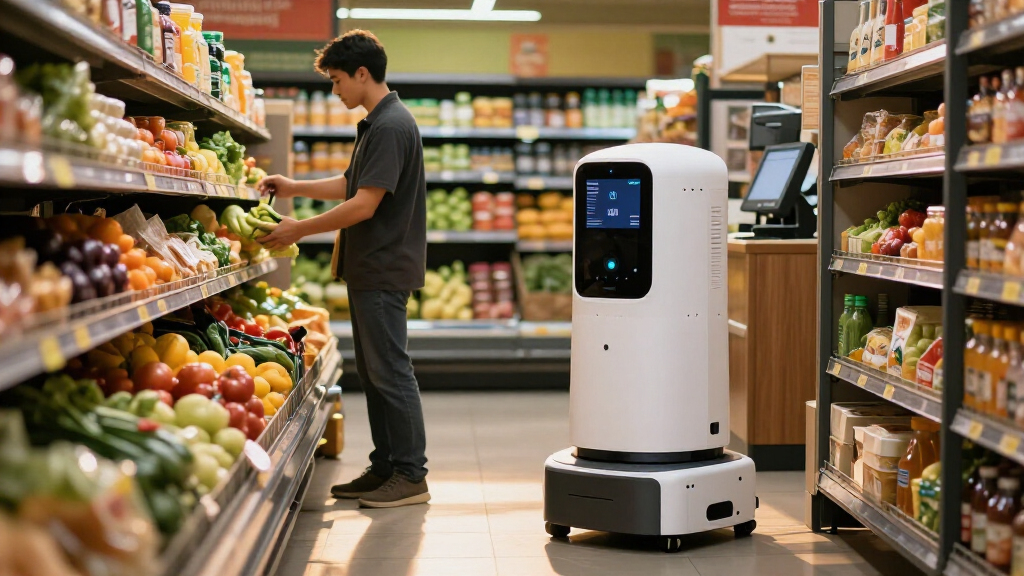
Retailers are potential users of AI systems that interact with physical spaces, where tasks may involve products, equipment, staff or shoppers. If SenseMart OS supports reliable store operations, it could give SenseTime a route to apply AI beyond digital services. The announcement alone, however, does not establish that the platform performs any particular task or is being used by a retailer.
The commercial question is whether the system can address a defined operational need at a worthwhile cost. Retail environments vary, and software that works in a demonstration may still require integration with store systems, devices and established workflows. Without named deployments or measured outcomes, readers cannot yet judge whether SenseMart OS has moved from concept to practical use.
retail AI embodied intelligence platform
As an affiliate, we earn on qualifying purchases.
As an affiliate, we earn on qualifying purchases.
From AI Models to Physical Settings
Embodied intelligence generally refers to AI linked to a physical system that can sense or act in its environment. In retail, that broad idea might cover different kinds of devices and software, but the available announcement does not specify which applications SenseMart OS targets. It would be premature to assign it functions such as inventory handling, customer assistance or autonomous movement.
SenseTime’s announcement places the company’s retail effort within this wider field of AI deployment. The supplied information contains only a headline-level description, rather than the original article’s detailed account. It therefore does not provide a timeline, technical explanation or comparison with existing retail products. Those gaps limit what can be responsibly reported about the launch beyond its stated focus.
As an affiliate, we earn on qualifying purchases.
Product Scope and Rollout Unknown
Key details remain unavailable: what SenseMart OS includes, which hardware it runs on, what store tasks it is intended to support, and whether it has been tested or deployed with retail customers. The announcement information also gives no launch date, geographic availability, pricing or named partners.
There are no disclosed benchmarks or independent evaluations to show how the system performs, how it handles unusual conditions in stores, or what operational benefits it might deliver. SenseTime’s description establishes the product’s intended direction, but not its capabilities or commercial status. These points may become clearer with a fuller product announcement or customer disclosure.
As an affiliate, we earn on qualifying purchases.
Details Needed From SenseTime
The next useful milestone would be a product briefing that explains SenseMart OS’s architecture, supported devices and intended retail workflows. Details on availability, integration requirements and deployment partners would help establish whether the announcement concerns a near-term product or an early-stage initiative.
Retail customers’ accounts and independently reported operating results would help assess the platform’s real-world performance. Until those details emerge, the announcement remains a statement of direction rather than evidence of adoption or impact.
embodied intelligence retail solutions
As an affiliate, we earn on qualifying purchases.
As an affiliate, we earn on qualifying purchases.
Where I land
I see SenseMart OS as a potentially meaningful signal of SenseTime’s interest in putting AI into retail environments, but the announcement provides too little detail to judge the product itself. Naming a platform and describing its ambition do not show that it is ready for store use or that retailers have adopted it.
The strongest counterargument is that early announcements often precede product documentation and customer disclosures; missing details now do not prove that the technology lacks substance. I would revise my assessment if SenseTime publishes concrete specifications and names deployments, especially if retailers report independently verifiable results on reliability, costs or operating performance.
Source: SenseTime
Key Questions
What is SenseMart OS?
SenseMart OS is a SenseTime-announced platform that the company describes as bringing embodied intelligence into retail. The available information does not specify its components or functions.
What does “embodied intelligence” mean here?
It broadly describes AI connected to systems that can perceive or act in physical settings. SenseTime has not said which devices or store activities SenseMart OS supports.
Is SenseMart OS already being used in stores?
The announcement information reviewed does not identify retail customers or confirm live deployments.
When will it launch, and what will it cost?
No availability date or pricing details are provided in the information available for this report.
Source: SenseTime
Halloween Picks
halloween
As an affiliate, we earn on qualifying purchases.