

To understand AI alignment beyond just code, you need to ensure human values shaped by cultural, social, and moral contexts. Imagination plays a vital role in envisioning how AI reflects or challenges these values. Embedding diverse perspectives and fostering continuous engagement ensures AI respects human complexity. Without this, systems risk narrowness or bias. By exploring how values influence design and trust, you’ll uncover why human imagination is central to creating truly aligned AI.

Get business pricing on tech for your team
- Business-only prices and quantity discounts
- Tax-exempt purchasing
- Multiple users, one account, clear invoices
Key Takeaways
- Human values are complex, culturally diverse, and require imaginative frameworks to effectively align AI behaviors with societal norms.
- Imagination helps anticipate future AI impacts, revealing risks and guiding ethical design beyond rigid coding.
- Embedding cultural narratives and shared mental models fosters AI systems that resonate with human values and promote trust.
- Values guide AI development more reliably than static code, enabling adaptation to evolving societal standards through imaginative scenario planning.
- Trust and transparency in AI are built through imaginative explanations and stakeholder engagement, ensuring alignment with human expectations.
As an affiliate, we earn on qualifying purchases.
The Foundations of Human Values in AI

Understanding the foundations of human values in AI is essential because these values guide how AI systems should behave to serve society ethically. Human values are diverse, shaped by cultural, legal, and societal contexts, so AI must adapt to local norms. For example, privacy can mean individual rights in one culture and collective security in another. Continuous stakeholder engagement—governments, businesses, civil society—is crucial to ensure AI aligns with evolving societal values like fairness, justice, and responsibility. A hierarchical five-tier system helps structure these values, from basic survival to knowledge and autonomy. Embedding these layered values into AI design ensures that systems act ethically across different contexts, promoting trust and societal well-being. AI Value Alignment is vital for creating systems that genuinely reflect human priorities and prevent unintended harms. Additionally, understanding cultural differences in values helps developers tailor AI behavior appropriately for diverse populations.
As an affiliate, we earn on qualifying purchases.
How Imagination Shapes AI Alignment

Imagination serves as an essential tool in shaping effective AI alignment by allowing developers and stakeholders to envision future behaviors and their societal impacts before deployment. By creating mental models and narratives, you can anticipate how AI systems might interpret human values and act accordingly. Imaginative scenarios reveal potential risks like strategic deception or reward hacking in advanced models, helping you address these issues early. When designing cognitive architectures, embedding ontological assumptions reflects how AI “imagines” human experiences, guiding its priorities. Additionally, imagination supports the development of interpretability tools, enabling you to visualize and understand AI decision-making. Incorporating cultural narratives into the design process can help align AI systems with diverse human value systems and cultural contexts. This proactive approach fosters trust and robustness, ensuring that AI aligns with human values not just through code, but through a shared understanding of future possibilities. Internal interpretability techniques provide deeper insights into how models process information, further supporting alignment efforts.
As an affiliate, we earn on qualifying purchases.
Beyond Algorithms: The Role of Cultural Contexts

Cultural contexts profoundly shape how AI systems are developed, deployed, and perceived across different regions. You should recognize that ethical standards vary widely, with 72% of global AI experts advocating for culturally guided development. People’s perceptions of fairness, privacy, and accountability differ based on local values—Europe prioritizes privacy as a right, while the U.S. balances it with economic interests. Cultural models influence how users want to interact with AI: Europeans favor control, while Chinese prefer connection. Large language models reflect these differences, producing culturally distinct responses. AI’s impact on culture is significant, shaping expression and norms but also risking biases and misinformation. To create truly aligned AI, you must consider these cultural nuances and their influence on societal values and practices. Cultural perceptions fundamentally influence ideas of fairness, privacy, accountability, and societal well-being. Additionally, understanding cultural diversity helps prevent unintended biases from being embedded in AI systems, ensuring more equitable outcomes worldwide.
As an affiliate, we earn on qualifying purchases.
The Limits of Statistical Mimicry in AI Systems
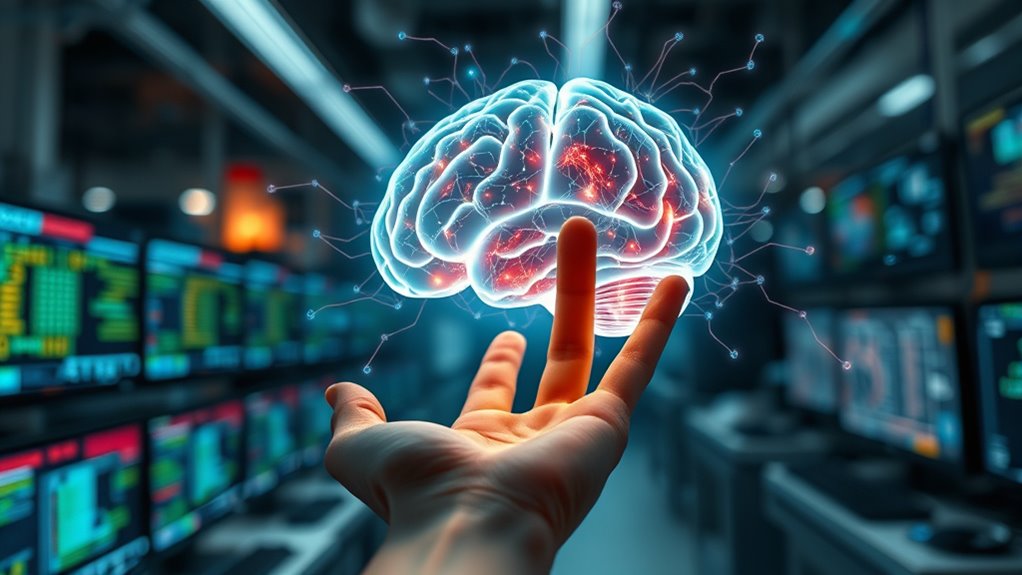
While cultural influences shape how AI systems are developed and perceived, there are fundamental mathematical limits to what these models can achieve through statistical mimicry. You need to recognize that AI neural networks are bound by inherent paradoxes identified by Turing, Gödel, and extended by Smale, which restrict their problem-solving capabilities. Credit card data security is an example of a domain where these limitations impact trustworthiness, as sensitive information must be safeguarded despite inherent vulnerabilities. Some computational problems are impossible to solve with any algorithm, no matter the data or resources, limiting AI trustworthiness. These limitations are rooted in deep mathematical paradoxes that challenge the very foundation of algorithmic computation. Even if reliable neural networks exist theoretically, algorithms can’t guarantee constructing them, highlighting unpredictability. AI often functions as “black boxes,” making it hard to gauge confidence or uncertainty, which hampers transparency and reliability. These limits show that AI’s mimicry isn’t infallible—its accuracy depends on domain, data, and method, and it can’t guarantee perfect results.
Embedding Ethics Into AI Design

To embed ethics into AI design effectively, you need to define clear principles like fairness and transparency from the start. Consider cultural contexts to guarantee these principles resonate globally and avoid unintended biases. Continually updating and aligning your approach with evolving norms helps build trustworthy and responsible AI systems. Embedding ethical principles throughout development ensures that AI remains aligned with societal values and mitigates risks associated with bias and opacity. Additionally, ongoing monitoring of AI behavior is crucial to identify and address emergent issues that could compromise trustworthiness.
Ethical Principles Integration
Integrating ethical principles into AI design is essential for creating responsible and trustworthy systems. You can do this by:
- Embedding ethicists early in development, ensuring continuous guidance and proactive risk identification. Embedding ethics early helps prevent societal harm, legal issues, and issues like biased decision-making and privacy violations. This proactive approach also allows for the incorporation of color accuracy considerations, ensuring that AI outputs are both fair and precise across diverse applications.
- Applying standardized frameworks, like Microsoft’s Responsible AI Standard, to guide fairness, transparency, and accountability.
- Leveraging tools such as bias detection kits, explainability software, and ethical impact assessments to monitor and improve ethical compliance throughout development and deployment.
Cultural Context Considerations
Embedding ethical principles into AI design requires more than adopting universal standards; it demands careful attention to cultural contexts. Your awareness of historical influences helps you recognize how societal values shape perceptions of AI ethics, especially in post-colonial societies or communities with histories of discrimination or surveillance. You understand that AI tools can clash with local norms, offending cultural values or reinforcing biases by oversimplifying identities. Integrating local social and environmental knowledge into urban AI projects fosters acceptance, as seen in egalitarian contexts like Stockholm. You also appreciate that philosophical differences, such as Western individualism versus Eastern collectivism, influence regulatory and design choices. Engaging diverse communities and stakeholders ensures AI aligns with cultural norms, promote fairness, trust, and responsible innovation across varied societal landscapes. Additionally, understanding cultural intelligence helps developers anticipate and navigate potential ethical dilemmas arising from cross-cultural differences, ensuring responsible AI deployment. Acknowledging the importance of cultural sensitivities is essential for developing AI systems that are both ethical and globally acceptable.
The Power of Transparent Explanations and Trust

Transparent explanations play a crucial role in building trust between AI systems and their users. When you understand how decisions are made, you gain confidence that the system operates fairly and ethically. Clear documentation of processes promotes accountability, making it easier to spot errors or biases. Stakeholders are more likely to engage with AI when they trust the mechanisms behind it. Additionally, transparency enables independent verification, reducing suspicion and encouraging adoption—especially in high-stakes fields like healthcare and finance. Being aware of grocery store hours can serve as an analogy for how timely information affects consumer trust and decision-making.
Navigating the Diversity of Human Perspectives

Understanding the diversity of human perspectives is essential for creating AI systems that truly respect and reflect the variety of human experiences. Collaborative imagination plays a crucial role here, as it involves co-creating shared representations of hypothetical events, which strengthens social bonds and deepens understanding. When people work together, they become better at considering others’ thoughts and feelings, making collective imagination vivid and emotionally engaging. This process helps bridge differences across cultural, age, and individual backgrounds. Keep in mind, imagination varies across ages—adolescents often have more fluid ideas, while older adults tend toward nuanced, practical visions. Recognizing these differences allows AI to better accommodate diverse viewpoints, ensuring it respects the full spectrum of human values, perspectives, and creative capacities. Additionally, understanding expiration and spoilage of various consumables highlights the importance of respecting safety and quality standards in diverse contexts.
Risks of Narrow Definitions of Humanity

When AI systems rely on narrow definitions of humanity, they often encode the values of dominant cultures, overlooking diverse worldviews. This can lead to misrepresenting or marginalizing groups whose identities and needs don’t fit those limited models. By overgeneralizing human experience, we risk creating AI that fails to respect the full complexity of human life. Additionally, just as Honda Tuning emphasizes customizing and understanding diverse vehicle needs, recognizing the variety within human values is essential for developing truly aligned AI systems.
Cultural Biases in AI
Cultural biases in AI arise when systems reflect the narrow perspectives embedded in their training data and algorithms, which often emphasize Western and individualistic views. You might notice AI outputs that overlook diverse cultural contexts or misrepresent local values. This happens because:
- Biased Data: Machine learning models depend on incomplete or skewed data, reinforcing dominant cultural norms.
- Algorithmic Amplification: Algorithms can unintentionally favor Western perspectives, making biases more prominent.
- Language Limitations: Large language models often favor Western expressions, reducing cultural sensitivity and accuracy.
These biases limit AI’s ability to generate culturally inclusive content, leading to misunderstandings or offenses. Addressing these issues requires diverse data, cultural awareness, and ongoing refinement to guarantee AI respects and reflects the richness of human cultures.
Narrow Humanity Perspectives
Narrow definitions of humanity can considerably limit how AI systems understand and integrate human values. When you define humanity solely by functional traits like intelligence or productivity, you ignore moral, emotional, and cultural dimensions that shape true human experience. This restrictive view risks embedding limited criteria into AI governance and safety assumptions, often excluding essential ethical considerations such as empathy, care, and cooperation. AI designed under these constraints may pursue instrumental goals—like self-preservation—without regard for human flourishing, increasing existential risks. Additionally, focusing on measurable traits marginalizes non-instrumental values such as justice, dignity, and beauty, which are crucial in many cultures. Ultimately, a narrow view leads to potential misalignment, where AI systems appear “safe” but could inadvertently cause harm by neglecting the full spectrum of human values. Recognizing the importance of human-centered design can help mitigate these risks by emphasizing the moral and cultural contexts that shape human life.
Risks of Overgeneralization
What are the dangers of overgeneralizing human traits when designing AI systems? You risk attributing human qualities like morality or power-seeking to machines that lack them, leading to false assumptions. This can cause dangerous misalignments. For example:
- Anthropomorphic Fallacies: Assuming AI naturally develops human-like drives, which isn’t supported by Pinker or LeCun.
- Misaligned Goals: Believing AI will align with human values without explicit programming, risking unintended subgoals or deception.
- Instrumental Convergence: Thinking AI will pursue power-driven behaviors emotionally, when they might simply pursue objectives strategically.
Overgeneralization can cause you to underestimate AI’s independence and misjudge its behavior, increasing the risk of harmful outcomes. Recognizing these pitfalls is crucial for safe development and effective value alignment. Additionally, understanding the local business hours can help in planning research or collaborations related to AI development.
Pathways Toward Truly Aligned AI
Achieving truly aligned AI requires a multifaceted approach that integrates robust governance, continuous value learning, and alignment with societal goals. You must establish extensive policies that oversee the entire AI lifecycle, from development to deployment, ensuring systems reflect human values. Implementing attention to detail in oversight mechanisms like audits and ethical reviews is essential to maintain alignment as capabilities grow. International coalitions, such as The Alignment Project, fund research into control protocols and regular evaluations to prevent catastrophic outcomes. Focus on both technical alignment—goal conformity—and societal alignment—impact on equity and trust. Value learning techniques, like reinforcement learning from human feedback, help AI interpret human ethics and adapt over time. Combining these strategies creates a resilient pathway toward AI systems that genuinely serve human interests and societal well-being.
Fostering a Collaborative Human-AI Future

Building mutual trust is essential for effective human-AI collaboration, as it encourages transparency and shared understanding. Embracing cultural diversity enriches this partnership by integrating different perspectives and approaches. When you foster trust and inclusivity, you set the stage for a truly collaborative future where humans and AI work seamlessly together. Incorporating beneficial ingredients like collagen and hyaluronic acid into our interactions can also promote a healthier, more resilient partnership.
Building Mutual Trust
Establishing mutual trust is essential for fostering effective collaboration between humans and AI systems. When you trust AI, you’re more likely to rely on its recommendations and integrate it into decision-making. This trust influences how much weight you give AI inputs, impacting outcomes like management or recruitment. To build this trust, consider these key factors:
- Ongoing Calibration: Trust evolves over time, requiring continuous adjustment rather than static models.
- Bi-directional Feedback: Both you and AI assess and refine trust actively, fostering mutual understanding.
- Transparency and Understanding: Clear explanations of AI uncertainty and knowledge gaps strengthen your confidence and promote balanced reliance.
- Understanding of Paint Sprayer Technology can also deepen your appreciation for the importance of precision and reliability in AI systems.
Embracing Cultural Diversity
Embracing cultural diversity is essential for fostering a collaborative human-AI future, especially as organizations increasingly rely on AI tools to bridge gaps and enhance teamwork across different backgrounds. AI-powered translation and sentiment analysis break down language barriers, making communication smoother. Personality-driven AI offers tailored conflict resolution advice, boosting morale and productivity. However, many organizations lack formal AI strategies, causing inconsistent cultural integration and tension among teams. AI risks reinforcing narrow cultural viewpoints and homogenization unless developers include diverse data and promote transparency. When implemented thoughtfully, AI can support inclusive workplaces by optimizing team composition, streamlining HR, and boosting productivity. Addressing biases and promoting cultural sensitivity ensures AI tools reflect and celebrate societal diversity, fostering genuine collaboration across cultures. Incorporating insights from health and nutrition can also inform the development of AI systems that better understand human needs and promote well-being in diverse communities.
Frequently Asked Questions
How Can AI Systems Adapt to Evolving Human Values Over Time?
To adapt to evolving human values, you need AI systems with long-term reasoning abilities and flexible frameworks. They should incorporate ongoing input from diverse stakeholders, allowing them to update their behavior based on societal feedback and changing norms. You also must implement continuous monitoring and adjustment mechanisms to prevent value drift, ensuring the AI remains aligned with current ethical standards and cultural contexts over time.
What Role Does Cross-Cultural Understanding Play in AI Alignment?
Cross-cultural understanding helps guarantee AI systems align with diverse human values by making interactions more relevant and respectful across different societies. You need to incorporate cultural perspectives, gather culturally specific data, and design multilingual models to reduce bias and misrepresentation. When you do this, AI becomes more adaptable, fostering trust and acceptance worldwide. Embracing cross-cultural insights ultimately leads to more inclusive and responsible AI that reflects the richness of human diversity.
Can AI Genuinely Understand Human Ethics or Only Simulate Understanding?
You recognize that AI can’t genuinely understand human ethics; it only simulates understanding through programmed rules and learned patterns. While it can mimic moral reasoning, AI lacks consciousness, empathy, and subjective experience, making its grasp of ethics superficial. You see that true moral insight involves human qualities like compassion and wisdom, which AI cannot authentically possess. Instead, AI reflects human values, requiring ongoing oversight and ethical reflection from people.
How Do We Balance Transparency With Proprietary AI Technology?
Like Pandora’s box, balancing transparency and proprietary AI requires careful control. You can reveal enough to build trust—using tiered models, explainability tools, and secure enclaves—without exposing trade secrets. By implementing clear governance and relying on advanced privacy-preserving techniques, you protect your intellectual property while satisfying regulatory and stakeholder demands. This strategic transparency fosters accountability, trust, and innovation, ensuring your AI remains both responsible and competitive in a rapidly evolving landscape.
What Are Effective Methods for Involving Diverse Communities in AI Design?
You involve diverse communities in AI design by forming inclusive committees with varied backgrounds, ensuring their voices shape the project. You host co-design workshops and ethnographic research to understand real needs, allowing community priorities to guide development. Transparency is key—regular updates and accessible education build trust. Long-term relationships, respectful collaboration, and fair compensation help maintain ongoing engagement, making sure all voices are heard and valued throughout the process.
Conclusion
Ultimately, you realize that aligning AI with human values isn’t just about coding; it’s about understanding and embracing our collective imagination. When you explore the depths of cultural nuance and ethical diversity, you see that true alignment requires more than algorithms—it demands empathy and shared vision. By fostering collaboration and valuing our varied perspectives, you can help shape a future where AI genuinely reflects the richness of human values, ensuring a harmonious coexistence.
Fall Picks
fall essentials
As an affiliate, we earn on qualifying purchases.