
TL;DR

Get business pricing on tech for your team
- Business-only prices and quantity discounts
- Tax-exempt purchasing
- Multiple users, one account, clear invoices
Anthropic reportedly aims to have its Claude AI models operate real laboratory equipment, moving the company further into agentic and physical-world applications. Details are limited: the report is headline-level and Anthropic has not released full specifications, timelines, or partner names.
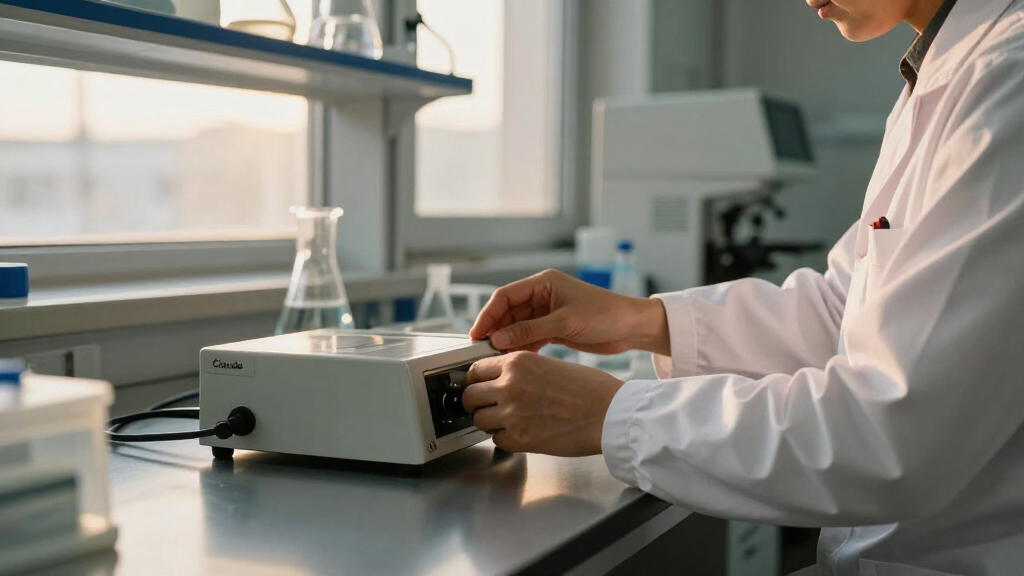
Anthropic reportedly wants its Claude AI models to move from answering questions to operating real laboratory equipment, according to a report from the AI newsletter The Neuron. The development signals the company’s ambition to place AI agents inside physical scientific workflows — controlling instruments, running experiments, and handling the kind of hands-on work that has so far remained largely human territory.
The core claim, as reported by The Neuron, is that Anthropic is pursuing a path in which Claude does not merely advise researchers in a chat window but actively controls laboratory hardware. That would put Claude in the same category as a small but growing set of AI systems being tested for automated experimentation — mixing reagents, adjusting instruments, and collecting measurements under computer control.
Anthropic has not published a detailed technical paper, product announcement, or partner list tied specifically to this reported effort. What is confirmed is the broader trajectory: the company has spent the past year expanding Claude’s agentic capabilities, including computer use — letting the model navigate screens, click buttons, and operate software the way a person would. Extending that principle from software to physical devices is a logical next step for any lab-automation push, but the report does not specify which instruments, which labs, or which experimental domains are involved.
It is also not confirmed from the report how far along any effort is — whether Anthropic is running live trials with actual equipment, building internal prototypes, or simply signalling intent through hiring and research directions. The gap between “wants Claude operating real lab gear” and a deployed, safety-reviewed system controlling physical instruments is wide, and the available reporting does not yet close it.
Anthropic Wants Claude Operating Real Lab Gear
A new report claims Anthropic is pushing Claude beyond chat windows and into physical laboratories — controlling instruments, running experiments, and taking on hands-on scientific work that has remained human territory. Details are limited: no partners, instruments, or timelines have been confirmed.
Why AI-Controlled Lab Equipment Matters
Science is bottlenecked less by ideas than by hands. Experiments demand repetitive pipetting, calibration, monitoring, and adjustment — slow, error-prone, and expensive when done manually.
Run Experiments Around the Clock
If Claude could reliably operate lab instruments, it could compress research cycles and execute sophisticated protocols continuously, without fatigue-driven errors.
Democratize Specialist Protocols
Automated instrumentation would make advanced experimental workflows accessible to labs that lack specialist technicians — lowering the barrier to serious science.
Extend the Frontier Race
OpenAI and Google DeepMind have publicized AI-for-science work; startups are building autonomous lab platforms. A credible Anthropic entry moves the race from chatbots into the physical sciences.
From Computer Use to Physical Experiments
Reports of lab-equipment ambitions fit a deliberate progression Anthropic has been building since introducing computer use for Claude in late 2024.
Reasoning & Chat
Claude answers questions, drafts documents, and advises researchers in a text window.
Computer Use — Late 2024
Claude sees a screen, moves a cursor, clicks buttons, and operates software the way a person would.
Lab Hardware Control
Per The Neuron: Claude would direct instruments, run experiments, and handle physical protocols.
Autonomous Science
Robot chemists and self-driving labs already exist; what’s missing is a frontier AI company making hardware a stated priority.
The Safety Questions Are Not Trivial
Software agents that click the wrong button waste time. An agent controlling a centrifuge, a heating element, or hazardous chemicals carries physical risk — making execution unusually consequential for a company positioned as the safety-focused frontier lab.
Errors Escape the Screen
A misdirected agent near hazardous reagents or spinning equipment creates real-world consequences. Human oversight, failure handling, and risk assessments will draw as much scrutiny as the capability itself.
Safety-Focused Identity on the Line
Anthropic has staked its brand on careful deployment. Both the ambition and its execution will be measured against that standard if lab control is ever demonstrated.
“Anthropic wants Claude operating real lab gear.”
— The Neuron · Headline & Report FramingWhat the Report Leaves Unanswered
The gap between “wants Claude operating real lab gear” and a deployed, safety-reviewed system is wide — and available reporting does not yet close it.
| Open Question | What the Report Says | Confirmed? | What Would Change It |
|---|---|---|---|
| Stage of Effort | Indicates intent only — prototypes, partnerships, or hiring signals unclear | ✗ No | Live trials with actual equipment demonstrated |
| Scope of Instruments | No instruments, experimental fields, or partner institutions named | ✗ No | Named labs, instruments, or experimental domains |
| Timeline | No stated date for any trial, product, or publication | ✗ No | A concrete Anthropic announcement with dates |
| Delivery Model | Unclear: in-house integration, vendor partnership, or third-party robotics | ~ Unknown | Partnership announcements with universities or lab-automation firms |
| Agentic Trajectory | Computer use for Claude confirmed since late 2024 | ✓ Yes | Already established — the bridge to physical systems |
Signals to Watch — and Where I Land
The clearest near-term signals would be official confirmation, corroborating hiring patterns, or partnership announcements with universities, pharmaceutical companies, or lab-automation firms.
The ambition is real; the capability is unproven. Anthropic has committed to agentic AI, and computer use is an obvious bridge to physical systems. The strongest counterargument: headline-level reports routinely overstate early explorations — “wants” is a weak verb, describing intent rather than achievement. Until Anthropic shows a working demo, a named partner, or a paper, this could remain an internal research thread for a long time.
Why AI-Controlled Lab Equipment Matters
Science is bottlenecked less by ideas than by hands. Experiments require repetitive pipetting, calibration, monitoring, and adjustment — work that is slow, error-prone, and expensive when done manually. If an AI model like Claude could reliably operate lab instruments, it could compress research cycles, run experiments around the clock, and make sophisticated protocols accessible to labs that lack specialist technicians.
The move also matters competitively. Rivals including OpenAI and Google DeepMind have publicised work on AI for scientific reasoning, and several startups are building autonomous lab platforms. A credible Anthropic entry into physical lab automation would extend the frontier-model race from chatbots and coding agents into the physical sciences — a domain with clearer economic value and harder safety questions.
Those safety questions are not trivial. Software agents that click the wrong button waste time; an agent controlling a centrifuge, a heating element, or hazardous chemicals carries physical risk. Anthropic has positioned itself as the safety-focused lab among frontier developers, which makes both the ambition and its execution unusually consequential for the company’s reputation.
automated laboratory instrument control software
As an affiliate, we earn on qualifying purchases.
As an affiliate, we earn on qualifying purchases.
From Computer Use to Physical Experiments
Anthropic introduced computer use for Claude in late 2024, allowing the model to see a screen, move a cursor, and interact with ordinary software. That capability was widely read as a first step toward general-purpose AI agents that act in the world rather than only produce text. Reports of lab-equipment ambitions fit the same arc: from language, to software tools, to physical manipulation.
The broader field has been moving in this direction for several years. Academic groups and companies have demonstrated robot chemists and self-driving laboratories that design, execute, and analyse experiments with limited human involvement. Large language models have been layered onto such systems to translate natural-language instructions into machine-executable protocols. What has been missing is a frontier AI company with Anthropic’s resources making laboratory hardware a stated priority — which is what the new report, at headline level, suggests.
“Anthropic wants Claude operating real lab gear.”
— The Neuron (headline and report framing)
As an affiliate, we earn on qualifying purchases.
What the Report Leaves Unanswered
Several things remain unclear. First, the stage of the effort: the report indicates intent, but it is not yet clear whether Anthropic has functioning prototypes, active lab partnerships, or only internal research directions and hiring signals. Second, the scope: no instruments, experimental fields, or partner institutions are named in the available reporting. Third, the timeline: there is no stated date for any trial, product, or publication.
It is also unconfirmed whether the effort involves Anthropic building hardware integrations itself, partnering with lab-automation vendors, or working through third-party robotic platforms that Claude would direct. Until Anthropic confirms details directly, the safest reading is that the company has a stated direction — ambitious but early — rather than a shipped capability.
scientific experiment automation tools
As an affiliate, we earn on qualifying purchases.
As an affiliate, we earn on qualifying purchases.
Signals to Watch From Anthropic
The clearest near-term signals would be official confirmation from Anthropic — a blog post, research paper, or product announcement describing lab-control capabilities for Claude. Watch also for hiring patterns: postings for robotics integration, lab automation, or scientific-instrument engineers would corroborate the direction. Partnership announcements with universities, pharmaceutical companies, or lab-automation firms would be the strongest evidence that the effort has moved beyond intent.
Expect safety and governance questions to follow any confirmation. If Anthropic demonstrates Claude controlling real equipment, the accompanying safeguards — human oversight requirements, failure handling, risk assessments for hazardous materials — will likely receive as much attention as the capability itself.
laboratory hardware control devices
As an affiliate, we earn on qualifying purchases.
As an affiliate, we earn on qualifying purchases.
Where I land
My read: this report is directionally plausible but thin. Anthropic has already committed to agentic AI, and computer use is an obvious bridge to physical systems. Wanting Claude in laboratories fits both the company’s trajectory and the industry’s momentum toward autonomous science. I would treat the ambition as real and the capability as unproven until Anthropic shows a working demonstration.
The strongest counterargument is that headline-level reports can overstate early-stage explorations. Companies routinely explore directions that never become products, and “wants” is a weak verb — it describes intent, not achievement. Without a named partner, a demo, or a paper, this could remain an internal research thread for a long time.
What would change my assessment: a concrete Anthropic announcement, evidence of live trials with named instruments or labs, or credible hiring activity in lab automation and robotics integration. Any of those would move this from an interesting signal to a substantive development worth tracking closely.
Source: Anthropic
Key Questions
What exactly has been reported about Anthropic and lab equipment?
AI newsletter The Neuron reported that Anthropic wants Claude to operate real laboratory equipment. The reporting is headline-level: no instruments, partners, timelines, or technical details have been confirmed.
Has Anthropic officially announced this capability?
Not in detail. Anthropic has announced agentic features such as computer use for Claude, but a specific, documented capability for controlling physical lab instruments has not been formally unveiled.
How would an AI model control lab equipment?
Typically through the same software interfaces humans use — instrument control panels, scheduling systems, and robotic platforms. Claude’s existing computer-use ability, which lets it navigate screens and operate software, is the natural foundation for such integrations.
Why is this different from existing lab automation?
Automated labs already exist, but they follow pre-programmed protocols. A frontier AI model directing experiments could, in principle, adapt protocols, interpret unexpected results, and decide next steps — a shift from automation to autonomous scientific reasoning.
Are there safety concerns?
Yes. Unlike software agents, systems controlling physical instruments can cause real-world harm — damaged equipment, failed experiments, or hazardous incidents. Any deployment would likely require human oversight and explicit safety controls.
Source: Anthropic
Evergreen bestsellers Picks
bestsellers
As an affiliate, we earn on qualifying purchases.