
TL;DR

Get business pricing on tech for your team
- Business-only prices and quantity discounts
- Tax-exempt purchasing
- Multiple users, one account, clear invoices
A report carried by ByteDance Seed says ByteDance is weighing a push into autonomous driving as interest in physical AI grows. No investment, product, testing program or launch timeline has been confirmed.
A report carried by ByteDance Seed says ByteDance is weighing an autonomous-driving push, a possible expansion of the technology group’s artificial-intelligence work into vehicles and other machines that operate in the physical world. The report indicates that the company is considering the move, but ByteDance has not confirmed a program, investment plan or launch timetable.
The reported deliberations remain at an uncertain stage. No details were provided about whether ByteDance would develop a full driving system, supply software or AI models to vehicle manufacturers, pursue research partnerships, or focus on selected components such as perception and decision-making. It is also unknown whether any work would be designed for passenger vehicles, commercial fleets or research use.
The wording that ByteDance is “weighing” a push points to consideration rather than a finalized commercial decision. There has been no disclosed budget, internal business unit, testing fleet, manufacturing partner or regulatory filing tied to the reported plan. Readers should distinguish the existence of the report from confirmation that a product is under development.
ByteDance is best known as the parent company of TikTok and Douyin, but it also conducts artificial-intelligence research through ByteDance Seed. An autonomous-driving effort would require those capabilities to work with sensor data, real-time decisions and safety constraints. Whether the company has assembled the people, data and computing systems needed for that work has not been made public.
ByteDance Could Enter Physical AI
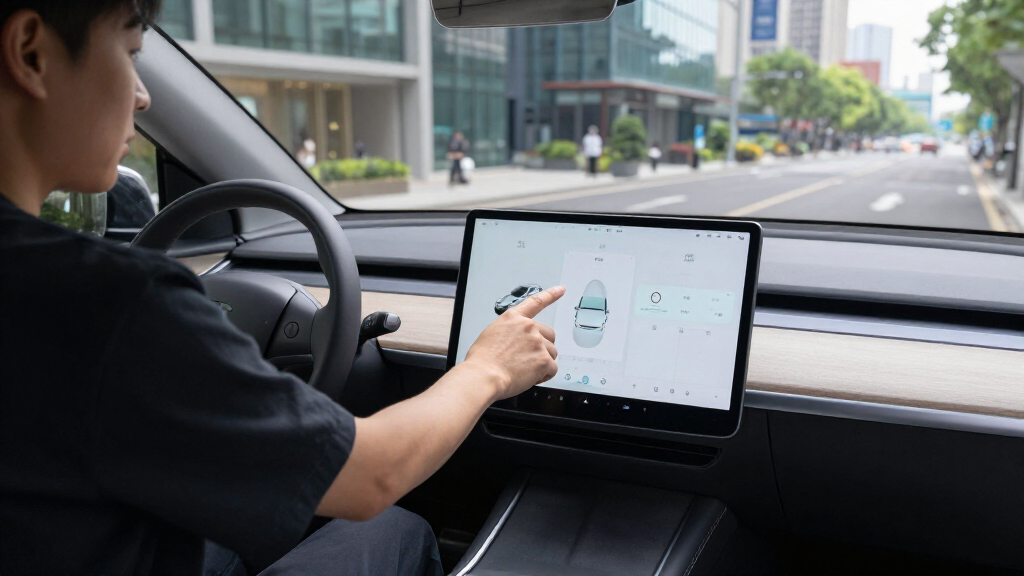
A move into autonomous driving would place ByteDance’s AI research in a field where software must interpret the physical environment and guide machines under changing conditions. That differs from deploying models mainly for content, search or digital assistants because driving systems face real-time performance and safety demands.
The report also reflects growing interest in physical AI, a broad label for models used in vehicles, robots and other machines that sense and act in the real world. For ByteDance, such work could open paths beyond consumer internet services. For vehicle companies and technology suppliers, a new participant with substantial AI resources could affect research partnerships, competition for specialists and demand for computing infrastructure.
The commercial impact cannot yet be measured. Autonomous-driving development can require lengthy testing, access to vehicle and sensor data, regulatory clearance and close ties with manufacturers. A decision to conduct research would not by itself mean that ByteDance intends to build cars or release a public driving product.
As an affiliate, we earn on qualifying purchases.
AI Research Moves Into Machines
Autonomous driving combines several areas of artificial intelligence, including visual perception, prediction and planning. Systems must identify road users and objects, anticipate movement and select actions while operating within vehicle controls and traffic rules. Recent interest in larger AI models has encouraged companies to examine whether broader, data-intensive methods can improve parts of that process.
The term physical AI is also used for robotics and embodied systems, making the boundaries of the reported ByteDance initiative hard to define from the available information. The effort could range from early research to software intended for use in production vehicles. The report does not establish where ByteDance’s discussions sit on that spectrum or whether autonomous driving is the sole focus.
As an affiliate, we earn on qualifying purchases.
Plans Lack Scope and Timeline
It is not yet clear whether ByteDance has approved the initiative or is only studying possible applications. The report does not identify a target market, development stage, investment amount, technical approach or route to commercialization. It also gives no indication that road testing has begun.
Other open questions include whether ByteDance would work independently or with automakers, whether it would develop an entire driving stack or selected AI tools, and how any system would be validated. There is also no confirmed information about regulatory engagement, safety testing or access to vehicle data. Until ByteDance provides details, claims about the scale or readiness of the project remain speculative.
As an affiliate, we earn on qualifying purchases.
Watch for Formal Project Details
The next meaningful development would be a formal statement from ByteDance, evidence of a dedicated team, announced partnerships, recruitment tied to vehicle systems or documented testing activity. Any disclosure would need to clarify the project’s scope, intended users and development stage before its competitive impact can be judged.
Industry attention will also center on whether ByteDance commits resources beyond exploratory research. Without a confirmed investment or product plan, the reported move should be treated as a possible strategic expansion, not an established autonomous-driving business. The timing of any decision or public announcement remains unknown.
Source: ByteDance Seed
As an affiliate, we earn on qualifying purchases.
Key Questions
Has ByteDance confirmed an autonomous-driving program?
No formal program has been disclosed. The available report says ByteDance is weighing a push, which indicates consideration rather than confirmation of an approved commercial project.
Is ByteDance planning to manufacture vehicles?
There is no confirmed evidence that ByteDance plans to manufacture vehicles. A driving initiative could involve AI research, software, models or partnerships, but its intended role is unknown.
What does physical AI mean in this report?
Physical AI generally refers to artificial-intelligence systems used by machines that perceive and act in the real world. In autonomous driving, that can include perception, prediction, planning and interaction with vehicle controls.
When could ByteDance release an autonomous-driving product?
No release timetable has been reported, and it is unclear whether a public product has been approved. Any estimate would be speculative until ByteDance discloses the project’s scope and stage.
Source: ByteDance Seed
Halloween Picks
halloween
As an affiliate, we earn on qualifying purchases.