By Thorsten Meyer | October 28, 2026 | ThorstenMeyerAI.com

Get business pricing on tech for your team
- Business-only prices and quantity discounts
- Tax-exempt purchasing
- Multiple users, one account, clear invoices
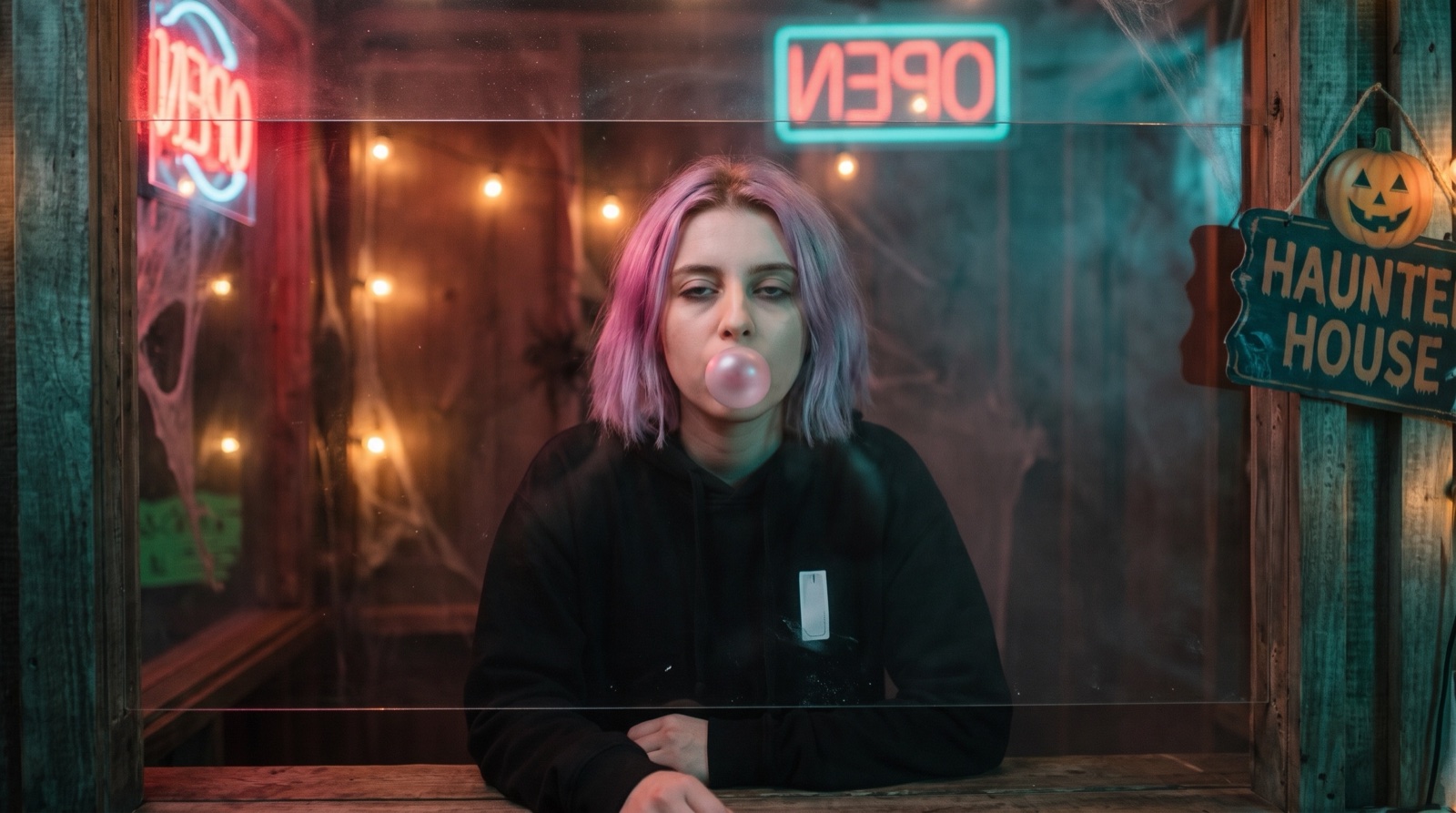
Nobody in this film exists. Not the ticket girl blowing gum bubbles, not the guest who keeps screaming the safe word, not the shift lead with the clipboard, and certainly not the ghost. All 97 seconds of Hollow House were made between early evening on October 27 and about half past one the next morning.
It also took three attempts. The first version looked great, and when I watched it I called it what it was: terribly boring and amateurish. This is how the film was made, told with every behind-the-scenes image we have: the character sheets, the start frames, the failures and a contact sheet of the final cut.
Key takeaways
- The film: Hollow House, a 1:37 horror-comedy. A real ghost joins the scare crew of an extreme haunted attraction, and the staff treat it like an HR problem.
- Three versions in one night: 20 single shots (2:15), then 66 fast cuts (2:21), then three 30-second segments from one model that had the whole cast as references (1:37). Only the third one worked.
- The pictures were never the problem. The rhythm was. Version one averaged 5.6 seconds per cut. The short that inspired us averaged under two.
- Cost: 2,220 Higgsfield credits across all three versions, roughly $95 at our plan price, plus about 2,100 ElevenLabs characters for music and sound effects.
- The decisive moves were human: calling the first cut boring, handing the whole cast to one model, and the final colour grade.
Products Worth Considering

Bose QuietComfort Wireless Bluetooth Headphones with Active Noise Cancellation, Mic, USB‑C Charging, Deep Bass, 24‑Hour Battery – White Smok

Sony WH-1000XM6 Wireless Noise-Canceling Over-Ear Headphones, Blue, Bundle

Jackery HomePower 1000 Plus v2 Portable Power Station
As an affiliate, we earn on qualifying purchases.
The idea: a haunted house with an HR department
Extreme haunted attractions are a real thing. You sign a waiver, you get a safe word, and when you say it, the scaring stops. Our premise asks one question: what if something in the house doesn’t care about the safe word?
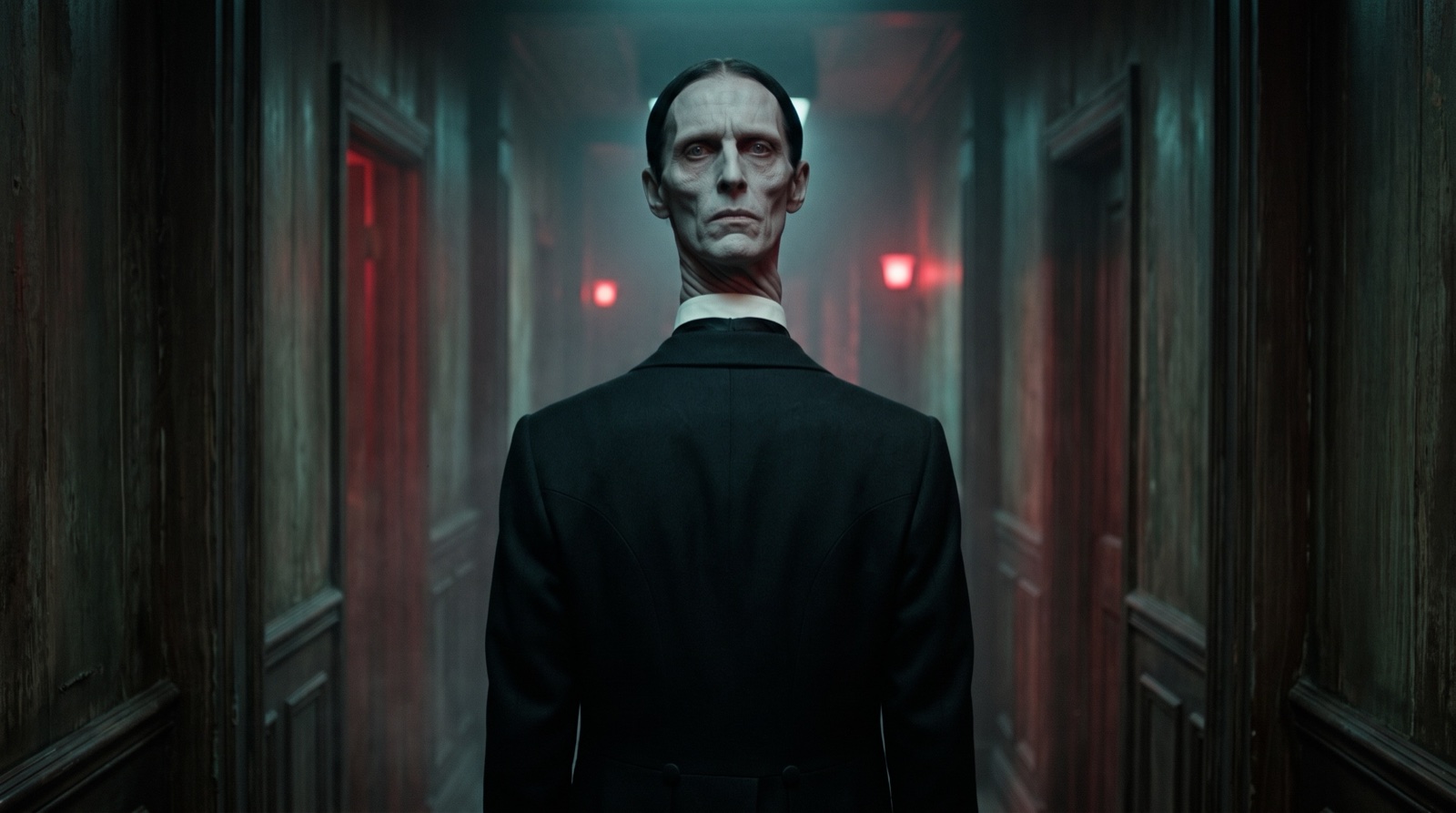
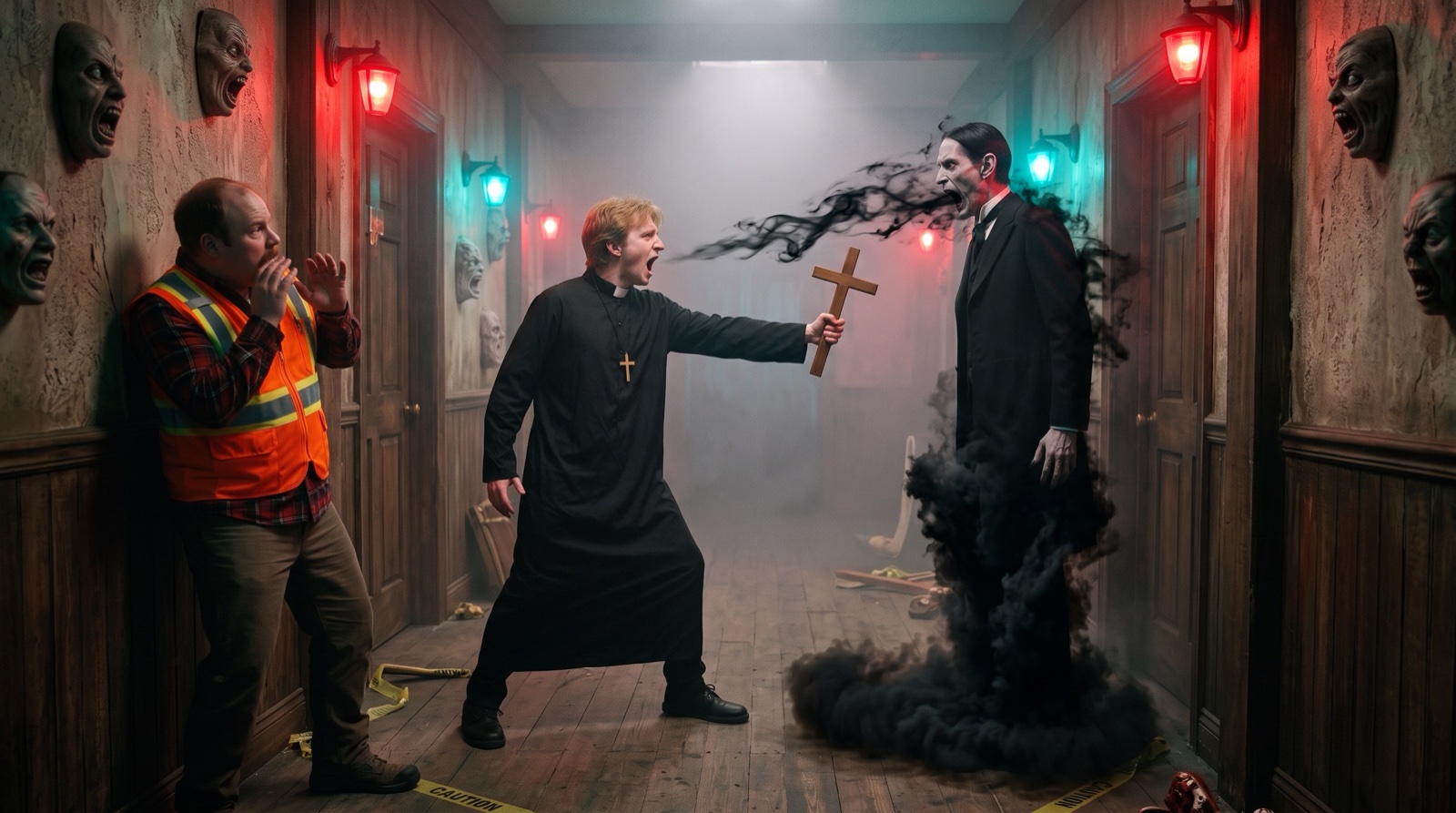
Derek says “cotton candy”. Nothing stops. The scare actors realise that the tall man holding Derek in the air is not one of them, and shift lead Ray does what shift leads do: he asks whether the new guy signed the waiver. The ghost has no shadow. The popcorn kid, who wears the priest costume because the real priest quit on Tuesday, gets drafted for an exorcism. It goes badly. The next night, the ghost works the door.
To be fair about where it came from: the structure was inspired by an AI horror-comedy short shared on X. Our script, characters and jokes are our own.
Casting people who don’t exist
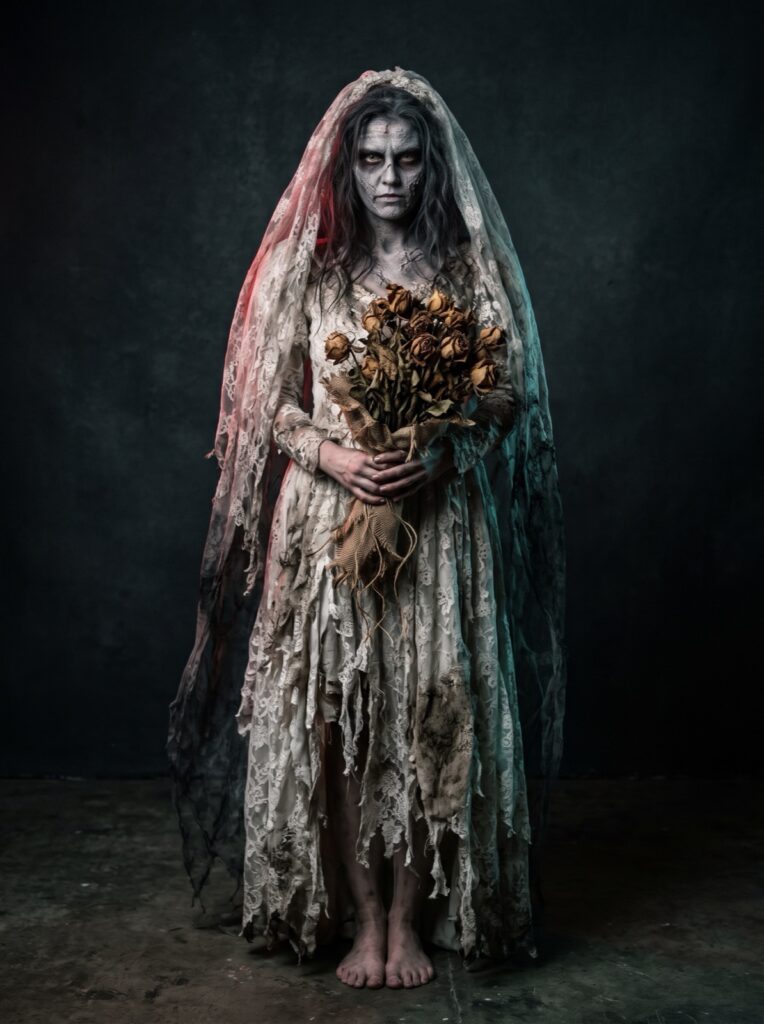
The first step had nothing to do with video. Before a single clip existed, we made one full-length reference picture per character with Nano Banana 2, Google’s image model, through the Higgsfield platform. Each one cost 2 credits at 2K resolution, and all eight were done in under two minutes.
These sheets carry everything that follows. AI video models drift. Give them a loose description and the lavender bob turns blonde between shots, the hi-vis vest changes colour, the ghost gains ten kilos. A locked picture per character is the closest thing AI film has to a casting call and a costume department in one.




Version 1: twenty pretty shots, one boring film
Version one took the classic route. We wrote a list of 20 shots, generated a start frame for each one with Nano Banana 2 (with the character sheets as references), and then animated every frame with Google’s Veo 3.1 in its fast mode. Veo generates speech and sound together with the picture, so each clip came back with the actors already talking.

The result ran 2 minutes 15 seconds, and it looked good. Faces stayed consistent, the corridor had the right red-and-teal haunted-house glow, the costumes held. Then I watched it.


So we measured instead of guessing. By our count, the short that inspired us had about 74 cuts in 2:14, a new picture every 1.8 seconds on average. Ours had 20, averaging 5.6 seconds. Every shot carried exactly one line, the camera mostly stood still, and there was no score, only a synthesized drone. Comedy lives on timing, and we had none.
Version one also showed us where the models stop cooperating:
- Capital letters get spelled out. The script had Ray shout “HEY!” in capitals. Veo had him say “Hey! H-E-Y!”, letter by letter. Shouting has to be described in words, not typed in caps.
- The 180° head turn never happened. The ghost was meant to turn his head all the way round while his body stayed still. Veo turned the whole body every time, in fast mode and in the more expensive preview mode.
- Content filters are blunt. The first attempt at Derek being lifted off the floor was blocked, apparently because dangling legs read like a hanging. The reworded “floating” version passed, but his feet barely left the ground.
- Some stunts don’t come out. The possessed popcorn kid was supposed to bend backwards into a bridge. Veo had him crawl hunched forward instead.
- Whisper is the proofreader. We ran every clip through Whisper, OpenAI’s open speech-recognition model, and compared the transcript with the script. That is how the spelled-out “H-E-Y” turned up, and why the ghost’s last line got a retake after it came back with extra, garbled syllables.
Version 2: 66 cuts and a man who never stops talking
For version two we rewrote the script for rhythm, not story. The same ten scenes became 66 cuts with three or four angles per beat: action, reaction, detail, scare. Lines now run across the cuts, people interrupt each other, and Ray became the comic engine with a nonstop tirade about the waiver, page three, initials on every page, and “that is a lawsuit”.
That took 30 new start frames and 33 new Veo clips of four to six seconds each, plus the strongest moments of version one, trimmed down to the frame. For the first time, the film also got a real score: an original carnival waltz, a tension pulse and stingers on every scare, made with ElevenLabs Music, plus sound effects.
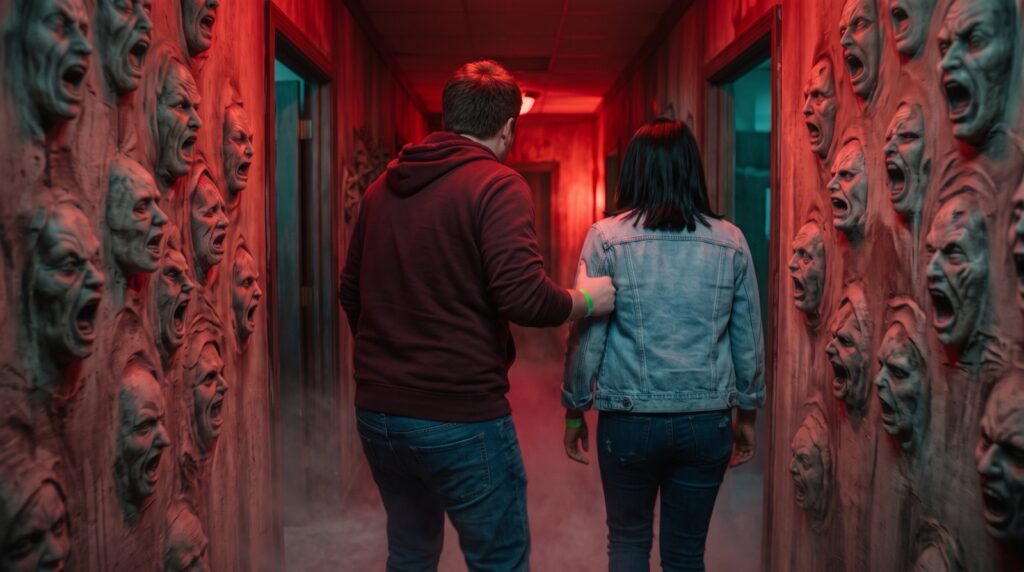


Ray’s storyline is where version two found its comedy. He is on his break with a hot dog when the call comes in, and he arrives angry about paperwork, not about ghosts.
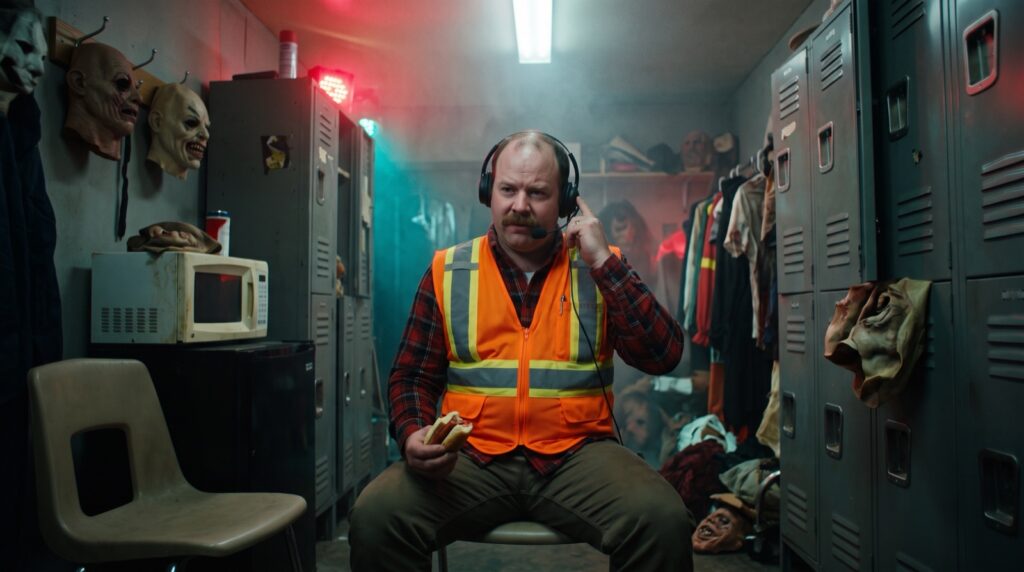


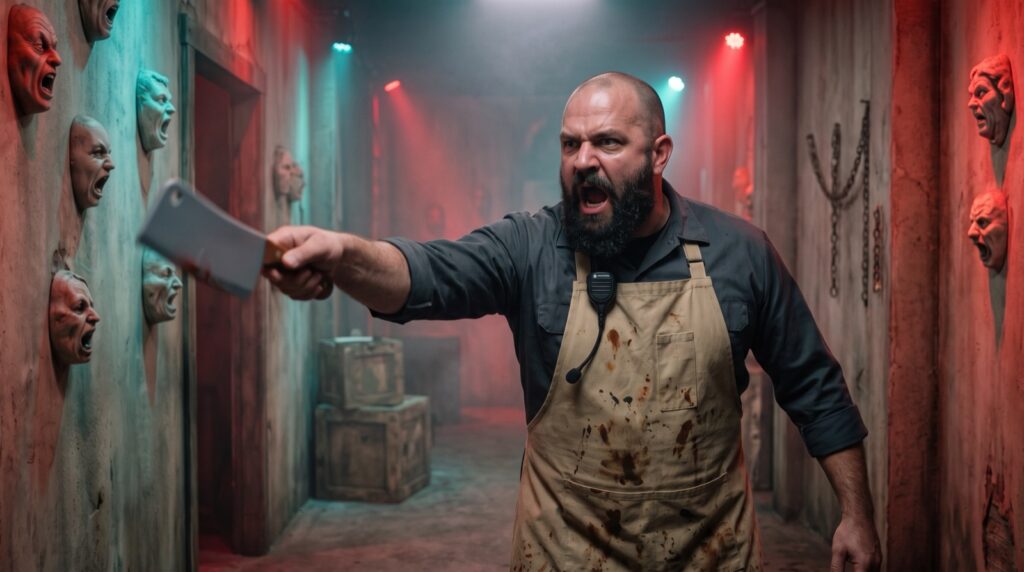


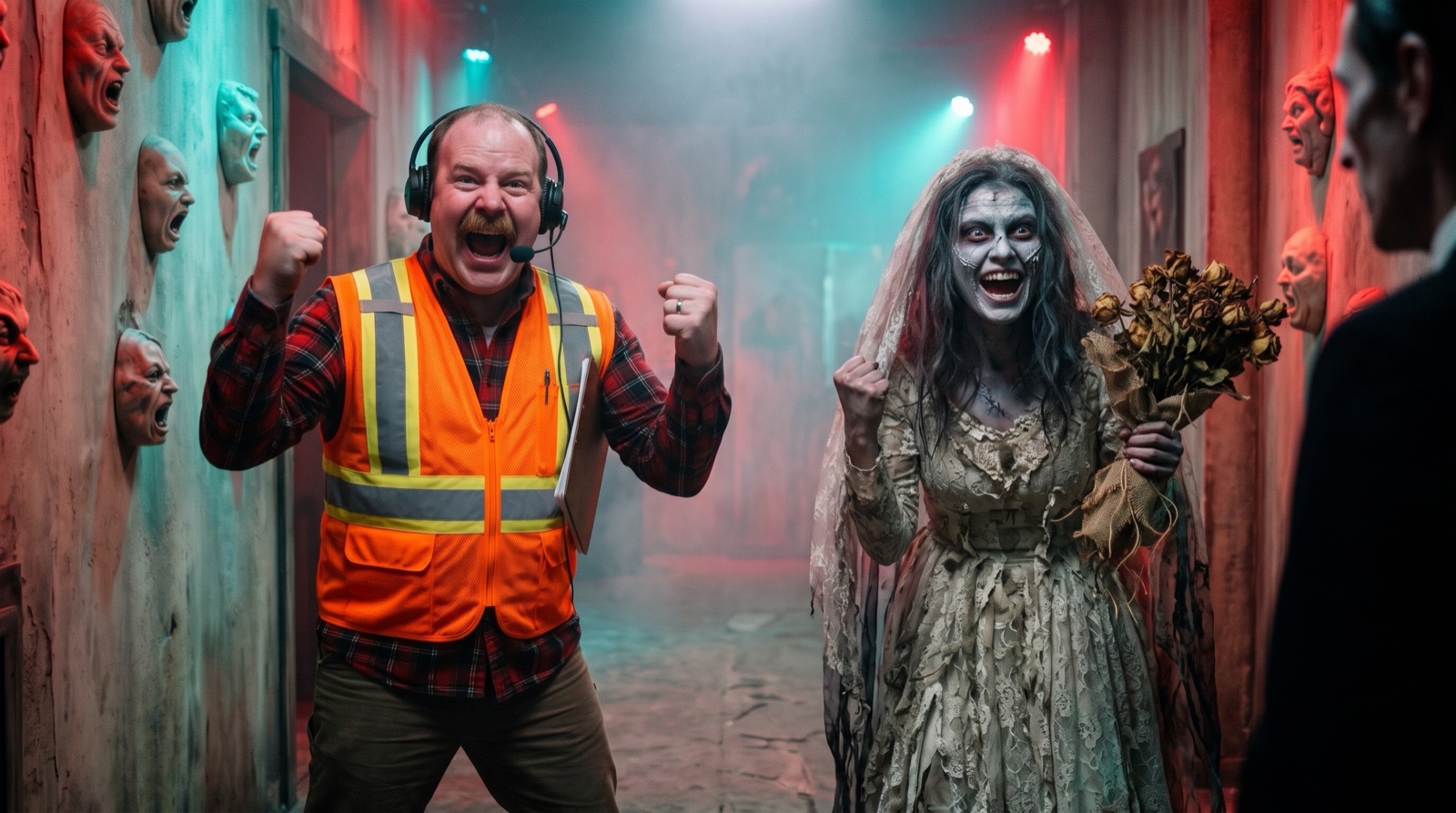
Version two was much better. It ran 2:21, moved faster and was actually funny in places. But stitching 66 separately generated clips together has a ceiling. Every clip is its own small world: the light shifts, a face changes slightly, a voice sounds different from one cut to the next. The film felt assembled, not performed.
Version 3: hand the whole cast to one model
The idea that fixed it came late that evening. Instead of asking a model for one short clip at a time, why not give Seedance 2.5, ByteDance’s video model, all the character sheets and key frames at once and ask it for a whole 30-second sequence with nine or ten shots inside? Seedance can take a stack of reference images in one request and generate up to 30 seconds in one go. The model does the cutting, the camera moves and the voices itself.
Each prompt listed its references explicitly (“image 1 = Mavis…”, up to eleven images), followed by a shot list with timecodes and every line of dialogue. Three segments covered the story: the ticket booth to the grab, Ray’s tirade to the missing shadow, and the exorcism to the ending.
The difference was immediate. The characters stayed themselves across the cuts inside a segment, the gaps between lines felt like a scene, and Derek finally floated in the air the way the script wanted.
Version three brought its own surprises:
- A whole segment came back in Mandarin. The prompt for the last segment never said which language to speak. Seedance picked Mandarin, including a Chinese line where the waiver joke should be. The retake opens with “All spoken dialogue is in English” and repeats “in English” before every line. That worked, but the Mandarin take still cost 210 credits.
- The F-word was blocked. Derek’s original “I said cotton f***ing candy!” stopped the job at the filter. In the film he now yells “cotton freaking candy”. Honestly, it’s funnier.
- The head turn still didn’t happen. Seedance also turned the whole body. A true 180° head turn is not something either model would give us.
- The edit had a sync bug. Our cutting script rounded segment lengths in a way that let picture and sound drift apart by fractions of a second. The fix was to snap every piece to whole frames, 24 per second, before joining them.
- A finished job went unnoticed. One long generation ran in the background, and its completion notice never arrived, so the work sat idle until someone checked. Lesson learned: run long jobs in the foreground and watch them.
Three segments, a title card and an end card add up to 1 minute 37 seconds. Seedance delivered 720p. I graded the result myself and upscaled it to 4K for YouTube.
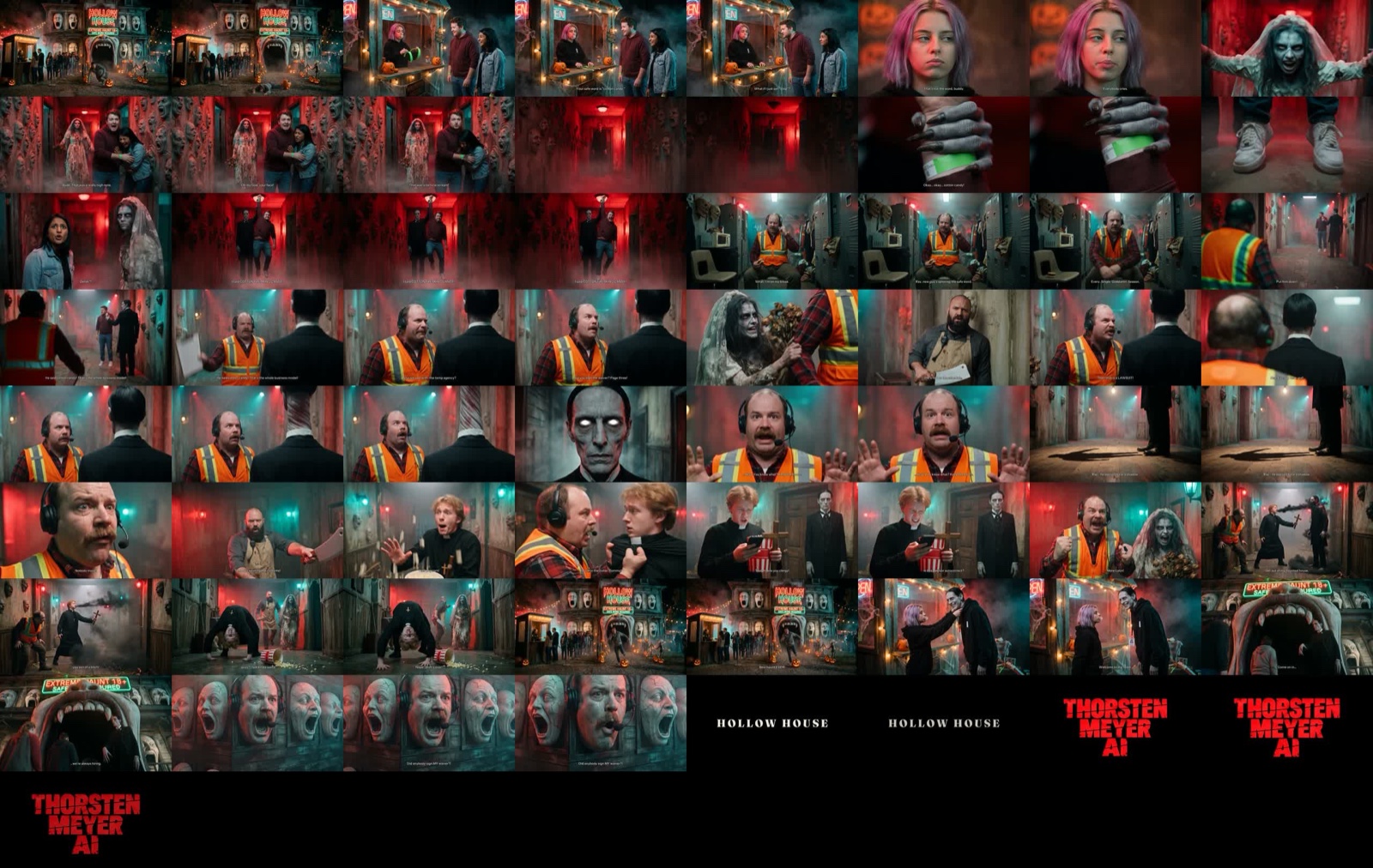
The ending survived all three versions: the ghost gets hired, and Ray ends up in the wall.


What it cost
| Version | What we did | Length | Credits |
|---|---|---|---|
| 1 | 20 single shots with Veo 3.1 fast: 32 new images, 27 video jobs (plus 1 blocked) | 2:15 | 768 |
| 2 | 66 cuts, score: 30 new images, 33 new Veo clips (plus 2 blocked) | 2:21 | 612 |
| 3 | Three 30-second Seedance 2.5 segments: 4 video jobs (plus 1 blocked) | 1:37 | 840 |
| Total | 62 images, 64 video jobs | 2,220 |
Version 1 includes a 24-credit test clip made before the shoot. At our plan price, about $129 for 3,000 credits, the 2,220 credits come to roughly $95. That is an estimate, and it counts generation only. Blocked jobs were free. Music and sound effects used about 2,100 ElevenLabs characters. The first test clip was made at 18:44, and the final cut of version three was finished at 01:34. The grade came the next morning.
What it means for creators and companies
- AI video is good at pictures and getting good at performance. It is still weak at judgment. No model told us version one was boring. Rhythm, the choice of take and the decision to start over were human calls, and they mattered more than any prompt.
- Build references before you build scenes. Consistency came from locked character sheets, not from adjectives in a prompt. The more of the cast a model can see at once, the better it holds together.
- Write everything out. Language, accent, tone of voice, what “shouting” means. If you don’t say it, the model decides, and once it decided on Mandarin.
- Budget for filters and retakes. Blocked jobs cost nothing but time. Wrong-but-delivered jobs cost full price.
- Check every line. A speech-to-text pass against the script is cheap and catches what tired eyes miss.
- The bar for a prototype has dropped. A marketing team can test a story idea overnight for under $100 in generation costs. That is not the same as a finished production: 720p output, limited control and stunts that simply won’t happen are real limits.
What it means for viewers
- Everyone you see here is synthetic. We say so on the page, and the YouTube upload carries the platform’s “altered or synthetic content” label. That label should be normal for every film like this.
- Short, cheap and convincing fiction will become common. Hollow House is a comedy, and nobody is fooled. The same tools can make things that are meant to fool you, so labels and sources matter more than they did. We wrote about what fans actually reject about AI earlier this week.
- Look at the letters. Text is still a giveaway. In the start frame for the final shot, the neon sign reads “HOLLOW H…” next to a word that does not exist.
Honest limits
- The credit figures come from our own logs. The dollar amount is an estimate from our plan price and leaves out subscriptions, human time and the grade.
- The 74 cuts in the reference short are our own count.
- “One night” is true for the generation and the edit. It is only possible because the pipeline for images, sound, transcripts and editing already existed from earlier projects.
- Some things we never got: a true 180° head turn and a backbend crawl. The film works around them.
If you want to see another honest build log, read Five Days, Sixteen Versions, Nineteen Games, where an AI coding agent and I built a retirement countdown.
Now watch the film again and see how many of the frames above you can spot.
Researched and drafted with AI assistance, including Anthropic’s Claude.