
TL;DR

Get business pricing on tech for your team
- Business-only prices and quantity discounts
- Tax-exempt purchasing
- Multiple users, one account, clear invoices
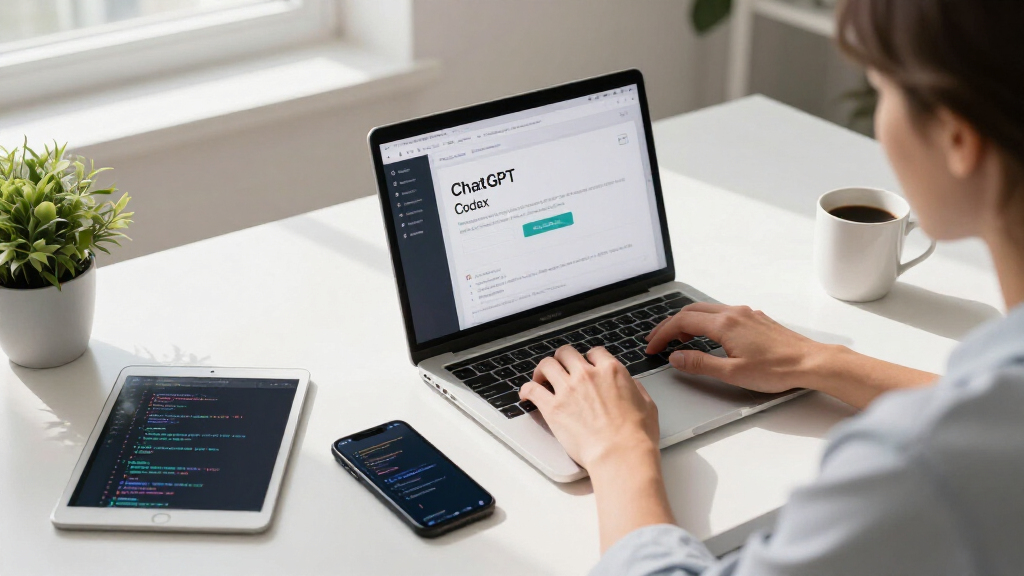
OpenAI has published new education guidance for ChatGPT Work and Codex, presenting the tools as agents for multi-step academic, teaching and technical projects. The company describes possible workflows, but has not supplied independent evidence that the tools improve learning outcomes.
OpenAI has expanded its education guidance for ChatGPT Work and Codex, describing how teachers, students and campus teams can use the agents for multi-step research, course development, analysis and software projects. The announcement matters because it moves the company’s education pitch beyond conversational assistance toward AI systems that can plan and carry out longer workflows across approved files, websites and connected tools.
ChatGPT Work is positioned as the option for projects that involve several steps, multiple information sources or a finished deliverable. OpenAI says a user can define a goal, review the proposed plan, supply files or approved institutional information, follow the agent’s progress and approve selected actions. Possible outputs include documents, spreadsheets, presentations, reports and interactive Sites.
For educators, OpenAI has described workflows such as revising a syllabus, comparing course materials with accessibility guidance, organizing evidence for accreditation and preparing source-backed planning briefs. It also says Work can maintain project trackers, summarize recurring questions from approved course channels and prepare updates through Scheduled Tasks. These are examples presented by the company, not independently measured results.
Codex remains focused on software development and technical work. OpenAI directs technology teams, advanced builders and learners working with code toward Codex for repositories, tests, debugging and implementation. The products sit alongside ordinary Chat, which remains intended for faster questions, drafting and iterative discussion. As of OpenAI’s July 9 product announcement, ChatGPT Work was powered by GPT-5.6, while product access and available tools differed by plan and platform.
New Ways To Learn And Teach With ChatGPT Work And Codex
OpenAI’s education guidance moves beyond conversational assistance toward agents that can coordinate longer academic, teaching and technical projects across approved files, websites and connected tools.
Three tools, three different jobs
Ordinary Chat supports quick dialogue. Work coordinates broader projects. Codex handles code-heavy implementation. The distinction is about the shape of the task—not simply its difficulty.
Chat
Best suited to questions, explanations, drafting and iterative discussion where the user remains closely involved in each exchange.
ChatGPT Work
Designed for goals involving multiple steps, several approved sources and a finished document, spreadsheet, presentation, report or interactive Site.
Codex
Focused on repositories, debugging, tests and implementation for technology teams, advanced builders and learners working directly with code.
Where each product fits
Product access, integrations, local-file permissions, administrative controls and usage limits can vary by plan, operating system, region and workspace policy.
| Need | Chat | ChatGPT Work | Codex |
|---|---|---|---|
| Quick explanation or discussion | ●Primary fit | ○Possible, but oversized | —Not the main purpose |
| Multi-source research project | ○Manual coordination | ●Primary fit | ○When code is central |
| Syllabus or course-material update | ○Useful for drafts | ●Plan, compare and deliver | —Limited relevance |
| Spreadsheet, report or presentation | ○Content assistance | ●Connected deliverables | ○Technical outputs |
| Repository work and debugging | ○Advice and snippets | ○Broader coordination | ●Primary fit |
| Human review required | ●Always | ●Always | ●Always |
Agent output is only the middle of the chain
Institutions must control what enters the workflow, where the agent may act and how the final result is checked. Subject expertise and accountable human review remain essential.
Capability is not the same as effectiveness
The announcement establishes proposed workflows, not educational impact. The next meaningful evidence must come from documented deployments and independent comparisons with established teaching methods.
Promising workflow layer, incomplete education case.
Work may reduce coordination effort and Codex may accelerate technical implementation. Neither claim proves stronger comprehension, retention, teaching quality or student performance.
Verify everything
Check citations, calculations, interpretations, generated code and claims in specialized fields.
Define authorship
Set clear expectations for acceptable assistance, disclosure and independently completed student work.
Control the inputs
Decide which records, course channels, files and connected systems may be shared with an agent.
Start with pilots
Use limited, familiar workflows that staff can compare with known results before expanding access.
Academic Workflows Move Beyond Chat
The change broadens the role OpenAI wants its products to play in education. Instead of generating a single answer or draft, Work can coordinate a chain of tasks, while Codex can handle the technical implementation behind software, data or research projects. That could reduce time spent assembling accreditation files, updating course materials or converting research into multiple formats.
It also places more weight on human review and subject expertise. An agent may organize evidence, write code or suggest revisions, but instructors and students still need to verify citations, calculations, interpretations and alignment with learning goals. In classrooms, the distinction between assistance and substituted student work will remain a policy and assessment issue for each institution.
AI-powered research and project management tools for educators
As an affiliate, we earn on qualifying purchases.
As an affiliate, we earn on qualifying purchases.
Work Joins OpenAI’s Education Tools
OpenAI introduced ChatGPT Work in July 2026 as an agent for longer projects spanning apps, files and the web. The updated desktop application brought Chat, Work and Codex into one interface, while keeping Codex as a separate view for software development. Cloud Work conversations can continue across supported devices; local file access depends on the desktop environment and user permission.
The education guidance builds on OpenAI’s earlier tools, including Study Mode, interactive learning modules and ChatGPT Edu. Those products concentrate more directly on guided explanation and institutional access. Work addresses a different category: producing and coordinating complex deliverables. OpenAI says connected tools may include services such as Google Drive, Microsoft 365, Slack, Teams, email, calendars, learning-management systems and project trackers when an institution permits them.
AI coding assistants for software development
As an affiliate, we earn on qualifying purchases.
As an affiliate, we earn on qualifying purchases.
Learning Gains Remain Unproven
OpenAI has not presented peer-reviewed evidence showing that these workflows improve comprehension, retention, teaching quality or student performance. The announcement describes product capabilities and proposed use cases; it does not establish educational effectiveness. It is also unclear how often the agents produce errors across specialized academic fields or how much instructor review typical projects will require.
Access is not uniform. Available integrations, local-file permissions, usage limits and administrative controls can vary by subscription, operating system, region and workspace policy. Institutions will also need to decide which data may be shared, how generated work should be disclosed and whether particular uses comply with privacy, academic-integrity and records rules.
educational workflow automation software
As an affiliate, we earn on qualifying purchases.
As an affiliate, we earn on qualifying purchases.
Campuses Set Access and Review Rules
Schools and universities adopting the tools are likely to begin with limited, familiar workflows that staff can evaluate against known results. Administrators can decide which users receive access, which connected systems are available and when the agent must pause for approval. Faculty will need to set expectations for citation checking, disclosure and student authorship.
OpenAI is expected to keep updating Work, Codex and Sites, while institutions monitor accuracy, workload savings and classroom effects. The next meaningful evidence will come from documented deployments and independent studies, particularly research comparing agent-assisted learning with established teaching methods.
AI tools for course syllabus revision
As an affiliate, we earn on qualifying purchases.
As an affiliate, we earn on qualifying purchases.
Key Questions
What is ChatGPT Work?
ChatGPT Work is an agent for longer, multi-step tasks. It can use approved sources and tools to research information, follow a plan and create connected deliverables while allowing the user to review progress and approve actions.
How is Codex different from ChatGPT Work?
Codex is aimed at coding and software engineering, including repository work, debugging and tests. Work is aimed at broader projects such as research, course updates, reports, spreadsheets and presentations.
Can students use these tools to complete assignments?
The tools can help with research, analysis, drafting and technical projects, but acceptable use depends on course and institutional rules. Students should follow disclosure requirements and verify all generated material rather than treating an agent’s output as established fact.
Can institutions control data and tool access?
OpenAI says workspace administrators can manage user access, connected tools and permitted information. The exact controls and available integrations depend on the institution’s plan, platform and configuration.
Where did OpenAI publish the announcement?
The announcement appears on OpenAI’s official website under the title “New ways to learn and teach with ChatGPT Work and Codex.”
Source: OpenAI
Source: OpenAI
Fall Picks
fall essentials
As an affiliate, we earn on qualifying purchases.