
TL;DR
A NextBigFuture headline reports that xAI’s Grok 4.6 offers near-frontier capability at 85% lower cost. The available material provides no benchmarks, comparison baseline, pricing table or release details, so the performance and cost claims cannot yet be independently evaluated.
A report says xAI’s Grok 4.6 is capable of performance near that of frontier artificial intelligence models while costing 85% less, a claim that could affect how developers compare high-end models if supporting benchmarks and pricing details bear it out. The available material does not establish whether Grok 4.6 has been publicly released or identify the models and workloads used for the comparison.
The reported development centers on two linked claims: near-frontier capability and an 85% cost reduction. No benchmark scores, test methodology, token prices, hardware costs or latency measurements were included in the available material. Without those details, the claims should be treated as reported characterizations, not independently confirmed performance findings.
The phrase near frontier capable has no single industry definition. It could refer to performance across reasoning, coding, mathematics, tool use or general knowledge, but the report does not specify which tasks were measured. The 85% lower-cost figure also lacks a named baseline, leaving open whether it compares API prices, inference expenses, total operating costs or the price of completing a particular workload.
No information was provided about Grok 4.6 availability, its context window, rate limits, deployment options or safety controls. It is also unknown whether the reported results came from an internal evaluation, a public benchmark suite or independent testing. Those omissions limit the conclusions that customers and researchers can draw from the headline claim.
xAI Grok 4.6: near frontier at 85% lower cost?
A NextBigFuture headline presents a potentially disruptive performance-to-cost claim. The supplied material, however, contains no benchmarks, named comparison baseline, pricing table, release details or independently reproducible test results.
Two bold claims, many open variables
The headline may signal an important development, but it does not supply enough detail to determine performance, price or practical value.
Performance positioning
Grok 4.6 is characterized as capable of performance near leading frontier models.
Cost positioning
A cost reduction of 85% is attributed to the model, without a named reference point.
“Near frontier”
The phrase could concern reasoning, coding, mathematics, tool use or general knowledge.
Benchmark evidence
No scores, prompts, test suite, scoring rules or inference-time settings are supplied.
Pricing baseline
No API rate, reference model, workload or distinction between price and internal cost appears.
Product details
Release date, access conditions, context window, rate limits and safety controls are unknown.
Claim versus confirmation
A useful model comparison requires shared tasks, disclosed versions, equivalent conditions and a cost measure tied to completed work.
| Evaluation item | Available material | Status | What would resolve it |
|---|---|---|---|
| Near-frontier capability | Broad characterization only | Unclear | Named models, tasks, scores and matched settings |
| 85% lower cost | Percentage without baseline | Unclear | Pricing unit, comparison model and workload |
| Public benchmark scores | No scores supplied | Missing | Reproducible results and test methodology |
| Public availability | No access details supplied | Unconfirmed | Release notice, API access or product documentation |
| Independent verification | No third-party evaluation supplied | Missing | Matched independent tests on representative tasks |
| Potential market impact | Lower costs could alter model selection | Plausible | Evidence that quality and reliability hold at scale |
High potential, low evidence density
The 85% figure is precise, but precision in a headline does not substitute for a disclosed measurement framework.
Disclosure coverage
Qualitative view of what is present in the supplied material.
Confidence spectrum
Current placement reflects the lack of supporting documentation, not a judgment that the claim is false.
The appropriate conclusion is “not yet independently evaluable,” rather than confirmed or disproven.
From headline to buying decision
Each link must hold before a lower token price can be translated into lower real-world operating cost.
Headline
Near-frontier and 85% lower cost are reported.
Documentation
Model version, access and pricing must be disclosed.
Matched tests
Prompts, tools and compute settings must align.
Task economics
Retries, tokens, latency and corrections are counted.
Decision
Value is judged on reliable completed work per dollar.
Cheap tokens do not guarantee cheap outcomes
Businesses ultimately pay for completed tasks, not isolated tokens. Quality, reliability and operational overhead can change the equation.
If the claim holds
Near-frontier capability at sharply lower cost could widen access to advanced AI and pressure competitors on price and efficiency.
- More economical high-volume coding and research workflows
- Broader deployment in support and automation
- Greater useful output per budget dollar
- Stronger competitive pressure on API providers
If quality varies
A cheaper model can cost more per successful task when it needs extra tokens, retries, human correction or fallback systems.
- Accuracy may differ across task categories
- Latency and reliability can affect production economics
- Selected benchmarks may not reflect real workloads
- Safety and deployment controls remain unspecified
No benchmark suite, pricing baseline or independent replication is included in the supplied material.
Promising headline. Unfinished evidence.
Grok 4.6 could materially change high-end model economics if it delivers comparable results at the reported price. For now, the responsible reading is that near-frontier performance and 85% lower cost remain claims awaiting documentation and independent testing.
Lower Costs Could Shift Model Choices
If verified, the combination of high-end model performance and sharply lower operating costs could make advanced AI systems more accessible to developers processing large volumes of requests. Model costs can shape whether businesses deploy AI for coding, research, customer support and automated workflows at scale.
The claim could also increase pressure on competing providers to adjust API pricing or improve the amount of useful work produced per dollar. Yet a low advertised price does not by itself establish better value. Buyers also compare accuracy, latency, reliability and the frequency with which a model requires retries or human correction.
For readers evaluating the report, the main issue is whether Grok 4.6 can deliver comparable results on representative tasks, rather than matching selected scores under narrow test conditions. A model that costs less per token may still be more expensive for a completed task if it uses more tokens or produces lower-quality answers.
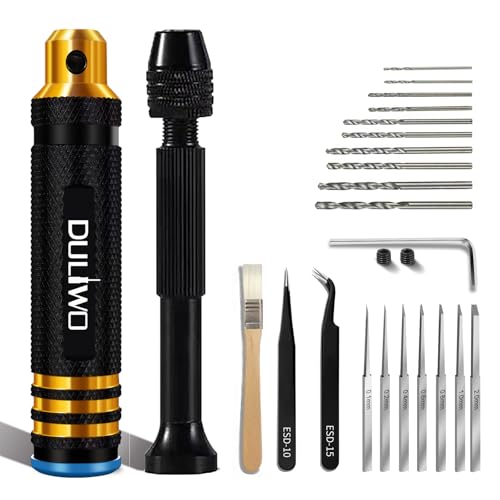
DULIWO Model Scriber Tool Kit, 7-Blade Chisel Set for Gunpla
- Complete Model Kit Tools: Includes scribe, drill, tweezers, and brush
- High-Quality Blades: Tungsten steel, wear-resistant, long-lasting sharpness
- Ergonomic Handle: Lightweight, non-slip aluminium alloy handle
As an affiliate, we earn on qualifying purchases.
As an affiliate, we earn on qualifying purchases.
AI companies commonly describe their newest systems through benchmark results, API prices and comparisons with rival models. Such comparisons can vary with prompts, scoring rules, tool access and the amount of inference-time computation allocated to each answer. A claim of near-frontier performance is most informative when the tested model version, competing systems and evaluation settings are disclosed.
Cost comparisons require similar precision. Providers may charge separately for input tokens, output tokens, cached prompts and specialized features. Internal inference cost is also different from the price charged to customers. The report does not say which measure supports the 85% figure.
high performance AI inference servers
As an affiliate, we earn on qualifying purchases.
As an affiliate, we earn on qualifying purchases.
Benchmarks and Price Baseline Missing
It is not yet clear whether Grok 4.6 is publicly available, limited to testing or described through preliminary results. The available information does not identify a release date, technical report, model card or public evaluation that would allow independent replication.
The largest unresolved question concerns the 85% lower-cost comparison. The reference model, unit of cost and workload are unspecified. There is also no evidence showing how consistently Grok 4.6 performs across reasoning, coding, factual accuracy and safety evaluations.
No direct statement or attributable quotation from an xAI representative was included in the available material. The wording should not be read as confirmation that xAI has published every technical or commercial detail associated with the reported model.

Compiler Engineering for AI Hardware: MLIR, TVM, XLA, and Custom Backends for Neural Network Accelerators (AI Infrastructure, Hardware & Compiler Engineering Series)
As an affiliate, we earn on qualifying purchases.
As an affiliate, we earn on qualifying purchases.
Independent Tests Must Verify Claims
The next meaningful milestone would be the publication of official model documentation, including API prices, availability, benchmark methodology and the exact version tested. Independent evaluators could then compare Grok 4.6 with named competitors under matched prompts and workloads.
Developers will also need real-world measurements of cost per completed task, response time, reliability and output quality. Until those results are available, the reported near-frontier and 85%-lower-cost claims remain difficult to verify or use in purchasing decisions.
As an affiliate, we earn on qualifying purchases.
Key Questions
What is the reported Grok 4.6 development?
A report characterizes xAI’s Grok 4.6 as offering near-frontier capability at a cost said to be 85% lower. Supporting technical and pricing details were not included.
Is Grok 4.6 confirmed to be publicly available?
No public availability information appears in the provided material. Its release status, access conditions and API availability remain unconfirmed.
What does 85% lower cost mean?
The comparison is not defined. It could refer to API pricing, inference expenses or cost per task, but the baseline and measured workload are not identified.
Does near-frontier mean Grok 4.6 matches leading models?
Not necessarily. Near-frontier is a broad description, and no named competitors, benchmark results or testing conditions were supplied. A reliable comparison requires matched, independently reviewed evaluations.
What evidence would confirm the report?
Confirmation would require official specifications and pricing, disclosed benchmark methods and independent tests covering representative tasks. Those materials would show whether the claimed performance-to-cost advantage holds outside selected evaluations.
Source: xAI
Source: xAI