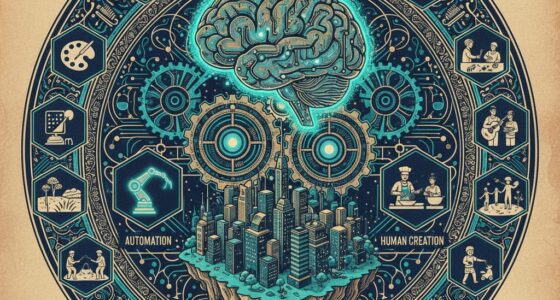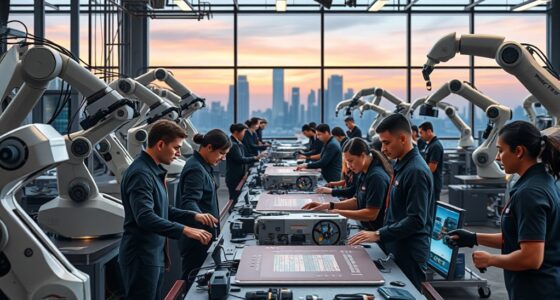

AI-driven automation is causing more companies to lay off employees across industries like tech, manufacturing, and customer support. As routine tasks get automated, job security shifts, and your value depends on unique skills and adaptability. To stay ahead, it’s essential to identify skill gaps and pursue reskilling opportunities. If you want to learn how these changes could impact your job and what you can do about it, keep exploring further.
Key Takeaways
- AI-driven automation has led to significant layoffs across tech, manufacturing, and support roles since 2025.
- Companies are replacing routine tasks with AI, reducing workforce size and increasing reliance on automated processes.
- Algorithmic layoffs predominantly affect roles in software development, customer support, and assembly lines.
- Workforce transition requires reskilling in AI oversight, data analysis, and adaptable skills to avoid obsolescence.
- Future layoffs may continue as AI integration deepens, emphasizing the need for continuous learning and strategic adaptation.

Training Courses for Solid Works (CAD skill for industrial products at level two and three) (Chinese Edition)
As an affiliate, we earn on qualifying purchases.
As an affiliate, we earn on qualifying purchases.
The Surge in Automated Workforce Reductions

The surge in automated workforce reductions has become a defining feature of the current job landscape. You’ve likely noticed companies cutting jobs due to AI and automation, especially in tech and manufacturing sectors. Over 19,000 tech workers lost their jobs in September 2025 alone, mainly because of AI-driven restructuring. Since 2000, automation has displaced 1.7 million manufacturing jobs, and nearly 14% of US workers report losing jobs to robots. Many entry-level white-collar roles face elimination within the next five years. Companies are prioritizing AI adoption, with 90% of US businesses now using AI tools. This shift isn’t just about efficiency; it’s fundamentally changing employment dynamics, leading to widespread layoffs and a growing reliance on automation to streamline operations.
data analysis software tools
As an affiliate, we earn on qualifying purchases.
As an affiliate, we earn on qualifying purchases.
How AI Is Transforming Job Security Dynamics

As AI becomes more integrated into workplaces, job security shifts from being tied to productivity or profitability to the ability to remain irreplaceable by automation. You now need unique skills, emotional intelligence, and adaptability to stay valuable. The days when hard work alone guaranteed job stability are fading. Instead, your relevance depends on how well you can collaborate with AI and innovate beyond routine tasks. The fear of sudden layoffs grows as companies prioritize AI-driven efficiency. Staying informed about resources and tools available for skill development is essential to adapt effectively.
reskilling books for AI automation
As an affiliate, we earn on qualifying purchases.
As an affiliate, we earn on qualifying purchases.
Sectors Most Affected by Algorithmic Layoffs

Certain sectors face more immediate and widespread disruptions from algorithmic layoffs driven by AI. The tech industry leads the way, with thousands of workers losing their jobs as companies automate roles like software development, support, and project management. IT services firms in India, such as TCS, Infosys, and Wipro, have reduced large numbers of roles due to automation efforts. Consulting giants like Accenture are restructuring around AI, resulting in massive layoffs. Manufacturing remains heavily impacted, with robots replacing assembly line workers, especially in automotive and electronics sectors. Customer support and clerical jobs are also highly vulnerable, as AI chatbots and virtual assistants handle routine tasks. These industries face rapid change, forcing workers to adapt quickly or face job insecurity. As the adoption of home theatre projectors and other advanced technologies increases, the demand for specialized skills in technology maintenance and calibration also grows, highlighting the need for ongoing workforce adaptation.
AI oversight training programs
As an affiliate, we earn on qualifying purchases.
As an affiliate, we earn on qualifying purchases.
Navigating Reskilling and Workforce Transition Challenges
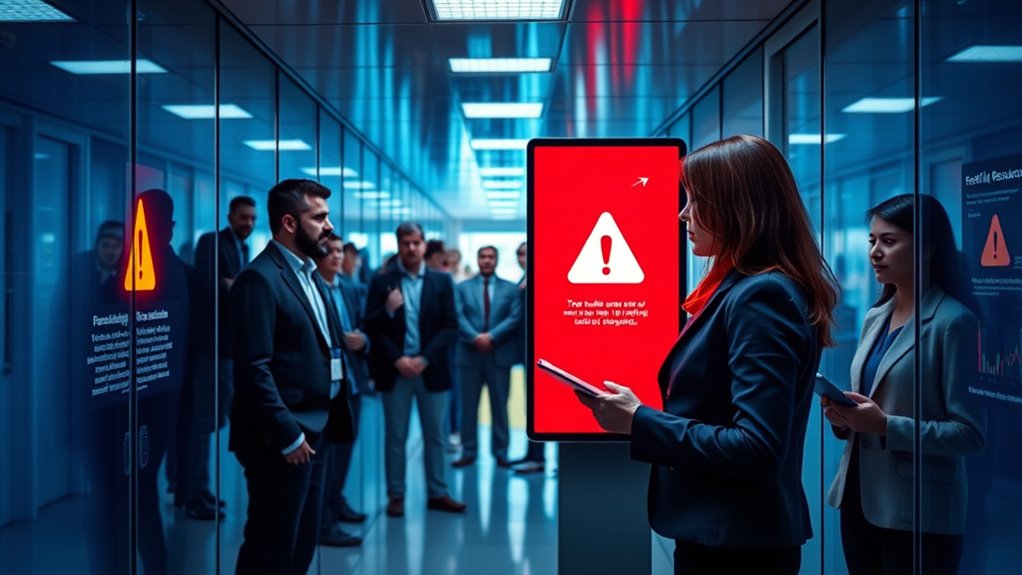
Navigating the challenges of reskilling and workforce transition requires immediate and strategic action. You need to identify your skills gaps quickly and seek targeted training to stay relevant. Without proactive steps, you risk becoming obsolete in an AI-driven job market. Recognizing signs of skill deterioration, such as outdated knowledge or inability to adapt to new tools, can help you assess your readiness and plan accordingly.
Future Outlook: AI, Employment, and Economic Implications

The future of work with AI will profoundly reshape employment and economic stability worldwide. You’ll see widespread job displacement, especially in routine roles like clerical work and customer support, while new opportunities emerge in healthcare, education, and AI maintenance. Companies are restructuring to leverage AI’s productivity gains, but this deepens inequality if reskilling isn’t prioritized. You may need to adapt by acquiring skills in AI oversight, data analysis, or human-AI collaboration. While AI-driven automation could displace millions, it also promises economic growth and innovation. However, the overall job landscape will become more dynamic and uncertain, with some workers facing significant shifts. Preparing now for these changes is essential to navigate a future where AI’s influence on employment and the economy continues to expand rapidly. Fostering a mindset of creative practice can help workers develop resilience and adapt to these rapid changes.
Frequently Asked Questions
How Do Companies Decide Which Employees to Replace With AI?
You might find that companies decide which employees to replace with AI based on task repetitiveness, efficiency, and cost savings. They often analyze roles with routine, predictable duties, like data entry or customer support. If AI can perform these tasks faster and cheaper, they’re more likely to replace those workers. Additionally, employees with specialized or narrow skills may be targeted, especially if their roles are easily automated or duplicated by AI systems.
What Legal Rights Do Workers Have During Algorithmic Layoffs?
You have legal rights during algorithmic layoffs, including notice and protection against discrimination. Remarkably, 40% of companies automate rather than augment work, which can impact fairness. You’re entitled to clear explanations, and if you believe the process was unfair or discriminatory, you can challenge it legally. Stay informed about your rights, seek legal advice if needed, and advocate for transparency and fair treatment during AI-driven workforce changes.
How Does Ai-Driven Firing Impact Employee Morale and Workplace Culture?
AI-driven firing can seriously damage your employee morale and workplace culture. You might feel betrayed or anxious about job security, leading to decreased trust and engagement. This can create a tense environment where collaboration suffers, and innovation stalls. As employees, you may become less committed, fearing automation will replace your role. To maintain a positive culture, companies need transparency, support, and efforts to rebuild trust after such layoffs.
Are There Ethical Concerns Surrounding Ai-Based Workforce Reduction?
Yes, there are ethical concerns with AI-based workforce reduction. You might worry about transparency, fairness, and accountability, especially when decisions are automated without human oversight. It can feel impersonal, increasing anxiety and eroding trust. You may also question whether companies are prioritizing profit over employees’ well-being. Ensuring ethical AI use requires clear communication, fair algorithms, and reskilling support, so workers aren’t left vulnerable or unfairly treated.
What Strategies Can Employees Use to Protect Their Jobs From Automation?
You should focus on developing skills that are hard to automate, like critical thinking, creativity, and emotional intelligence. Stay updated on industry trends, and consider reskilling in AI maintenance or oversight roles. Building a strong network can open new opportunities. Keep learning and adapt quickly; studies show flexible workers are less vulnerable. By staying irreplaceable, you improve your job security amidst automation.
Conclusion
As AI continues to reshape the job landscape, remember that over 60% of companies are already using automation for layoffs. While these changes can be unsettling, embracing reskilling can help you stay ahead. By understanding sector shifts and adapting your skills, you can navigate this new era confidently. The key is staying proactive—your ability to adapt will determine your future in an increasingly automated world.