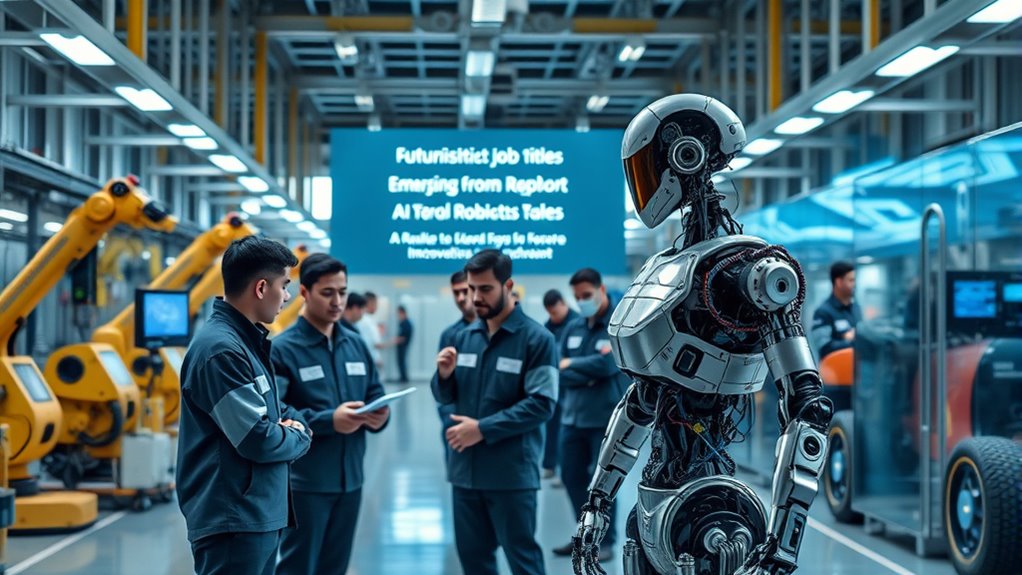

Automation is creating exciting new job roles across various industries, like AI trainers, ethics officers, and robotics technicians. These roles require technical skills, continuous learning, and certifications, opening high-demand pathways in healthcare, manufacturing, and energy sectors. Both blue- and white-collar workers now find opportunities to grow and adapt. As industries evolve, understanding these emerging roles and skills will help you stay ahead—more insights await to empower your career journey.
Key Takeaways
- New roles like prompt engineers, AI ethics officers, and human-AI collaboration specialists are emerging across industries.
- AI trainers and robotics technicians are vital for improving models and maintaining robotic systems in various sectors.
- Industry-specific jobs in healthcare, manufacturing, and energy are expanding to manage and optimize AI-driven processes.
- Continuous upskilling and certifications enable workers to adapt to automation-driven job market changes.
- Ethical and collaborative roles ensure responsible AI deployment, fostering trust and balancing innovation with societal values.

AI Security Leader Certification Study Guide: Gain practical skills to manage AI security programs while preparing for the AISecLEAD certification exam … Certification Series from AISEC Training)
As an affiliate, we earn on qualifying purchases.
As an affiliate, we earn on qualifying purchases.
Emerging Roles in AI and Robotics Sectors

As AI and robotics technologies advance, new roles are emerging that focus on designing, managing, and optimizing these systems. You might become a prompt engineer, refining human-AI interactions to boost efficiency and output. An AI ethics officer ensures responsible deployment, addressing societal and moral concerns. As a human-AI collaboration specialist, you’ll design workflows that integrate human skills with AI capabilities, maximizing productivity. AI trainers teach models specific tasks, improving accuracy and performance. Robotics technicians and engineers build, program, and maintain robots used in manufacturing, healthcare, and service sectors. These roles demand a blend of technical expertise and problem-solving skills. They also open pathways into high-demand fields, emphasizing the importance of understanding AI and robotics to stay relevant in evolving job markets. Developing specialized knowledge in AI tools and systems will be crucial for professionals aiming to excel in this rapidly changing landscape.

Syba SY-ACC65053 100 Piece Computer Technician Tool Kit for Repairing, Wiring, Cleaning, and Testing
All tools are fully demagnetized TO protect computer hard drive or magnetic media from damage
As an affiliate, we earn on qualifying purchases.
As an affiliate, we earn on qualifying purchases.
Skills and Education Transformations for New Jobs

As automation reshapes the job market, you’ll need to update your skills and education to stay competitive. Evolving technical requirements, like machine learning and data analysis, are becoming essential, and certifications can fast-track your readiness. To thrive, focus on continuous learning and adapting your expertise to meet the changing demands of new roles. Emphasizing technical proficiency will be crucial as more roles require advanced understanding of emerging technologies.
Evolving Skill Requirements
The rapid rise of AI technology is transforming the skills and education landscape for new jobs, demanding that you quickly adapt to changing requirements. To stay competitive, you need to develop technical skills like machine learning, NLP, robotics, and data analysis. Certifications such as IBM’s AI Professional Certificates or Google’s Data Analytics can help you acquire relevant expertise efficiently. Besides technical knowledge, soft skills like interpersonal communication and human-centered problem-solving are increasingly valuable. As AI integration deepens across industries, your ability to learn continuously and upgrade your skills becomes essential. Education must shift from traditional degrees to ongoing, flexible learning paths. Leveraging Natural Language Processing (NLP) capabilities can give you a competitive edge in understanding and utilizing AI-driven tools. Embracing this evolution guarantees you remain relevant, adaptable, and positioned to capitalize on emerging opportunities in an AI-driven job market.
Upskilling and Certification
Upskilling and certification have become essential tools for staying relevant in an AI-driven job market. As technology evolves rapidly, you need continuous learning to keep pace with new roles and responsibilities. Certifications like IBM’s AI Professional Certificates or Google’s Data Analytics programs help you gain practical skills quickly and demonstrate your expertise to employers. Upskilling isn’t just about technical knowledge; it also involves developing human-centric skills like communication and problem-solving, which AI can’t replace. Investing in education now guarantees you remain competitive and adaptable. By actively pursuing relevant certifications and expanding your skill set, you position yourself for new job opportunities, higher wages, and long-term job security amidst ongoing automation. Staying proactive with learning is your best strategy for thriving in this changing landscape. Additionally, understanding safety, transfer switch, and fuel‑storage checklists from reliable sources ensures you are prepared for the technical aspects of implementing new technologies safely.
Educational Shifts in AI
Rapid advancements in AI are transforming the skills and educational pathways needed for emerging job roles. You’ll find that acquiring technical expertise like machine learning, NLP, and robotics is now essential. Traditional degrees still matter, but their dominance is decreasing; more employers value certifications and hands-on experience. You’re encouraged to pursue programs such as IBM’s AI Professional Certificates or Google’s Data Analytics courses to gain practical skills quickly. Focus on developing AI literacy alongside human-centric skills like communication and problem-solving. Education systems are shifting toward modular, flexible learning to keep pace with rapid change. Here’s a quick overview:
| Skill Area | Educational Approach |
|---|---|
| Technical Skills | Certifications, bootcamps, degrees |
| AI Literacy | Workshops, online courses |
| Human Skills | Soft skills training |
| Industry-Specific Knowledge | Specialized training programs |
| Continuous Learning | Lifelong learning initiatives |
Employers are increasingly recognizing the value of adaptive learning methods to keep their workforce up-to-date with technological advancements.
AI ethics officer training courses
As an affiliate, we earn on qualifying purchases.
As an affiliate, we earn on qualifying purchases.
Blue-Collar and White-Collar Opportunities
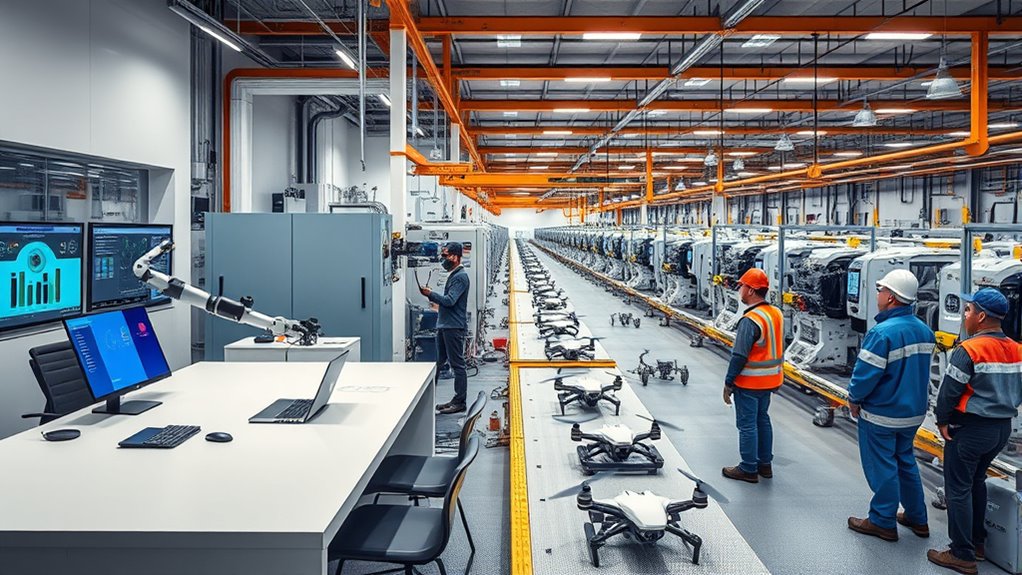
As AI continues to reshape industries, both blue-collar and white-collar workers find new opportunities emerging alongside automation. In manufacturing, you might monitor AI systems, interpret data, or maintain robots, enhancing efficiency without replacing your role. Healthcare professionals now work alongside AI tools to diagnose and treat patients more accurately, expanding their responsibilities. In offices, white-collar workers can take on roles like AI trainers or collaboration specialists, designing workflows that maximize human-AI synergy. Skilled tradespeople are learning to operate and service robotic equipment, creating a demand for technical expertise. These opportunities require adapting your skills, embracing continuous learning, and developing technical competence. The integration of specialized equipment in various sectors highlights how technical skills are increasingly crucial. Rather than displacement, AI offers a chance to elevate your role, making your work more strategic, efficient, and impactful.

Amplified: The Operator's Playbook for Scaling Human Potential in an AI World
As an affiliate, we earn on qualifying purchases.
As an affiliate, we earn on qualifying purchases.
Industry-Specific Job Innovations
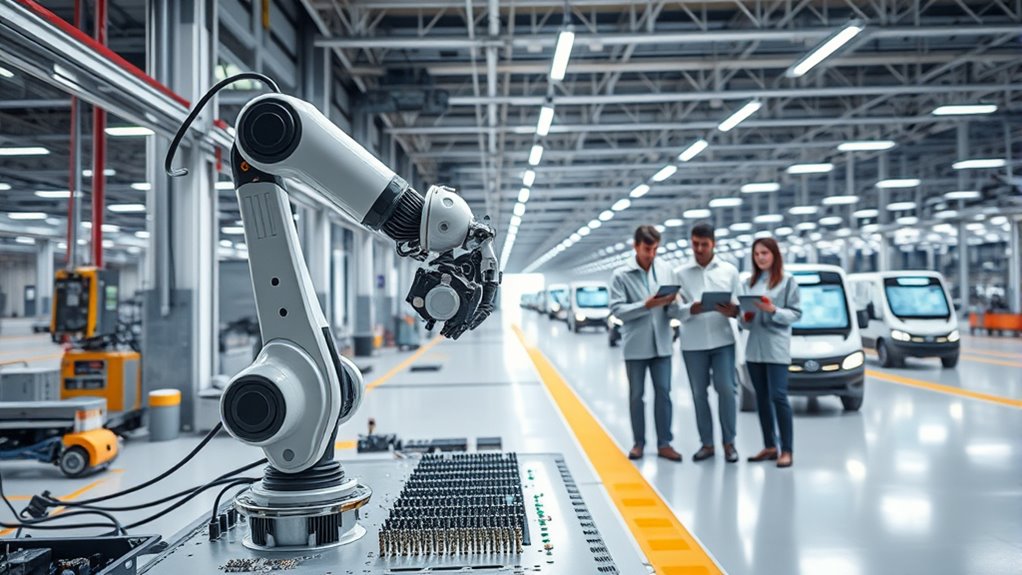
Industry-specific job innovations driven by AI are transforming traditional roles across sectors, creating new opportunities for professionals to specialize and adapt. In healthcare, you’ll find roles like AI-literate clinicians who combine medical expertise with AI system management. Manufacturing now demands workers who monitor AI-driven processes and interpret data for optimizing production. Energy sectors are evolving with positions focused on implementing AI solutions for efficiency and innovation. These changes enhance existing jobs and introduce specialized roles that require unique skills. Embracing these developments can help workers stay competitive in a rapidly changing job market as highlighted in the concept of “Vetted”.
Demographic and Geographic Shifts in Employment
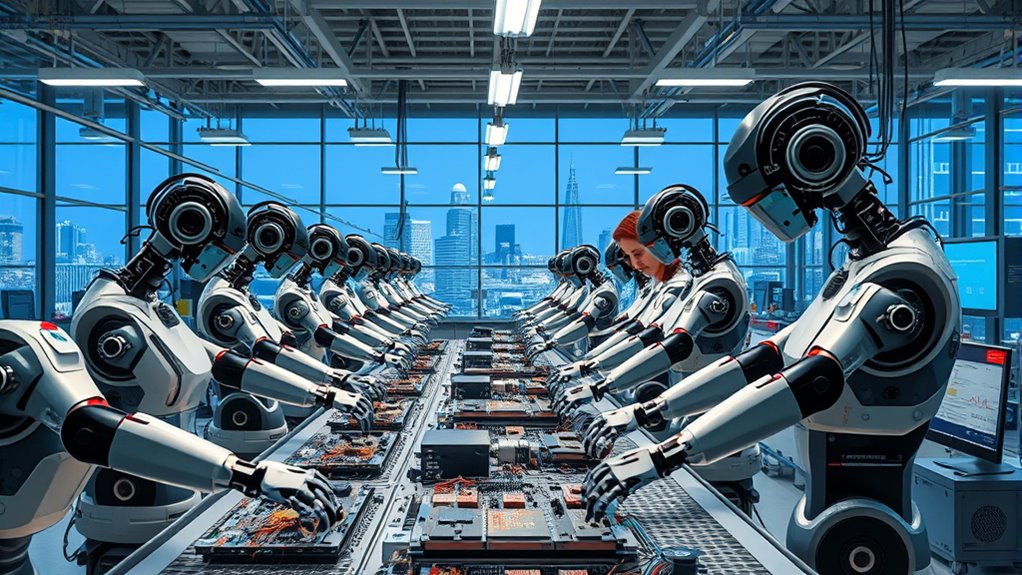
You’ll notice that demographic shifts are changing who’s most impacted by automation, with more women in roles exposed to AI and younger workers worrying about job security. Regional differences also matter, as advanced economies face higher AI exposure than low-income countries. Addressing these disparities is vital to guarantee equitable workforce adaptation across all communities. Understanding the sound design techniques used in trailer music can help industries adapt their creative processes to new technological realities.
Gender Distribution Changes
Have you noticed how gender dynamics in employment are shifting amid AI-driven automation? More women, totaling 58.87 million, now hold positions vulnerable to automation than men, at 48.62 million, highlighting emerging equity challenges. This shift prompts a reevaluation of workforce diversity and inclusion efforts. Key points include:
- Women dominate roles exposed to AI, raising concerns about widening gender gaps.
- Increased participation of women in STEM-focused AI training programs aims to close this divide.
- Geographic disparities influence gender distribution, with advanced economies seeing higher female representation in AI-related roles.
- Incorporating interior design principles into workplace environments can foster inclusivity and support diverse workforces.
These changes underscore the importance of targeted policies to ensure equitable access to AI education and job opportunities, fostering a balanced workforce amidst rapid technological transformation.
Age-Related Concerns Rise
As AI automation accelerates, concerns about its impact on different age groups are growing, especially among younger workers. You might worry that rapid technological changes threaten your job stability or limit future opportunities. Younger employees, particularly those aged 18-24, are 129% more likely to fear obsolescence due to AI than older workers. This age group faces unique challenges in acquiring new skills quickly enough to stay competitive. Conversely, older workers may experience fewer immediate threats but face hurdles in retraining or adapting to new technologies. Demographic shifts also influence employment patterns, with younger populations often more willing to embrace emerging roles, while older workers may struggle with the pace of change. Addressing these age-related concerns is vital for ensuring inclusive workforce resilience amid AI-driven transformation. Recognizing the importance of continuous learning and up-to-date knowledge can help bridge the gap for all age groups.
Regional Employment Disparities
Regional employment disparities are widening as AI adoption accelerates across different parts of the world. In advanced economies, roughly 60% of jobs face AI exposure, creating opportunities but also deepening inequality. Meanwhile, low-income countries see only 26% of jobs at risk, limiting growth potential and widening economic gaps. You’ll notice that:
- High-income regions rapidly develop AI-related roles, boosting productivity and wages.
- Developing areas lag due to limited access to AI education and infrastructure.
- Disparities grow as skilled workers migrate toward AI hubs, leaving local economies behind.
To bridge this divide, organizations and governments must prioritize equitable access to AI training and resources. Failing to do so risks leaving vulnerable regions further behind as automation reshapes the global labor landscape.
Ethical and Collaborative Positions in AI

Ethical and collaborative positions in AI are becoming essential as organizations seek to guarantee responsible development and deployment of AI systems. You may find yourself working as an AI ethics officer, ensuring algorithms align with fairness, transparency, and privacy standards. These roles involve evaluating AI impacts, developing guidelines, and mitigating biases. Collaboration specialists facilitate human-AI partnerships, designing workflows that maximize efficiency while maintaining ethical standards. Your work helps prevent unintended consequences and builds trust among users and stakeholders. As AI integrates into critical sectors like healthcare and finance, your role becomes crucial in balancing innovation with societal values. You’ll stay at the forefront of policy, technical, and social considerations, shaping AI systems that serve everyone ethically and collaboratively.
The Future Landscape of Work and Workforce Development
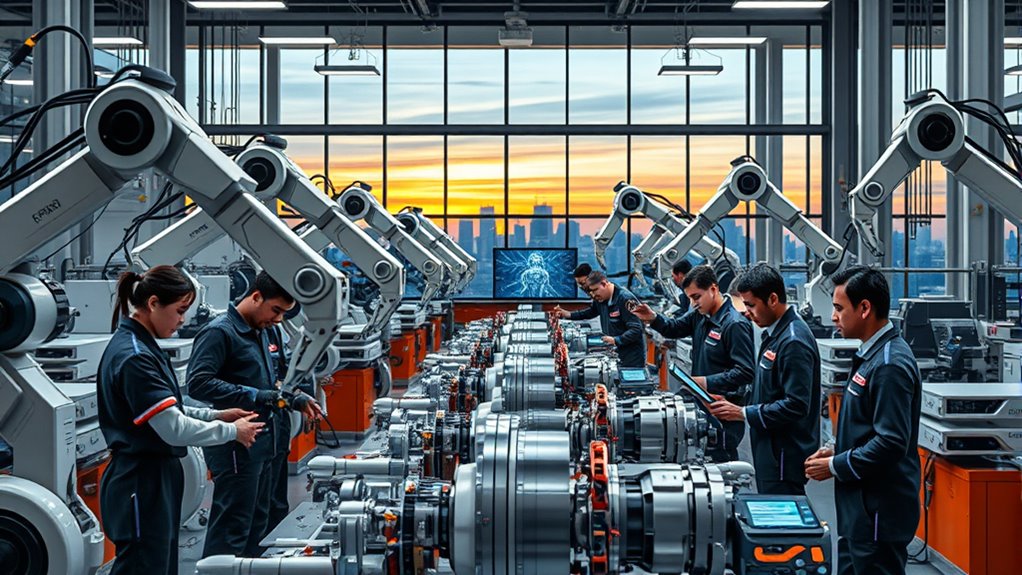
The future landscape of work will be shaped by rapid advancements in AI and automation, which are redefining how jobs are created, performed, and evolved. You’ll need to adapt quickly to these changes, as new roles emerge across industries. AI-driven job creation spans both blue- and white-collar sectors, offering opportunities for those with technical skills. To thrive, you should focus on developing expertise in areas like machine learning, data analysis, and robotics. Additionally, organizations are emphasizing lifelong learning, requiring ongoing upskilling and reskilling efforts. The shift will also demand increased emphasis on workforce equity, ensuring access to training for all demographics. As automation accelerates, your ability to embrace new roles—such as AI trainers or human-AI collaboration specialists—will determine your future success in this evolving environment.
- Emphasis on continuous skill development
- Growing importance of interdisciplinary expertise
- Focus on equitable access to AI education
Frequently Asked Questions
How Quickly Are New AI Jobs Expected to Grow Worldwide?
You can expect new AI jobs worldwide to grow rapidly, with projections showing about 170 million new roles by 2030. This growth means thousands of positions, like prompt engineers and AI ethics officers, will emerge annually. As AI continues to evolve, you should prepare for a swift expansion in opportunities across industries, requiring you to upskill and adapt quickly to stay relevant and competitive in the job market.
What Are the Most In-Demand Technical Skills for Ai-Related Jobs?
You should focus on developing skills in machine learning, deep learning, and natural language processing, as these are highly sought after in AI jobs. Additionally, gaining expertise in robotics, computer vision, and data analysis will boost your employability. Cloud computing skills are also vital, enabling you to work with AI infrastructure. Combining technical proficiency with certification programs like IBM’s AI Certificates can give you a competitive edge in this rapidly evolving field.
How Does AI Impact Employment Opportunities for Older Workers?
You’ll find more employment opportunities for older workers as AI creates roles that value experience and domain knowledge. Many jobs now emphasize skills like AI literacy, data analysis, and human-centric tasks, which older workers often excel at. Plus, continuous learning and upskilling are vital, helping you stay relevant in this evolving job market. By embracing new technologies, you can leverage your expertise and find rewarding roles alongside AI advancements.
What Measures Are Being Taken to Ensure Equitable AI Job Access?
You can promote equitable AI job access by supporting initiatives that provide widespread AI education and training, especially for underserved communities. Encourage organizations to invest in upskilling programs and certifications, making AI skills accessible regardless of background. Advocate for policies that address disparities, including funding for diverse talent pipelines. Staying proactive about learning AI-related skills yourself can also help make sure you’re prepared for new opportunities and avoid being left behind.
Which Industries Are Seeing the Fastest Adoption of Ai-Driven Roles?
You’ll notice the healthcare industry adopting AI-driven roles fastest, like a hospital integrating AI to assist diagnostics. This rapid adoption enhances patient care and streamlines workflows. Manufacturing also sees swift AI integration, with robots and data analysis transforming production lines. These industries capitalize on AI’s ability to improve efficiency and accuracy, creating new roles and opportunities for workers, and marking them as leaders in embracing AI-driven transformation.
Conclusion
As you navigate the evolving landscape of AI and robotics, think of the workforce as a vast garden in constant bloom. New roles are the vibrant flowers, emerging from the soil of innovation. By cultivating your skills and staying adaptable, you can help this garden flourish, ensuring your place among the thriving blossoms. Embrace change as the sunlight that nurtures growth, and you’ll find endless opportunities waiting to be harvested in this dynamic future.