To build an AI-ready workforce in 2025, focus on fostering continuous learning through embedded, workflow-based training that integrates AI tools directly into daily tasks. Personalize development with AI-driven assessments that adapt to individual gaps and provide real-time feedback. Guarantee your training emphasizes ethics and strategic alignment, preparing staff for future job shifts and emerging AI opportunities. Keep improving your approach, and you’ll discover effective strategies to stay ahead in this rapidly evolving landscape.
Key Takeaways
- Implement continuous, embedded AI training using microlearning, real-time prompts, and on-the-job coaching to foster ongoing skills development.
- Personalize learning pathways with AI analysis to address individual gaps and adapt content for maximum engagement.
- Integrate AI tools seamlessly into workflows to promote real-time learning and immediate application of new skills.
- Develop ethical training policies emphasizing transparency, fairness, and bias mitigation to ensure responsible AI adoption.
- Focus on agility and lifelong learning to prepare employees for evolving AI-driven roles and high-growth sectors.

AI Engineering: Building Applications with Foundation Models
As an affiliate, we earn on qualifying purchases.
As an affiliate, we earn on qualifying purchases.
Understanding the Growing Demand for AI Skills in the Workforce

The demand for AI skills is rapidly expanding across various industries, driven by the widespread adoption of AI technologies in the workplace. You’ll notice employers increasingly seek professionals who can develop, manage, and optimize AI tools, with job postings requiring AI expertise rising crucially. This surge isn’t limited to tech roles; over half of AI-related job openings now appear outside traditional IT sectors, especially in STEM fields. Workers with AI skills command a 28% salary premium, reflecting the market’s value. Globally, organizations support AI training more than ever, recognizing that continuous skill development is essential for staying competitive. As AI transforms work processes, the urgency for upskilling, reskilling, and strategic alignment becomes clear—making AI literacy a key component of future workforce success. Additionally, the integration of AI in mobile devices, such as the Snapdragon 8 Gen 3, highlights the expanding role of on-device AI capabilities in everyday technology.
microlearning platform for employee training
As an affiliate, we earn on qualifying purchases.
As an affiliate, we earn on qualifying purchases.
Integrating Continuous Learning and Workflow-Embedded Training Programs

As AI continues to reshape work environments, organizations are shifting from one-time training events to continuous learning embedded directly into daily workflows. You integrate real-time skill development by embedding AI tools and resources into routine tasks, enabling employees to learn by doing. This could mean using AI-driven prompts, on-the-job coaching, or microlearning modules accessible during work hours. Workflow-embedded programs guarantee employees acquire new skills without disrupting productivity, fostering agility and adaptability. You also leverage data analytics to monitor progress and identify gaps promptly. By embedding learning into daily operations, you create a culture where skill growth is ongoing, immediate, and relevant. Additionally, implementing vertical storage solutions can help organize training materials and resources efficiently, supporting a seamless learning environment. This approach keeps your workforce aligned with evolving AI demands, ensuring they stay competitive and confident in their roles.

Microsoft Copilot Studio Quick Start: Learn to Create and Deploy Personalized AI Solutions (Tech Today)
As an affiliate, we earn on qualifying purchases.
As an affiliate, we earn on qualifying purchases.
Leveraging AI-Driven Personalization to Accelerate Skill Acquisition

Leveraging AI-driven personalization transforms how employees acquire new skills by tailoring learning experiences to individual needs. You’ll receive customized content that targets your specific knowledge gaps, ensuring you focus on relevant skills rather than generic training. AI analyzes your progress, adjusting difficulty levels and suggesting next steps in real time, making learning more efficient. This approach accelerates skill mastery by providing immediate feedback and relevant resources, helping you apply new knowledge directly to your work. It also fosters engagement by offering varied formats—videos, simulations, or interactive modules—aligned with your preferences. As a result, you learn faster, retain more, and stay motivated. Personalized AI training creates a dynamic, adaptive environment where skill development aligns precisely with your evolving job requirements. Incorporating adaptive learning strategies ensures continuous improvement and responsiveness to individual learner needs.

Data Privacy Solutions In AI System Design: Balancing Innovation and Security in Machine Learning Workflows
As an affiliate, we earn on qualifying purchases.
As an affiliate, we earn on qualifying purchases.
Addressing Ethical and Strategic Considerations in AI Training Initiatives
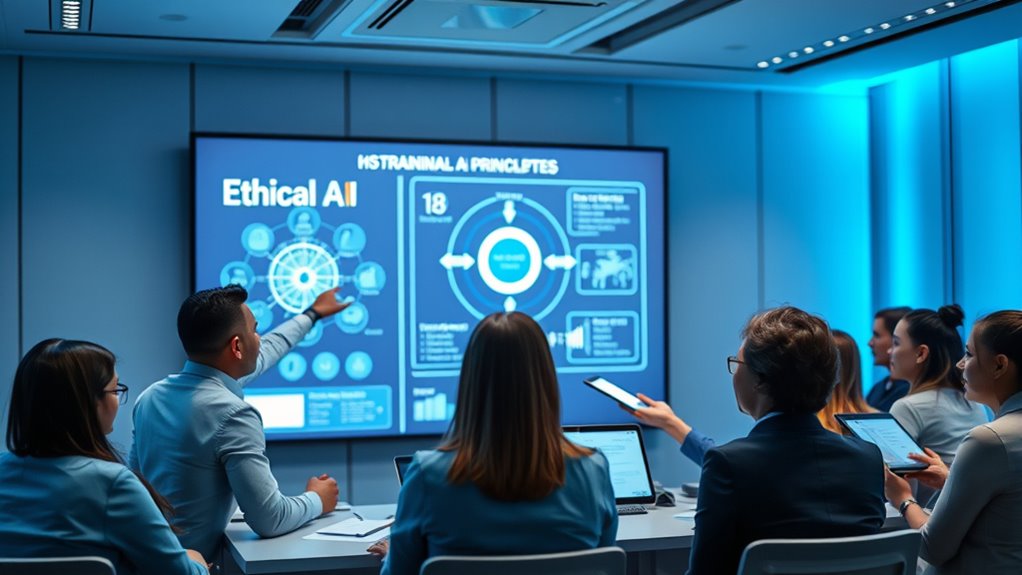
Addressing ethical and strategic considerations in AI training initiatives is essential to guarantee responsible and aligned AI integration within your organization. You must develop policies that promote transparency, fairness, and accountability. Ensuring that your team understands AI biases and ethical implications prevents unintended harm. Strategically, focus on aligning AI training with business goals, avoiding over-reliance on technology and maintaining human oversight. Regularly evaluate AI systems for compliance and ethical standards. This approach builds trust and mitigates risks. Here’s a visual overview:
| Ethical Considerations | Strategic Considerations |
|---|---|
| Bias mitigation | Goal alignment with business objectives |
| Transparency | Balancing automation and human input |
| Accountability | Continuous evaluation and updates |
| Fairness | Ethical use policies and compliance |
Additionally, fostering an environment that emphasizes attention in creative practice can improve the effectiveness of AI training by encouraging focus and deliberate engagement with new technologies.
Preparing for Future Job Market Shifts and AI-Generated Opportunities

Preparing your workforce for future job market shifts involves understanding how AI-generated opportunities will reshape roles and industries. As AI advances, expect new job categories to emerge and existing roles to evolve, demanding continuous adaptation. To stay ahead, focus on:
Preparing for AI-driven job shifts requires agility, upskilling, and embracing lifelong learning.
- Upskilling employees to leverage AI tools effectively, creating new value streams.
- Identifying sectors with high growth potential, such as data science, machine learning, and automation.
- Emphasizing agility and lifelong learning, enabling staff to pivot as AI transforms workflows.
- Recognizing the importance of color accuracy in delivering high-quality AI-driven visual content and training materials.
Frequently Asked Questions
How Can Organizations Measure ROI From AI Training Programs Effectively?
You can measure ROI from AI training programs by tracking key performance indicators like productivity improvements, error reduction, and faster project completion. Collect feedback on skill application and analyze how AI-driven tasks impact revenue or cost savings. Use detailed analytics from AI-enabled learning platforms to assess skill mastery and retention. Regularly compare pre- and post-training metrics to demonstrate tangible business benefits, ensuring your investments translate into measurable growth.
What Are the Most Critical Soft Skills to Complement AI Technical Training?
Think of soft skills as the glue that holds AI technical expertise together. You need strong communication to explain complex AI concepts clearly, adaptability to stay ahead of rapid tech changes, critical thinking to evaluate AI outputs, emotional intelligence to navigate team dynamics, and ethical judgment to guarantee responsible AI use. Mastering these skills transforms technical knowledge into impactful, human-centered solutions, making you indispensable in today’s AI-driven workplace.
How Do Regional Differences Impact AI Workforce Training Strategies?
Regional differences considerably shape your AI workforce training strategies. Globally, organizations support AI skill development more than U.S. counterparts, often embedding continuous learning into workflows. Cultural factors influence employee engagement and how training is delivered—more collaborative regions favor beta testing and feedback, while others focus on formal coursework. Tailor your approach by considering regional support levels, cultural attitudes, and existing infrastructure to guarantee effective, localized AI skill development.
What Role Do Government Policies Play in AI Skill Development?
Imagine governments as gardeners, nurturing the AI landscape with policies that shape growth. They set the pathways for AI skill development through funding, regulations, and strategic initiatives, guiding organizations and individuals toward continuous learning. By fostering innovation and ethical standards, policies guarantee a balanced, sustainable AI ecosystem. Your role involves staying informed about these policies, leveraging support, and aligning your training efforts with national priorities to thrive in this evolving digital garden.
How Can Small Businesses Implement Scalable AI Training Solutions?
You can implement scalable AI training solutions by leveraging online platforms that offer targeted courses aligned with your business needs. Incorporate AI tools into daily workflows for continuous learning, and use analytics to track progress. Encourage peer collaboration and provide regular updates on AI developments. By prioritizing flexible, accessible training methods, you guarantee your team stays current, enhances skills, and adapts quickly to evolving AI demands without overextending resources.
Conclusion
As you build an AI-ready workforce, remember you’re planting seeds for a future where human potential blooms alongside technology. Embrace continuous growth, nurture ethical choices, and adapt to shifting landscapes—like a gardener tending to a resilient, thriving garden. Your efforts today cultivate a landscape where innovation and opportunity flourish, ensuring your team isn’t just prepared but empowered to shape a future filled with promise. The harvest depends on the care you invest now.