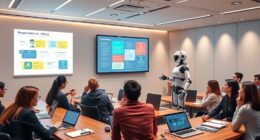

Community colleges and bootcamps are actively bridging the AI skills gap by offering affordable, flexible, and practical training tailored to industry needs. They focus on hands-on learning, industry partnerships, and real-world projects to prepare learners quickly for AI roles. These programs are expanding access for underrepresented groups and supporting career advancement with short-term credentials. If you’re interested in how these efforts are shaping the future workforce, there’s much more to explore ahead.
Key Takeaways
- Community colleges and bootcamps offer affordable, flexible, hands-on AI training tailored to diverse learners and local workforce needs.
- They incorporate industry partnerships and real-world projects to ensure curricula remain relevant and practical.
- Short-term programs enable rapid skill acquisition, increasing employability and career advancement in AI roles.
- Funding initiatives and online platforms improve access for underrepresented and non-traditional learners.
- These institutions serve as vital bridges to traditional higher education and long-term AI career pathways.
The Growing Demand for AI and Data Skills Across Industries

Why is the demand for AI and data skills surging across industries? Because organizations recognize AI’s potential to boost efficiency, innovate, and stay competitive. Companies are integrating AI tools like ChatGPT and industry-specific platforms into daily operations, requiring employees to understand and leverage these technologies. As automation expands, roles across sectors—from healthcare to finance—demand workers who can interpret data, develop insights, and optimize processes. Many workers lack the skills needed to identify AI opportunities or implement solutions, creating a significant gap. This growing need isn’t just about technical knowledge; it’s about adapting to rapid technological change. Employers are enthusiastic for talent that can navigate AI-driven environments, making AI and data literacy essential for future job success and organizational growth. Developing literate skills is crucial for bridging this gap and ensuring a workforce prepared for evolving technological demands.
Challenges in Scaling AI Literacy and Workforce Readiness

Scaling AI literacy and workforce readiness faces significant hurdles, despite widespread recognition of their importance. One major challenge is limited access to quality training, especially for non-traditional learners. Many programs struggle to keep pace with rapidly evolving AI tools and industry needs. Additionally, institutional capacity and funding constraints hinder expansion efforts. Moreover, establishing essential industry connections can significantly enhance program relevance and student outcomes. Without addressing these issues, scaling AI literacy and workforce readiness remains an uphill battle.
The Role of Community Colleges in Providing Accessible AI Education

Community colleges are uniquely positioned to expand access to AI education, addressing many of the barriers faced by traditional training programs. You can leverage their affordable tuition, flexible schedules, and local presence to reach diverse learners—including underrepresented groups and those balancing work and family. Many community colleges have integrated AI, data science, and coding into credential programs, offering practical, hands-on experiences. Partnerships with local industry help tailor curricula to regional workforce needs, ensuring students gain relevant skills. These institutions often focus on project-based learning and real-world applications, making AI accessible and understandable. Additionally, the integration of automation technologies in education helps prepare students for the evolving job market. By providing clear pathways to employment, community colleges empower learners to upskill quickly and confidently, helping bridge the growing AI skills gap across industries and communities.
Bootcamps as Accelerators for Practical AI and Data Skills

Bootcamps serve as powerful accelerators for acquiring practical AI and data skills, offering intensive, focused training that meets the urgent needs of today’s workforce. They emphasize hands-on learning, allowing you to develop real-world competencies quickly. Through project-based curricula, you’ll gain experience with industry-standard tools like Python, machine learning platforms, and data visualization software. Bootcamps prioritize fast skill acquisition, enabling you to progress into roles requiring AI literacy without the lengthy commitment of traditional degrees. They also often partner with industry leaders to guarantee training aligns with current job market demands. By focusing on practical applications, bootcamps prepare you to contribute immediately, helping bridge the skills gap and meet employers’ needs for adaptable, technically fluent workers.
Industry Partnerships: Aligning Training With Evolving Workforce Needs

Industry partnerships play a crucial role in guaranteeing that AI and data training programs stay aligned with real-world workforce needs. By collaborating directly with employers, training providers can tailor curricula to reflect current skill demands, technology trends, and industry challenges. These partnerships facilitate practical learning experiences, such as internships, co-op programs, and project-based coursework, giving students real-world exposure. They also help identify emerging skill gaps early, enabling rapid curriculum updates. When employers actively participate, they influence training content and set clear standards, ensuring graduates are workforce-ready. Additionally, partnerships foster ongoing dialogue, making training adaptable as industry needs evolve. This alignment helps bridge the skills gap faster and ensures that learners develop relevant, marketable competencies. Emphasizing the importance of creative practice can also inspire innovative approaches to problem-solving within the training programs, enriching the learning experience.
Key Skills for Thriving in the AI-Driven Workplace

To thrive in the increasingly AI-driven workplace, developing a diverse set of skills is essential. You need more than technical knowledge—you must also cultivate human-centric abilities. Here are three key skills to focus on:
- Hybrid skills: Combine AI and data literacy with critical thinking, creativity, and social intelligence to solve complex problems and adapt quickly.
- Learning agility: Stay flexible and open to continuous learning, as 39% of core skills are expected to evolve by 2030.
- Systems thinking: Understand how different components interact, enabling you to identify where AI can add value and improve workflows.
Mastering these skills will help you navigate changes, contribute meaningfully, and remain competitive in an AI-driven environment.
Overcoming Barriers to Inclusive AI Upskilling

You need to find ways to expand access to AI training for everyone, especially those facing educational barriers. By reducing costs and offering flexible learning options, you can help more workers develop essential skills. Ensuring inclusivity in upskilling efforts is vital to closing the AI skills gap effectively. Incorporating accessible training methods can further broaden participation and foster a more diverse AI workforce.
Expanding Access for All
Despite widespread recognition of the importance of AI skills, many workers still face significant barriers to accessing inclusive upskilling opportunities. You can help bridge this gap by addressing key challenges:
- Cost and affordability: Many training programs are out of reach financially, especially for those in low-income communities.
- Geographic limitations: Rural or underserved areas often lack local institutions offering AI education.
- Awareness and outreach: Potential learners may not know about available opportunities or how AI skills can benefit their careers.
- Understanding of foundational skills: A strong grasp of home improvement principles, such as organization and decluttering strategies, can support learners in developing the discipline and problem-solving skills necessary for AI training.
Community colleges and bootcamps are stepping in to tackle these issues through affordable, flexible, and targeted programs. By expanding outreach, leveraging online platforms, and forming industry partnerships, these institutions can make AI upskilling accessible to everyone, regardless of background or location.
Reducing Educational Barriers
Many workers face significant educational barriers that hinder their ability to access inclusive AI upskilling opportunities. Cost, time constraints, and lack of prior experience often prevent individuals from pursuing new skills. Language barriers and limited digital literacy further exclude underrepresented groups from training programs. To reduce these barriers, community colleges and bootcamps are developing affordable, flexible courses tailored to diverse learners. They emphasize practical, hands-on learning with real-world applications, making AI skills more accessible. Partnerships with industry ensure curricula stay relevant, while targeted outreach helps reach underserved communities. Additionally, providing mentorship and support services helps learners overcome confidence gaps. By lowering these obstacles, you can more effectively participate in the AI economy and open new career opportunities.
The Impact of Short-Term Training on Career Advancement

Short-term training programs can quickly equip you with new AI skills, making you more competitive in the job market. These courses often open doors to better job opportunities and higher wages. By gaining relevant expertise fast, you can shift into emerging roles and advance your career more efficiently. Incorporating beginners guides into your learning plan can help you grasp foundational concepts and stay motivated throughout your skill development journey.
Accelerated Skill Acquisition
Accelerated skill acquisition through short-term training programs is transforming how you enhance your career in the AI-driven workplace. These programs allow you to quickly gain practical skills, making you more adaptable and competitive. Here’s how they impact your career:
- Rapid Upskilling: You can acquire essential AI and data literacy skills in weeks rather than years, enabling faster entry into new roles.
- Immediate Application: Hands-on projects and industry partnerships help you apply what you learn directly to your current job or new opportunities.
- Increased Employability: Short-term programs often lead to certifications that boost your resume and demonstrate your commitment to continuous learning.
These programs empower you to stay relevant, meet evolving employer needs, and gain access to new career pathways faster.
Enhanced Job Opportunities
Quickly gaining new skills through targeted training opens up a range of enhanced job opportunities. With short-term programs at community colleges and bootcamps, you can quickly build relevant AI, data, and digital literacy skills that employers value. These credentials increase your competitiveness, often leading to higher wages and promotions. As organizations prioritize AI integration, workers with practical skills are in high demand, opening doors to roles in data analysis, machine learning, and AI project management. Short-term training also accelerates your career trajectory, helping you move into specialized positions faster than traditional education routes. By investing in focused upskilling, you position yourself to capitalize on emerging AI-driven markets, making yourself indispensable in a rapidly evolving job landscape. Vetted
Rapid Career Transition
Have you considered how targeted, short-term training programs can transform your career trajectory? These programs enable rapid skill acquisition, making it easier to pivot into AI-driven roles. Here’s how they can accelerate your career:
- Fast Track to New Roles: You can gain in-demand skills in months, not years, opening doors to AI and data positions.
- Immediate Application: Practical, project-based learning lets you apply skills directly to current jobs or new opportunities.
- Enhanced Earning Potential: Quickly upskilling can lead to higher wages and better job security, especially as organizations prioritize AI competency.
Policy Initiatives to Support Broader Access to AI Education

Policy initiatives play a pivotal role in expanding access to AI education, especially for underrepresented and underserved communities. Governments are increasing funding for community colleges and bootcamps, making AI training more affordable and available. Grants and subsidies help reduce financial barriers, allowing more learners to acquire essential skills. Additionally, policies promote inclusive curricula that reflect diverse perspectives, helping marginalized groups access opportunities in AI careers. Public-private partnerships are encouraged to align training programs with industry needs, ensuring relevance and employability. Certification standards and recognition programs further legitimize non-traditional pathways, making AI skills transferable and credible. Moreover, comprehensive educational resources are essential to support diverse learning needs and foster long-term success in AI fields. Overall, these initiatives aim to democratize AI education, fostering a more equitable workforce prepared for the future of work.
Building a Future-Ready Workforce Through Collaborative Efforts

You play a key role in shaping a future-ready workforce by supporting industry-academia partnerships and expanding accessible training programs. Collaborative efforts can bridge skills gaps and guarantee diverse talent can develop AI literacy and data skills. When these initiatives focus on inclusivity, they create a stronger, more innovative workforce prepared for the evolving AI landscape. Emphasizing AI skills development ensures that workers are equipped to meet new technological demands and contribute effectively to the digital economy.
Industry-Academia Partnerships
Industry-academia partnerships are pivotal for developing a future-ready workforce equipped with the necessary AI skills. These collaborations align education with industry demands, ensuring learners gain relevant, practical experience. To build effective partnerships, consider these steps:
- Curriculum Co-Design: Engage industry experts to develop relevant courses that address current technological challenges.
- Internship Programs: Offer real-world work experiences that help students apply AI concepts in practical settings.
- Continuous Feedback: Establish ongoing communication to adapt training programs based on evolving industry needs.
Accessible Training Programs
Building on the importance of strong industry-academia partnerships, expanding access to AI training programs is essential for creating a workforce ready to meet future demands. Community colleges and bootcamps offer flexible, affordable pathways that target non-traditional learners and underrepresented groups. These programs focus on practical skills like AI literacy, data analysis, and foundational programming, often through project-based learning that emphasizes real-world application. Collaborations with industry ensure curricula stay relevant, aligning training with evolving employer needs. Additionally, government support and funding can help scale these initiatives, removing barriers to participation. By broadening access, you empower more individuals to develop the skills necessary for the AI-driven workplace, reducing skills gaps and fostering economic growth.
Inclusive Skill Development
Achieving an inclusive, future-ready workforce requires collaborative efforts among educators, employers, policymakers, and communities. You can help by supporting initiatives that break down barriers to access and guarantee diverse participation. Consider these strategies:
- Expand outreach to underrepresented groups, providing targeted outreach and mentorship programs.
- Develop flexible learning pathways through community colleges and bootcamps that accommodate different backgrounds and schedules.
- Foster partnerships with industry to create tailored curricula that reflect local and regional needs.
Frequently Asked Questions
How Do Community Colleges Tailor AI Courses for Non-Technical Learners?
You’re likely to find community colleges tailoring AI courses for non-technical learners by focusing on practical applications and everyday tools. They simplify complex concepts, emphasize project-based learning, and incorporate industry-relevant examples. You’ll gain foundational skills in AI literacy and data handling without heavy coding. These courses often include workshops, collaborative projects, and real-world scenarios, helping you build confidence and skills to apply AI in your current or future roles.
What Funding Options Are Available for Students in AI Bootcamps?
You can access various funding options for AI bootcamps, from federal and state grants to scholarships designed for non-traditional students. Many bootcamps also offer income-share agreements, where you pay a percentage of your future earnings. Employer sponsorships and financial aid packages are additional avenues. While some programs are free or low-cost, it’s vital to explore all available resources to make upskilling affordable and achievable.
How Do Industry Partnerships Influence Curriculum Development in AI Training Programs?
Industry partnerships shape AI training programs by ensuring curricula stay relevant and aligned with employer needs. You benefit by gaining access to real-world projects, industry-specific tools, and updated skills that match job market demands. These collaborations also provide insights into emerging trends, helping you stay competitive. As a result, you’re better prepared for the workforce, with practical experience and a network that can open doors to internships and job opportunities.
What Measures Ensure Diversity and Inclusion in AI Upskilling Initiatives?
You can promote diversity and inclusion in AI upskilling by designing accessible programs that accommodate different learning styles and backgrounds. Partner with organizations serving underrepresented groups to reach broader audiences. Offer scholarships, flexible schedules, and mentorships to eliminate barriers. Guarantee curricula reflect diverse perspectives, and foster inclusive environments where everyone feels valued. Regularly assess and adapt initiatives to meet evolving needs, making AI literacy attainable for all individuals regardless of their socioeconomic or demographic backgrounds.
How Can Employers Support Ongoing AI Skills Development After Initial Training?
Over 90% of employees want to improve their AI skills, so you should support ongoing development by offering continuous learning opportunities. Encourage participation in advanced courses, workshops, or industry certifications, and create a culture that values experimentation and feedback. Provide access to mentorship and peer learning to keep skills fresh. Regularly assess skill gaps and tailor training programs, ensuring your team stays adaptable and ready for evolving AI-driven workplaces.
Conclusion
Imagine forging a bridge over a widening river, connecting enthusiastic learners to a future of opportunity. By partnering community colleges, bootcamps, and industry, you help construct that essential span, ensuring no one’s left stranded on the banks. As you champion inclusive, accessible AI education, you become the architect of a resilient, future-ready workforce—transforming challenges into pathways and dreams into reality. Together, you’re building the bridge that will carry tomorrow’s innovators across today’s divides.