Executive AI bootcamps are designed for busy leaders who want quick, practical insights into AI’s strategic, ethical, and technical aspects. These programs vary from two-day intensives to immersive two-week courses, offering workshops, case studies, and hands-on exercises. They help you grasp AI’s business applications, improve your AI literacy, and foster innovation. These bootcamps also build a shared language across your organization. Keep exploring to discover how these focused trainings can boost your leadership in AI-driven change.
Listen free for 30 days with Audible
Thousands of audiobooks and originals — cancel anytime.
As an affiliate, we earn on qualifying purchases.
Key Takeaways
- Executive AI bootcamps offer intensive, short-term training tailored for busy leaders to quickly grasp AI fundamentals and strategic applications.
- Programs combine virtual and in-person formats with practical exercises, case studies, and workshops for immediate real-world relevance.
- Curriculum focuses on AI strategy, ethics, human-centered AI, and technical insights, enabling leaders to integrate AI into organizational goals.
- Certification upon completion enhances credibility, helping leaders confidently promote AI-driven innovation across their organizations.
- Top providers include Stanford, MIT Sloan, Dartmouth Tuck, and Georgia Tech, offering flexible, impactful courses designed for executive schedules.
As an affiliate, we earn on qualifying purchases.
The Growing Need for Executive AI Education
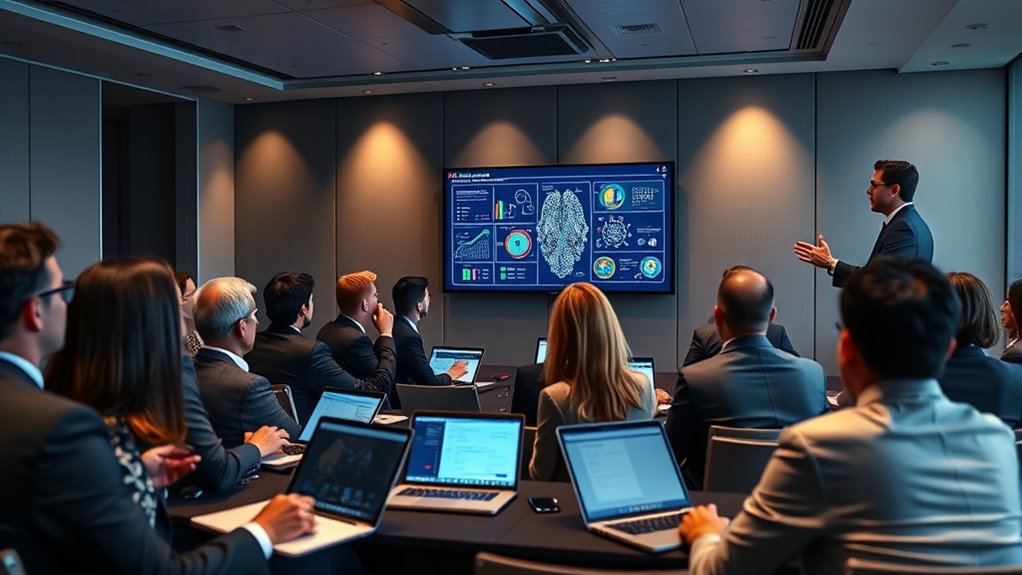
As AI continues to transform industries at a rapid pace, the need for executive education in this field becomes increasingly urgent. You must understand AI’s strategic implications to stay competitive, as more organizations integrate these technologies into core operations. Many leaders underestimate how widely AI is adopted across their teams, creating a gap in organizational awareness. To leverage AI effectively, you need to develop AI literacy that aligns technology with business goals. Bold leadership actions, such as supporting AI training initiatives, are essential for steering this shift. Recognizing AI’s impact on workforce roles—whether through augmentation or replacement—helps you plan future workforce strategies. Understanding technological integration in AI can enhance your ability to oversee digital transformation initiatives. Ultimately, executive education in AI empowers you to make informed decisions, drive innovation, and sustain your organization’s competitive edge in a digitally driven landscape.
As an affiliate, we earn on qualifying purchases.
Program Structures and Learning Formats

Program structures for executive AI bootcamps vary widely to accommodate different learning needs and schedules. You might find programs that span just two days, offering intensive, focused content, or immersive two-week academies that balance technical skills with strategic insights. Many bootcamps combine live virtual sessions for flexibility with in-person workshops for deeper engagement. You’ll benefit from diverse formats, including workshops, case studies, and hands-on exercises designed to translate AI concepts into real-world applications. Top providers often include interdisciplinary faculty from leading universities, ensuring you receive both technical and strategic perspectives. Upon completion, you’ll earn certificates that boost your credibility. These varied formats aim to maximize learning efficiency, fitting into your busy schedule while equipping you with practical AI skills to lead digital transformation confidently. Recognizing emotional support needs can also enhance your learning experience, fostering resilience and confidence throughout your training.
As an affiliate, we earn on qualifying purchases.
Core Curriculum and Focus Areas

What are the key topics that shape the core curriculum of executive AI bootcamps? You’ll find a focus on strategic AI leadership, guiding you to align AI initiatives with your company’s goals and societal values. Human-centered AI approaches emphasize ethics, responsibility, and augmentation, ensuring AI benefits your workforce and customers. You’ll gain a solid understanding of technical concepts like machine learning, natural language processing, and data analytics, translating them into practical business applications. Case studies and hands-on exercises help you apply AI solutions to real-world challenges, fostering immediate impact. Change management and workforce transformation are also central, preparing you to lead organizational shifts driven by AI. This all-encompassing focus equips you with the knowledge and frameworks to integrate AI effectively and ethically. Additionally, understanding AI’s impact on customer experience helps leaders optimize engagement and satisfaction through personalized and sentiment-driven strategies.
As an affiliate, we earn on qualifying purchases.
Benefits for Leaders and Organizations

Engaging in executive AI bootcamps equips leaders with practical tools to embed AI into their business strategies, driving innovation and maintaining a competitive edge. You’ll develop a shared language and framework that promote cohesive AI-driven transformation across your organization. This accelerates your ability to identify opportunities, mitigate risks, and implement AI solutions effectively. Additionally, these programs boost your AI literacy, helping you better understand technological capabilities and ethical considerations. The immediate application of concepts ensures quick wins, reinforcing strategic initiatives. You’ll also benefit from a network of like-minded leaders, fostering ongoing support and knowledge exchange. Emphasizing technical understanding and practical application, these bootcamps position your organization for successful AI integration. Overall, participating in these bootcamps enhances your leadership capacity, aligns organizational goals with AI advancements, and positions your company at the forefront of digital transformation.
Leading Providers and Signature Programs

Leading providers and signature programs shape the landscape of executive AI education by offering specialized, high-impact training designed for busy leaders. Stanford Sierra Camp’s program emphasizes research-based, human-centered AI leadership, blending theory and practical insights. Dartmouth’s Tuck Executive Sprints deliver focused, short-term courses tailored for executives seeking strategic AI advantages without extensive time commitments. MIT Sloan’s AI Executive Academy combines technical depth with business strategy through immersive, cross-disciplinary sessions. TDWI’s AI Bootcamp Week features live seminars led by top experts, covering AI strategy, governance, and implementation essentials. Georgia Tech’s Scheller College offers practical courses that translate AI buzzwords into actionable business strategies. These programs stand out by balancing technical knowledge, leadership skills, and real-world applications, empowering leaders to confidently drive AI initiatives. Additionally, exploring remote hackathons can provide leaders with innovative, collaborative experiences to stay ahead in AI development and implementation.
Future Trends in AI Leadership Training

Are AI leadership training programs poised to evolve in response to rapid technological advances? Absolutely. As AI continues to accelerate, you’ll see a shift toward more integrated, industry-specific courses that address real-world challenges. Hybrid formats will become standard, blending online flexibility with immersive in-person experiences for maximum engagement. Expect a stronger focus on ethical considerations, societal impacts, and responsible AI governance, reflecting growing regulatory and public concerns. Additionally, training will increasingly emphasize strategic thinking, helping you align AI initiatives with overarching business goals. The incorporation of popular juice brands into training examples might seem unrelated, but it highlights the importance of understanding diverse consumer preferences and market trends in AI-driven industries.
Frequently Asked Questions
How Do Executive Bootcamps Tailor Content for Different Industries?
You’ll find executive bootcamps tailor content by focusing on industry-specific challenges and opportunities. They incorporate case studies, real-world data, and scenarios relevant to your sector, such as healthcare, finance, or public services. This targeted approach helps you understand how AI can solve unique problems and drive innovation in your field. You’ll also learn industry-relevant strategies and frameworks, making the training directly applicable and impactful for your organization’s goals.
What Qualifications Do Instructors Typically Have for Teaching AI Leadership?
You might wonder what makes an instructor truly qualified to teach AI leadership. Typically, they hold advanced degrees in fields like computer science, data science, or business. They often combine technical expertise with real-world leadership experience, working at top universities or industry leaders. Their background includes practical AI implementation, strategic planning, and ethical considerations. This blend guarantees they can guide you through complex concepts with clarity and relevance, transforming your understanding of AI in leadership.
How Do Programs Measure the Impact on an Executive’s Decision-Making Skills?
You can measure the impact on your decision-making skills through pre- and post-program assessments, practical exercises, and real-world case studies. These tools evaluate how well you apply AI concepts, strategic frameworks, and ethical considerations in your leadership decisions. Additionally, feedback from peers and mentors helps identify improvements. Monitoring your ability to integrate AI into business strategies over time indicates how effectively the program enhances your decision-making.
Are There Prerequisites or Prior Knowledge Needed to Join These Bootcamps?
You typically don’t need extensive prior knowledge to join these bootcamps, but a basic understanding of business operations and familiarity with digital tools helps. Most programs are designed for busy executives, so they start with foundational AI concepts and build up to strategic applications. If you have some experience with technology or data, you’ll find it easier to grasp advanced topics quickly. Overall, these programs are accessible and tailored for leaders at various levels.
What Ongoing Resources or Support Are Available Post-Completion?
After completing an AI bootcamp, you can access ongoing resources like alumni networks, webinars, and curated content to stay updated. Many programs offer continued mentorship, online communities, and exclusive events that help reinforce your learning. You’ll also find opportunities for advanced training and peer collaboration, ensuring you keep evolving your AI skills and strategy. These resources support your ongoing growth and help you effectively lead AI initiatives in your organization.
Conclusion
If you want to lead confidently in the AI age, embracing executive AI bootcamps is essential. These crash courses cultivate clarity, competence, and competitive advantage, empowering you to navigate new nuances with nimbleness. By bridging gaps and building boldness, you’ll become a better leader and leverage AI’s full potential. Don’t delay—dive into these dynamic, data-driven developments and discover your decisive difference in the evolving executive landscape.
NFL season / tailgating Picks
team gear
As an affiliate, we earn on qualifying purchases.