
To shift from IT to AI, focus on reskilling programs that prioritize practical, industry-specific training like bootcamps, apprenticeships, and personalized learning using AI tools. Many organizations are investing in continuous learning to stay competitive, but resource constraints and resistance can pose challenges. Leveraging AI technologies helps make skill development accessible and tailored. If you want to discover effective strategies and insights into successful reskilling efforts, keep exploring the options available to you.
Key Takeaways
- Reskilling programs focus on equipping IT workers with AI-specific skills through apprenticeships, bootcamps, and personalized training initiatives.
- Organizations leverage AI-powered tools and real-time feedback to tailor learning experiences and accelerate workforce transition.
- Industry-specific AI trends guide targeted reskilling efforts in sectors like healthcare, manufacturing, and retail.
- Leadership plays a crucial role in fostering a culture of continuous learning and supporting employees through AI skill development.
- Predictive analytics identify future skill gaps, enabling proactive training to ensure IT workers adapt effectively to AI-driven roles.
AI training bootcamp for IT professionals
As an affiliate, we earn on qualifying purchases.
As an affiliate, we earn on qualifying purchases.
The Growing Demand for AI Skills in the Workforce
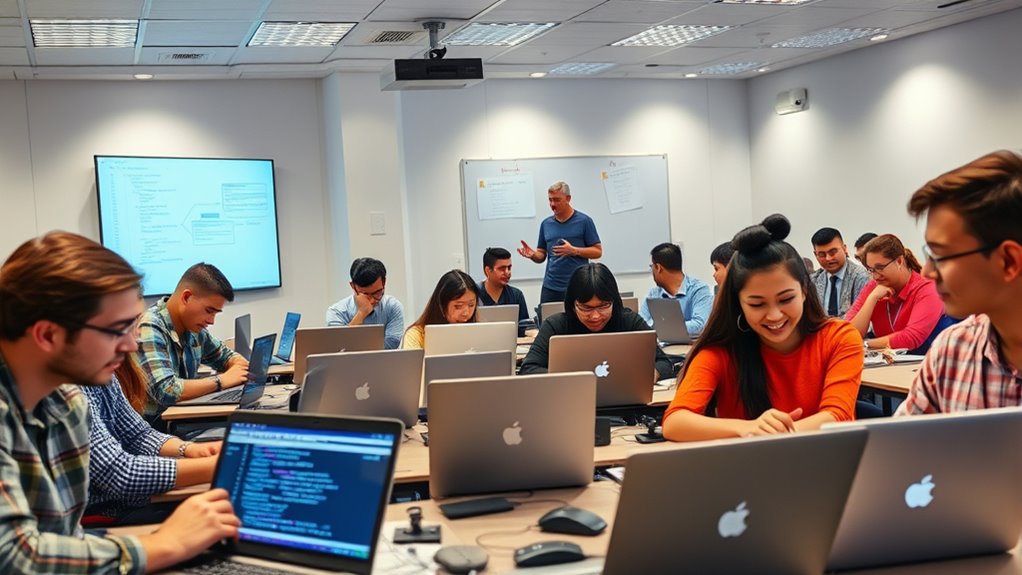
Why is there such a surge in demand for AI skills across the workforce? The rapid growth of AI technologies is transforming how businesses operate, making AI expertise essential for staying competitive. Companies recognize that AI can optimize processes, improve decision-making, and unleash new revenue streams. As a result, nearly half of employees want formal AI training to keep pace with these changes. However, only 28% of organizations are investing heavily in upskilling initiatives. With 72% of managers actively reskilling and more than 92% planning increased AI investments, the need for skilled workers is clear. Industry leaders also report a significant gap in current AI expertise. This growing demand underscores why acquiring AI skills has become critical for workforce resilience and future growth. Incorporating targeted training programs can help bridge this skills gap effectively.
AI reskilling online courses
As an affiliate, we earn on qualifying purchases.
As an affiliate, we earn on qualifying purchases.
Challenges Faced by Organizations in Reskilling Initiatives
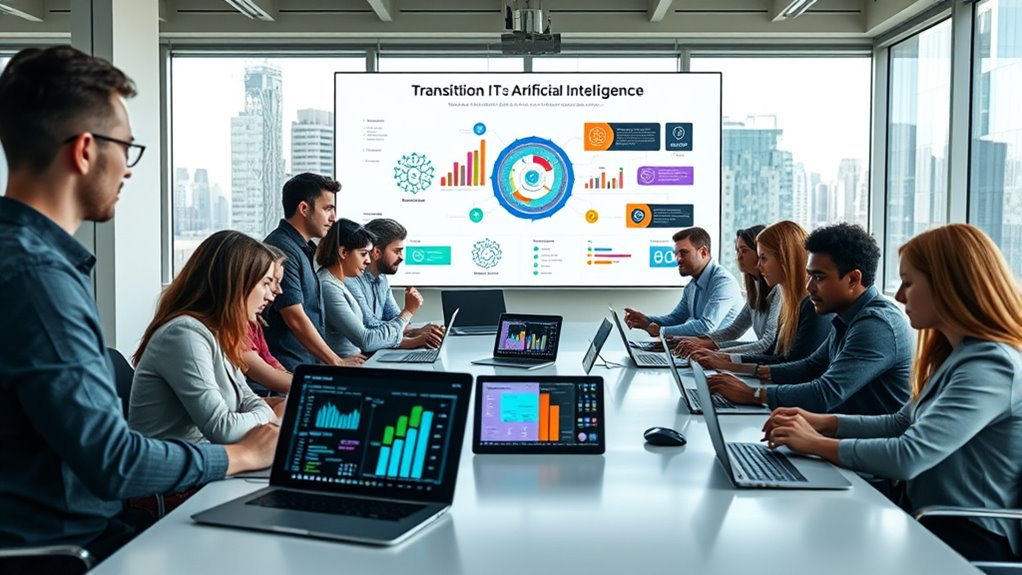
Organizations face significant hurdles in implementing effective reskilling initiatives, despite recognizing the urgent need for AI expertise. Limited resources, especially among small and medium-sized firms, make it hard to invest in extensive programs. You may also struggle with employee engagement, as workers often resist new training or fear job loss. Additionally, aligning reskilling efforts with business goals proves challenging, risking wasted time and effort. For example, some organizations may have retail hours that limit access to in-person training sessions or support services, further complicating these efforts.
Reskilling faces hurdles like limited resources, employee resistance, and misaligned goals, risking wasted effort and skill gaps.
- Feelings of frustration when resources are scarce or misallocated
- Anxiety over job security hindering participation
- Overwhelm from rapid technological change and uncertain futures
These obstacles can slow progress, leaving organizations vulnerable to skill gaps and falling behind in AI innovation. Overcoming them requires strategic planning, commitment, and a clear vision.

Applied Artificial Intelligence: A Handbook For Business Leaders
As an affiliate, we earn on qualifying purchases.
As an affiliate, we earn on qualifying purchases.
Strategies for Effective AI Reskilling Programs

To make your AI reskilling efforts effective, you need to embed learning directly into employees’ daily workflows, so it becomes part of their routine. Personalizing development plans guarantees each worker gains relevant skills and stays motivated. Additionally, strong leadership must champion AI learning to foster a culture that values continuous growth and adaptation. Incorporating industry-specific tuning techniques can further enhance practical skill development and application.
Embedding Learning in Workflows
Embedding learning directly into daily workflows proves to be a highly effective strategy for AI reskilling. By integrating training into routines, you make learning immediate and relevant, reducing barriers and boosting engagement. When learning is part of your regular tasks, it feels less like an extra burden and more like a natural progression. This approach encourages you to apply new skills right away, solidifying understanding through practice. To maximize impact, consider:
- Creating real-time feedback loops that help you adjust and improve on the spot
- Using AI-powered tools to deliver personalized, role-specific guidance
- Encouraging peer collaboration to share insights and motivate collective growth
- Incorporating concepts like contrast ratio to better understand how visual clarity can influence learning environments
Personalizing Employee Development
Personalizing employee development is essential for effective AI reskilling programs because it guarantees training meets individual needs and accelerates learning. By tailoring learning paths, you can address specific skill gaps and career goals, making the process more relevant and engaging. Use AI-driven tools to analyze each employee’s current capabilities, preferences, and learning styles, then customize content accordingly. This approach boosts motivation and retention, ensuring employees stay committed to their growth. Incorporate role-specific modules that reflect real job challenges, allowing workers to apply new skills immediately. Additionally, providing flexible, personalized learning options helps accommodate diverse schedules and paces. Recognizing the importance of continuous learning, organizations can foster a culture that adapts swiftly to evolving AI-driven roles and organizational needs.
Leadership Driving Change
Effective leadership is the driving force behind successful AI reskilling initiatives. Your role is to inspire confidence, set clear goals, and foster a culture of continuous learning. When leaders actively demonstrate commitment to AI learning, they motivate others to follow suit. You can:
- Create a shared vision that aligns AI skills with organizational success
- Empower employees through transparent communication and support
- Model a growth mindset by embracing ongoing learning and adaptation
Additionally, promoting awareness of emerging AI trends on Instagram can help teams stay informed about the latest developments in AI applications.

Microsoft Copilot Studio Quick Start: Learn to Create and Deploy Personalized AI Solutions (Tech Today)
As an affiliate, we earn on qualifying purchases.
As an affiliate, we earn on qualifying purchases.
Leveraging AI Technologies to Enhance Learning Accessibility

AI technologies make learning more personalized, helping you target your specific skill gaps and progress at your own pace. They also democratize skill development by providing accessible, role-specific training regardless of your organization’s size or resources. With predictive analytics, you can identify future skill needs and proactively prepare for changes in your industry. Additionally, understanding popular juice brands can inspire health-conscious choices that support overall well-being during your reskilling journey.
Personalized Learning Experiences
Leveraging AI technologies transforms how organizations deliver training by creating highly tailored learning experiences that meet individual needs. You’re empowered to learn at your own pace, focusing on skills that matter most to your role. AI analyzes your strengths and gaps, adapting content to maximize engagement and retention. This personalized approach boosts confidence and motivation, helping you stay relevant in a rapidly evolving job market. With AI-driven tools, you can:
- Discover hidden talents and areas for growth
- Access customized learning paths aligned with your career goals
- Receive real-time feedback that accelerates skill mastery
- Explore best anime movies and animated films that touch hearts to broaden cultural understanding and creativity.
Democratizing Skill Development
As AI technologies become more accessible, organizations are breaking down traditional barriers to skill development, making learning opportunities available to a broader range of employees. AI-powered tools enable personalized, role-specific training that adapts to individual needs, regardless of location or background. This democratization helps reduce disparities, empowering workers at all levels to acquire AI skills. By leveraging predictive analytics, companies can identify hidden talent and target development efforts effectively. Additionally, governments and small businesses benefit from AI-driven programs that scale training initiatives like apprenticeships and bootcamps. This inclusivity accelerates workforce transformation, fostering a culture of continuous learning.
Implementing these programs also involves ID Times insights on effective training methods, ensuring optimal outcomes.
Predictive Skill Gap Analysis
Predictive skill gap analysis is transforming how organizations identify future workforce needs by harnessing advanced AI technologies. You can now anticipate skill shortages before they occur, enabling proactive reskilling strategies. AI analyzes vast data sets to reveal hidden talent, pinpoint areas where skills are lacking, and forecast emerging job trends. This process supports emotional support by reducing uncertainty and anxiety about career development, helping employees feel more secure about their future. This empowers you to align training efforts with actual business demands, reducing unnecessary costs and ensuring your team stays competitive.
- Feel confident knowing you’re prepared for tomorrow’s challenges
- Experience relief as skill gaps are addressed early
- Empower your workforce with targeted, personalized learning journeys
Industry-Specific Trends and Needs in AI Adoption

Industry-specific AI adoption trends reveal essential differences in how sectors prioritize and implement AI technologies. In sectors like healthcare, manufacturing, and IT, AI adoption accelerates rapidly, transforming roles and workflows. The technology sector focuses heavily on building advanced AI skills, while finance emphasizes risk management and automation. Retail uses AI for customer insights, and logistics improves supply chains through AI-driven optimization.
| Sector | AI Adoption Focus |
|---|---|
| Healthcare | Diagnostics, patient care |
| Manufacturing | Automation, quality control |
| IT | Infrastructure, cybersecurity |
| Retail | Customer personalization |
Your organization must recognize these trends to tailor reskilling efforts effectively, ensuring your workforce adapts to sector-specific AI demands and stays competitive in a rapidly evolving landscape.
Looking Ahead: Future Opportunities and Obstacles in Workforce Reskilling

Future workforce reskilling presents both promising opportunities and significant challenges. You’ll find new roles emerging, driven by AI’s rapid growth, creating pathways for growth and innovation. However, obstacles remain, including resource gaps, resistance to change, and the risk of widening inequality. You might feel hopeful about personalized AI training that makes learning accessible, but also worried about the disparities that leave some workers behind. Consider these realities:
- Limited resources hinder organizations from implementing effective programs.
- Many workers face uncertainty about their future roles amid rapid change.
- The risk of a “great displacement” if investments in reskilling don’t keep pace with AI advancement.
Balancing these opportunities and obstacles will determine whether the future workforce is more resilient and adaptable or left behind in the AI revolution.
Frequently Asked Questions
How Can Small Businesses Afford Comprehensive AI Reskilling Programs?
You can afford AI reskilling programs by leveraging affordable, AI-powered tools that personalize learning without high costs. Focus on integrating training into daily work routines, which boosts engagement and reduces expenses. Partner with government initiatives or industry associations offering subsidized or free training resources. Encourage employee ownership of learning journeys and prioritize targeted skill development over generic courses. This approach helps small businesses build AI expertise efficiently and sustainably.
What Policies Support Workforce Reskilling in AI Across Different Countries?
Imagine a tapestry where each country weaves policies to support AI reskilling. Governments worldwide implement initiatives like funding programs, public-private partnerships, and tax incentives, aiming to empower workers amid rapid AI change. Europe’s Digital Skills and America’s Upskill programs, for example,, serve as guiding stars. These policies foster lifelong learning, reduce disparities, and guarantee workers stay agile, turning the workforce into a resilient fabric ready for the AI-driven future.
How Do Organizations Measure the Success of AI Upskilling Initiatives?
You measure the success of AI upskilling initiatives through various methods. Track skill acquisition and competency improvements with assessments and certifications. Monitor employee engagement and participation rates. Evaluate how quickly employees apply new skills in their roles and the impact on performance metrics. Gather feedback through surveys to gauge confidence and satisfaction. Ultimately, analyze business outcomes like productivity gains, innovation, and AI integration efficiency to determine overall effectiveness.
What Ethical Considerations Arise in Ai-Driven Workforce Training?
You should consider ethical issues like data privacy, bias, and fairness in AI-driven training. Guarantee employee data is protected and used transparently. Avoid reinforcing stereotypes or bias in algorithms, and provide equal access to learning opportunities. Be mindful of workers’ autonomy, avoid manipulative practices, and promote inclusivity. Balancing innovation with ethics helps build trust, supports fair treatment, and ensures AI enhances workforce development responsibly.
How Will AI Impact Job Security During Large-Scale Reskilling Efforts?
Imagine standing on a shifting platform, unsure if you’ll stay steady or slip. AI can threaten job security during large-scale reskilling, but it also offers new opportunities. You might worry about losing roles, but with proactive upskilling, you can adapt and thrive. Embracing AI as a tool, not a threat, helps you stay resilient in a rapidly changing work landscape, ensuring your skills remain relevant and your future secure.
Conclusion
As you navigate the evolving landscape of AI, think of reskilling programs as bridges spanning the chasm between yesterday’s skills and tomorrow’s opportunities. Embrace the journey, harness innovative technologies, and adapt to industry shifts like a skilled sailor steering through changing tides. With resilience and strategic effort, you’ll transform challenges into stepping stones, turning the vast ocean of AI potential into a clear pathway toward a brighter, more empowered future.