Anthropic has introduced Claude Opus 4.5, a model designed to redefine what enterprises expect from an AI-driven engineering partner. This release focuses on two critical areas: advanced coding capabilities and agentic automation of workflows.
While most companies have been racing to optimize language generation or chat capabilities, Anthropic is executing a clear strategic shift: turning Claude into a reliable autonomous collaborator capable of reasoning about systems, interacting with tools, and orchestrating multi-step tasks with minimal human intervention.
Beyond Code Generation: Toward True Software Reasoning
Claude Opus 4.5 extends well past code-writing. The model demonstrates:
- Long-context code understanding across entire repositories
- Cross-file reasoning for dependency tracing
- Unit and integration test generation tailored to code structure
- Bug diagnosis with explicit reasoning
- Refactoring of legacy codebases with architecture-aware improvements
- System design proposals with architectural diagrams and documentation
This transforms the coding landscape. Instead of handling isolated snippets, Claude can now operate at the scale of real-world software systems.

AI-Assisted Coding: A Practical Guide to Boosting Software Development with ChatGPT, GitHub Copilot, Ollama, Aider, and Beyond (Rheinwerk Computing)
As an affiliate, we earn on qualifying purchases.
As an affiliate, we earn on qualifying purchases.
Agents with Multi-Step Autonomy
Perhaps the most transformative improvement is in agentic tool use. Claude Opus 4.5 can:
- Execute tasks across multiple external tools
- Maintain memory of steps and goals
- Optimize token usage during multi-step workflows
- Self-validate intermediate steps
- Adjust strategies autonomously when tools return errors
- Complete long-horizon tasks like data processing → building → testing → deploying
This pushes enterprise AI further into operational automation—not just writing code, but running processes.

AI-Powered Automations: Add ChatGPT and Claude Into Your Zapier and Make Workflows (No-Code AI Automation Book 4)
As an affiliate, we earn on qualifying purchases.
As an affiliate, we earn on qualifying purchases.
Why This Is a Big Deal for Enterprises
1. Software engineering throughput skyrockets
Development teams can shift from coding to solution selection and oversight.
2. Tool ecosystem compatibility
Claude is increasingly cloud-agnostic, with integrations via APIs, SDKs, and partner cloud platforms.
3. Reduced cost
With improved token efficiency and faster reasoning, enterprise workloads become dramatically cheaper.
4. Compliance and governance
Anthropic continues emphasizing constitutional AI, giving enterprises a safer path to adopt deeply integrated AI tools.

AI Programming Made Practical: A Step-by-Step Guide to Building AI-Powered Applications, Writing Better Code Faster, and Using Modern AI Tools with Confidence
As an affiliate, we earn on qualifying purchases.
As an affiliate, we earn on qualifying purchases.
The Strategic View
Claude Opus 4.5 pushes the industry closer to AI development teams—agents that can build, test, and improve software with minimal supervision. The future of enterprise engineering will likely include hybrid teams of human developers and AI-driven agent clusters.
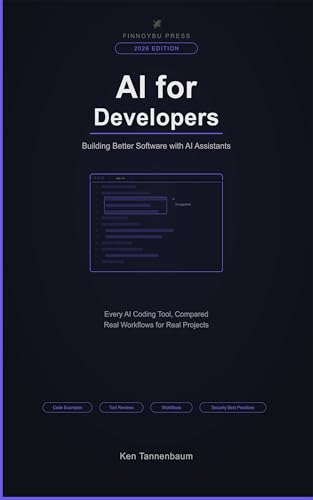
AI for Developers: Claude Code, GitHub Copilot, Cursor, Code Review, Testing, DevOps, and AI Pair Programming (AI for Everyone Book 13)
As an affiliate, we earn on qualifying purchases.
As an affiliate, we earn on qualifying purchases.