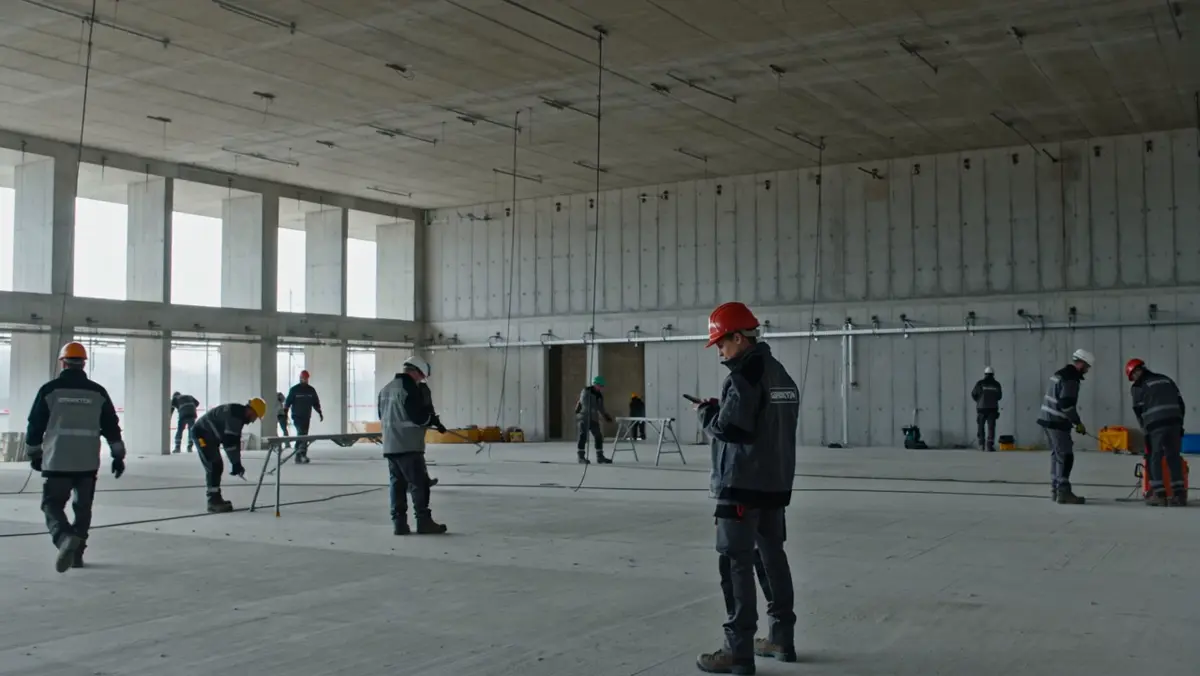
How a 60-technician plumbing & HVAC firm stopped cutting holes through fresh rebar — Thermowerk Riedel GmbH & Co. KG (fictional case)
Studio · Status Instead of Email
requestedapprovedcutcompleted
Every breakthrough is an element with a biography. The riser shaft check flags a 30 cm offset between floors — before the concrete is poured, not after. Routing runs appear in color; collisions with downstand beams are shown.
Field · The Wall Knows Its Photos
Mandatory photo grid before closing any cavity wall: pipe photos per wall, a completeness status light per room.
20 min
Leak location two years later — photo archive instead of 2 days of breaking open walls. The tiles stayed intact.
Uncoordinated Breakthroughs
40+→< 5
Per project. No more slots “requested” by email, noted in plans nobody sent back, and cut on site through freshly tied rebar.
Cloud & Operations · Handover That Lives On
At acceptance, Gewerkton generates the equipment register with maintenance intervals; the operator imports it into the operations calendar. Warranty deadlines and guarantee-bond returns run on the archive radar — turning handover into follow-up maintenance revenue.
“We’re once again cutting holes that are planned. Sounds trivial — but it’s the difference between margin and loss.”
— Project manager, Thermowerk Riedel (fictional)
Fictional case study based on the target build-out of the Gewerkton platform (Field, Studio, Cloud, Archive, Operations). · Source: own reporting · gewerkton.com
A building services company stops chasing wall slots twice — because breakthroughs have a status, shafts align vertically, and the wall knows its own photos.
The fictional Thermowerk Riedel GmbH & Co. KG, 60 technicians, outfits residential buildings and nursing homes. Biggest frustration according to an internal survey: “Breakthroughs that don’t exist when we arrive on site.”
Breakthroughs were “requested” by email, noted in plans nobody sent back, and finally cut on site — all too often right through freshly tied rebar. Every uncoordinated slot cost hours and nerves.
In the Studio, every breakthrough is an element with a status: requested, approved, cut, completed. The riser shaft check flags when the shaft on the 2nd floor sits 30 centimeters off from the one on the 1st floor — before the concrete is poured, not after. The trades’ routing runs are shown in color in the plan, and collisions with downstand beams are displayed.
Before any cavity wall is closed, the mandatory photo grid applies: pipe photos for each wall, a completeness status light for each room. When a leak had to be located two years later, the wall showed its interior — the tiles stayed intact.
Cloud & Operations: A Handover That Lives On
At acceptance, Gewerkton generates the equipment register with maintenance intervals; the operator imports it into the operations calendar. Warranty deadlines run on the archive radar — including the return of guarantee bonds.
The Numbers from the Scenario
– Uncoordinated breakthroughs per project: from 40+ to under 5 – Leak location in existing stock: 20 minutes of photo archive instead of 2 days of breaking open walls – Maintenance contract after handover: follow-up revenue, because the equipment data is already available in structured form
“We’re once again cutting holes that are planned. Sounds trivial — but it’s the difference between margin and loss.”
—
Fictional case study: Companies, individuals, and figures are invented and serve illustrative purposes. The basis is the target build-out of the Gewerkton platform (Field, Studio, Cloud, Archive, Operations). Gewerkton is a voice-first platform for construction documentation and defect management for global markets — with the deepest integration into German construction standards (GAEB, REB, XRechnung, DATEV), 27 content languages, and regional AI provider choice.
Powered by Thorsten Meyer AI — https://thorstenmeyerai.com/