
TL;DR

Get business pricing on tech for your team
- Business-only prices and quantity discounts
- Tax-exempt purchasing
- Multiple users, one account, clear invoices
Real World VoiceEQ has been introduced as a human-evaluation benchmark covering more than 40 voice models, over 60 metrics and more than 1 million ratings gathered during development. Its authors report that leading systems have specialized strengths, often miss nonverbal audio cues and perform less consistently under real-world conditions than conventional benchmarks indicate.
A team publishing on Hugging Face has introduced Real World VoiceEQ, a benchmark that evaluates whether voice AI systems can recognize, generate and respond to acoustic information omitted from transcripts. The project covers more than 40 proprietary and open-source models and is intended to expose weaknesses that conventional tests of word error rate and latency may miss.
Real World VoiceEQ spans more than 15 evaluation dimensions and over 60 metrics across automatic speech recognition, text-to-speech, speech-to-speech and speech understanding. The authors say the benchmark examines tone, emotion, speaker identity, background conditions, pronunciation, conversational behavior and other qualities that affect whether an interaction feels reliable and natural.
The developers report that Real World VoiceEQ was built from more than 1 million individual human ratings gathered across varied demographics, speaking styles and acoustic environments. Its current benchmark includes 785,000 text-to-speech ratings and 48,000 speech-to-speech ratings. All evaluations were conducted through Kairos, the team’s voice-focused evaluation platform.
The reported results do not identify one model as the strongest across every task. In text-to-speech testing, no system configuration placed among the top five in all eight capability groups. Some models performed well on precise content such as booking references, account details or pharmaceutical names, while others produced more expressive speech but showed weaker reliability on accuracy-focused tasks.
Voice Models Split Into Specialists
The findings suggest that organizations choosing a voice system may need to match models to specific operational needs instead of relying on one overall score. A natural-sounding assistant may not be the safest choice for precision-heavy banking or healthcare tasks, while a technically accurate system may handle emotion or conversational pacing poorly.
The benchmark also focuses attention on the gap between speaking naturally and listening effectively. Its authors found that access to audio did not mean a system used tone, hesitation, pacing, emphasis or volume. Those signals can change the meaning of identical words, including whether a speaker sounds confident, uncertain, frustrated or sarcastic.
Products Worth Considering

Bose QuietComfort Wireless Noise Cancelling Headphones, Black
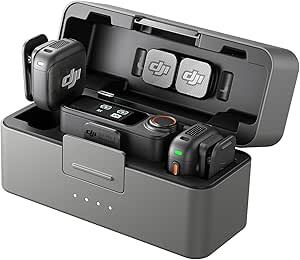
DJI Mic 3 Wireless Microphone System with 2 Transmitters, 1 Receiver, and Charging Case

Bose QuietComfort True Wireless Earbuds with Active Noise Cancellation, Black
As an affiliate, we earn on qualifying purchases.
Standard Speech Tests Miss Nuance
Voice models have improved on established measures, with lower word error rates and conversation-level response speeds. The Real World VoiceEQ team argues that these gains can overstate practical readiness because established tests often give limited coverage to accents, overlapping speakers, emotional speech, background noise and long conversations.
One reported example found that transcription error rates for speech mixed with noise were about four times higher than for speech mixed with music. The authors said a combined background-audio score could conceal that difference. They also reported preliminary signs that some models reproduced errors or spelling conventions from public reference transcripts, although the supplied material does not establish why that behavior occurred.
“Voice models have become better at speaking than actually listening.”
— Real World VoiceEQ authors
Methodology Details Need Wider Review
The supplied announcement does not provide the full model rankings, detailed sampling procedures, rater-agreement figures or enough statistical information to independently judge every comparison. It is also unclear how often the benchmark will be updated, which results will be publicly reproducible and whether participating vendors had access to test material. The claim that models may be tuned to public benchmarks is described as preliminary research, not a confirmed explanation of model behavior.
Results Face Reproduction Tests
The next test will be whether researchers and customers can inspect the full methodology, reproduce the reported gaps and apply the metrics to deployed systems. Future updates may also show whether newer models become better at using tone and hesitation, rather than merely processing the transcript produced from an audio recording.
Key Questions
What is Real World VoiceEQ?
It is a human-evaluation benchmark for measuring how voice AI recognizes, produces and responds to acoustic and conversational information that text transcripts omit.
How large is the benchmark?
The authors report evaluations of more than 40 models across over 60 metrics. Development used more than 1 million human ratings, while the current benchmark contains 785,000 text-to-speech and 48,000 speech-to-speech ratings.
Did the benchmark identify the best voice model?
No universal winner was reported. The results indicate different leaders for different capabilities, with no tested text-to-speech configuration reaching the top five across all eight capability groups.
Why are word error rate and latency insufficient?
Those measures capture transcription accuracy and speed, but they can miss emotion, hesitation, identity, accents, overlapping speech and specific background-noise failures.
Have the findings been independently verified?
The supplied source presents findings from the benchmark’s own developers. It does not describe independent replication, and some observations about public-benchmark optimization are labeled preliminary.
Source: Hugging Face