
AIThis post was created with the assistance of artificial intelligence (AI).
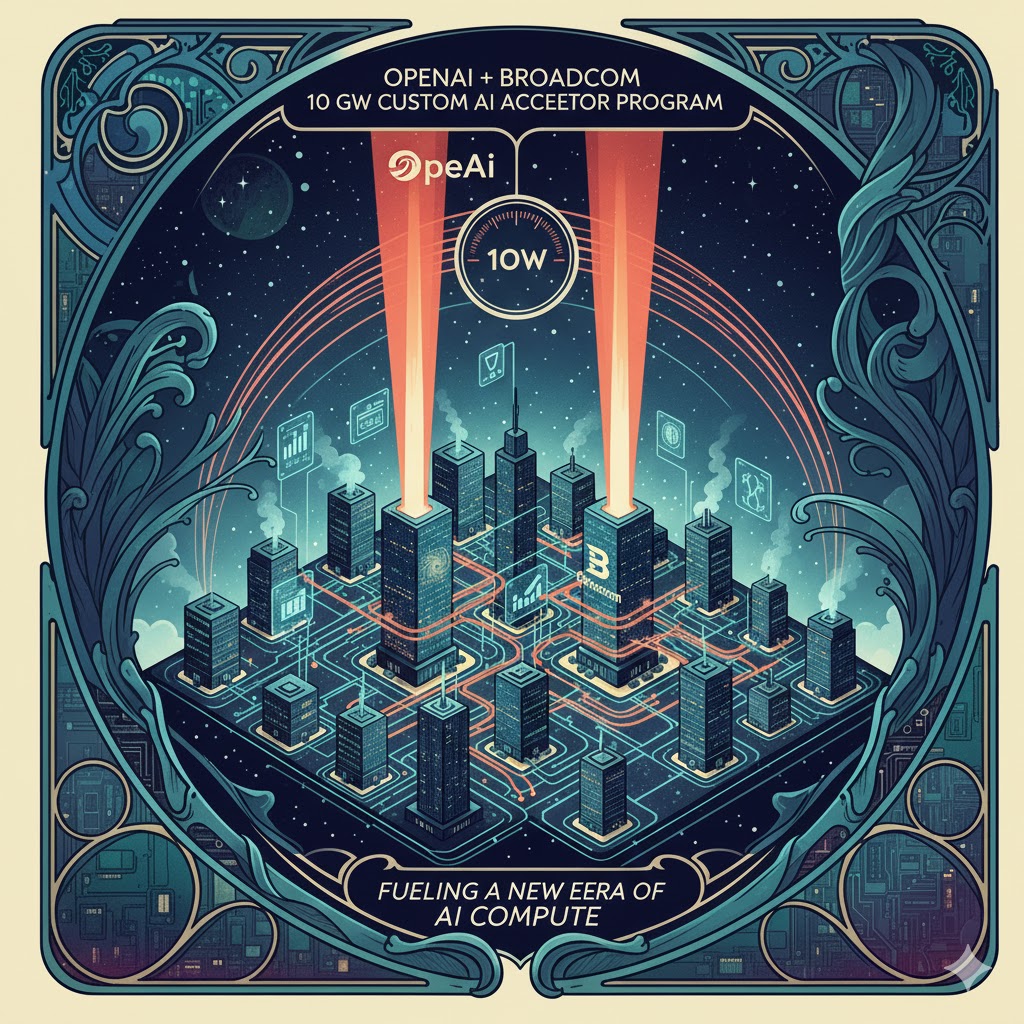
What’s new: OpenAI and Broadcom will co‑design and deploy ten gigawatts of custom AI accelerators by 2029. OpenAI focuses on chip and rack design, while Broadcom builds and integrates the silicon and networkingopenai.com. The scale is enormous—1 GW can power about 700 000 U.S. homesdatacentremagazine.com, so 10 GW equates to electricity for roughly seven million households.

Buying for a business?Offer from Amazon
Get business pricing on tech for your team
- Business-only prices and quantity discounts
- Tax-exempt purchasing
- Multiple users, one account, clear invoices
Create a free Business account Free to register
As an affiliate, we earn on qualifying purchases.
Impact:
- Vertical integration and sovereignty: Analysts note that embedding model‑specific insights into hardware could lower per‑token costs by around 40 %, giving OpenAI independence from Nvidia and AMDhyperframeresearch.com. Broadcom’s use of open Ethernet fabrics may also pressure proprietary interconnects like InfiniBandhyperframeresearch.com.
- Environmental footprint: Critics point out that data‑centre demand could push U.S. electricity use up to 6.7–12 % by 2028ainvest.com. A single article estimates the 10‑GW build‑out could consume power equivalent to eight million U.S. households, raising concerns about sustainabilityainvest.com.
- Market dynamics: This project is part of a broader 33‑GW expansion that includes deals with AMD and Nvidiatheregister.com. Observers warn of an AI hardware bubble if compute demand slows, while acknowledging that the partnership could reshape supply chains and challenge Nvidia’s dominancehyperframeresearch.com.
- Societal reaction: Sam Altman has described the effort as “the biggest joint industrial project in human history,” but some commentators worry about an unsustainable arms racetheregister.com.
Takeaway: OpenAI’s 10‑GW initiative is a bold bid for compute sovereignty and lower inference costs, but it also highlights the growing tension between AI expansion and energy sustainability.
Products Worth Considering

DJI Mini 5 Pro Fly More Combo Camera Drone with RC 2 Controller

Apple iPad Air 13-inch (M4), 128GB, Wi-Fi 7, Space Gray

Amazon Kindle Paperwhite Signature Edition (12th Generation, 2024), 32 GB, Metallic Raspberry
As an affiliate, we earn on qualifying purchases.