Artificial intelligence has moved from experimentation to infrastructure. What was once a frontier technology is now embedded in decision-making, operations, and social systems. The acceleration driven by large-scale models, cloud platforms, and automation tools is reshaping how value is created—and who captures it. This transformation is not only economic; it is institutional, cultural, and political.
This article examines how AI is altering business structures and societal dynamics, and why the coming decade will be defined less by innovation breakthroughs and more by structural adaptation.
1. Business Impact: From Software Advantage to Utility Economics
AI as a Cost-Compression Engine
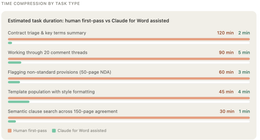
For businesses, AI’s first-order effect is radical cost compression. Functions that once required teams—customer support, content production, data analysis, even elements of software development—are increasingly automated or augmented. Firms deploying AI effectively report faster cycle times, lower marginal costs, and higher output per employee.
Yet this efficiency hides a strategic shift. As AI capabilities converge across vendors, differentiation erodes. When similar outcomes can be achieved using models from OpenAI, Google, or open-source alternatives, competitive advantage migrates away from the model itself toward integration, proprietary data, distribution, and trust.
The Rise of AI as Infrastructure
AI is beginning to resemble a utility rather than a premium software product. Pricing pressure, low switching costs, and standardized APIs push margins down. The winners are not necessarily those building the smartest models, but those controlling the “socket”: cloud infrastructure, enterprise workflows, and customer relationships.
This dynamic mirrors earlier shifts in electricity, telecommunications, and cloud computing—industries that became essential yet margin-constrained.

The AI Cloud Infrastructure Blueprint: Practical Designs and Configurations for Scalable AI
As an affiliate, we earn on qualifying purchases.
As an affiliate, we earn on qualifying purchases.
2. Labor and the Firm: Productivity Without Proportional Employment
The Productivity–Employment Decoupling
AI breaks the historic link between growth and job creation. Companies can scale output without scaling headcount. For firms, this is rational and often necessary to remain competitive. For workers, it creates instability—especially in roles defined by routine cognitive labor.
We are not witnessing “job loss” in isolation but role compression: fewer entry points, flatter organizations, and a premium on oversight, judgment, and domain expertise.
Organizational Flattening
Middle layers of management and coordination are shrinking as AI handles reporting, forecasting, and scheduling. The firm becomes leaner, faster, and more centralized around decision authority. This favors capital owners and top-tier talent while increasing pressure on mid-skill professionals.

Your Boomi Enterprise Platform Companion
As an affiliate, we earn on qualifying purchases.
As an affiliate, we earn on qualifying purchases.
3. Market Structure: Concentration, Not Democratization
Scale Advantages Reassert Themselves
Despite narratives of democratization, AI often reinforces concentration. Large firms possess the data, compute budgets, and legal capacity to deploy AI at scale. Smaller firms can access tools, but not the same leverage.
This mirrors what happened with cloud computing: while entry barriers lowered initially, durable advantages accrued to platforms with global reach and capital depth.
New Forms of Vendor Dependence
Businesses increasingly build workflows around AI APIs and platforms. When those platforms change pricing, policies, or performance, dependent firms absorb the shock. AI risk thus becomes a balance-sheet and career risk—not just a technical one.

AI Tools for Small Business Owners: The Practical No-BS Guide to ChatGPT, Automation, and AI Workflows That Save 10+ Hours Every Week
As an affiliate, we earn on qualifying purchases.
As an affiliate, we earn on qualifying purchases.
4. Societal Impact: Inequality, Power, and Institutional Lag
Economic Polarization
AI amplifies returns to capital and high-leverage skills while compressing wages for routine cognitive work. Without countervailing mechanisms, inequality widens—not because AI “replaces humans,” but because it concentrates decision power and surplus.
Institutional Mismatch
Education systems, labor law, and social safety nets were designed for a labor-mediated economy. AI accelerates a shift toward capital-mediated value creation, yet institutions lag behind. This mismatch creates social tension: people are told to “reskill” for roles that structurally require fewer humans.

USB Data Recovery Device | Windows Data Recovery Software | Recover SD Card, Photos, Files
Recover Deleted Files Quickly & Easily – Simply plug in the Data Recovery Stick and click start—no technical…
As an affiliate, we earn on qualifying purchases.
As an affiliate, we earn on qualifying purchases.
5. Governance and Trust: The New Scarcity
As AI becomes ubiquitous, trust becomes scarce. Businesses must manage not only accuracy and efficiency, but explainability, compliance, and reputational risk. Societies must decide how much autonomy to grant systems that shape credit, employment, healthcare, and information flows.
The challenge is not stopping AI, but governing abundance—of intelligence, content, and decision automation.
Conclusion: Adaptation Over Innovation
AI’s greatest impact will not come from the next model release, but from how organizations and societies adapt to intelligence that is cheap, abundant, and increasingly interchangeable.
For businesses, success depends on owning context, integration, and customer trust—not raw AI capability. For society, the task is to redesign institutions so productivity gains translate into shared prosperity rather than concentrated advantage.
AI is not ending work or capitalism—but it is ending assumptions that linked growth, employment, and human labor in a simple loop. The next decade belongs to those who recognize this structural break early and adapt accordingly.