
And Why the Per-Seat SaaS Era May Never Recover
By Thorsten Meyer | February 25, 2026 | ThorstenmeyerAI.com Original analysis • Market data • Enterprise intelligence
Executive Summary: In early 2026, the software industry suffered a market event without modern precedent. Autonomous AI agents — led by Anthropic’s Claude Cowork and its plugin ecosystem — demonstrated that they could execute entire enterprise workflows previously requiring dozens of licensed human users. The result: more than $1 trillion in market capitalization evaporated from SaaS stocks in weeks. Salesforce fell 38%, ServiceNow dropped 23%, and even Microsoft slid over 10%. This analysis dissects the structural forces behind the crash, evaluates the contrarian case for SaaS survival, and maps the strategic implications for anyone building, buying, or investing in software.


Untangling AI: Driving Business Success Through Enterprise Automation and AI Agents
As an affiliate, we earn on qualifying purchases.
As an affiliate, we earn on qualifying purchases.
I. The $1 Trillion Reckoning
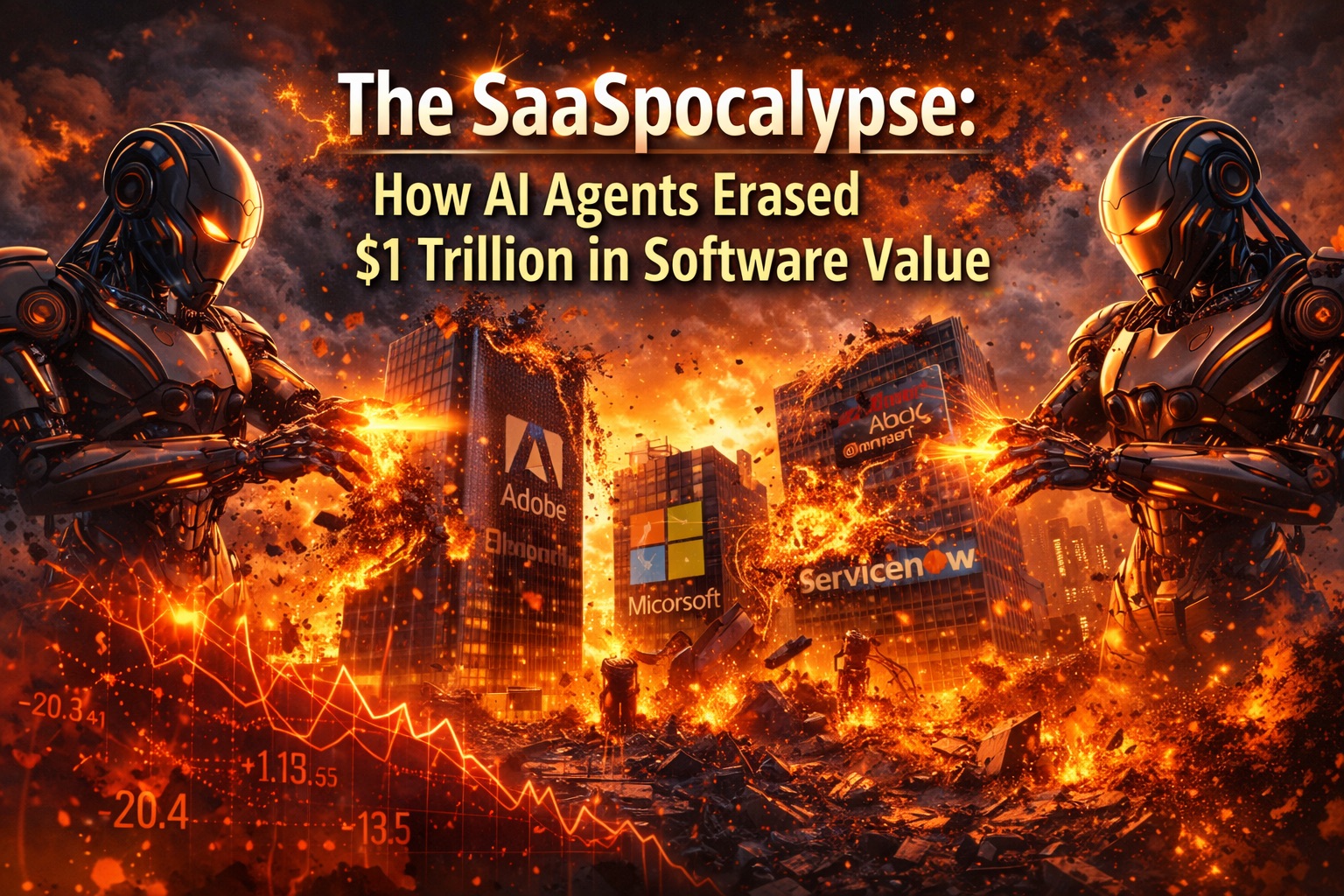
Between mid-January and mid-February 2026, the S&P 500 Software & Services Index posted its worst monthly decline since the 2008 financial crisis. Depending on which analyst you trust, total sector losses range from $1 trillion to nearly $2 trillion when European software giants like SAP and RELX are factored in. Bloomberg, CNBC, and Fast Company have all documented the sell-off under a shared label: the SaaSpocalypse.
The carnage was not caused by a recession, a credit event, or a regulatory shock. It was triggered by a series of product launches from AI companies — most notably Anthropic — that demonstrated, in concrete and undeniable terms, that autonomous AI agents can now perform the administrative and analytical work that justified millions of enterprise software subscriptions.
What makes this sell-off historically unusual is that it represents a structural repricing, not a cyclical correction. Investors are not rotating out of software temporarily — they are reassessing whether the fundamental business model of the past two decades can survive.
The Timeline of Destruction
January 12, 2026 — Claude Cowork launches. Anthropic released its desktop-native agentic tool in research preview. Unlike conversational chatbots, Cowork could manage local files, navigate complex enterprise interfaces, and deploy parallel sub-agents for data-intensive tasks. C-suites took notice immediately.
January 30, 2026 — The Plugin Event. Anthropic released 11 open-source plugins spanning legal document discovery, tax accounting, sales prospecting, financial analysis, and engineering specifications. As Axios reported, Anthropic’s head of enterprise product Scott White described the vision: plugins as “mini apps” that companies could build by the hundreds and distribute to employees. Specialized software providers saw double-digit drops in a single trading session. This was the moment markets shifted from abstract AI anxiety to concrete displacement fear.
Late January — Earnings season amplifies the panic. ServiceNow reported decelerating remaining performance obligations and conservative 2026 guidance, dropping nearly 11%. SAP missed cloud backlog targets and plunged 15%. Microsoft’s Azure growth decelerated more than expected. The contagion was swift and indiscriminate.
February 2026 — Full sector repricing. Corporate procurement departments announced plans to “right-size” their software stacks. A leaked Fortune 50 memo revealed plans to cut Salesforce and ServiceNow license spend by 60%, opting to use raw API credits from foundational model providers instead. Forward earnings multiples for the software sector collapsed from an average of 39x to 21x.
The Casualty List
| Company | YTD Drop | Primary Vulnerability |
|---|---|---|
| Salesforce | −38% | Per-seat CRM licensing; AI agents automate data entry, pipeline mgmt |
| ServiceNow | −23% | IT service ticket routing and approval workflows |
| Adobe | −30%+ | Creative and document workflow subscriptions |
| Intuit | −33% | Tax preparation and financial analysis automation |
| Thomson Reuters | −31% | Legal research and document discovery |
| SAP | −15% | ERP migration cycles disrupted by leaner AI architectures |
| LegalZoom | −20% | Legal document preparation directly targeted by Cowork plugins |
| Palantir | −25% | AIP perceived as “UI wrapper” for third-party models |

The Ultimate Toolkit: Best AI Content Creation Plugins for Your WordPress Site: : A Complete Guide to Content Creation, SEO, and Automation Tools
As an affiliate, we earn on qualifying purchases.
As an affiliate, we earn on qualifying purchases.
II. From Copilots to Digital Workers: Why This Time Is Different
The AI industry has cried wolf before. In 2023 and 2024, “copilot” products from Microsoft, Google, and others promised to revolutionize productivity. They delivered incremental gains — faster email drafting, better code suggestions — but left the fundamental SaaS architecture untouched. Users still needed their software seats. Revenue models were safe.
2026 is different because the technology crossed a critical threshold: agents stopped assisting humans and started replacing them.
The Copilot Era (2023–2025)
LLM-based copilots helped humans work faster within existing software interfaces. They wrote emails, generated code snippets, summarized reports. But they required a human operator at every step. The software seat remained essential because the human remained essential.
The Agentic Era (2026–)
Computer-Using Agents (CUAs) like Claude Cowork operate differently. As Anthropic’s Kate Jensen told reporters at the company’s February 24 enterprise event: “2025 was meant to be the year agents transformed the enterprise, but the hype turned out to be mostly premature. It wasn’t a failure of effort. It was a failure of approach.” The 2026 approach works because agents now:
- Execute multi-step workflows autonomously across applications and systems
- Navigate complex enterprise interfaces better than most human users
- Deploy parallel sub-agents to handle massive data processing tasks
- Learn any new software environment within minutes
- Move data between systems with perfect fidelity, reducing vendor lock-in
This transition fundamentally decouples workflow execution from the traditional GUI and SaaS seat that once justified subscription fees. When the primary “user” of software is no longer a human, the per-seat model collapses.
![WavePad Audio Editing Software - Professional Audio and Music Editor for Anyone [Download]](https://m.media-amazon.com/images/I/B1fcLEGCs6S._SL500_.png)
WavePad Audio Editing Software – Professional Audio and Music Editor for Anyone [Download]
Full-featured professional audio and music editor that lets you record and edit music, voice and other audio recordings
As an affiliate, we earn on qualifying purchases.
As an affiliate, we earn on qualifying purchases.
III. Revenue Deletion: The Economics of Seat Compression
The dynamic at work here is not competition in any traditional sense. AI is not merely taking market share from SaaS vendors — it is deleting their revenue entirely. When an AI agent can perform a service for pennies in API credits that enterprises previously paid billions for in aggregate licensing fees, that revenue does not transfer cleanly to the AI provider. Much of it simply vanishes from the economy and rotates into AI infrastructure — chips, data centers, and foundational model providers. This is revenue deletion, not revenue displacement.
The Per-Seat Model Under Siege
Traditional SaaS valuations are built on three pillars, and all three are now compromised:
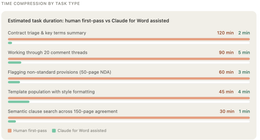
- Predictable Recurring Revenue (ARR): Depends on many licensed users paying per seat every month. When a single AI agent can handle the work previously done by 10–15 licensed users, the seat count collapses. Major enterprises have reportedly begun cutting SaaS license counts aggressively, redirecting budget toward AI infrastructure and agent platforms.
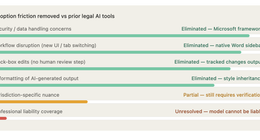
- High Switching Costs & Vendor Lock-in: Once enterprise data and workflows are embedded in a software platform, it’s traditionally been prohibitively costly to leave. But agents can extract data, transform workflows, and migrate processes across systems — reducing lock-in to near zero.
- Interface Complexity as a Moat: Sophisticated UIs and workflow designers were competitive advantages. Agents don’t need UIs. They interact directly with APIs and databases. The interface becomes irrelevant.
Consider the practical implications. A mid-market company running 500 Salesforce licenses at $150 per seat per month is spending $900,000 annually on CRM alone. If an AI agent platform costing a fraction of that can execute the same data entry, pipeline management, and reporting tasks, the CFO’s decision is straightforward. Multiply that across thousands of enterprises, and you begin to see how a trillion dollars of market value evaporates.
The Vulnerability Spectrum
| Risk Level | Category | Rationale |
|---|---|---|
| Critical | CRM data entry, ticketing, support, reporting, scheduling, project tracking | Highly repeatable; agents already automate with high fidelity |
| High | Sales prospecting, legal document review, tax preparation | Targeted directly by Cowork plugins and OpenAI Operator |
| Medium | BI dashboards, HR automation, analytics | Require interpretation and human judgment for edge cases |
| Lower | Security/compliance, mission-critical ERP, regulated workflows | Demand human oversight, audit trails, and regulatory controls |

Claude for Lawyers: AI-Powered Legal Research, Drafting & Document Review — Contracts, Motions, Discovery, Compliance & Ethics
As an affiliate, we earn on qualifying purchases.
As an affiliate, we earn on qualifying purchases.
IV. Outcome-as-a-Service: The New Commercial Architecture
One of the most profound implications of the agentic shift is the emergence of what I’m calling Outcome-as-a-Service (OaaS) — a commercial model where enterprises pay not for seats, interfaces, or dashboards, but for business outcomes delivered by AI agents handling workflows autonomously.
Adobe has already begun this transition, moving toward a “Generative Credit” system where users pay for specific output produced rather than the software used to produce it. Salesforce and ServiceNow are exploring similar consumption-based models. The pricing architecture of the next era may include:
- Per workflow executed (e.g., complete this legal review)
- Per outcome delivered (e.g., close this sales lead)
- Task-based billing with guaranteed quality thresholds
- Tiered API credit systems replacing flat subscription fees
The unit of value is shifting from “access to a tool” to “the completion of a task.” This is a radically different commercial architecture from per-seat SaaS, and the companies that master the transition first will define the next era of enterprise technology.
The logical endpoint is what I’d describe as the agent-native workflow — a single interface where users state objectives and an agent orchestrates everything via APIs. Traditional software with human-readable dashboards becomes a “legacy” concept. Users stop clicking through apps and start delegating to agents. The era of the GUI as the primary interaction layer is drawing to a close.
V. The Contrarian Case: Is SaaS Really Dead?
While the market narrative is overwhelmingly bearish, a serious contrarian case deserves examination. Fast Company published a pointed counter-argument on February 24 under the headline “What if the SaaSpocalypse is a myth?” The argument is more sophisticated than mere denial.
The core thesis: enterprise software is not just a set of tools. It encodes the enterprise itself — decades of business rules, process flows, governance structures, compliance requirements, data definitions, and role-based permissions. When a company runs on SAP, Salesforce, or ServiceNow, those systems hold the organization’s operating architecture in digital form. Replacing that is not a technology swap; it is an institutional transformation.
The Moat That Isn’t Code
As CNBC reported, Wedbush Securities noted that large enterprises took decades to accumulate trillions of data points now deeply ingrained in their software infrastructure. Constellation Research analyst Rolf Bulk argued that mission-critical providers like Oracle and ServiceNow maintain a sustained “right to earn” because the depth of their data and their entrenched role in customer workflows make them more likely to coexist with AI than be replaced outright.
This coexistence narrative was on full display at Anthropic’s own enterprise launch event on February 24. In a move that surprised many observers, Thomson Reuters CEO Steve Hasker appeared as a customer and partner — despite Wall Street’s widespread assumption that Anthropic posed an existential threat to Thomson Reuters’ legal software business. Hasker noted that Anthropic is a key model provider for Thomson Reuters and emphasized the importance of audit trails and trust in regulated industries. Epic’s SVP of R&D Seth Hain described AI shifting from assistive to collaborative, not replacive.
The relationship between AI labs and enterprise software is clearly more nuanced than the panic suggests.
The Two-Camp Future
Several analysts predict the industry will bifurcate:
- AI-Native companies built from the ground up to be operated by agents, capturing the high-value “intent” layer
- Legacy Utilities providing the underlying databases, compliance layers, and institutional memory that agents query in the background
This framing suggests not a death but a demotion — from being the primary interface to being the infrastructure substrate. That distinction still implies massive valuation compression for companies currently trading as high-growth platform plays. Being relegated to “dumb database that agents query” is survival, but it is not a growth story.
VI. Beyond Software: Labor, Security, and the Post-Agent Economy
The Labor Question
After the impact on software revenue, the next major disruption will be in the labor force itself. If AI agents can automate hundreds of thousands of repetitive enterprise roles, this raises urgent questions about workforce adaptation, AI governance, reskilling programs, and economic inequality. Some projections suggest that by 2027, AI agents may be able to compress a full month of human labor into a single execution cycle.
The implications cascade. OpenAI’s new “Frontier Alliances” with McKinsey, BCG, and Accenture are explicitly designed to help Fortune 500 companies replace entire human departments with AI agents. The consulting firms have established dedicated “OpenAI Practices” — a direct-to-enterprise pipeline that bypasses traditional software vendors entirely. When the world’s largest management consultancies are building practices around replacing human departments, the labor question ceases to be hypothetical.
The Security Dimension
One underreported risk: autonomous agents operating across enterprise systems create new and largely unexplored attack surfaces. Consider a recent real-world case: a security researcher used AI to reverse-engineer a consumer robot vacuum, accidentally discovering a vulnerability that allowed access to every similar model’s cameras globally. Now scale that dynamic to the enterprise — thousands of AI agents navigating corporate networks, each a potential vector for data exfiltration or manipulation.
This is why “Agent Governance” is emerging as the next major market opportunity — tools that monitor, audit, and secure the millions of AI agents now operating within corporate infrastructure. Anthropic itself emphasizes audit trails, admin controls, and enterprise-grade security as core Cowork differentiators. The irony is rich: the same technology disrupting software incumbents is simultaneously creating a new software category.
The Bespoke Software Revolution
Perhaps the most forward-looking implication of the agentic shift: we are entering an era of bespoke personal software. Rather than millions of users conforming to a single SaaS product’s interface and workflow, each user (or each agent) generates custom software on the fly, tailored to the specific task at hand. The notion of “buying software” gives way to “describing an outcome and having an agent build the tool.”
AI agents already build and maintain automated websites, manage personalized fitness tracking across biometric data sources, handle complex accounting tasks that would normally require a CPA working for hours, and orchestrate multi-system workflows — all without traditional software subscriptions for the execution layer. The era of clicking through different apps is ending. Software stops being a destination and becomes a substrate for autonomous AI action.
When users can describe an outcome and an agent builds the tool on the spot, the entire concept of “software products” as we know them dissolves. The product becomes the outcome. The software is disposable.
VII. Strategic Implications: What This Means for Builders and Investors
For anyone navigating this shift — whether as a founder, enterprise leader, or investor — five strategic imperatives emerge from this analysis:
- Audit Your SaaS Stack Now. The SaaSpocalypse creates a rare window to renegotiate contracts while you have maximum leverage. Pilot AI agents on low-risk, repeatable workflows. The companies that move first will capture compounding cost savings that widen over time.
- Reevaluate Pricing Models. If you’re building software, per-seat pricing is now a liability. Explore outcome-based, consumption-based, or task-based monetization before the market forces the transition. Adobe’s Generative Credit model is an early template worth studying.
- Build for Agent-Native Workflows. The winners will not be companies with the most human users but those whose software can successfully serve AI agents as primary users. API-first architectures, clean data models, and governance layers are the new competitive moats.
- Invest in Agent Governance. Autonomous agents require monitoring, auditing, and security frameworks that don’t yet exist at scale. This is a greenfield market opportunity — possibly the most consequential new software category to emerge from the disruption.
- Plan for Workforce Augmentation, Not Just Replacement. The most sustainable approach integrates agents to augment human potential. Pure replacement strategies carry regulatory, reputational, and operational risk. The companies that find the right human-agent balance will outperform those that over-correct in either direction.
VIII. Conclusion: A Paradigm Shift, Not a Market Correction
The trillion-dollar sell-off of early 2026 is not a blip. It captures the opening act of what may prove to be the most consequential restructuring of the technology industry since the birth of cloud computing.
The per-seat SaaS model sustained a multi-trillion-dollar industry for two decades. Its core assumptions — that work requires human operators, that human operators require software licenses, and that software complexity creates defensible moats — are now being challenged simultaneously by a technology that learns any interface in minutes and works without sleep, benefits, or complaints.
Whether you view this as the end of SaaS or the beginning of a new hybrid era, one conclusion is inescapable: the rules that governed enterprise software are being rewritten in real time. And this rewrite is not coming from within the industry. It is being imposed from outside by AI labs that have no legacy business model to protect.
AI agents are not tools. They are digital workforce engines. And the companies that master them first will define the next era of technology — while those that cling to the old paradigm risk joining the trillion-dollar wreckage.
The SaaSpocalypse is not an ending. It is the beginning of the Agentic Era — and the enterprises, founders, and investors who recognize this fastest will be the ones writing the rules of what comes next.
Thorsten Meyer AI — Deep analysis of AI infrastructure, market dynamics, and the forces reshaping technology.
Sources: CNBC; Bloomberg; Fast Company; TechCrunch; Axios; Yahoo Finance; CNN; Constellation Research; FinancialContent / MarketMinute; Digital Applied; Anthropic enterprise briefings.