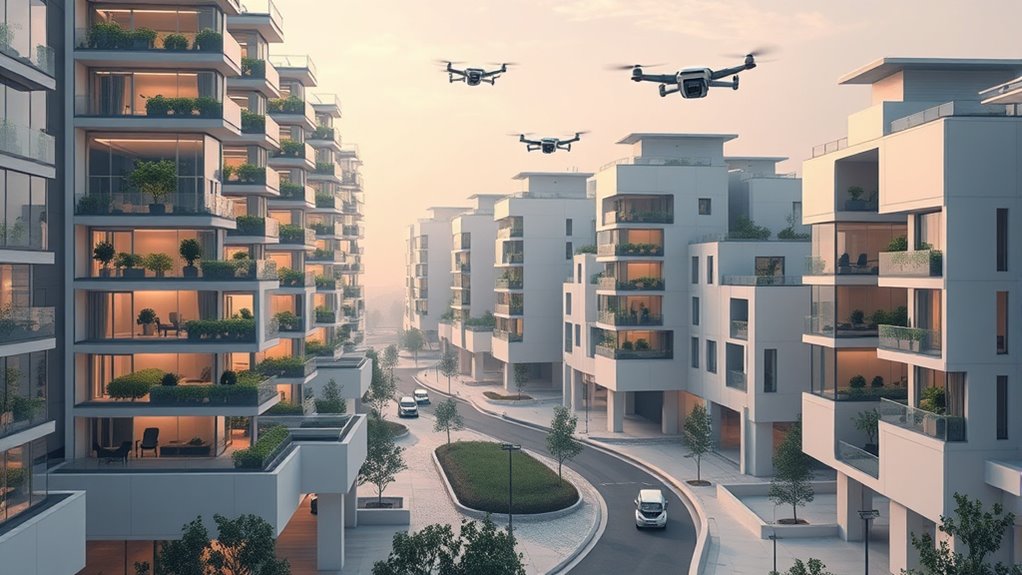

A post-work society paired with automation could dramatically reduce housing costs and increase availability. Automation speeds up construction, cuts costs, and improves management, making homes more affordable. A steady income from policies like universal basic income can ease financial burdens and stability. Combined with innovative approaches like modular and 3D-printed homes, these changes could reshape housing access. To explore how these solutions work together and their potential impacts, keep exploring this transformative possibility.
Key Takeaways
- Automation reduces construction costs and accelerates housing supply through robotics, 3D printing, and smart building systems.
- A post-work society with UBI stabilizes income, making housing costs more predictable and affordable for vulnerable households.
- Technological innovations improve housing management efficiency, lowering operational expenses and enhancing tenant stability.
- Policy reforms and community models, combined with automation, can expand access to affordable, equitable housing in underserved areas.
- Future integration of smart systems and advanced construction tech could dramatically decrease housing costs, addressing shortages and disparities.
Top picks for "hous automation could"
Open Amazon search results for this keyword.
As an affiliate, we earn on qualifying purchases.
The Current State of Housing Affordability and Its Challenges

Housing affordability remains a pressing issue, with millions of renter households struggling to cover their housing costs. In 2023, over 22.6 million renters were cost-burdened, spending more than 30% of their income on rent. Among them, 12.1 million are severely burdened, dedicating over half their income to housing. Disparities worsen the crisis; households of color are more likely to face severe cost burdens than white renters. The shortage of affordable homes is severe, with a deficit of 7.1 million units for extremely low-income households. Many renters lack residual income for daily expenses, pushing them toward financial instability. This ongoing crisis highlights the urgent need for solutions to increase affordable housing options and address systemic inequities. Understanding the housing supply shortage is crucial to developing effective policies that can alleviate the crisis.
How Automation Is Transforming the Housing Industry
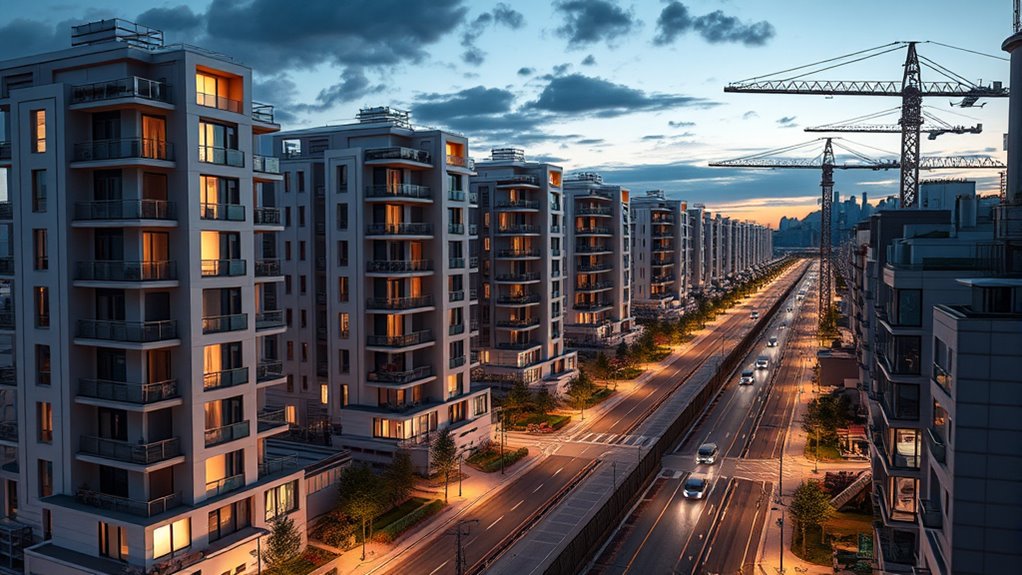
Automation is rapidly transforming the housing industry by streamlining construction, management, and delivery processes. You’ll see faster builds, reduced costs, and more innovative designs thanks to robotics, 3D printing, and smart systems. These advancements make affordable housing more achievable and accessible. Automation also improves management through smart sensors and data analytics, ensuring efficient maintenance and energy use. Additionally, understanding signs of spoilage in building materials can prevent costly repairs and delays, further enhancing project efficiency.
The Impact of a Post-Work Society on Income Stability and Housing Costs

A post-work society could provide you with more income stability through universal basic income or similar programs, easing the burden of housing costs. With fewer employment uncertainties, your expenses may become more predictable, making housing more affordable. Additionally, economic resilience might improve as steady income streams help sustain housing markets despite shifts in employment patterns. Incorporating long-term planning into housing strategies can further enhance stability and affordability.
Universal Income Stability
In a post-work society, implementing a universal basic income (UBI) could considerably enhance income stability for many households. With a steady financial safety net, you wouldn’t have to worry about sudden job loss or income fluctuations, which often drive housing insecurity. This consistent support reduces the pressure to spend over half your income on rent or mortgage payments, easing housing burdens. UBI also enables you to better plan for future expenses, making housing costs more predictable and manageable. By providing reliable income regardless of employment status, UBI helps prevent homelessness and housing insecurity, especially for low-income and marginalized communities. Additionally, the stability provided by UBI can encourage investment in American Diner Classics and related community amenities, fostering stronger local economies. Ultimately, universal income stability can create a foundation for more affordable, secure housing, fostering resilience amid economic shifts brought by automation.
Reduced Housing Expenses
Universal basic income can considerably reduce your housing expenses by providing a steady stream of income regardless of employment status. With reliable financial support, you’ll be better equipped to cover rent or mortgage payments without the constant fear of losing your home. It also allows you to allocate funds to other essentials like utilities, transportation, and groceries. Imagine having predictable housing costs that don’t fluctuate with market changes or employment gaps.
- Access to more affordable housing options as demand shifts, making rent or mortgage payments more manageable
- Reduced risk of eviction or foreclosure, offering greater housing stability
- Increased ability to invest in home improvements or community resources, enhancing living conditions and neighborhood stability
Economic Resilience Boost
As society moves toward a post-work era, economic resilience becomes essential for maintaining stable housing costs. With reduced reliance on traditional employment, universal basic income or similar support systems can provide consistent income, shielding households from income volatility. This stability helps prevent sudden rent increases or evictions, making housing more affordable. Additionally, automation-driven efficiency in construction can lower housing costs, further easing financial burdens. By ensuring a steady income stream, a post-work society reduces the financial stress that often leads to housing insecurity or homelessness. This resilience also buffers against economic downturns, preventing widespread housing instability. Furthermore, integrating home decor solutions that promote organization and comfort can enhance overall quality of life for residents in such societies. Ultimately, fostering economic resilience through income guarantees and technological advancements enables a more stable housing market, benefiting low-income households and reducing disparities.
Potential Solutions Enabled by Technological Advancements

Technological advancements can transform housing affordability by making construction faster and cheaper through automated methods. Smart housing management systems can reduce operational costs and optimize resource use, lowering monthly expenses for residents. Additionally, cost-reducing technologies can streamline building processes and materials, increasing the availability of affordable homes for those who need them most. Innovations like portable restrooms can contribute to sustainable event and housing setups, reducing environmental impact and supporting scalable living solutions.
Automated Construction Efficiency
Automated construction technologies have the potential to drastically improve housing affordability by reducing building costs and accelerating project timelines. With advancements like robotics, 3D printing, and modular construction, you can see faster, cheaper housing developments. These innovations minimize labor costs and material waste, making housing projects more scalable and accessible. Imagine buildings assembled quickly with minimal on-site work, freeing up time and resources. This efficiency enables developers to deliver more affordable homes, especially in high-demand areas. Additionally, automation allows for precision and quality control, reducing construction errors and delays. As a result, housing supply increases, helping to address shortages. By streamlining the building process, automation creates opportunities for innovative, cost-effective solutions that can transform the housing market and make affordable homes more widely available. Modern construction automation techniques further enhance project consistency and safety, ultimately contributing to sustainable housing development.
Smart Housing Management
How can smart housing management revolutionize affordable housing? By using connected devices and data analytics, you can optimize energy use, reduce costs, and improve living conditions. Smart systems monitor occupancy, adjust heating and cooling, and detect maintenance issues early, preventing costly repairs. These efficiencies lower operational expenses, making housing more affordable. Additionally, automation streamlines rent collection, tenant communication, and resource allocation, ensuring fair access. Here’s how smart housing management impacts different areas: Customer service can assist with inquiries about the technology and its implementation.
Cost-Reducing Technologies
Smart housing management has already demonstrated how technology can streamline operations and reduce costs, paving the way for broader innovations that lower housing expenses even further. New cost-reducing technologies are transforming construction, management, and maintenance processes. You might see modular building systems that speed up construction and cut labor costs, or 3D printing that produces affordable, durable homes on-site. Additionally, smart energy systems optimize resource use, lowering utility bills for residents. These innovations make housing more accessible by reducing upfront costs and ongoing expenses. By leveraging automation and innovative materials, developers can build affordable housing at scale. This shift not only helps address shortages but also ensures long-term affordability for low-income households. The result: a more sustainable, cost-effective housing future.
Policy Reforms and Community Strategies for Housing Accessibility
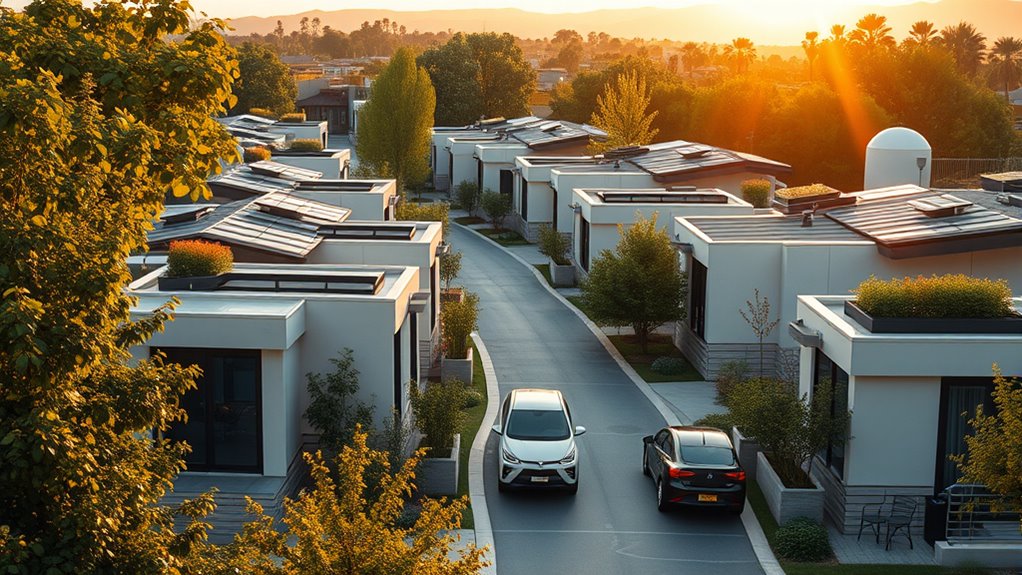
What policy reforms can effectively improve housing accessibility for low-income and marginalized communities? You can advocate for expanding affordable housing funding and increasing subsidies to make rent more manageable. Relaxing zoning laws allows for denser development, boosting supply and lowering costs. Implementing rent control measures helps prevent excessive rent hikes, providing stability. Strengthening tenant protections ensures fair treatment and reduces eviction risks. Community land trusts and cooperative housing models give residents shared ownership, making housing more affordable long-term. Additionally, targeted programs for marginalized groups address systemic barriers and improve access. Incorporating cookie management strategies ensures that user privacy preferences are respected during the implementation of these policies. Combining these reforms with community engagement ensures that residents have a voice in planning. Ultimately, coordinated policy efforts can create a more equitable housing landscape, reducing disparities and fostering inclusive neighborhoods.
Addressing Disparities and Ensuring Equity in a Changing Housing Landscape
Addressing disparities and ensuring equity in a changing housing landscape requires targeted efforts to close the gaps faced by marginalized communities. You need to focus on policies that promote fair access and dismantle systemic barriers. Consider how efforts like expanding affordable housing, reforming zoning laws, and supporting community-led initiatives can create more inclusive neighborhoods.
- Investing in affordable housing developments in underserved areas to reduce segregation
- Implementing anti-discrimination policies to protect vulnerable renters and buyers
- Supporting local programs that empower marginalized communities with resources and decision-making power
Case Studies and Global Perspectives on Housing Innovation
Have innovative housing solutions made a tangible difference in tackling affordability and accessibility across different regions? Yes, in countries like Singapore, modular construction techniques have drastically reduced building times and costs, making homes more accessible. In Denmark, cooperative housing models foster community ownership and affordability, addressing social disparities. Meanwhile, in Colombia, urban renewal projects incorporate local participatory design, ensuring housing meets community needs while controlling costs. In the United States, public-private partnerships have expanded affordable housing through incentives and zoning reforms. Globally, smart technologies like 3D printing and automated construction are emerging to lower costs and speed up development. Additionally, the integration of predictive analytics helps optimize resource allocation and project planning in housing development. These case studies demonstrate that tailored innovations, supported by policy and community engagement, can markedly improve housing affordability and accessibility worldwide.
Envisioning a Future Where Housing Costs Are Significantly Reduced
Envisioning a future where housing costs are substantially reduced requires harnessing innovative technologies and bold policy reforms. You might see modular construction using automation, which cuts building time and costs. Zoning reforms could enable more dense, affordable developments, making better use of land. Additionally, universal basic income or social support programs would ensure stable income, easing financial burdens.
- Automated construction techniques rapidly produce affordable, durable housing at scale
- Policy reforms loosen zoning restrictions, encouraging diverse, dense housing options
- Income support mechanisms, like universal basic income, reduce financial stress and increase housing affordability
Frequently Asked Questions
How Realistic Is a Post-Work Society for Solving Housing Affordability?
A post-work society could be quite realistic in solving housing affordability if implemented thoughtfully. You’d rely on mechanisms like universal basic income and innovative housing solutions to guarantee everyone has access. While automation and policy reforms can help reduce costs and increase supply, you’ll need strong political will and community engagement to address disparities and systemic barriers. With coordinated efforts, this future could make housing more accessible and affordable for all.
What Are Potential Risks of Automation Increasing Income Inequality?
You should know that automation could widen income inequality, with the top 10% capturing most benefits. This means fewer opportunities for low-income earners, making housing even less affordable for them. Imagine millions struggling to keep up as wages stagnate while automation boosts profits for the wealthy. The risk is a deeper housing crisis, where economic disparity grows, leaving vulnerable populations behind and increasing homelessness and housing insecurity.
Can Technology Fully Address the Shortage of Affordable Housing?
Technology can help reduce the affordable housing shortage by improving construction methods and streamlining development processes, making homes cheaper and faster to build. You might see more innovative housing solutions like modular or 3D-printed homes that cut costs. However, technology alone isn’t enough. You need supportive policies, zoning reforms, and investments to address land availability and affordability, ensuring new housing actually reaches those who need it most.
How Might Universal Basic Income Impact Housing Market Dynamics?
Universal basic income could revolutionize housing market dynamics, turning the chaos into calm. Imagine a world where affordability skyrockets, and housing costs plummet to near zero! You’d have the power to choose homes without the crushing fear of losing everything. This financial safety net would flood the market with stability, making homelessness vanish overnight. It’s a game-changer that could transform the entire housing landscape into a peaceful, affordable paradise for everyone.
What Are Effective Ways to Ensure Housing Equity in a Technological Shift?
You can promote housing equity by supporting policies that increase affordable housing supply, like zoning reforms and public funding. Advocate for rent controls and tenant protections to prevent displacement. Embrace technological innovations that lower construction costs and improve housing access. Prioritize income support programs, such as universal basic income, to help low-income households. Engage communities in planning to ensure diverse, inclusive housing options, creating a fairer, more equitable housing landscape amidst technological change.
Conclusion
Imagine a world where the house you call home is no longer a towering mountain of debt, but a steady stream flowing from the river of innovation. As automation and a post-work society reshape our landscape, you become the gardener tending to this new ecosystem—cultivating affordability and equity. Embrace this future, where technology’s gentle hand guides us toward a horizon where everyone can find shelter beneath the open sky.