
AI-enabled worker surveillance helps companies boost productivity by tracking activity, analyzing work patterns, and monitoring digital behavior. However, it raises concerns about privacy, trust, and fairness, as constant monitoring can create anxiety and reduce morale. Regulations like GDPR emphasize transparency and employee consent, but balancing efficiency with privacy remains a challenge. If you keep exploring, you’ll discover strategies to manage these tensions ethically and responsibly, ensuring both organizational goals and individual rights are respected.
Key Takeaways
- AI-driven surveillance tools enhance productivity by monitoring work patterns but raise privacy concerns about data security and personal information.
- Balancing transparency and employee consent is crucial to maintain trust while using AI for monitoring.
- Strict regulations like GDPR and CCPA require transparent data collection and limit intrusive surveillance practices.
- Over-surveillance can damage workplace trust and morale, leading to disengagement and reduced job satisfaction.
- Responsible AI deployment involves ethical use, bias mitigation, and clear boundaries to protect employee privacy rights.
Vision1 Mini Offline AI Assistant on USB Drive No Subscription Private Local AI Device Portable AI Chat and Document Analysis Compatible with PC System
🔐 COMPLETE LOCAL PRIVACY — 100% OFFLINE AI PROCESSING Vision1 Mini runs entirely on your computer without online…
As an affiliate, we earn on qualifying purchases.
As an affiliate, we earn on qualifying purchases.
The Rise of Workplace Monitoring Technologies

The rise of workplace monitoring technologies has transformed how employers oversee employee activities. Today, over 61% of companies track attendance and monitor work hours using surveillance tools. These systems often include AI-driven analytics that assess productivity, screen activity, and even keystrokes. Employers justify these measures by claiming they boost efficiency and reduce time waste, but workers often feel their privacy is compromised. Many input sensitive information into AI tools, raising confidentiality concerns. Surveillance now extends beyond simple time tracking to include data collection on performance patterns, often without employee awareness. Additionally, data collection practices raise significant concerns about consent and individual rights. While these technologies aim to improve organizational outcomes, they also create ethical dilemmas and trust issues. As monitoring intensifies, understanding its scope and implications becomes essential for both employers and employees.

BXQINLENX 11 INCH (28.8cm) Professional BNC Extraction Tool BNC Screwdriver Surveillance Video BNC Prolong Tool Q9 Screwdriver BNC Assistance Tools
100% Brand new and high quality.
As an affiliate, we earn on qualifying purchases.
As an affiliate, we earn on qualifying purchases.
Balancing Productivity Gains and Employee Privacy

Balancing productivity gains with employee privacy presents a significant challenge for modern workplaces. You want to harness AI’s potential to improve efficiency without infringing on personal boundaries. To do this, set clear boundaries around data collection and monitoring practices, ensuring transparency about what’s tracked and why. Focus on using AI tools to support workers rather than to micromanage or scrutinize them excessively. Engage employees in conversations about privacy concerns and involve them in shaping policies. Regularly review surveillance practices to prevent overreach and maintain trust. Prioritizing Forsale 100 data security and ethical use, making sure AI-driven monitoring aligns with legal standards and respects individual rights. Striking this balance fosters a productive environment where innovation doesn’t come at the expense of privacy.
Quantifiably Better: Delivering Human Resource (HR) Analytics from Start to Finish
As an affiliate, we earn on qualifying purchases.
As an affiliate, we earn on qualifying purchases.
Common Methods of AI Surveillance in Organizations

Organizations often monitor your time and attendance using AI-driven systems to track when you’re working and taking breaks. Productivity analytics tools analyze your work patterns and outputs to assess efficiency and performance. Additionally, companies may track sensitive data you input into AI tools, raising concerns about privacy and confidentiality. Transparency regarding affiliate partnerships and data collection practices is also emphasized to maintain user trust.
Time and Attendance Monitoring
How do companies track employee time and attendance using AI? They often deploy digital tools that automatically record when you log in and out of work systems, using facial recognition, biometric scans, or activity sensors. These systems analyze patterns to verify presence and monitor punctuality. Some organizations use AI-powered facial recognition cameras at entry points, while others rely on keyboard and mouse activity to determine if you’re working. AI algorithms process this data in real-time, generating attendance reports and flagging irregularities. This approach aims to streamline payroll and ensure compliance. However, it raises privacy concerns, as employees may feel surveilled constantly. Despite their efficiency, these methods can blur the boundary between productivity monitoring and personal privacy, creating ethical dilemmas for organizations. Additionally, advancements in Home Theatre Projector technology demonstrate how AI can optimize image quality and user experience in entertainment settings.
Productivity Analytics Tools
Productivity analytics tools leverage AI to monitor and assess employee performance through a variety of methods. These tools analyze patterns in work output, time spent on tasks, and digital activity. They often track keyboard and mouse activity, app usage, and website visits to gauge engagement. Some systems use sentiment analysis on communication channels to evaluate mood and collaboration. Here’s a quick overview:
| Method | Data Collected | Purpose |
|---|---|---|
| Activity Monitoring | Keyboard, mouse, app usage | Measure task engagement |
| Communication Analysis | Emails, chats, calls | Assess collaboration and tone |
| Time Tracking | Login/logout times | Monitor work hours |
While designed to boost productivity, these tools can intrude on privacy and create ethical dilemmas. Additionally, understanding data privacy regulations is crucial for organizations implementing such surveillance.
Sensitive Data Tracking
Have you ever wondered how companies monitor sensitive data in the workplace? They often use AI-driven tools to track access, sharing, and storage of confidential information. These systems scan emails, documents, and messaging platforms for keywords and patterns that indicate potential leaks or misuse. Some organizations implement biometric authentication, like fingerprint or facial recognition, to control data access. AI algorithms also analyze employee activity logs to detect unusual behavior that might compromise data security. While these methods aim to protect sensitive information, they can feel invasive and erode trust if not transparent. Balancing security with privacy remains a challenge. Employees may unknowingly input sensitive data into AI tools, increasing exposure and raising ethical concerns about surveillance and data confidentiality.

Crienten Auto Face Tracking Tripod, 360° AI Face Tracking Phone Holder with Remote, No App,Smart Phone Stand for iPhone & Android, Rechargeable Tripod for Video Recording, Live Streaming, TikTok, Vlog
【360°Real-time Smart Face Tracking Shooting】This face tracking phone holder uses a real-time AI computing system that can automatically…
As an affiliate, we earn on qualifying purchases.
As an affiliate, we earn on qualifying purchases.
Employee Concerns and Perceptions of Monitoring
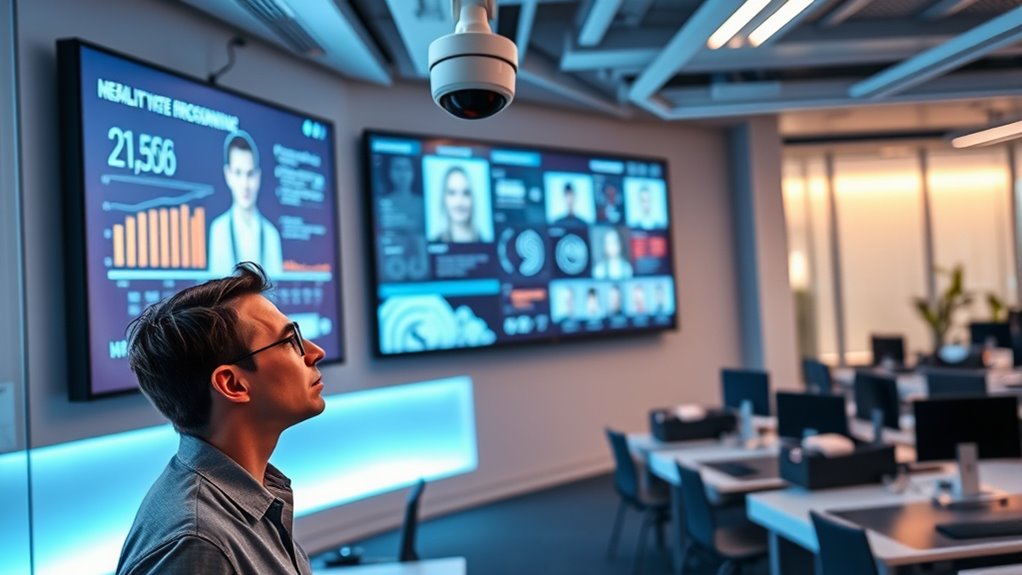
As AI-powered monitoring becomes more prevalent in workplaces, employees are increasingly concerned about privacy and the potential for surveillance to infringe on their personal boundaries. You might worry about how much your activities are being watched and whether your personal data is secure. Many feel that constant oversight can create a sense of mistrust and reduce job satisfaction. You may also fear that surveillance could be used unfairly or lead to unjust performance evaluations. Concerns about the lack of transparency and clarity around monitoring practices add to your unease. You want assurance that your privacy is respected and that AI tools are used ethically. Balancing productivity gains with your right to privacy remains a significant challenge for organizations.
Ethical Considerations in AI-Driven Oversight

Ethical considerations in AI-driven oversight are increasingly critical as organizations rely more on surveillance to monitor employee performance. You need to guarantee transparency, so workers understand what data is collected and how it’s used. Avoid hidden monitoring that erodes trust; instead, communicate openly about AI tools and their purpose. Bias and fairness are also essential concerns—AI systems can reinforce discrimination when not properly designed or tested. Protecting privacy must remain a priority, with strict data security measures and limits on data access. Accountability is key—if an AI system makes a questionable decision, organizations should have processes to review and address issues fairly. Balancing productivity goals with respecting individual rights requires deliberate, ethical oversight to prevent misuse and maintain workplace integrity. Additionally, understanding the role of Mad Tasting in the IT sector can provide insights into innovative approaches to data management and user experience.
Impact of Surveillance on Workplace Trust and Morale

Surveillance practices in the workplace can particularly affect trust and morale among employees. When you see constant monitoring of your attendance, productivity, or even keystrokes, it can feel like you’re under scrutiny rather than trusted. This sense of being watched often leads to anxiety, reducing engagement and openness. Employees may become wary of sharing ideas or feedback, fearing surveillance could be used against them. Over time, this erodes trust in leadership, creating a siloed, defensive environment. Morale declines as workers feel their privacy is compromised and their contributions undervalued. Instead of fostering collaboration, surveillance can foster resentment and disengagement, making it harder for organizations to maintain a positive, motivated workforce. Building trust requires transparency and respecting boundaries, not just monitoring. Implementing vertical storage solutions and creating designated zones can help improve workspace organization, which may alleviate some stress related to clutter and chaos, ultimately supporting a healthier work environment.
Regulatory Landscape and Legal Challenges

The increasing use of AI in workplaces has prompted governments and regulators to develop frameworks aimed at balancing innovation with employee rights and safety. You need to understand key legal challenges shaping this landscape:
- Data Privacy Laws: Regulations like GDPR and CCPA enforce strict data handling, limiting surveillance and requiring transparency.
- Consent Requirements: Laws increasingly demand explicit employee consent for monitoring and data collection.
- Discrimination and Bias: Legal scrutiny targets AI biases that could lead to unfair treatment or discrimination.
- Enforcement and Penalties: Authorities are strengthening enforcement, with significant fines for non-compliance and misuse.
Staying ahead means aligning AI deployment with evolving legal standards to avoid sanctions and protect worker rights.
Strategies for Transparent and Responsible Monitoring

Implementing transparent and responsible monitoring practices is essential for building trust and ensuring compliance in AI-driven workplaces. You should clearly communicate what data is collected, how it’s used, and who has access. Establish policies that prioritize employee privacy, such as limiting surveillance to work-related activities and avoiding intrusive methods. Regularly update staff on monitoring tools, their purpose, and any changes to data practices. Incorporate employee feedback to address concerns and improve transparency. Use AI ethically by avoiding bias and ensuring fairness. Implement oversight mechanisms, like audits, to detect misuse or overreach. Promoting employee rights and understanding legal considerations are also vital to prevent potential violations. By fostering openness and accountability, you create a workplace where monitoring supports productivity without sacrificing privacy or morale.
Future Trends in AI and Worker Privacy Protections
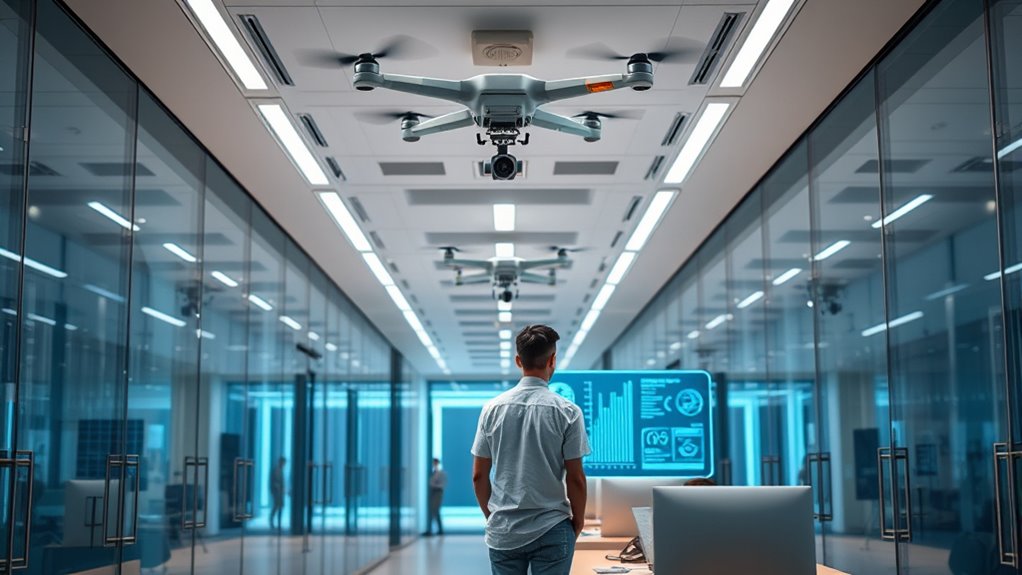
As AI becomes more embedded in workplaces, future protections for worker privacy are likely to focus on balancing technological innovation with ethical safeguards. You can expect regulations to evolve along several key lines:
- Implementing stricter data privacy laws that limit AI’s access to sensitive employee information.
- Requiring transparent AI algorithms to prevent bias and ensure fairness.
- Establishing clear boundaries on surveillance scope to protect workers’ privacy rights.
- Promoting employee consent and control over how their data is collected and used.
- Addressing data privacy challenges by developing policies that adapt to the increasing complexity of algorithms and safeguard individual rights.
These trends aim to reduce misuse, enhance transparency, and foster trust. As organizations adopt new AI tools, you’ll see a growing emphasis on responsible practices that respect individual privacy while maintaining productivity.
Navigating the Tension Between Efficiency and Privacy Rights

You need to find ways to boost productivity without sacrificing employee privacy. Implementing ethical surveillance practices can help balance these goals and build trust. When organizations prioritize transparency and respect, they can achieve efficiency while safeguarding rights. Incorporating well-being tips such as clear policies and open communication can foster a healthier workplace environment.
Balancing Productivity and Privacy
Balancing productivity gains with privacy rights has become one of the most pressing challenges in workplaces adopting AI. To navigate this tension, you should consider:
- Establish clear policies that define acceptable AI monitoring and data collection limits.
- Communicate transparently with employees about what data is collected and how it’s used.
- Implement privacy safeguards, such as data encryption and access controls, to protect sensitive information.
- Regularly review and update surveillance practices to align with evolving regulations and ethical standards.
Ethical Surveillance Practices
Implementing ethical surveillance practices requires organizations to carefully weigh the benefits of increased efficiency against employees’ rights to privacy. You should establish clear policies that specify what data is collected, how it’s used, and who has access. Transparency is essential; openly communicate surveillance measures and their purpose to build trust. Avoid intrusive monitoring that can erode morale or infringe on personal boundaries. Regularly review surveillance tools to ensure they remain fair and unbiased, and implement safeguards against misuse. Consider employee feedback to balance oversight with privacy rights. Ethical practices also include anonymizing data when possible and limiting surveillance to work-related activities. By prioritizing transparency, fairness, and consent, your organization can foster a responsible surveillance environment that respects individual privacy while supporting productivity.
Frequently Asked Questions
How Do Employees Typically Detect Hidden AI Surveillance?
You usually detect hidden AI surveillance by paying attention to unusual system behavior or increased monitoring prompts. You might notice sluggish device performance, unexpected pop-ups, or new permissions requesting access to sensitive data. Sometimes, coworkers share concerns or notice changes in workplace policies. By staying alert to these signs and monitoring your device activity, you can identify if AI surveillance is operating behind the scenes, potentially compromising your privacy.
What Are Effective Ways to Challenge Intrusive Monitoring Policies?
You can challenge intrusive monitoring policies by openly discussing your concerns with management, emphasizing privacy rights and ethical considerations. Organize or join employee advocacy groups to push for transparency and fair practices. Use collective bargaining or negotiate for clear policies that limit surveillance scope. Additionally, document instances of overreach and seek legal advice if necessary. By advocating for your privacy, you promote a balanced approach that respects both productivity and personal boundaries.
How Does AI Surveillance Impact Employee Creativity and Innovation?
AI surveillance can hinder your creativity and innovation by creating a sense of constant monitoring, which may make you hesitant to experiment or take risks. When you feel watched, you might stick to familiar methods instead of exploring new ideas. This environment stifles spontaneous thinking and problem-solving, ultimately limiting your ability to innovate. To thrive, you need a balance where AI supports, rather than restricts, your creative efforts.
Are There Industry-Specific Regulations Governing AI Monitoring Practices?
Yes, industry-specific regulations govern AI monitoring practices. For example, healthcare and finance sectors face strict data privacy laws like HIPAA and GDPR, which limit surveillance and data collection. In the EU, GDPR enforces transparency and consent, while the US has sectoral laws addressing privacy and security. As you implement AI monitoring, make certain you stay compliant with these regulations to protect worker rights and avoid legal penalties.
What Privacy Protections Are Available for Remote or Gig Workers?
Imagine a gentle shield wrapping around your digital space. For remote and gig workers, privacy protections include data encryption, clear privacy policies, and consent-based monitoring. Some regions enforce laws requiring transparency about data collection and limiting intrusive oversight. You can also advocate for workplace policies that prioritize respectful, ethical surveillance practices. Staying informed about your rights and requesting transparent communication helps assure your privacy remains safeguarded while working remotely or gigging.
Conclusion
As you navigate the world of AI and worker surveillance, remember it’s a delicate dance—like walking a tightrope between productivity and privacy. Embracing transparency and ethical practices helps you maintain trust while boosting efficiency. Striking this balance isn’t just a tightrope act; it’s about creating a workplace where innovation and respect for privacy walk hand in hand. By staying informed and responsible, you can turn this challenge into an opportunity for growth.