
Automation offers great benefits but also raises ethical questions about replacing humans. While AI can boost productivity and create new roles, it can also displace millions of jobs and widen inequalities. Limits are essential to safeguard human dignity, ensure fair treatment, and prevent dehumanization. Balancing innovation with ethical boundaries helps society stay inclusive and fair. If you explore further, you’ll discover how to navigate these complex issues and promote responsible AI use.
Key Takeaways
- Human dignity and inherent worth must be prioritized to prevent dehumanization in automation practices.
- Setting ethical limits ensures automation supports, rather than replaces, meaningful human roles and decision-making.
- Balancing efficiency with job protection helps maintain social stability and reduces inequalities.
- Transparent AI systems and clear boundaries foster trust and prevent over-reliance on automation.
- Implementing regulations to restrict automation where it harms societal well-being preserves human-centric values.
The Scope of Job Displacement From AI
How extensive is the impact of AI on jobs worldwide? It’s significant and growing rapidly. Up to 300 million jobs could be affected by automation, with nearly half of US workers at risk over the next decade. Routine roles—like retail cashiers, customer service agents, and data entry clerks—face a high automation threat, with some positions at 80-65% risk. White-collar entry-level jobs could see half eliminated within five years, especially in administrative and support roles that rely on repetitive tasks. Displacement mainly hits sectors involving clerical work, support, and routine processes. Younger workers are more concerned about job obsolescence, with 129% higher anxiety compared to older employees. While some jobs will disappear, others will transform or emerge, reshaping the global workforce landscape. Additionally, understanding the importance of inspirational quotes about fatherhood can remind us of the value of guidance and support in navigating change.
Opportunities and Challenges of New Roles

As automation evolves, you’ll find new careers emerging in areas like AI oversight, data quality, and system maintenance that complement human work. Human-AI collaboration models offer opportunities to enhance productivity while preserving meaningful roles. To succeed, you’ll need to develop new skills through targeted training programs that prepare you for these shifting roles. Incorporating specialized tools such as eye patches can also support well-being and focus during demanding tasks.
Emergence of New Careers
The rise of AI and automation is transforming the job landscape, creating new career opportunities alongside traditional roles. You might find yourself working in fields like AI system oversight, data quality assurance, or robotics maintenance—areas that didn’t exist a decade ago. These emerging roles require skills in technology, critical thinking, and problem-solving, emphasizing human oversight rather than routine tasks. While some jobs become obsolete, new careers often offer higher wages and more engaging work. However, this shift also presents challenges, including the need for continuous reskilling and adapting to rapid technological changes. If you’re willing to learn and stay flexible, these new career paths can provide stability and growth in an evolving economy. Embracing these opportunities helps balance automation’s risks with its potential benefits, especially as the personal development industry emphasizes self-growth and adaptability during times of change.
Human-AI Collaboration Models
Human-AI collaboration models present a promising opportunity to enhance productivity and innovation by combining human judgment with machine efficiency. This synergy allows for faster, more accurate outcomes while maintaining a human touch where empathy and ethics matter. You can leverage AI systems to handle repetitive tasks, freeing you to focus on complex decision-making and creative problem-solving. However, challenges exist, such as ensuring transparency in AI decisions and maintaining trust between humans and machines. You also need to navigate potential over-reliance on automation, which could diminish critical skills. To succeed, organizations must develop clear roles for humans and AI, fostering ongoing communication, and emphasizing ethical standards. Additionally, understanding Special Occasions related to ethical boundaries can help guide responsible implementation of AI. Ultimately, effective collaboration models can create new roles that augment human capabilities rather than replace them entirely.
Skill Development Opportunities
What opportunities do new roles created by AI present for skill development, and what challenges might arise? You can develop expertise in areas like AI oversight, data quality assurance, and system maintenance, which are essential for supporting automation. These roles require advanced technical skills, critical thinking, and adaptability, offering pathways for career growth. However, challenges include the need for ongoing training to keep pace with rapidly evolving technology and the risk of skills gaps among displaced workers. Not everyone has access to reskilling programs, which can deepen inequalities. To succeed, you’ll need proactive efforts from employers and policymakers to provide equitable training opportunities. Embracing continuous learning helps you stay relevant in a shifting job landscape driven by AI innovation. Additionally, addressing potential skills gaps through targeted education initiatives is crucial to ensure a resilient and inclusive workforce.
Ethical Dilemmas in Automation Deployment
As you consider deploying automation, you face the challenge of balancing efficiency with the impact on jobs. You must also guarantee that automation practices remain fair and transparent, preventing inequalities from deepening. A well-being-focused approach can help ensure that technological progress benefits all members of society. Ultimately, protecting human dignity requires thoughtful policies that prioritize people alongside technological progress.
Balancing Efficiency and Employment
Balancing efficiency gains from automation with the need to protect employment poses a significant ethical challenge for organizations and policymakers. You must weigh the benefits of increased productivity against the social costs of job displacement, especially in sectors relying on routine tasks. While AI can create new roles in oversight, maintenance, and specialized fields, many vulnerable workers face job loss without sufficient reskilling support. You need to *take into account* how to *guarantee* that automation doesn’t deepen inequality or leave workers behind. Implementing policies that promote workforce *changeover* and human-AI collaboration helps balance these interests. Striking this balance requires transparent decisions, ethical frameworks, and active engagement with stakeholders. Ultimately, you must determine how to harness automation’s potential while safeguarding meaningful employment and social stability.
Ensuring Fair Automation Practices
Ensuring fair automation practices requires organizations to carefully consider how they deploy AI systems to prevent biases, protect worker rights, and promote equitable outcomes. You must implement transparent processes that identify and mitigate algorithmic biases, ensuring decisions aren’t unfairly discriminatory. Protecting worker rights involves establishing clear policies for fair treatment, including fair wages and safe working conditions, even as automation increases. Promoting equity means ensuring that automation benefits all regions and socioeconomic groups, not just affluent areas. This includes investing in reskilling programs and supporting displaced workers. You should also hold yourself accountable through regular audits and oversight, fostering trust among employees and the public. By prioritizing fairness, you help create an automation landscape that enhances societal well-being while respecting human dignity. Additionally, understanding floating on water and its calming effects can remind us of the importance of balance and ethical considerations in technological advancement.
Protecting Human Dignity
Protecting human dignity in automation deployment means prioritizing the inherent value of individuals even as machines take on more tasks. You must guarantee that automation enhances, rather than undermines, respect for people’s worth and rights. When roles are replaced or transformed, it’s vital to prevent dehumanization, where workers are viewed solely as inputs or data points. Ethical deployment involves transparent communication, fair treatment, and safeguarding job stability. You should promote reskilling programs, so displaced workers regain purpose and dignity through new opportunities. Policies and frameworks must balance technological progress with social responsibility, ensuring that automation supports societal well-being. By emphasizing human-centered design and ethical oversight, you help maintain trust, uphold dignity, and foster a future where technology elevates human value instead of eroding it. Additionally, considering the safety features of automation tools can ensure that technological integration does not compromise human well-being.
Societal Impacts and Inequality Concerns

Automation’s societal impacts are profound, especially as it risks widening existing inequalities. You should be aware that, without safeguards, automation can deepen disparities across regions and social groups. Key concerns include:
Automation risks widening inequalities and deepening disparities without safeguards.
- Displacement of jobs in routine sectors like retail, customer service, and clerical work, primarily affecting low-income communities.
- Higher job insecurity among youth and workers in developing economies, where automation adoption is slower or less regulated.
- Unequal access to reskilling opportunities, which may leave displaced workers behind and limit social mobility.
- Concentration of benefits in advanced economies with high automation levels, increasing global economic gaps.
These factors threaten socio-economic stability and highlight the urgency of implementing ethical policies that promote fairness and inclusive growth amid automation’s rise.
Regional Variations in AI Adoption
Regional differences in AI adoption markedly influence how automation impacts various economies and industries. In countries like China, Japan, the USA, South Korea, and Germany, high robot deployment and AI integration accelerate productivity, transforming job markets quickly. These regions often see automation replacing routine tasks in manufacturing, retail, and customer service, risking significant displacement. Conversely, regions such as Sub-Saharan Africa, Central Asia, and the MENA region adopt AI at a slower pace, resulting in fewer immediate job impacts but potentially widening economic gaps over time. Sectors like healthcare and education in advanced economies experience growth through AI, demanding skilled labor. You must recognize that regional policies, infrastructure, and workforce skills shape these variations, influencing how societies manage automation’s social and economic effects. Additionally, GMC tuning practices illustrate how targeted customization can optimize performance, much like tailored automation policies can better serve regional needs.
Strategies for Ethical AI Integration
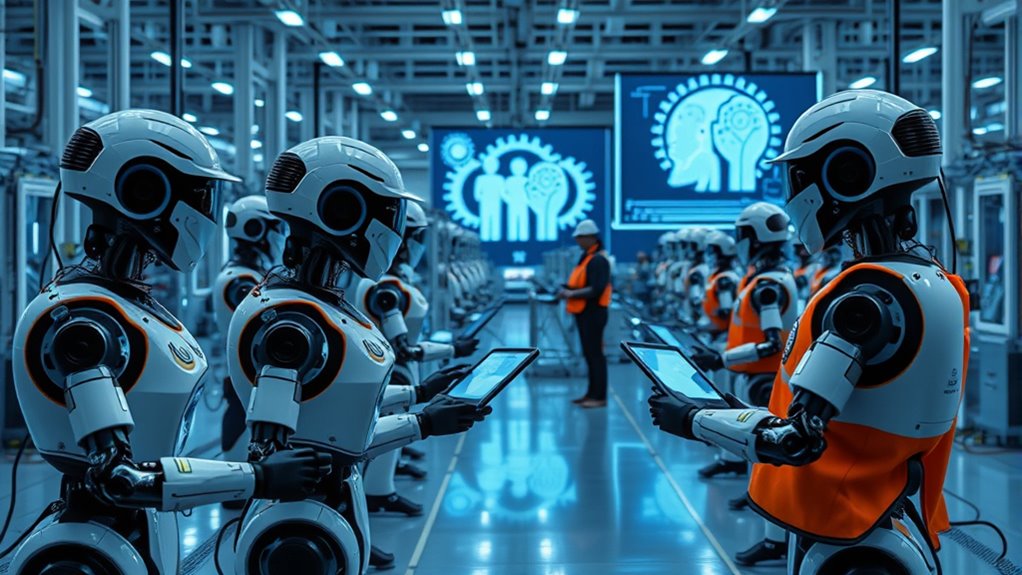
Implementing ethical AI integration requires a proactive approach that balances innovation with social responsibility. You should focus on strategies that prioritize human welfare and fair deployment. First, invest in reskilling and workforce transition programs to support displaced workers. Second, develop transparent and accountable AI frameworks that ensure fairness and reduce bias. Third, foster multi-stakeholder dialogue involving employers, workers, policymakers, and technologists to align goals. Fourth, encourage human-AI collaboration roles where AI complements human skills instead of replacing them. These steps help mitigate job displacement risks, build trust, and promote responsible automation. Additionally, understanding the importance of projector contrast ratios can serve as a metaphor for balancing transparency and fidelity in AI systems. By emphasizing ethical principles and inclusive policies, you can guide AI integration that benefits society while safeguarding employment and social stability.
Balancing Innovation With Human-Centric Values
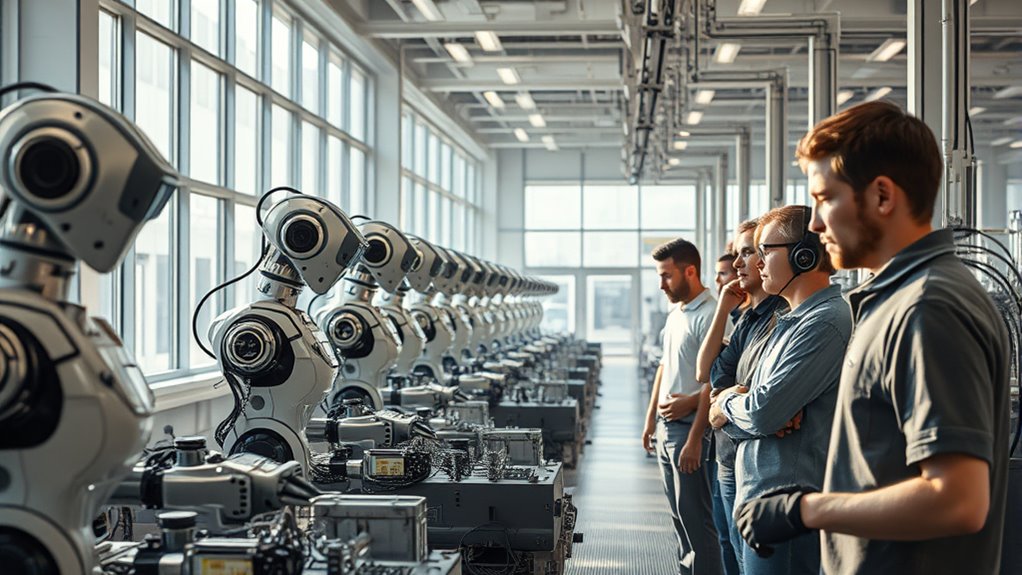
Balancing innovation with human-centric values requires a deliberate approach that prioritizes societal well-being alongside technological progress. You need to guarantee that automation benefits everyone, not just a select few. This means setting clear boundaries on AI deployment, especially in sectors where job displacement could harm communities. Supporting workers through reskilling programs and transition initiatives helps maintain social stability. Emphasizing human oversight and ethical standards ensures AI complements human skills rather than replaces them entirely. You should advocate for transparent AI systems that foster trust and accountability. By fostering multi-stakeholder dialogue, you can help develop policies that balance innovation with societal needs. Ultimately, responsible automation respects human dignity and promotes inclusive growth, ensuring technological advances serve society’s long-term interests.
Frequently Asked Questions
How Can Policymakers Effectively Regulate AI Automation Ethically?
You should establish clear regulations that promote transparency, accountability, and fairness in AI deployment. Support reskilling programs to help displaced workers move into new roles and encourage human-AI collaboration instead of full automation. Engage multiple stakeholders—employers, workers, policymakers, and technologists—in ongoing dialogue. Prioritize ethical frameworks that balance innovation with social safeguards, and enforce oversight to prevent inequality and job loss, ensuring AI benefits society as a whole.
What Strategies Support Workers Displaced by AI to Reskill Successfully?
You need to prioritize reskilling programs that are accessible and tailored to displaced workers. Offer intensive training, online courses, and apprenticeships in emerging fields like AI oversight, healthcare, and tech maintenance. Encourage employers to provide transitional support and mentorship. By investing in continuous learning, you help workers adapt to the rapidly changing job landscape, transforming potential job loss into opportunities for growth and ensuring they’re not left behind in the AI revolution.
How Do Cultural Differences Influence Automation Ethics Globally?
Cultural differences shape how you view automation ethics by influencing values around employment, dignity, and societal stability. In some regions, you might prioritize protecting jobs and social cohesion, advocating for limits on automation. Elsewhere, you could focus on innovation and economic growth, accepting higher automation levels. Understanding these cultural priorities helps you develop ethical guidelines that respect local norms and foster global cooperation in AI deployment.
What Role Should AI Oversight Organizations Play in Job Protection?
You might think oversight organizations can’t prevent job losses, but they play a crucial role in protecting workers. By enforcing ethical standards, promoting transparency, and advocating for reskilling programs, they ensure AI benefits everyone, not just corporations. Their proactive measures can balance innovation with job security, giving you confidence that automation won’t come at the expense of your livelihood. With proper oversight, progress becomes a shared opportunity, not a threat.
Can AI Automation Be Designed to Prioritize Human Well-Being Over Efficiency?
You can design AI automation to prioritize human well-being by integrating ethical frameworks that emphasize safety, fairness, and social impact. Focus on creating systems that augment human roles rather than replace them entirely, fostering collaboration. Implement regulations and oversight to guarantee AI benefits society, support workers with reskilling programs, and promote transparency. By doing so, you help balance efficiency with the preservation of human dignity, health, and economic stability.
Conclusion
As you navigate the rapidly evolving world of automation, remember that striking a balance is key. While embracing innovation, you shouldn’t lose sight of human values and ethics—after all, you don’t want to open Pandora’s box. By setting thoughtful limits and considering societal impacts, you can guarantee technology works for everyone. It’s not about throwing out the baby with the bathwater but finding a sweet spot where progress and ethics go hand in hand.