
By Thorsten Meyer | October 21, 2026 | ThorstenMeyerAI.com

Get business pricing on tech for your team
- Business-only prices and quantity discounts
- Tax-exempt purchasing
- Multiple users, one account, clear invoices
SpaceX earned $4.4 billion in Q3 on $14.6 billion of revenue, driven by its AI compute business. On the call, Elon Musk went much further: Starship catches, 100 times the Starlink bandwidth, 13 gigawatts of compute and up to $1 trillion in annual recurring revenue by the end of 2027. Here is every claim, checked against the numbers.
SpaceX reported its third-quarter results on October 20, 2026, its first quarter as a profitable public company. Revenue rose 161% to $14.6 billion. Net income was $4.4 billion, against a loss of $1.1 billion a year earlier, and adjusted EBITDA reached $8.8 billion. Revenue beat analyst estimates of about $12.7 billion, and the shares rose roughly 8% after hours.
The numbers tell one story: SpaceX is no longer mainly a rocket company. More than half of its revenue now comes from Super Intelligence (SI), the segment formerly called AI, which rents out compute, sells Grok and, since August, owns Cursor.
Musk’s remarks told a bigger one. He opened with a number that dwarfs everything in the report: annual recurring revenue of “somewhere between 500 billion and a trillion” dollars by the end of 2027. Then he walked through Starship, Starlink, compute, power, chips, Grok Bot and a possible merger with Tesla. This article goes through each of those topics in turn and puts them next to what SpaceX actually reported.
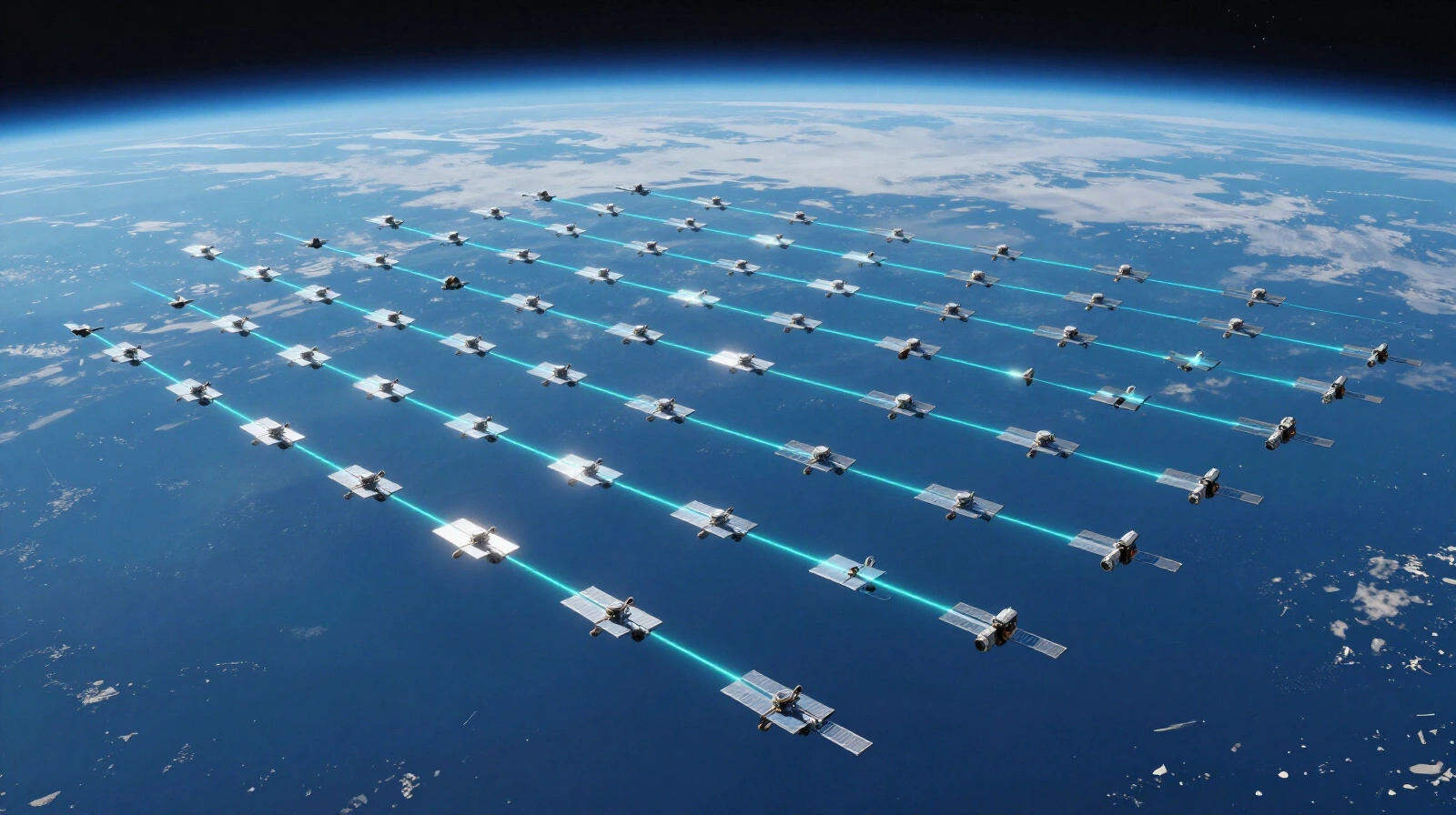
The quarter in numbers
| Q3 2026 | Q2 2026 | Q3 2025 | Change y/y | |
|---|---|---|---|---|
| Revenue | $14.6B | $7.8B | $5.6B | +161% |
| Income from operations | $2.8B | –$0.1B | –$0.3B | swing of $3.1B |
| Net income | $4.4B | n/a | –$1.1B | swing of $5.5B |
| Adjusted EBITDA | $8.8B | $3.5B | $2.2B | +306% |
| Capital expenditure | $19.6B | $18.4B | $6.9B | +185% |
By segment:
| Segment | Revenue | Income from operations | Adj. EBITDA | Capex |
|---|---|---|---|---|
| Space | $1.8B (+6%) | –$7M | $357M | $1.6B |
| Connectivity (Starlink) | $5.2B (+69%) | $2.4B | $3.5B | $1.5B |
| Super Intelligence | $7.6B (+830%) | $431M | $5.0B | $16.4B |
Three details matter for reading the headline:
- The profit is partly financial. Income from operations was $2.8 billion. Net income was higher, at $4.4 billion, because of $873 million in interest income on the IPO cash, $1.0 billion in other income (of which $561 million from a related party) and a $390 million tax benefit.
- SI’s profit is small after costs. The segment earned $431 million from operations on $7.6 billion of revenue. That includes $1.2 billion in stock compensation from the Cursor deal; without it, operating income was about $1.6 billion.
- The cash is going into compute. SpaceX spent $48 billion on capital projects in the first nine months against $13.1 billion of operating cash flow. It guided Q4 capex to $35–40 billion. The gap is funded by the IPO: $85.7 billion of net proceeds, leaving $51.3 billion in cash and $38.6 billion in marketable securities at the end of September.
Guidance for Q1 2027 is $33–37 billion in revenue, more than double Q3. SpaceX reported a backlog of $63 billion.
Infographic 01 · The quarter in numbers
AI compute is now SpaceX's biggest business.
Revenue rose 161% to $14.6 billion. Super Intelligence (formerly AI) is more than half of it, and takes 84% of all capital spending.
Revenue by segment, Q3 2026
Bar length on a $0–8B scale.
SI revenue +830% y/y: cloud services agreements, Cursor ($608M since 14 Aug) and Grok; $538M of it is advertising.
Capital spending, Q3 2026
Where the $19.6B went. Bar length on a $0–17B scale.
Nine months: $48.1B capex vs $13.1B operating cash flow, funded by $85.7B of IPO proceeds.
Profit by segment
Q3 2026. SI operating income includes $1.2B Cursor-related stock compensation.
| Segment | Revenue | Op. income | Adj. EBITDA |
|---|---|---|---|
| Space | $1.8B | −$7M | $357M |
| Connectivity | $5.2B | $2.4B | $3.5B |
| Super Intelligence | $7.6B | $431M | $5.0B |
| Total | $14.6B | $2.8B | $8.8B |
Source: SpaceX Q3 2026 results (20 Oct 2026); Q4 capex guidance from the earnings call.
Powered by Thorsten Meyer AI
high performance AI compute server
As an affiliate, we earn on qualifying purchases.
As an affiliate, we earn on qualifying purchases.
Topic 1: “$500 billion to a trillion” in annual recurring revenue
Musk’s opening claim: by the end of 2027, SpaceX’s annual recurring revenue will be “somewhere between 500 billion and a trillion” dollars. He made it right after describing the compute build-out, and joked that he didn’t want to give the CFO “a heart attack.”
How big is that? Annual recurring revenue usually means the latest month’s revenue times twelve. SpaceX’s CFO, Bret Johnsen, still says the company is on track for $100 billion of ARR by the end of 2026, measured on December revenue.
- Q3 2026 revenue of $14.6 billion is about $58 billion annualised.
- The Q1 2027 guidance of $33–37 billion is about $140 billion annualised.
- $500 billion to $1 trillion of ARR means $42–83 billion of revenue in a single month, December 2027.
So Musk’s range is 9 to 17 times the Q3 run-rate, and 3.5 to 7 times the company’s own guidance for early 2027. No formal definition or bridge was given on the call. It is a target, not guidance, and it depends on almost everything below going right.
Infographic 02 · Topic 1 · Annual recurring revenue
From $58 billion a year to a promised $1 trillion.
Annual recurring revenue (ARR) is the latest month's revenue times twelve. Every rung of the ladder, from today's run-rate to Musk's range for the end of 2027.
The ARR ladder
Annualised revenue. Bar length on a $0–1,000B scale.
ReportedCompany guidance / CFO targetMusk target on the call
Musk gave no formal definition or bridge for the range. It is a target, not guidance.
Sources: SpaceX Q3 2026 results (20 Oct 2026) (Q3 revenue); Q3 2026 earnings call transcript (guidance, CFO and Musk targets); Thorsten Meyer AI calculations.
Powered by Thorsten Meyer AI
As an affiliate, we earn on qualifying purchases.
Topic 2: Starship is finally reaching orbit
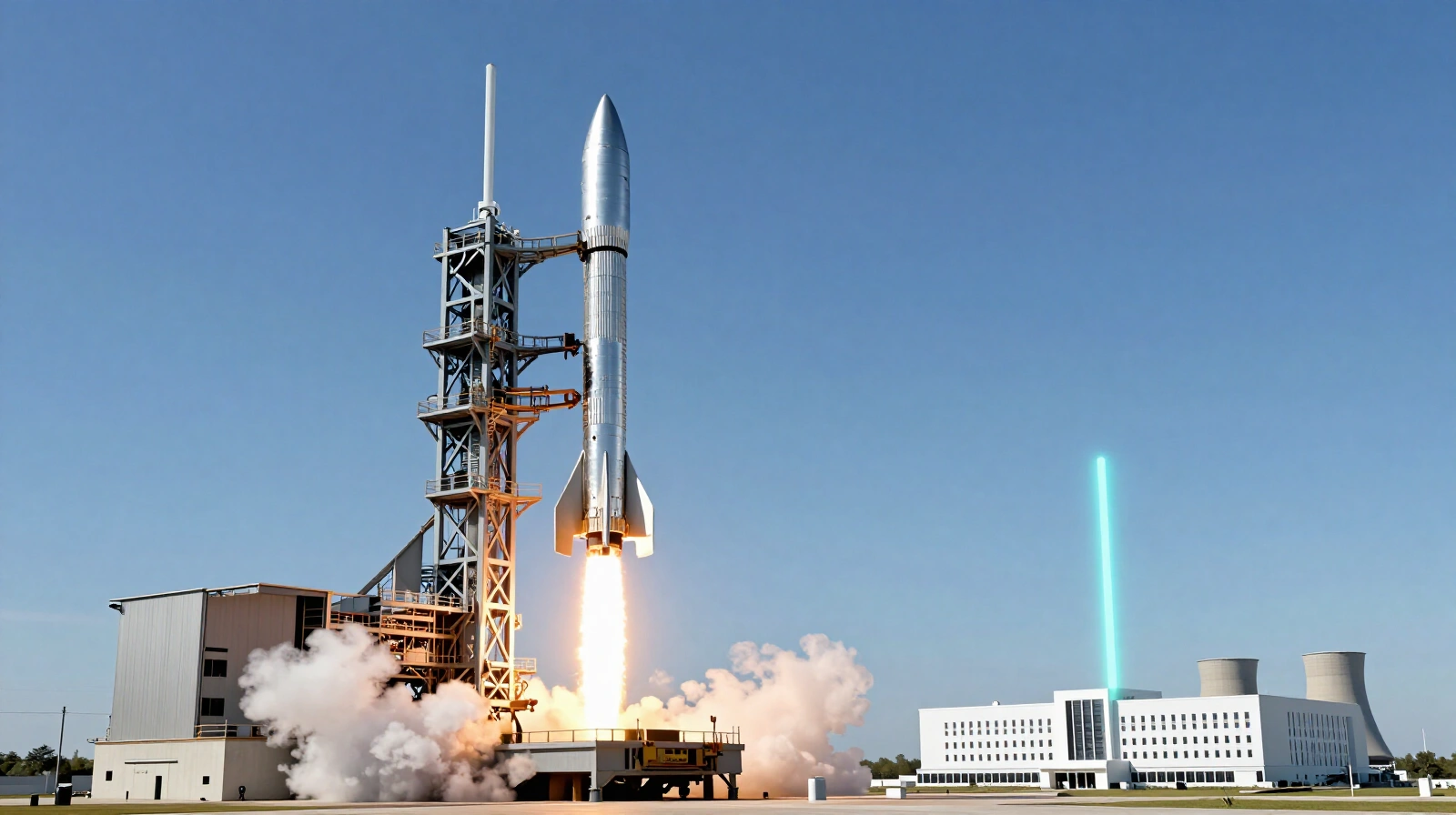
Flight 14 was Starship’s first orbital flight and its first revenue-generating mission. It deployed 26 Starlink V3 satellites, adding about ten times the downlink capacity of a Falcon 9 Starlink launch. Musk said the ship was only “about half loaded.”
Flight 15, expected next month, will try to catch both the Super Heavy booster and the Starship upper stage at the tower. If it works, Musk said, it would be the first time an orbital launch vehicle has been fully recovered. He called it “a profound technology milestone in the history of civilization” and the only way to “extend consciousness beyond Earth on a sustained basis.” He was careful about the odds: success “is not guaranteed,” but “more likely than not.”
His cadence targets:
- Weekly Starship flights at some point in the first half of 2027.
- Twice weekly, or more, by the end of 2027.
- First some refurbishment between flights, then none: “land the rocket and launch it again, just like an airplane.”
President Gwynne Shotwell added nearer milestones: reflying a second stage and attempting orbital refuelling early next year. SpaceX also announced Starbase, Louisiana, a spaceport for “thousands of Starship flights a year” with eventually 20 or more launch towers; the release targets the first launch for 2029.
The reality check: Starship’s ramp is still ahead. Total launches fell to 113 in the first nine months, from 128 a year earlier, and mass to orbit fell to 1,517 tonnes from 1,627. The Space segment broke even at the operating line (–$7 million) because R&D on Starship rose to $1.2 billion a quarter.
Infographic 03 · Topic 2 · Starship
Starship reached orbit. The launch count fell.
Flight 14 was Starship's first orbital and first revenue flight. The cadence targets are steep; the year-to-date numbers still point down.
The road, as stated on the call
Grey tags are targets, not guidance.
- Q3 2026 · done reported
Flight 14
First orbital and first revenue flight: 26 Starlink V3 satellites, ~10× the downlink capacity of a Falcon 9 Starlink launch. Ship “about half loaded”.
- Next month planned
Flight 15: catch both stages
Super Heavy and Starship caught at the tower. Musk: “not guaranteed”, but “more likely than not”.
- Early 2027 target
Second-stage reflight, orbital refuelling
Nearer milestones named by President Gwynne Shotwell.
- 1H 2027 → end 2027 target
Weekly, then twice weekly or more
First with some refurbishment, then none: “just like an airplane”.
- 2029 target
Starbase, Louisiana
First launch targeted for the new spaceport for “thousands of Starship flights a year”.
Reality check: first nine months
Reported, Space segment. Launch bars on a 0–140 scale, mass on 0–1,700 t.
Total launches, Jan–Sep
Mass to orbit, Jan–Sep
| Space income from operations, Q3 | −$7M |
| … a year earlier (Q3 2025) | $259M |
| Space R&D, Q3 | $1.2B |
| … a year earlier (Q3 2025) | $849M |
Sources: SpaceX Q3 2026 results (20 Oct 2026) (launches, mass to orbit, Space segment, Louisiana); Q3 2026 earnings call transcript (Flight 15 and cadence targets).
Powered by Thorsten Meyer AI
space-grade satellite power supply
As an affiliate, we earn on qualifying purchases.
As an affiliate, we earn on qualifying purchases.
Topic 3: Starlink, 100 times the bandwidth
Musk’s Starlink argument has two halves: supply and demand.
Supply. One half-loaded Starship flight delivered 26 terabits per second of Starlink capacity, the equivalent of ten Falcon 9 launches. Within about three years he expects roughly 100 times today’s constellation bandwidth: on the order of 100,000 satellites, each with more than ten times the bandwidth of current ones. The CFO said Starship loads are ramping towards more than 20 times the capacity of a Falcon 9 launch. Shotwell said users need a few hundred V3 satellites in orbit to really notice the difference, which she expects by mid-2027.
Demand. Musk expects demand for about 1,000 times today’s bandwidth in three to five years, because AI agents will each use far more bandwidth than a person and “there will be far more agents than there are people.” He sees “a clear path to several hundred billion dollars” in connectivity revenue.
The reality check: Connectivity is SpaceX’s healthiest business today. Revenue was $5.2 billion (+69%), operating income $2.4 billion, consumer subscribers 13.6 million (+1.6 million in the quarter) in 174 countries. Enterprise and government revenue grew 91%. But average revenue per consumer fell from $83 a year ago to $69 a month, as growth shifts to cheaper markets and plans. “Several hundred billion” is about 15 to 30 times the current $21 billion annual run-rate. The 1,000-times demand forecast is Musk’s own projection.
Infographic 04 · Topic 3 · Starlink
Musk sees 1,000× demand. Starlink earns $5.2B today.
Supply and demand are Musk's projections for the next three to five years. The business underneath them is reported, profitable and growing fast.
today’s bandwidth in about 3 years
- ~100,000 satellites, each with more than 10× today’s bandwidth (11.1K in orbit now)
- One half-loaded Starship flight added 26 Tbps, equal to 10 Falcon 9 launches
- CFO: Starship loads ramp toward more than 20× a Falcon 9 launch
today’s bandwidth demand in 3–5 years
- Driven by AI agents: “far more agents than there are people”
- “A clear path to several hundred billion dollars” of connectivity revenue
- That is 15–30× today’s ~$21B annual run-rate
Consumer subscribers
Bar length on a 0–14M scale.
Plus hundreds of thousands of enterprise subscribers, not included in this count.
Consumer ARPU per month
Falling as growth shifts to cheaper markets and plans. Scale $0–90.
Connectivity, Q3 2026
| Q3 2026 | y/y | |
|---|---|---|
| Connectivity revenue | $5.2B | +69% |
| · consumer | $3.1B | +57% |
| · enterprise & government | $2.1B | +91% |
| Income from operations | $2.4B | +99% |
| Consumer ARPU / month | $69 | −17% |
| Countries with coverage | 174 | |
| Satellites in orbit | 11.1K |
Sources: SpaceX Q3 2026 results (20 Oct 2026) (Connectivity segment); Q3 2026 earnings call transcript (Musk and CFO projections); Thorsten Meyer AI calculations.
Powered by Thorsten Meyer AI
professional space mission control software
As an affiliate, we earn on qualifying purchases.
As an affiliate, we earn on qualifying purchases.
Topic 4: The real constraint is power, not chips
Musk’s central claim about AI: “the constraint on deployment of superintelligence is more in power and cooling and infrastructure than it is in chips.”
His pitch is that SpaceX can build power and cooling faster than anyone because the team that built its launch business can do the same on the ground. He cited SpaceX’s share of all mass launched to orbit: almost 90%, against roughly 6% for China and 4% for everyone else, including the rest of the US. Applying that team to data centres is, in his words, “a bit like the New York Yankees playing in Little League.”
Infographic 05 · Topic 4 · Power, not chips
Musk: power and cooling, not chips, limit AI.
His case for why SpaceX can build AI infrastructure faster than anyone: the team that launches almost all mass to orbit now builds power and cooling.
Share of all mass launched to orbit
As stated by Musk on the call. The release reports SpaceX’s tonnage (1,517 t in the first nine months), not a market share.
SpaceX: almost 90%China: ~6%Everyone else, incl. the rest of the US: ~4%
The constraint
“More in power and cooling and infrastructure than it is in chips.”
The capability
The team that built a ~90% share of mass to orbit can build power and cooling on the ground faster than anyone.
The comparison
Applying it to data centres is “a bit like the New York Yankees playing in Little League.”
Sources: Q3 2026 earnings call transcript (shares and quotes); SpaceX Q3 2026 results (20 Oct 2026) (mass to orbit).
Powered by Thorsten Meyer AI
Topic 5: Memphis and the gigawatt ramp
Musk says he spends “often four days a week” in Memphis bringing the Colossus II supercomputer online. His numbers:
- Pace: roughly 200,000 Nvidia GB300 chips brought online per month for the rest of 2026, continuing into 2027, with later additions mostly Vera Rubin. One published transcript renders this as 20,000; only the larger figure is consistent with the gigawatt ramp he describes.
- End of 2026: about 2.5–3 GW of nameplate compute, up from 1.7 GW reported at September 30 (1.4 GW in June, 0.6 GW a year ago).
- 2027: “fairly confident” of an incremental 10 GW, so at least 13 GW by the end of 2027. He would “be surprised” by less.
- Power headroom: SpaceX aims to build an incremental 20 GW of power and cooling in 2027 so that power is never the bottleneck.
- Upside: a “small” but “not zero” chance of more than 20 GW of compute online next year.
The reality check: Going from 1.7 GW to 13 GW in fifteen months is a nearly eightfold increase. SpaceX’s own capex guidance shows the scale: $35–40 billion in the fourth quarter alone. A typical new gas power plant takes years to build; Musk’s answer to that is the next topic.
Infographic 06 · Topic 5 · Memphis and the gigawatt ramp
From 1.7 gigawatts to 13 in fifteen months.
Musk spends “often four days a week” in Memphis bringing Colossus II online. Reported capacity is 1.7 GW; everything beyond it is his target.
Compute and power, reported and targeted
Bar length on a 0–20 GW scale.
Reported by SpaceXMusk target on the call
One published transcript renders the GB300 pace as 20,000 a month; only ~200,000 fits the 1.7 → 2.5–3 GW ramp. Later additions are mostly Vera Rubin. Musk sees a “small” but “not zero” chance of more than 20 GW of compute online next year.
Sources: SpaceX Q3 2026 results (20 Oct 2026) (reported GW); Q3 2026 earnings call transcript (targets, Q4 capex guidance).
Powered by Thorsten Meyer AI
Topic 6: Turbine blades from a rocket foundry
To bring power online faster, SpaceX is casting turbine blades and vanes for gas turbines itself. Musk said SpaceX has “the most advanced casting capability on Earth,” built for rocket engines, whose demands “exceed the demands for anything else you could possibly imagine.”
The reason is a supply-chain bottleneck. Turbine suppliers told SpaceX they can deliver everything except the blades and vanes 12 to 18 months earlier than those parts. “So that means that we can bring power online 12 to 18 months faster than anyone else,” Musk said, an advantage that is hard to copy without building an advanced casting shop.
Infographic 07 · Topic 6 · Turbine blades
Why casting its own blades buys 12–18 months of power.
Gas-turbine suppliers can deliver everything except the blades and vanes 12 to 18 months before those parts arrive. SpaceX casts them itself.
Waiting time for power, after the rest of the turbine is ready
Schematic, months. Supplier lead times as described by Musk on the call.
Waiting for blades and vanes12–18 month rangeNo wait
Blades and vanes from suppliers
Blades and vanes cast in-house
months faster
“So that means that we can bring power online 12 to 18 months faster than anyone else.”
Musk calls it an advantage that is hard to copy without building an advanced casting shop.
The bottleneck in three steps
- Turbine parts ready. Suppliers can deliver everything except the blades and vanes.
- Blades and vanes come 12–18 months later. They are the slowest part of the gas-turbine supply chain.
- SpaceX casts them in-house, with the casting shop built for rocket engines, “the most advanced casting capability on Earth”, per Musk.
Source: Q3 2026 earnings call transcript. No turbine figures appear in the release.
Powered by Thorsten Meyer AI
Topic 7: Terafab, SpaceX’s own chip factory
Musk gave the first timeline for Terafab, the chip fab project shared with Tesla:
- Test chip: a simple SRAM chip to “test the line,” aimed for about May or June 2027 at the research lab in Austin.
- Volume production: an aspiration of about Q3 2028 at the main Terafab site, Gibbons Creek, with Q3 or Q4 2028 within the possible outcomes.
- Long term: Terafab should “make a terawatt of superintelligence chips per year.”
He said SpaceX has “some significant potential breakthroughs in chip fabrication” but would not discuss them on an earnings call: “Let’s not give away the shop here.” He called the timelines “insanely fast,” which is fair: a new leading-edge fab normally takes several years from groundbreaking to volume.
Infographic 08 · Topic 7 · Terafab
Terafab: a test chip in 2027, volume in 2028.
Musk's first timeline for the chip fab SpaceX shares with Tesla. He called it “insanely fast”; a new leading-edge fab normally takes several years.
The Terafab timeline, as stated on the call
All three steps are Musk’s targets. The Q3 release contains no Terafab figures.
- May–June 2027
Test chip
A simple SRAM chip to “test the line”, at the research lab in Austin.
- ~Q3 2028
Volume production
Aspiration at the main Terafab site, Gibbons Creek; Q3 or Q4 2028 “within the possible outcomes”.
- Long term
A terawatt a year
Terafab should “make a terawatt of superintelligence chips per year”.
Source: Q3 2026 earnings call transcript.
Powered by Thorsten Meyer AI
Topic 8: Grok Bot, “the fastest growth of a product I’ve ever seen”
Grok Bot, SpaceX’s always-on agentic AI system launched in August, is Musk’s growth story for SI. “I’ve never seen anything grow this fast,” he said, and Grok Bot “may end up being what uses most of our superintelligence compute.”
Management added figures: about 800,000 paid weekly users earlier this month, more than double the month before, with a wider enterprise rollout due within weeks. Grok Enterprise customers above $1 million in annual run-rate, including Cursor, rose 50% quarter over quarter. A new single plan bundles Grok, Grok Bot, Cursor and X Premium.
The reality check: Most of SI’s revenue does not come from Grok yet. Of $7.6 billion, $7.0 billion was “solutions and infrastructure,” driven by cloud services agreements and Cursor ($608 million since the August 14 acquisition), and $538 million was advertising.
Infographic 09 · Topic 8 · Grok Bot
Grok Bot is growing fast. Compute still pays SI's bills.
The Grok figures come from management on the call. The release shows where Super Intelligence revenue actually comes from today.
SI revenue, Q3 2026: $7.6B
Segment widths to scale.
Excl. Cursor (cloud services, Grok, other): $6.4BCursor since 14 Aug: $608MAdvertising: $538M
Solutions & infrastructure total $7.0B, including Cursor. Grok and Grok Bot revenue is not broken out.
SI profit, Q3 2026
| Q3 2026 | |
|---|---|
| Income from operations | $431M |
| Cursor-related stock compensation in it | $1.2B |
| Without it (calculated) | ~$1.6B |
| SI adjusted EBITDA | $5.0B |
Sources: SpaceX Q3 2026 results (20 Oct 2026) (SI segment, Cursor); Q3 2026 earnings call transcript (Grok Bot users, enterprise customers, bundle).
Powered by Thorsten Meyer AI
Topic 9: Compute nobody can buy
Musk described a market with almost no spare capacity. SpaceX is “hounded relentlessly by every hyperscaler” and by dozens of smaller companies wanting to rent its compute: “We could rent out our compute several times over if we said yes to everyone.”
He illustrated it with Monty Python’s cheese shop sketch, in which a customer asks for one cheese after another and the shop has none. When SpaceX tried to move some of its own inference to other cloud providers to free capacity for training, the answer was the same: no GB300s, no GB200s, no TPUs, no H100s, except “maybe some overseas somewhere,” and then not those either.
The consequence, he said: “It’s not impossible that we will have a six-month payback period for compute next year.” The CFO said payback is currently under a year. SpaceX splits its compute roughly 50/50 between internal use and external customers, rents at close to spot prices rather than long-term contracts, and says renewals are coming in at higher prices per watt. Musk’s view: “the value of compute per watt will increase over time, not decrease.”
Infographic 10 · Topic 9 · Compute nobody can buy
The cheese shop: no spare compute left to rent.
SpaceX tried to move some of its own inference to other clouds to free capacity for training. Nobody had any. Musk says that scarcity shortens payback.
“Do you have any …?”
What SpaceX asked other cloud providers for, as told by Musk.
| Nvidia GB300 | No |
| Nvidia GB200 | No |
| TPUs | No |
| Nvidia H100 “Maybe some overseas somewhere” … then no | No |
“We could rent out our compute several times over if we said yes to everyone.”
Payback on compute
Months. Bar length on a 0–12 month scale.
Who uses the compute
- Rented at close to spot prices, not long-term contracts
- Renewals at higher prices per watt
Source: Q3 2026 earnings call transcript (Musk and CFO Bret Johnsen). Payback is not reported in the release.
Powered by Thorsten Meyer AI
Topic 10: A Tesla merger is not a done deal
Asked about combining SpaceX and Tesla, Musk said he felt like he was “tapping through a minefield.”
- Both companies have formed special committees of independent directors at the request of shareholders. Musk, as a conflicted party, is excluded from their discussions: “an odd kabuki dance where two groups of people are talking and I can’t be in the conversation.”
- He pushed back on the idea that a merger is certain. On the Tesla side it would need a majority of all shares, “not just those who vote,” which he called “quite a high hurdle.”
- The committees “have not reached agreement on the terms of any transaction,” and there is no guarantee they will.
- His own view: it would be “a good idea,” because “we are pretty much in the superintelligence singularity,” with gains from cooperating on AI software, chip design and Terafab, robotics, mass to orbit and connectivity.
Infographic 11 · Topic 10 · Tesla merger
A Tesla merger: committees, no terms, a high bar.
Musk calls a combination “a good idea”, but he is excluded from the talks, no terms are agreed and any deal needs a majority of all Tesla shares.
Special committees
Both companies formed committees of independent directors at shareholders’ request. Musk, as a conflicted party, is excluded: “an odd kabuki dance”.
Terms
The committees “have not reached agreement on the terms of any transaction”, and there is no guarantee they will.
Tesla vote
A majority of all Tesla shares, “not just those who vote”. Musk: “quite a high hurdle”.
Musk’s case for a merger
“We are pretty much in the superintelligence singularity.” Gains he expects from cooperating on:
- AI software
- Chip design and Terafab
- Robotics
- Mass to orbit
- Connectivity
Sources: Q3 2026 earnings call transcript; Reuters via MarketScreener.
Powered by Thorsten Meyer AI
What to make of it
The reported quarter is genuinely strong. SpaceX turned profitable, Starlink grows fast with good margins, and the AI business went from a loss-making cost centre to the largest segment in a single year. Starship’s first orbital and revenue flight is a real milestone, and a successful double catch next month would be a bigger one.
Musk’s targets live on a different scale. The $500 billion to $1 trillion ARR claim, 100 times the Starlink bandwidth, 13 GW of compute and a chip fab in volume by 2028 all require several hard things to go right at once: rapid reuse, a supply chain for power that does not exist yet, and demand from AI agents that keeps outrunning supply. Musk has a history of being right about direction and early about timing.
For investors and competitors, three numbers are worth watching over the next two quarters:
- Nameplate compute: does SpaceX reach 2.5–3 GW by December and stay on a path towards 13 GW?
- Flight 15: does the double catch work, and does Starship reach a weekly cadence in the first half of 2027?
- Cash: with $35–40 billion of Q4 capex, how fast does the IPO cash fall, and how much new debt follows?
Infographic 12 · Musk’s promises, checked
What Musk promised, next to what SpaceX reported.
Every target from the Q3 2026 call, set against the reported numbers. Gaps are ratios to today’s level, rounded.
Claim by claim
Targets are Musk’s statements on 20 Oct 2026, not company guidance unless stated.
| Topic | Musk on the call | Reported / today | Gap |
|---|---|---|---|
| ARR by end of 2027 | $500B – $1T | $58B annualised (Q3); $140B implied by Q1 2027 guidance | 9–17× Q3 |
| Connectivity revenue | “Several hundred billion” | $5.2B in Q3 (~$21B a year) | 15–30× |
| Starlink bandwidth | ~100× in ~3 years; ~100,000 satellites | 11.1K satellites in orbit; 26 Tbps added by Flight 14 | ~9× satellites |
| Bandwidth demand | ~1,000× in 3–5 years (AI agents) | 13.6M consumer subscribers; ARPU $69 | Musk projection |
| Starship cadence | Weekly in 1H 2027, twice weekly by end 2027 | 2 Starship flights in Q3; Flight 15 next month | — |
| Compute | ≥13 GW by end 2027 | 1.7 GW on 30 Sep 2026 | ~8× |
| Compute payback | “Not impossible”: 6 months | CFO: under a year today | — |
| Tesla merger | “A good idea” | Committees have not agreed terms; needs majority of all Tesla shares | Open |
Company guidance for comparison: Q1 2027 revenue $33–37B; $100B ARR by end of 2026 (CFO, December revenue × 12); backlog $63B.
Sources: SpaceX Q3 2026 results; earnings call transcript; Thorsten Meyer AI calculations.
Powered by Thorsten Meyer AI
Sources
- SpaceX: SpaceX Reports Third Quarter 2026 Results (October 20, 2026), including consolidated statements, segment data and reconciliations
- The Motley Fool: SpaceX (SPCX) Q3 2026 Earnings Call Transcript (the publisher notes parts were produced with AI and may contain errors)
- CNBC: SpaceX (SPCX) Q3 2026 earnings report: Live updates
- MarketScreener / Reuters: Musk calls Tesla-SpaceX merger a ‘good idea’ as SpaceX posts first profit as a public company
- Yahoo Finance: SpaceX earnings live
Halloween Picks
halloween
As an affiliate, we earn on qualifying purchases.