Community UBI programs are grassroots efforts that give targeted financial support to vulnerable populations like low-income families and residents in high-poverty areas. These pilot initiatives are funded through a mix of municipal budgets, private donors, and partnerships with nonprofits. Early results show improved financial stability, community well-being, and social cohesion. If you want to discover how these programs are shaping future policies and community resilience, there’s much more to explore.
Key Takeaways
- Grassroots community UBI programs target vulnerable populations like low-income families and formerly incarcerated individuals to improve financial stability.
- Funding mainly comes from a mix of government sources, private donors, and philanthropic organizations through partnerships.
- Pilot initiatives in cities such as Chicago, Denver, and Alameda County aim to explore social and economic benefits beyond immediate relief.
- Early results show improved well-being, reduced stress, and increased community cohesion and consumer confidence.
- Lessons from these experiments emphasize targeted approaches, flexible funding, and local collaboration to scale and sustain programs.
The Rise of Local UBI Initiatives in the US
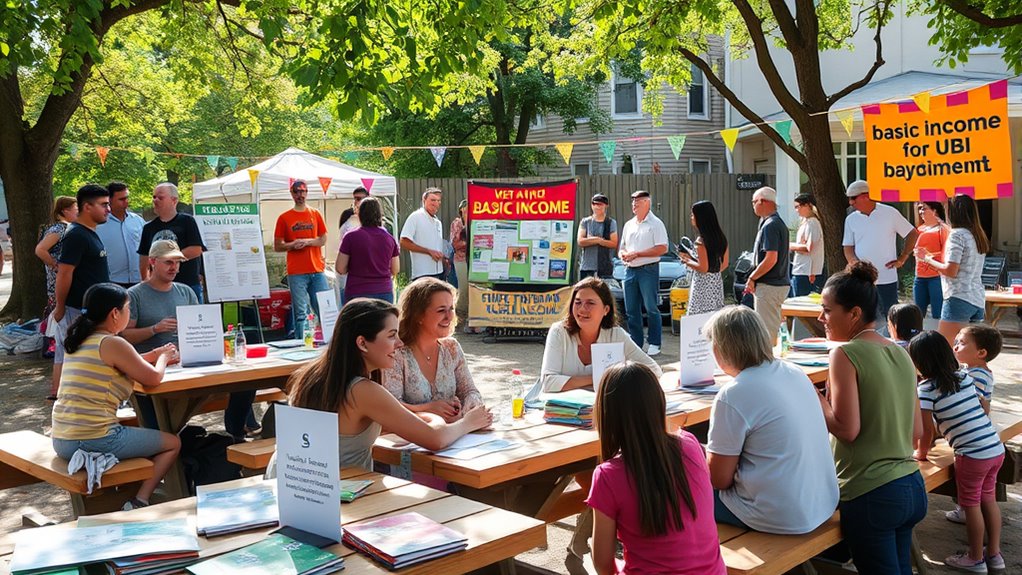
Have you noticed how more US cities are taking the lead in experimenting with Universal Basic Income? Local governments are launching innovative pilot programs to test how unconditional cash payments impact their communities. These initiatives target vulnerable populations like low-income families, formerly incarcerated individuals, and residents of high-poverty neighborhoods. Cities such as Chicago, Denver, and Alameda County are investing public funds, often supplemented by private donations or federal relief money, to run these pilots. The aim isn’t just to provide immediate financial relief but to explore long-term economic stability and social benefits. These grassroots efforts reflect a growing belief that localized solutions can address specific community needs more effectively than broad, one-size-fits-all policies. Additionally, some programs incorporate wave and wind energy considerations to promote sustainable development alongside economic assistance. Overall, local UBI initiatives are reshaping how governments approach social safety nets.
Targeted Populations and Eligibility Criteria
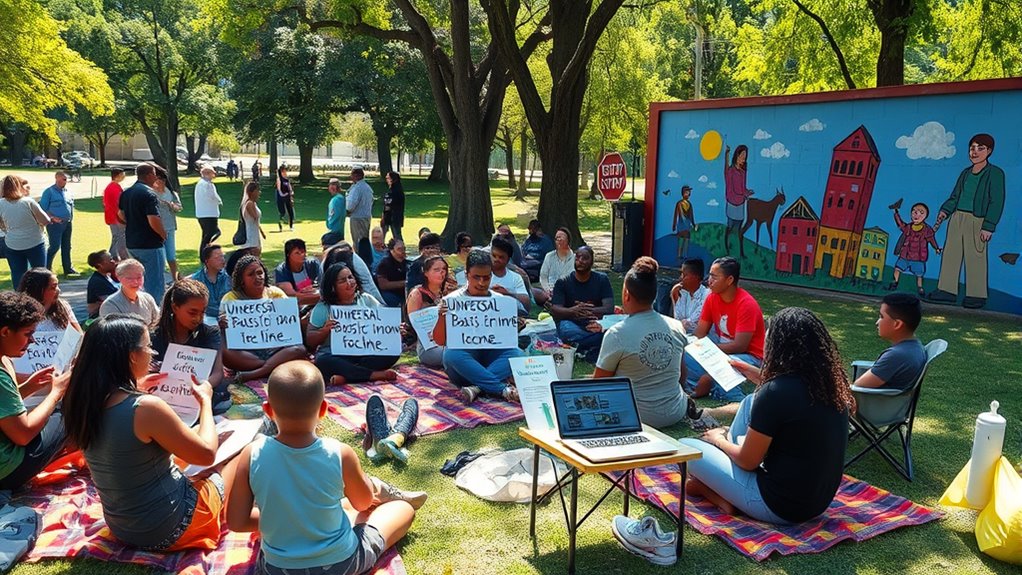
You’ll notice that most community UBI programs focus on specific groups, such as low-income families, formerly incarcerated individuals, or residents of high-poverty areas. These eligibility criteria aim to target populations most in need of economic support. Understanding who qualifies helps clarify the goals and potential impact of each initiative. For example, some programs specifically address targeted populations to maximize effectiveness and community benefits.
Eligibility Criteria Focus
Most UBI pilot programs in the US focus on specific, vulnerable populations rather than offering universal payments to everyone. You’ll notice that eligibility criteria often center on income levels, such as families below a certain threshold, or on particular groups like formerly incarcerated individuals, artists, or residents of high-poverty neighborhoods. These programs aim to address pressing needs and reduce economic disparities. You won’t find many that include all residents regardless of income or background. Instead, targeted approaches help ensure limited funds reach those most in need. Eligibility is usually determined through income assessments, residency verification, or membership in specific groups. This focus allows programs to maximize impact while managing resources, but it also means they’re not truly universal in scope. Additionally, understanding industry trends helps in designing effective programs that adapt to changing economic conditions.
Priority Population Groups
Target populations for UBI pilot programs in the US are carefully selected to address specific needs and maximize impact. These groups often include low-income families, individuals experiencing financial hardship, or residents of high-poverty neighborhoods. Programs focus on vulnerable populations, such as formerly incarcerated individuals, artists, or those facing employment instability. Eligibility criteria typically target those with limited resources or heightened risk of economic insecurity. For example, Alameda County serves families below a certain income level, while Chicago’s pilot prioritizes residents impacted by systemic inequality. By targeting these groups, programs aim to reduce poverty, promote stability, and gather data on how unconditional cash transfers influence marginalized communities. The focus remains on vulnerable populations, not universal coverage, to ensure resources reach those most in need. Incorporating adjustable settings in program design can help tailor support based on specific community circumstances.
Funding Sources and Partnerships
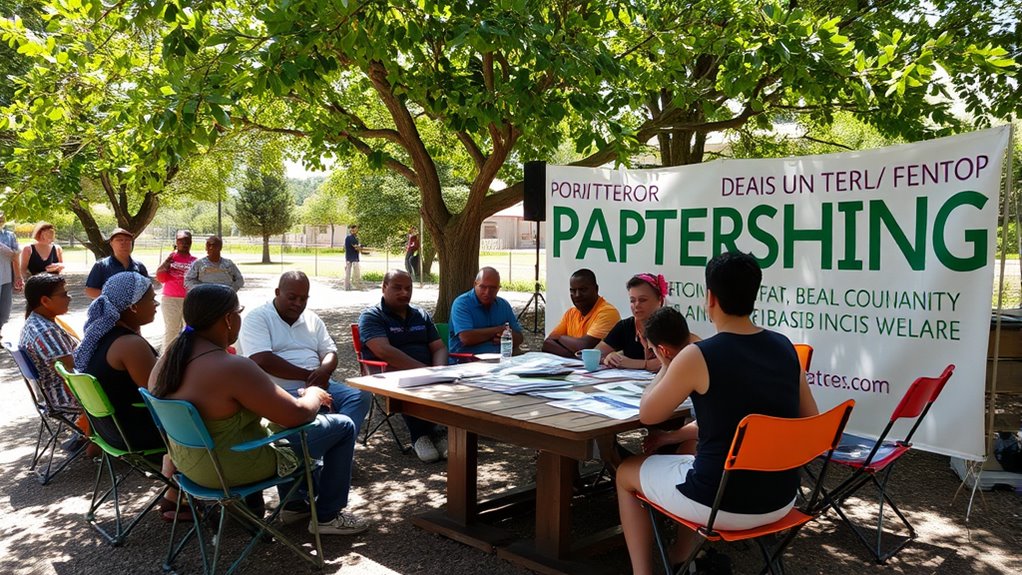
Funding for community UBI programs comes from a mix of sources, including government budgets, private donors, and philanthropic organizations. Many partnerships between public agencies and private entities help sustain these initiatives and expand their reach. By combining diverse funding streams and building strong support networks, communities can create more resilient and scalable UBI programs. Additionally, leveraging innovative funding mechanisms can further enhance program sustainability and impact.
Diverse Funding Streams
Diverse funding streams play a crucial role in sustaining community UBI programs across the United States. You’ll find these programs rely on a mix of sources, including philanthropic organizations, local government budgets, and federal relief funds. For example, Alameda County’s initiative is supported by the United Way and local donors, while Chicago’s pilots use funds from the American Rescue Plan Act. Some programs leverage partnerships with nonprofits or private donors to extend their reach. This variety helps reduce reliance on a single source and increases resilience against funding cuts. You may also see innovative approaches like crowd-funding or community-driven fundraising. These diverse streams enable grassroots programs to operate without the need for permanent, nationwide funding, ensuring that local needs and priorities shape their financial foundation. Additionally, some programs explore funding sustainability strategies such as rotating funds or matching grants to ensure long-term viability.
Public-Private Collaborations
Public-private collaborations are a common approach to financing community UBI programs, combining resources from government agencies, nonprofits, and private donors. These partnerships leverage diverse funding streams, making programs more sustainable and scalable. For example, Alameda County’s initiative is supported by United Way Bay Area and philanthropic donors, while Chicago’s pilot uses federal relief funds like ARPA. Private foundations often provide seed money or ongoing support, reducing reliance on public funds alone. Local governments also partner with nonprofits to streamline administration and reach targeted populations. By pooling resources, these collaborations enhance program reach and impact without requiring a single source of funding. They foster innovation, increase community buy-in, and help pilot projects test different models before considering broader adoption. Additionally, including proper vase selection in floral arrangements can further elevate the visual presentation and success of community-based initiatives.
Philanthropic Support Networks
Philanthropic support networks play a essential role in sustaining community UBI programs by providing fundamental financial resources and strategic partnerships. These networks include foundations, charitable organizations, and individual donors committed to social equity. They often fund pilot projects, helping to cover operational costs and expand outreach. By collaborating with local organizations, philanthropists can guarantee programs target the most vulnerable populations effectively. Their support also fosters innovation, allowing programs to experiment with different models and scales. Many community UBI initiatives rely on these partnerships to supplement government funding, making them more resilient and adaptable. Additionally, philanthropic networks help raise awareness and build community trust, which is critical for long-term success. Their involvement ensures that grassroots efforts receive the stability needed to explore alternative economic security solutions.
Early Results and Community Impact
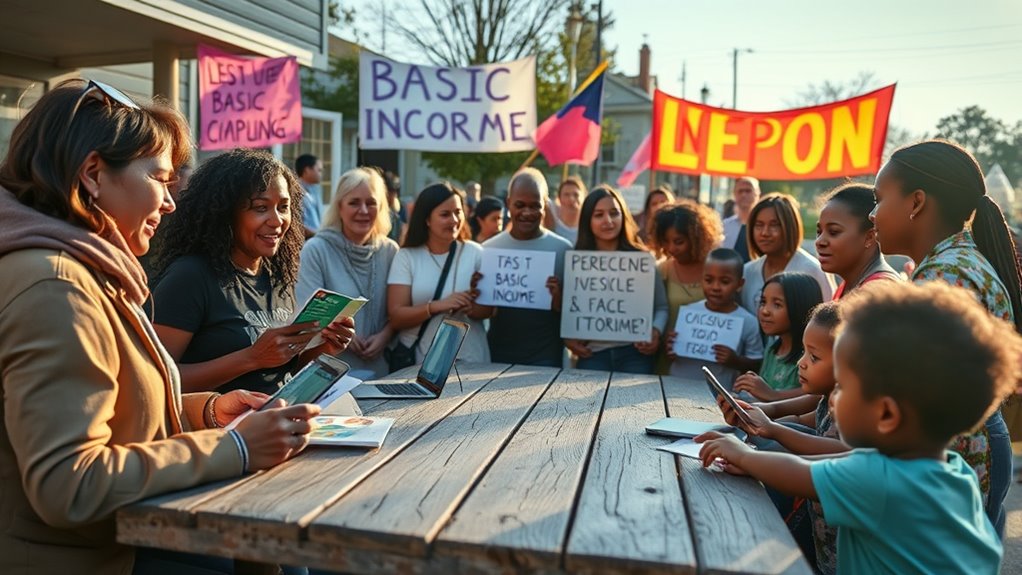
Early results from community UBI pilots in the US show promising improvements in financial stability and well-being. Participants report being able to cover essentials like rent, food, and healthcare more easily, reducing stress and anxiety. Many use the funds to invest in education, job training, or starting small businesses, fostering long-term growth. Families experience fewer crises related to missed payments or emergencies, boosting emotional resilience. Communities see increased social cohesion as residents feel more secure and supported. Local businesses benefit from higher spending and consumer confidence. Overall, these pilots demonstrate that direct cash transfers can create immediate relief while encouraging stability and community engagement. While pilot durations are short, early data indicates positive ripple effects on health, employment prospects, and neighborhood morale. Additionally, providing supportive services alongside cash transfers can enhance the overall impact on community well-being.
Political Support and Public Attitudes

Political support for community UBI programs remains mixed, reflecting a broader debate about their feasibility and fairness. Some see these programs as empowering vulnerable populations and reducing bureaucracy, while others worry about costs and disincentives to work. Public attitudes vary widely; many express skepticism about funding and long-term sustainability. Support tends to grow when programs demonstrate clear benefits, but opposition persists among those concerned about fairness or increased taxes. Here’s a quick overview: diverse designs available to enhance indoor aesthetics.
Lessons Learned From Pilot Programs
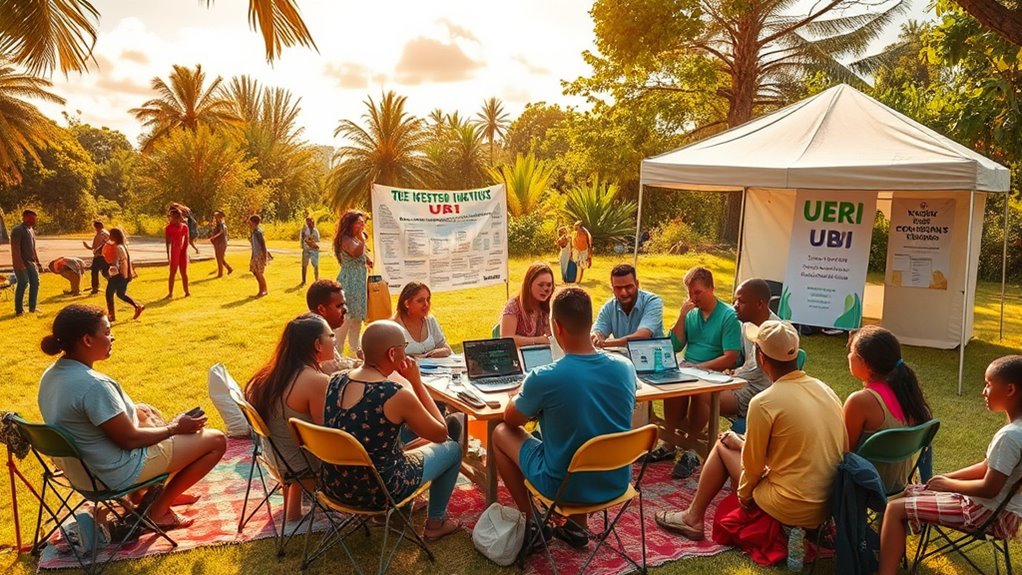
Pilot programs have provided valuable insights into how community-based UBI can be effectively implemented and scaled. You learn that targeted approaches tend to address specific needs more efficiently than broad, universal models. Flexibility in funding sources—whether from philanthropy, local budgets, or federal relief—ensures program sustainability. You see that involving local organizations and residents fosters trust, improves outreach, and increases participation. Data shows that even small, temporary payments can markedly reduce financial stress, boost well-being, and encourage long-term investments in health, education, and employment. Clear eligibility criteria help manage expectations and streamline administration. Additionally, understanding the importance of privacy and boundaries can help ensure participants feel secure and respected within the program. Overall, pilot programs reveal that tailored, community-focused UBI initiatives are feasible, impactful, and adaptable, providing a foundation for broader, more inclusive policies in the future.
The Future of Grassroots UBI Experiments

What does the future hold for grassroots UBI experiments, and how can they shape broader economic policies? These local efforts are poised to grow, influence national debates, and test innovative funding models. As more communities experiment with targeted cash transfers, they can demonstrate scalable solutions that address inequality and economic insecurity. Grassroots programs might push policymakers to deliberate permanent, inclusive UBI systems.
- Increased community-led innovation shaping policy
- Expansion of pilot programs in diverse regions
- New funding strategies like resource-based or social impact bonds
- Strengthening local advocacy for universal income models
- Evidence shaping national and global UBI discussions
Frequently Asked Questions
How Do Grassroots UBI Programs Sustain Long-Term Funding?
You sustain long-term funding for grassroots UBI programs by diversifying sources like local government grants, philanthropic donations, and community fundraising. Building strong partnerships with nonprofits and businesses can also provide ongoing support. Additionally, demonstrating positive impacts through data can attract new funding. Engaging your community consistently helps maintain momentum and advocacy, making it easier to secure resources over time and guarantee the program’s sustainability.
What Are Common Challenges Faced by Community-Led UBI Pilots?
You face challenges like trying to hold a skyscraper steady on a shaky foundation. Funding often feels like trying to catch rain with a sieve, constantly at risk of drying up. Gaining broad community support can be an uphill battle, like convincing a mountain to move. Administrative hurdles and maneuvering political landscapes can seem like steering a ship through a storm. Despite these, passion keeps grassroots pilots afloat and pushing forward.
How Do Local UBI Initiatives Influence State or National Policies?
Local UBI initiatives can shape state and national policies by demonstrating practical benefits like reduced poverty and economic stability. When you participate in or support these programs, you help showcase their success, encouraging policymakers to consider broader adoption. These grassroots efforts often serve as proof of concept, influencing lawmakers to expand or implement more all-encompassing UBI policies. Your involvement can be a catalyst for change at higher levels of government.
What Measures Ensure Fair Targeting Without Exclusivity?
To guarantee fair targeting without exclusivity, you should focus on clear, inclusive criteria that prioritize those most in need, like low-income or marginalized groups. Use transparent processes and community input to shape eligibility, avoiding arbitrary exclusions. Regularly evaluate and adjust the program based on data and feedback, ensuring fairness and preventing stigmatization. This way, you promote equity while reaching vulnerable populations effectively.
How Do Grassroots UBI Efforts Address Potential Work Disincentives?
You can address work disincentives in grassroots UBI efforts by designing programs with conditionalities, such as requiring beneficiaries to seek employment or participate in community activities. Additionally, you might implement tapered benefits, where payments decrease gradually as income from work increases, encouraging recipients to work without losing support abruptly. Clear communication about how UBI complements work, rather than replacing it, helps foster understanding and reduces fears of disincentivizing employment.
Conclusion
You might find it surprising that over 50 grassroots UBI programs across the US are already helping thousands of people. These community-led efforts show real promise in reducing poverty and fostering local resilience. As public support grows and more cities experiment with basic income, you can be part of this grassroots movement shaping a more equitable future. Keep an eye on these initiatives—they’re proving that small, local actions can drive big change.