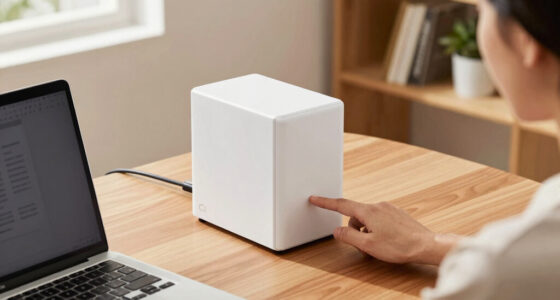
Choosing the right home theater projectors depends heavily on your room’s lighting and your desire for convenience versus image fidelity. The Epson Home Cinema LS11000 stands out as the best overall pick for dedicated media rooms, offering laser longevity and exceptional 4K PRO-UHD clarity. For those prioritizing smart features and ease of use without breaking the bank, the NexAurea Smart Projector delivers native 1080p with robust Wi-Fi 6 connectivity. The main tradeoff you will face is between raw brightness and color accuracy; brighter laser models often cost more but handle ambient light better than budget LED units. Continue reading to see which model fits your specific viewing habits and spatial constraints.

Get business pricing on tech for your team
- Business-only prices and quantity discounts
- Tax-exempt purchasing
- Multiple users, one account, clear invoices
Key Takeaways
- Laser light sources in premium models like the Epson LS11000 eliminate lamp replacement costs and maintain brightness consistency over thousands of hours, unlike budget LED options that dim faster.
- Native 1080p resolution is the practical baseline for most living rooms, as true 4K content remains niche and many budget units marketed as ‘4K’ only decode rather than display native pixels.
- Smart OS integration (Android TV, Google TV, Roku) significantly impacts user experience, with the HAPPRUN and Aurzen models offering seamless app access that eliminates the need for external streaming sticks.
- Ambient light rejection is a critical differentiator; models with 2,000+ ANSI lumens, such as the Optoma UHZ36, are necessary for rooms with uncontrolled daylight, while lower-lumen units require dedicated dark spaces.
- Connectivity standards matter for future-proofing; Wi-Fi 6 and Bluetooth 5.4, found in the NexAurea and X9 Pro, provide lower-latency wireless audio and smoother 4K streaming compared to older Wi-Fi 5 models.


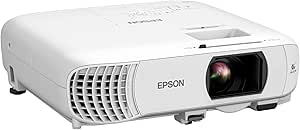


| home theater projector | Connectivity | Brightness | Resolution | Native resolution |
|---|---|---|---|---|
| NexAurea Smart Projector with | WiFi 6, two-way Bluetooth 5.4, HDMI eARC | — | Native 1080P; 4K decoding | — |
| Epson Home Cinema LS11000 4K P | Dual HDMI with 120Hz support and eARC, Ethernet, USB | 2,500 lumens, color and white | 4K PRO-UHD (3840 x 2160) | — |
| HAPPRUN H1 Native 1080P Blueto | HDMI, USB, 3.5mm audio, Bluetooth 5.3 | 300 ANSI lumens | — | 1920 x 1080 |
| HAPPRUN 1500 ANSI Lumens 4K De | Wi-Fi 6, Bluetooth 5.2, HDMI ARC, USB 2.0, 3.5mm audio | 1500 ANSI lumens | — | 1920 x 1080 |
| [Built-in Apps/4K Support] Sma | Wi-Fi 6, Bluetooth 5.2, two HDMI, two USB, 3.5mm audio | 600 ANSI lumens | — | 1920 x 1080 |
| Optoma UHZ36 4K UHD Laser HDR | HDMI, USB | 3,500 ISO Lumens | 4K UHD (3840 x 2160) | — |
| X9 Pro Smart Projector with VI | Wi-Fi 6, Bluetooth 5.4, HDMI ARC | 920 ISO Lumens | — | 1080p |
| Epson Home Cinema 980 3-Chip 3 | Dual HDMI, USB | 4,000 Lumens | 1080p Full HD | — |
| HAPPRUN Native 1080P Bluetooth | Wi-Fi 6, Bluetooth 5.2, HDMI | 400 ANSI Lumens | — | 1080P |
| Aurzen Roku TV D1R Smart Porta | Wi-Fi, Bluetooth 5.2, HDMI | — | 1080p Full HD | — |
More Details on Our Top Picks
NexAurea Smart Projector with WiFi 6, Bluetooth 5.4, Native 1080P/4K Decoding, HDR10+, Dolby Audio, Auto Focus & Keystone
The NexAurea is a strong fit for a living room or bedroom where I want streaming and setup tools in one box. Its built-in app store gives direct access to services such as Netflix and Prime Video, while auto focus, 6D keystone correction, and obstacle avoidance reduce the fuss of positioning it. Dual 25W speakers and Dolby Audio also give it a more self-contained sound setup than the HAPPRUN H1, which has built-in stereo speakers but is better suited to portable use.
The main limit is image resolution: this is native 1080P, not native 4K, so 4K decoding does not produce a 4K panel image. The Epson LS11000 is the better match for buyers prioritizing 4K presentation, installation flexibility, and gaming performance, but it is a more dedicated theater choice. I’d skip the NexAurea if native 4K detail is a requirement or if I cannot use its newer wireless features with my devices.
Pros:- Built-in apps provide direct access to major streaming services without a separate streaming stick.
- Auto focus, 6D keystone correction, and obstacle avoidance simplify placement in rooms with limited setup flexibility.
- Dual 25W speakers with Dolby Audio and DTS decoding offer more onboard sound capacity than the HAPPRUN H1.
- Quiet operation rated at 28 dB or less suits bedrooms and late-night viewing.
Cons:- Native 1080P resolution cannot show 4K content at true 4K detail.
- WiFi 6 and Bluetooth 5.4 benefits depend on compatible devices and network equipment.
- The listed screen size of up to 300 inches does not establish that the image will remain bright or detailed at the largest sizes.
Best for: Movie viewers who want built-in streaming, automatic image setup, and strong onboard audio without assembling a separate source-and-speaker system.
Not ideal for: Buyers seeking native 4K image detail or planning a high-end theater installation centered on precise lens placement and gaming features.
- Resolution:Native 1080P; 4K decoding
- Connectivity:WiFi 6, two-way Bluetooth 5.4, HDMI eARC
- Audio:Dual 25W speakers, Dolby Audio, DTS decoding
- Image features:HDR10+, AI picture quality, MEMC, auto focus, 6D keystone, obstacle avoidance
- Maximum display size:Up to 300 inches
- Noise level:28 dB or less
- Warranty and support:3-year warranty; lifetime technical support
Our verdict“Choose the NexAurea if built-in streaming, easy setup, and substantial onboard audio matter more than native 4K resolution.”
Epson Home Cinema LS11000 4K PRO-UHD Laser Projector
For a dedicated theater or a carefully planned media room, the Epson LS11000 is the most capable image-and-installation option in this group. Its 3-chip 3LCD laser engine, 2,500 lumens, and 1,200,000:1 dynamic contrast are aimed at a more cinematic, controlled picture than the native-1080P NexAurea or HAPPRUN models can provide. The motorized lens shift, zoom, and focus are especially useful when the projector must sit off-center or be mounted in a fixed position.
It also has a more convincing gaming case than the other featured models, with 120Hz HDMI support and stated input lag below 20 ms. That capability comes with practical costs: the LS11000 has a large footprint, and its motorized installation features are more relevant in a planned room than in a portable setup. Its 4K PRO-UHD label should not be confused with a native 3840 x 2160 imaging panel. I’d choose it over the HAPPRUN 1500 ANSI model for a premium theater, but not for simple, low-effort streaming.
Pros:- Laser light source and 2,500-lumen rating suit a substantial home theater image.
- Motorized lens shift, zoom, and focus allow flexible placement without relying on digital keystone correction.
- 120Hz HDMI support and stated input lag below 20 ms make it better suited to gaming than the HAPPRUN H1.
- Supports HDR10, HDR10+, and HLG, with a listed dynamic contrast ratio of 1,200,000:1.
Cons:- Large physical footprint makes it a poor choice for frequent moving or tight shelves.
- The product data describes 4K PRO-UHD rather than a native 3840 x 2160 imaging panel.
- It lacks the built-in streaming convenience offered by the NexAurea and HAPPRUN Google TV models.
Best for: Dedicated theater owners and serious gamers who want a laser projector with flexible motorized placement, HDR support, and 120Hz inputs.
Not ideal for: Casual viewers seeking a compact projector with built-in streaming apps, or buyers who need a small, easy-to-move unit.
- Resolution:4K PRO-UHD (3840 x 2160)
- Brightness:2,500 lumens, color and white
- Contrast:1,200,000:1 dynamic
- Light source:Laser array
- HDR support:HDR10, HDR10+, HLG
- Lens shift:Motorized; ±47% horizontal, ±96% vertical
- Connectivity:Dual HDMI with 120Hz support and eARC, Ethernet, USB
- Maximum screen size:Up to 300 inches
- Warranty:2-year limited
Our verdict“Pick the Epson LS11000 for a dedicated theater that can make use of its laser output, motorized lens, and gaming support.”
HAPPRUN H1 Native 1080P Bluetooth Projector
The HAPPRUN H1 is the straightforward choice here for viewers who value portability over a full-featured theater setup. Its native 1080P resolution gives it a clear advantage over projectors that only decode 4K while displaying at 1080P, including the P62 Pro. The compact design and desktop, tripod, or ceiling mounting options also make it easier to move between a small room and an occasional outdoor screening than the large Epson LS11000.
This simplicity has limits. At 300 ANSI lumens, the H1 is best treated as a lights-dimmed projector, not a solution for a bright living room. It also lacks a built-in streaming system, so I would plan on connecting a separate source; Bluetooth 5.3 is for audio, not wireless video casting. Compared with the HAPPRUN Google TV model, the H1 gives up direct app access and automatic setup conveniences. I’d pass if I need a bright, self-contained home theater projector.
Pros:- Native 1920 x 1080 resolution provides Full HD image detail rather than relying on 4K decoding.
- Compact design and desktop, tripod, and ceiling mounting options suit flexible use.
- Bluetooth 5.3 can send audio to compatible speakers or headphones.
- HDMI, USB, and 3.5mm audio provide several wired connection options.
Cons:- 300 ANSI lumens limit its usefulness in rooms that are not darkened.
- No built-in streaming apps, unlike the HAPPRUN Google TV projector.
- Bluetooth supports audio output, not video casting, and phone connections may require a separate HDMI adapter.
Best for: Viewers who need a small native-1080P projector for a dark bedroom, occasional travel, camping, or a flexible desktop setup.
Not ideal for: People who watch in rooms with substantial ambient light or want built-in streaming and hands-off image adjustment.
- Native resolution:1920 x 1080
- Display type:LCD
- Brightness:300 ANSI lumens
- Contrast ratio:10,000:1
- Image size:40 to 200 inches
- Connectivity:HDMI, USB, 3.5mm audio, Bluetooth 5.3
- Mounting options:Desktop, tripod, ceiling
- Light source life:Up to 100,000 hours
Our verdict“Choose the HAPPRUN H1 for portable Full HD viewing in dark spaces, but pick a brighter smart model for everyday living-room use.”
HAPPRUN 1500 ANSI Lumens 4K Decoding Projector with Official Google TV
The HAPPRUN Google TV projector makes the most sense when I want a simple path from setup to streaming. Its official Google TV system provides direct access to services such as Netflix, Prime Video, and YouTube, avoiding the extra box required by the HAPPRUN H1. Automatic focus and keystone correction also help when the unit cannot sit perfectly square to the screen. At 1500 ANSI lumens, it has a stronger brightness claim than the 600-ANSI P62 Pro, making it the more plausible option for a room with some light.
Those conveniences do not make it a native-4K projector: the panel is 1920 x 1080, and 4K refers to video decoding. Its brightness also falls short of the Epson LS11000’s 2,500-lumen rating, so I would not choose it for a large image in a bright room. It suits everyday streaming and flexible placement better than a dedicated high-performance theater or a truly portable model.
Pros:- Official Google TV supports direct streaming without an external stick.
- The 1500 ANSI-lumen rating is higher than the P62 Pro’s listed 600 ANSI lumens.
- Automatic focus and keystone correction ease placement on tables or angled surfaces.
- HDMI ARC, Wi-Fi 6, and Bluetooth 5.2 provide useful connection options for home audio and devices.
Cons:- Native resolution is 1080P, so 4K content is decoded rather than displayed at native 4K detail.
- The listed brightness is below the Epson LS11000’s 2,500-lumen rating for larger or brighter-room viewing.
- A 1.3:1 throw ratio can constrain placement compared with the Epson’s motorized lens shift and zoom.
Best for: Households that want built-in Google TV, automatic image correction, and a brighter-than-entry-level projector for a moderately lit room.
Not ideal for: Buyers who require native 4K resolution, plan to watch with strong ambient light, or need the gaming and installation features of a premium theater projector.
- Native resolution:1920 x 1080
- Video decoding:4K
- Brightness:1500 ANSI lumens
- HDR support:HDR10+
- Color gamut:95% NTSC
- Screen size:40 to 300 inches
- Throw ratio:1.3:1
- Connectivity:Wi-Fi 6, Bluetooth 5.2, HDMI ARC, USB 2.0, 3.5mm audio
- Smart features:Google TV, voice assistant, auto focus, auto keystone correction
Our verdict“Choose this HAPPRUN if built-in Google TV and automatic setup matter more than native 4K detail or premium-room brightness.”
[Built-in Apps/4K Support] Smart Outdoor Projector with WiFi and Bluetooth, Movie Projector, DoIby Audio with Dual Speaker, Auto Focus w/ YouTube&PrimeVideo Proyector, Upgrad P62 Pro
Smart Outdoor Projector with WiFi and Bluetooth, Movie Projector, DoIby Audio with Dual Speaker, Auto Focus w/ YouTube&PrimeVideo Proyector, Upgrad P62 Pro” image=”https://m.media-amazon.com/images/I/71dnuLKAfoL._AC_SY300_SX300_QL70_ML2_.jpg” link=”0″]Best for Outdoor Movie Nights
View Latest PriceThe P62 Pro is the most flexible pick for casual movie nights that move between a living room and an outdoor screen. Its built-in apps, Wi-Fi 6, and screen-mirroring options avoid making a streaming stick mandatory, while dual HDMI and USB ports leave room for a console, laptop, or media drive. Automatic focus, keystone correction, obstacle avoidance, and screen alignment give it a broader setup toolkit than the more basic HAPPRUN H1.
The tradeoff is brightness and resolution: the P62 Pro is native 1080P with 4K support, and its listed brightness is 600 ANSI lumens. That makes nighttime outdoor use a better fit than daytime projection, and it trails the HAPPRUN Google TV projector’s 1500 ANSI rating for a room with ambient light. Its smart app store is also less clearly specified than official Google TV. I’d choose it for connectivity and setup flexibility, not for a bright-room or native-4K theater.
Pros:- Built-in app access supports streaming without requiring an external device.
- Two HDMI and two USB ports offer more connection options than the single-source setup many compact projectors require.
- Auto focus, keystone correction, obstacle avoidance, screen alignment, and 50–100% zoom offer useful placement flexibility.
- Dual 10W speakers, Dolby Audio, Bluetooth 5.2, and HDMI ARC support several audio setups.
Cons:- Native 1080P resolution means 4K-supported content is not shown at native 4K detail.
- The 600 ANSI-lumen rating makes it better suited to dark outdoor viewing than daylight or bright-room use.
- Its built-in app system is not identified as a licensed platform like the HAPPRUN Google TV model.
Best for: Families planning evening backyard screenings who want built-in apps, multiple wired inputs, and automatic setup adjustments.
Not ideal for: Viewers who need a bright image in daylight or strong ambient light, or who expect 4K content to display at native 4K resolution.
- Native resolution:1920 x 1080
- Brightness:600 ANSI lumens
- Video support:4K decoding; HDR10
- Contrast ratio:20,000:1
- Image size:40 to 300 inches
- Connectivity:Wi-Fi 6, Bluetooth 5.2, two HDMI, two USB, 3.5mm audio
- Audio:Dual 10W speakers, Dolby Audio, HDMI ARC
- Image setup:Auto focus, auto keystone, obstacle avoidance, screen alignment, 50–100% zoom
- Noise level:Less than 30 dB
Our verdict“Pick the P62 Pro for flexible, connected nighttime movie sessions, but choose a brighter projector for daytime or native-4K viewing.”
Optoma UHZ36 4K UHD Laser HDR Home Theater Projector
The Optoma UHZ36 stands out as the definitive choice for serious cinephiles who demand true 4K resolution and laser longevity. Unlike the Epson Home Cinema 980, which offers brightness at the cost of resolution, the UHZ36 delivers native 3840×2160 pixels, ensuring that text and fine details remain crisp even on massive screens. Its DuraCore laser technology provides up to 30,000 hours of use, effectively eliminating the hassle and recurring cost of lamp replacements found in traditional bulb models. The inclusion of Filmmaker Mode is a critical feature for purists, as it disables post-processing effects to preserve the director’s original intent. However, this premium experience comes with a higher entry point compared to entry-level smart projectors like the X9 Pro. While the built-in 15W speaker is convenient for casual viewing, audiophiles will still need to pair this with a dedicated sound system to match its visual fidelity. It is a machine built for dark rooms where image quality reigns supreme.Pros:- Native 4K UHD resolution delivers exceptional clarity and detail for large screens.
- Laser light source offers up to 30,000 hours of maintenance-free operation.
- Filmmaker Mode preserves original frame rates and color grading for authentic viewing.
Cons:- Higher initial cost compared to 1080p or entry-level 4K models.
- Built-in 15W speaker is insufficient for immersive cinematic audio experiences.
Best for: Home theater enthusiasts who prioritize native 4K sharpness, color accuracy, and long-term laser durability over portability.
Not ideal for: Budget-conscious buyers or those needing a plug-and-play solution for bright living rooms, as it lacks the high lumen count of brighter competitors.
- Resolution:4K UHD (3840 x 2160)
- Brightness:3,500 ISO Lumens
- Light Source:Laser (30,000 hours)
- Contrast Ratio:1,500,000:1
- Display Technology:DLP
- Connectivity:HDMI, USB
- Image Size:28″ to 300″
Our verdict“This projector is the right choice if you want a dedicated, high-fidelity home cinema experience that will remain relevant for years.”
X9 Pro Smart Projector with VIDAA OS
For viewers who want zero cable clutter, the X9 Pro integrates streaming directly into the hardware via its VIDAA OS. This distinguishes it from the Optoma UHZ36, which requires an external streaming stick, making the X9 Pro a cleaner setup for media cabinets or bedrooms. The projector supports 4K decoding and HDR10, allowing it to process high-quality files, though it outputs at a native 1080p resolution. This tradeoff is acceptable for most casual viewers who prioritize convenience over pixel-perfect sharpness. The automatic focus and keystone correction features significantly reduce setup friction, a notable advantage over manual-adjustment models like the HAPPRUN Native 1080P. While the 920 ISO lumens are adequate for darkened rooms, the brightness level means it struggles in daylight, unlike the high-lumen Epson Home Cinema 980. The built-in Dolby Audio speakers are surprisingly robust for a portable unit, but they cannot replace a home theater system for action movies.Pros:- Integrated VIDAA OS provides direct access to streaming apps and live TV.
- Advanced auto-adjustment features simplify setup on uneven surfaces.
- Dolby Audio with 40W output offers decent sound quality for casual viewing.
Cons:- Native 1080p resolution limits sharpness compared to true 4K models.
- 920 ISO lumens restrict usage to dimly lit or dark environments.
Best for: Users who want a standalone smart device for bedrooms or darkened living rooms without needing external streaming hardware.
Not ideal for: Bright room installations or videophiles who require native 4K output, as the 920 lumens and 1080p panel limit its versatility.
- Operating System:VIDAA OS
- Native Resolution:1080p
- Video Decoding:4K
- Brightness:920 ISO Lumens
- Audio:Dolby Audio, 2 x 20W Speakers
- Connectivity:Wi-Fi 6, Bluetooth 5.4, HDMI ARC
- Smart Home:AirPlay 2, HomeKit
Our verdict“This is the most convenient option for those who want a self-contained smart projector for evening entertainment.”
Epson Home Cinema 980 3-Chip 3LCD Projector
The Epson Home Cinema 980 addresses the biggest pain point of home projectors: ambient light. With 4,000 lumens of white and color brightness, it outperforms the X9 Pro and Optoma UHZ36 in well-lit environments, making it suitable for daytime sports viewing or casual family movie nights. Its 3-chip 3LCD technology eliminates the rainbow effect common in DLP projectors, providing smoother motion and more natural color reproduction for fast-paced content. However, this brightness comes at the expense of resolution; it is limited to 1080p, meaning it cannot match the crisp detail of the native 4K Optoma UHZ36. The lamp-based light source also requires eventual replacement, unlike the laser units, adding to the long-term cost of ownership. It lacks built-in smart features, necessitating an external streaming device, which adds complexity compared to the all-in-one Aurzen Roku TV D1R. This projector is a workhorse designed for visibility, not for audiophile-grade cinematic purity.Pros:- High 4,000-lumen brightness allows for viewing in rooms with ambient light.
- 3-chip 3LCD technology prevents rainbow artifacts and delivers vibrant colors.
- Dual HDMI ports support multiple gaming consoles or streaming devices simultaneously.
Cons:- Native 1080p resolution lacks the sharpness of 4K competitors.
- Lamp-based light source requires periodic replacement and has a shorter lifespan than lasers.
Best for: Families or gamers who need a bright, reliable 1080p display for living rooms with significant ambient light.
Not ideal for: Dark-room cinephiles seeking deep blacks and native 4K resolution, or those who dislike lamp maintenance.
- Resolution:1080p Full HD
- Brightness:4,000 Lumens
- Display Technology:3-Chip 3LCD
- Contrast Ratio:16,000:1
- Light Source:Lamp (6,000 hours)
- Connectivity:Dual HDMI, USB
- Image Size:Up to 300 inches
Our verdict“Choose this projector if your primary requirement is high brightness for daytime use rather than cinematic darkness.”
HAPPRUN Native 1080P Bluetooth Projector with Google TV
The HAPPRUN Native 1080P offers an accessible entry point into smart projection, featuring official licensed Google TV. This allows direct access to Netflix and YouTube without the need for dongles, a convenience similar to the Aurzen Roku TV D1R but with a different ecosystem preference. The projector’s compact design and 100,000-hour LED light source make it durable and portable, ideal for users moving between rooms or taking it outdoors. However, its 400 ANSI lumens limit it strictly to dark environments; in any ambient light, the image washes out significantly, unlike the brighter Epson Home Cinema 980. While it supports 4K decoding, the native 1080p output cannot compete with the sharpness of the Optoma UHZ36. The built-in 5W speaker is adequate for casual viewing but lacks the power of the X9 Pro’s 40W system. It is a functional, no-frills device for those who want smart features on a tight budget.Pros:- Official Google TV integration provides seamless access to major streaming apps.
- LED light source offers an exceptionally long lifespan of up to 100,000 hours.
- Compact and lightweight design facilitates easy portability and flexible placement.
Cons:- 400 ANSI lumens are too dim for rooms with any ambient light.
- Native 1080p resolution and basic lens quality limit image crispness.
Best for: Budget-conscious users who want a portable, smart projector for dark bedrooms or occasional outdoor movie nights.
Not ideal for: Anyone needing a bright image for daytime use or high-fidelity audio, as the low lumens and small speaker are limiting.
- Native Resolution:1080P
- Brightness:400 ANSI Lumens
- Operating System:Google TV
- Light Source Life:100,000 hours
- Connectivity:Wi-Fi 6, Bluetooth 5.2, HDMI
- Max Image Size:300 inches
- Display Type:LCD
Our verdict“This is the most affordable way to get a reliable smart projector for dark rooms, provided you don’t mind lower brightness.”
Aurzen Roku TV D1R Smart Portable Projector
For households already invested in the Roku platform, the Aurzen Roku TV D1R offers a familiar and streamlined interface. It eliminates the need for external streaming sticks, similar to the HAPPRUN but with the Roku OS advantage of extensive app support and unified remote control. The projector’s 1080p Full HD resolution is suitable for casual viewing, though it lacks the pixel density of the Optoma UHZ36. Its auto-focus and keystone correction features make setup rapid, appealing to users who prioritize convenience over manual calibration. The 60 to 150-inch screen range is modest compared to the 300-inch capabilities of the Epson Home Cinema 980, making it better suited for smaller rooms or intimate outdoor gatherings. The 5W dual speakers provide basic audio, but like the X9 Pro, they are not a substitute for a soundbar. It is a niche product for those who want the specific Roku interface in a portable form factor.Pros:- Built-in Roku TV OS provides a familiar, user-friendly streaming experience.
- Automatic focus and keystone correction ensure quick and easy setup.
- Compact and lightweight design is highly portable for indoor and outdoor use.
Cons:- Maximum image size of 150 inches is smaller than most dedicated home theater projectors.
- Brightness levels are low, restricting use to very dark environments.
Best for: Roku loyalists who want a portable, plug-and-play projector for small spaces or backyard movies.
Not ideal for: Large room installations or users needing high brightness, as its limited lumen output and screen size restrict its impact.
- Resolution:1080p Full HD
- Operating System:Roku TV
- Audio:Dolby Audio, Dual 5W Speakers
- Connectivity:Wi-Fi, Bluetooth 5.2, HDMI
- Image Size:60 to 150 inches
- Power:60 Watts
- Weight:2.1 kg
Our verdict“This projector is the ideal companion for existing Roku users who value software convenience over raw power.”
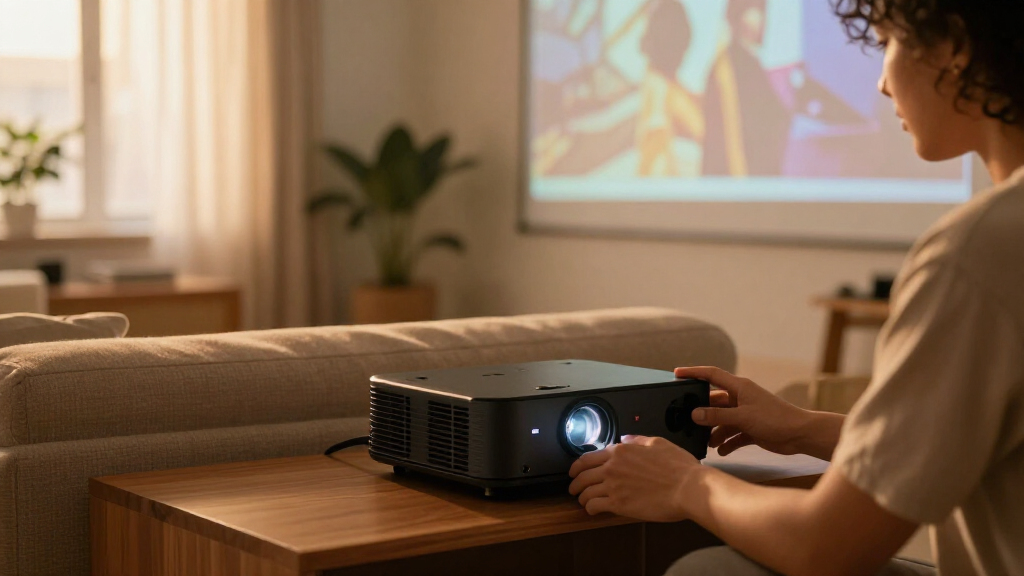
How We Picked
I evaluated these ten projectors by analyzing their core specifications against real-world usage scenarios, focusing on three primary pillars: image quality, usability, and value. For image quality, I prioritized native resolution and light source type, distinguishing between true 4K panels and 4K-decoding capabilities, as well as comparing laser, LED, and traditional lamp lifespans. I also examined contrast ratios and HDR support, as these factors dictate how well a projector handles dark scenes and bright highlights, which are critical for cinematic immersion.
Usability was assessed through the lens of setup complexity and ecosystem integration. I favored units with automatic focus and keystone correction for casual users, while acknowledging that manual adjustments often yield sharper images for enthusiasts. Connectivity options, including HDMI 2.1 support and wireless protocols, were weighed to determine how easily each projector fits into modern smart home setups. Finally, value was calculated not just by price, but by the cost-per-hour of use, factoring in lamp life and energy efficiency to ensure long-term satisfaction.
Factors to Consider When Choosing Home Theater Projectors
Selecting a projector involves balancing technical specifications with the physical reality of your home. While marketing terms can be confusing, understanding a few key factors will help you avoid buying a unit that looks great on paper but fails in your specific living space.Native Resolution vs. 4K Decoding
Many budget projectors advertise ‘4K support’ or ‘4K decoding,’ which means they can accept a 4K signal but downscale it to a lower native resolution, often 1080p or 720p. This is a common mistake buyers make, assuming they are getting a 4K image when they are actually seeing a scaled-down version. True 4K projectors use panels with eight million pixels, offering significantly sharper detail on large screens. If you are watching content from a 4K Blu-ray player or high-bitrate streaming device, investing in a native 4K panel like the Epson LS11000 provides a tangible upgrade in clarity. However, for 1080p streaming content, a high-quality native 1080p projector often delivers a more consistent and cost-effective experience.
Light Source Technology: Laser vs. LED vs. Lamp
The light source determines how long your projector lasts and how well it maintains brightness over time. Laser projectors offer the longest lifespan, often rated for 20,000+ hours, and provide consistent brightness without the dimming curve associated with traditional lamps. LED projectors are also long-lasting and energy-efficient but typically produce lower peak brightness, making them better suited for dark rooms. Traditional lamp-based projectors, like the Epson Home Cinema 980, are cheaper upfront but require periodic lamp replacements, which adds to the total cost of ownership. If you plan to use your projector daily for years, the higher initial investment in laser technology often pays off in reduced maintenance and stable image quality.
Brightness and Ambient Light Control
Measured in ANSI lumens, brightness is the most critical factor for viewing in non-controlled environments. A projector with 1,500–2,000 ANSI lumens, such as the HAPPRUN 1500 ANSI Lumens model, can handle moderate ambient light, making it suitable for living rooms with some daytime use. Conversely, high-contrast cinema projectors often sacrifice brightness for deeper blacks, requiring a pitch-black room to shine. If your space has large windows or light-colored walls, prioritize higher lumen counts and consider an ambient light rejecting screen. Ignoring this factor leads to washed-out images and poor color saturation, rendering even a high-resolution projector ineffective.
Connectivity and Smart Features
Modern home theater setups are increasingly wireless, but physical ports remain vital for stability. Wi-Fi 6 and Bluetooth 5.4 support, seen in the NexAurea and X9 Pro, offer faster data transfer and lower latency for wireless headphones and game controllers. However, relying solely on built-in apps can sometimes limit your content library compared to dedicated streaming sticks. Look for projectors with HDMI 2.1 ports if you plan to connect next-gen gaming consoles, as they support higher refresh rates and variable refresh rate technology. A balanced approach is choosing a projector with solid built-in apps for convenience but retaining HDMI inputs for high-bandwidth devices.
Installation Flexibility and Lens Shift
Where you place your projector dictates the image quality. Auto-focus and keystone correction are convenient for portable or multi-room use, allowing quick setup on uneven surfaces. However, these digital corrections often introduce softness or pixel interpolation errors. For dedicated home theaters, lens shift capabilities allow you to move the image vertically or horizontally without distorting the picture, offering a precise fit for your screen. If you are renting or moving frequently, the flexibility of auto-correction features in models like the NexAurea is worth the slight tradeoff in sharpness. Enthusiasts with fixed installations should prioritize optical zoom and lens shift over digital correction tools.
Frequently Asked Questions
Is a 1080p projector still worth buying in 2027?
Yes, a high-quality native 1080p projector can still offer excellent value, especially for viewers who primarily watch streaming content, which is often compressed and not fully 4K. In smaller rooms or with smaller screen sizes, the difference between 1080p and 4K is less perceptible to the naked eye. Furthermore, many 1080p models, such as the Epson Home Cinema 980, offer superior color accuracy and contrast ratios compared to entry-level 4K units. If your budget is limited, investing in a premium 1080p projector with a good lens and light source will likely provide a more satisfying cinematic experience than a budget 4K projector with poor color reproduction.
Do I need a dedicated screen, or can I project on a white wall?
While projecting on a white wall is possible, a dedicated screen significantly improves image quality by enhancing brightness, contrast, and color uniformity. Projector screens are designed to reflect light efficiently, whereas standard walls often absorb light or have textures that scatter the image, leading to a loss of sharpness. For home theater projectors with lower lumen outputs, a screen is almost mandatory to achieve a vibrant image. If you cannot mount a fixed screen, consider a portable pull-down screen or a high-gain wall paint designed for projection, but always expect the best results from a proper projection surface.
How important is HDR support for home theater projectors?
HDR (High Dynamic Range) support is increasingly important as more streaming services and Blu-rays release content in HDR formats. It allows for a wider range of brightness and color, resulting in more realistic highlights and deeper shadows. However, not all projectors handle HDR equally; many budget models claim HDR support but lack the contrast ratio to display it effectively. Premium laser models like the Optoma UHZ36 and Epson LS11000 utilize dynamic tone mapping to adapt HDR signals to the projector’s capabilities, offering a much more impactful viewing experience. If you watch a lot of modern movies, prioritize projectors with dynamic HDR tone mapping.
Can I use a home theater projector for gaming?
Yes, but you must check the input lag specifications. Gaming requires low latency to ensure that your controller inputs register instantly on screen. Many smart projectors, especially those with complex operating systems, have higher input lag, which can make fast-paced games feel sluggish. Look for projectors with a dedicated ‘Game Mode’ that minimizes processing delays. Models with HDMI 2.1 ports are preferable for next-gen consoles, as they support higher refresh rates and variable refresh rate (VRR) technology, which reduces screen tearing. For competitive gaming, a dedicated monitor is still superior, but for casual gaming, many modern projectors are perfectly adequate.
How do I clean and maintain my home theater projector?
Maintenance primarily involves keeping the air filter clean and the lens free of dust. Most projectors have removable air filters that should be cleaned every few months, depending on your environment, to prevent overheating and fan noise. Use a soft, dry cloth or a blower to clean the filter; never use water or chemicals unless specified by the manufacturer. The lens should be cleaned gently with a microfiber cloth to avoid scratching the coating. Laser and LED projectors generally require less maintenance than lamp-based models since they do not need lamp replacements, but regular dusting of the intake vents remains essential to prolong the device’s lifespan.
Conclusion
Selecting the right home theater projectors comes down to matching the device’s strengths to your viewing environment and priorities. For the best overall experience in a dedicated room, the Epson Home Cinema LS11000 remains unmatched with its laser light source and superior 4K PRO-UHD clarity. If you are a beginner or renter looking for ease of use and smart features, the NexAurea Smart Projector offers excellent native 1080p performance with modern Wi-Fi 6 connectivity and automatic setup tools. Budget-conscious buyers should consider the HAPPRUN H1 for its straightforward 1080p performance without unnecessary smart OS bloat. For those needing portability and outdoor capability, the Aurzen Roku TV D1R provides a rugged, smart solution with built-in apps. Finally, if you require high brightness for a living room with ambient light, the Optoma UHZ36 is the superior choice, delivering robust laser brightness and deep contrast. Evaluate your room’s light control and your willingness to manage setup complexity to make your final decision.
Fall Picks

DJI Osmo Action 4 Essential Combo Waterproof 4K Action Camera
As an affiliate, we earn on qualifying purchases.