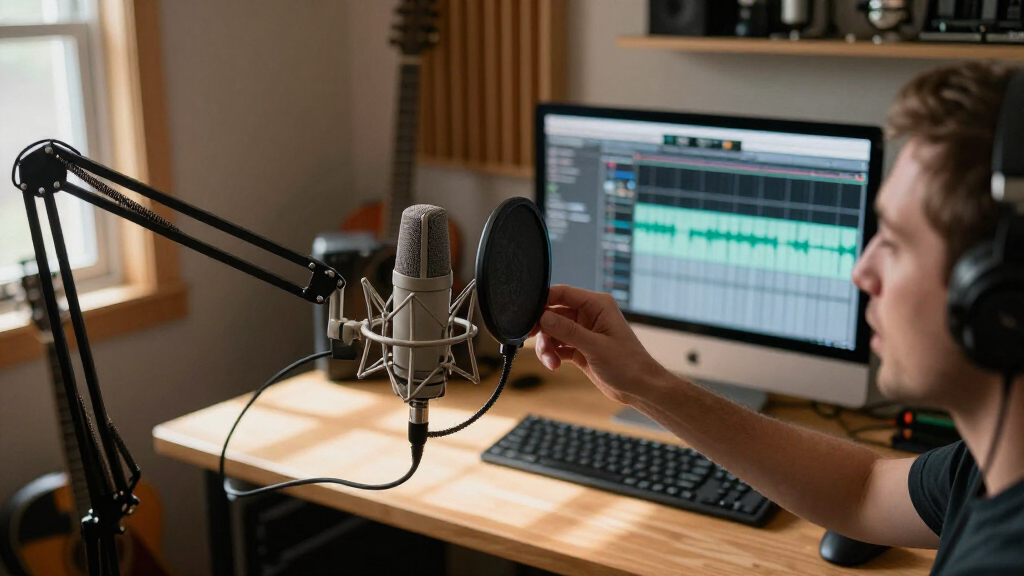

For most home and project studios, I’d start with the RØDE NT1 5th Generation: it offers both XLR and USB-C connections, so it can fit a simple computer setup or grow into an audio interface rig. The RØDE NT1 Signature Series is a strong choice for a dedicated XLR studio, while the FIFINE T669 makes recording more approachable with its USB connection and included kit. The main choice is between plug-and-play convenience and the flexibility of an XLR chain, with room treatment and background noise shaping the results either way. I ranked these microphones by their studio usefulness, connection options, setup needs, and fit for different recording situations. Read on for the full comparison and guidance on choosing the right one for your room and workflow.

Get business pricing on tech for your team
- Business-only prices and quantity discounts
- Tax-exempt purchasing
- Multiple users, one account, clear invoices
Complete the kit

Key Takeaways
- The RØDE NT1 5th Generation is the most adaptable pick: USB-C supports direct computer recording, while XLR keeps an interface-based setup open.
- The NT1 Signature Series suits a focused XLR studio: its dedicated connection makes sense for buyers who already have or plan to use an audio interface.
- USB kits simplify the first recording setup: the FIFINE T669 and MAONO A04 Gen2 include useful accessories, though their all-in-one approach offers less room to shape an XLR signal chain.
- The AT2020 and AKG P120 favor conventional studio workflows: both use XLR, so buyers need compatible phantom power and a separate way to mount and monitor them.
- Included stands do not solve every room problem: desktop kits can get recording started, but mic placement, vibration control, and acoustic treatment still affect usable takes.
| FIFINE T669 USB Condenser Microphone Kit |  | Best for Beginners | Microphone type: USB condenser | Pickup pattern: Cardioid | Compatibility: PC and laptop; incompatible with Xbox | VIEW LATEST PRICE | See Our Full Breakdown |
| Mackie EM-91C Large-Diaphragm Condenser Microphone |  | Best Rugged Studio Pick | Microphone type: Condenser | Diaphragm: Large | Polar pattern: Cardioid | VIEW LATEST PRICE | See Our Full Breakdown |
| RØDE NT1 Signature Series Studio Condenser Microphone, Black |  | Best for Quiet Vocal Recording | Type: Large-diaphragm condenser microphone | Color: Black | Pickup pattern: Cardioid | VIEW LATEST PRICE | See Our Full Breakdown |
| AKG Pro Audio P120 Cardioid Condenser Microphone |  | Best for Loud Sources | Diaphragm: 2/3-inch | Polar pattern: Cardioid | Connector: XLR | VIEW LATEST PRICE | See Our Full Breakdown |
| TZ Stellar X2 Large-Diaphragm Cardioid Condenser XLR Microphone |  | Best Accessory Bundle | Connectivity: XLR | Power: 48V phantom power | Polar pattern: Unidirectional | VIEW LATEST PRICE | See Our Full Breakdown |
| MAONO A04 Gen2 USB/XLR Condenser Microphone Kit |  | Best Beginner USB/XLR Kit | Connectivity: USB and XLR | USB sampling: 192 kHz / 24-bit | Frequency response: 30 Hz–16 kHz | VIEW LATEST PRICE | See Our Full Breakdown |
| PROAR XLR Condenser Microphone with Desktop Stand |  | Best XLR Starter with Desktop Stand | Connectivity: XLR | Polar pattern: Cardioid (unidirectional) | Sensitivity: -32 dB ±3 dB | VIEW LATEST PRICE | See Our Full Breakdown |
| RØDE NT1 5th Generation Studio Condenser Microphone, XLR and USB-C, Silver |  | Best Premium Hybrid Studio Mic | Microphone type: Studio condenser | Connectivity: XLR and USB-C | Digital conversion: Up to 192 kHz | VIEW LATEST PRICE | See Our Full Breakdown |
| Audio-Technica AT2020 Cardioid Condenser XLR Studio Microphone |  | Best Straightforward XLR Studio Pick | Connectivity: Wired, 3-pin XLRM connector | Polar pattern: Cardioid (unidirectional) | Frequency response: 20 Hz (upper limit not specified in supplied data) | VIEW LATEST PRICE | See Our Full Breakdown |
| Maono PM320S XLR Condenser Microphone with Boom Arm and Pop Filter |  | Best Bundled Boom-Arm XLR Kit | Connectivity: XLR | Power requirement: 48V phantom power | Capsule: 16 mm condenser | VIEW LATEST PRICE | See Our Full Breakdown |
| studio condenser microphone | Included accessories | Polar pattern | Connectivity | Frequency response |
|---|---|---|---|---|
| FIFINE T669 USB Condenser Micr | Steel scissor arm, C-clamp and desktop mount, shock mount, double pop filter, USB-B to USB-A/C cable | — | — | — |
| Mackie EM-91C Large-Diaphragm | Shock mount, XLR cable | Cardioid | — | — |
| RØDE NT1 Signature Series Stud | SM6 shock mount with pop filter, XLR cable, dust cover | — | — | — |
| AKG Pro Audio P120 Cardioid Co | — | Cardioid | — | 20–20,000 Hz |
| TZ Stellar X2 Large-Diaphragm | Aluminium carrying case, spring mount, 3/8-to-5/8-inch adapter, foam windscreen, leather pouch | Unidirectional | XLR | — |
| MAONO A04 Gen2 USB/XLR Condens | Scissor arm, shock mount, pop filter, foam windscreen, boom arm base, USB cable, user manual | Cardioid | USB and XLR | 30 Hz–16 kHz |
| PROAR XLR Condenser Microphone | Desktop stand, shock mount, pop filter, XLR-to-XLR cable, user manual | Cardioid (unidirectional) | XLR | 20–20,000 Hz |
| RØDE NT1 5th Generation Studio | — | — | XLR and USB-C | — |
| Audio-Technica AT2020 Cardioid | — | Cardioid (unidirectional) | Wired, 3-pin XLRM connector | 20 Hz (upper limit not specified in supplied data) |
| Maono PM320S XLR Condenser Mic | Boom arm, shock mount, pop filter, windscreen, XLR cable | Cardioid (unidirectional) | XLR | 20 Hz–20 kHz |
More Details on Our Top Picks
FIFINE T669 USB Condenser Microphone Kit
The FIFINE T669 is the easiest entry into this group for someone recording at a desk without an XLR interface. Its plug-and-play USB connection and included boom arm, shock mount, and pop filter make it a more complete starter setup than the Mackie EM-91C, which uses XLR and includes fewer desk accessories. The cardioid pattern focuses on sound in front of the mic, which suits solo podcasts, voiceovers, and calls, though it cannot remove room noise or keyboard sounds by itself.
The tradeoff is that this is a computer-focused kit rather than a flexible studio microphone: it is incompatible with Xbox and needs a PC or laptop with USB. Choose it for a straightforward desk setup; for recording through an interface or capturing instruments, the XLR AKG P120 is a better fit.
Pros:- USB connection supports plug-and-play recording on PC and laptop
- Includes a 30-inch adjustable boom arm and shock mount
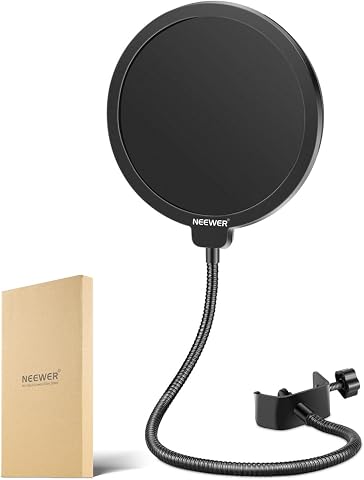
- Double-layer pop filter helps reduce plosive bursts in close speech
- Cardioid pickup focuses on sound from the front
Cons:- Incompatible with Xbox
- USB-only setup limits use with standard XLR studio equipment
Best for: New podcasters and voiceover creators who want a ready-to-mount microphone for a PC or laptop without buying an audio interface.
Not ideal for: Xbox users and home-studio musicians who need XLR connectivity or plan to record instruments through an audio interface.
- Microphone type:USB condenser
- Pickup pattern:Cardioid
- Compatibility:PC and laptop; incompatible with Xbox
- Boom arm reach:30 inches
- Boom arm adjustment:180° vertical rotation; 135° forward and backward extension
- Cable length:8.2 feet
- Included accessories:Steel scissor arm, C-clamp and desktop mount, shock mount, double pop filter, USB-B to USB-A/C cable
Our verdict“Choose the T669 for an accessible PC desk setup with its mounting and pop-filter accessories included.”
Mackie EM-91C Large-Diaphragm Condenser Microphone
The Mackie EM-91C makes sense for a home studio that needs a straightforward large-diaphragm condenser with rugged construction. Its cardioid pattern suits a single vocalist or speaker working in front of the mic, and the included shock mount and XLR cable provide a useful starting point. Compared with the USB FIFINE T669, it requires an XLR recording chain, but that connection suits a conventional interface-based studio rather than a computer-only desk kit.
The supplied details do not specify frequency response, sensitivity, or noise level, so I would not rank it ahead of models such as the RØDE NT1 Signature Series for buyers prioritizing documented low-noise performance. It is a practical choice when durability and a simple XLR package matter more than a broad feature set; its limited published specifications make detailed matching harder.
Pros:- Large-diaphragm condenser design for studio recording
- Cardioid pattern suits focused, front-facing vocals and speech
- Rugged construction is suited to regular studio handling
- Includes a shock mount and XLR cable
Cons:- Requires an XLR interface or other compatible preamp setup
- Available product details omit key performance figures such as self-noise and frequency response
Best for: Home-studio owners who already have an XLR interface and want a sturdy condenser with a shock mount and cable in the box.
Not ideal for: USB-only creators or buyers comparing microphones by published noise and sensitivity figures, since those details are not provided here.
- Microphone type:Condenser
- Diaphragm:Large
- Polar pattern:Cardioid
- Construction:Rugged construction
- Included accessories:Shock mount, XLR cable
Our verdict“Pick the EM-91C for a durable, basic XLR studio setup when the listed accessories matter more than detailed published specifications.”
RØDE NT1 Signature Series Studio Condenser Microphone, Black
The RØDE NT1 Signature Series is the vocal-focused choice here for buyers who want clean capture from a large-diaphragm condenser. Its low self-noise helps preserve quieter details in vocals and streaming, while the cardioid pattern directs attention toward the performer in front of it. The included SM6 shock mount with pop filter and XLR cable make it a more recording-ready package than the AKG P120, which lists only a stand adapter.
That fuller accessory bundle still does not make it a USB microphone: you need an audio interface to record. Compared with the TZ Stellar X2, the NT1 Signature adds an integrated pop filter and XLR cable to the supplied kit, while the Stellar X2 lists self-noise and signal-to-noise figures explicitly. This pick suits vocalists who value a quiet mic and a well-equipped package, but it is less convenient for computer-only recording.
Pros:- Low self-noise supports clean capture of quieter vocal detail
- Cardioid pattern focuses on sound from the front
- SM6 shock mount includes a pop filter
- XLR cable and dust cover are included
Cons:- Requires an audio interface for recording
- XLR setup is less direct than the USB FIFINE T669 for computer-only creators
Best for: Vocalists and streamers building an interface-based home studio who want low self-noise and a supplied shock mount, pop filter, and XLR cable.
Not ideal for: Creators who need direct USB recording or buyers who do not already own an audio interface.
- Type:Large-diaphragm condenser microphone
- Color:Black
- Pickup pattern:Cardioid
- Noise characteristic:Low self-noise
- Included accessories:SM6 shock mount with pop filter, XLR cable, dust cover
- Recording connection:XLR; requires an audio interface
Our verdict“Choose the NT1 Signature for quiet vocal recording when you have an interface and want the main recording accessories supplied.”
AKG Pro Audio P120 Cardioid Condenser Microphone
The AKG P120 is the most clearly specified option here for studios that record more than speech. Its 150 dB maximum SPL and -20 dB pre-attenuation pad give it room to handle loud sources, while the 300 Hz bass-cut filter can reduce low-frequency buildup before it reaches the recording chain. That makes it more versatile for instruments than the vocal-oriented RØDE NT1 Signature, though the NT1 includes a shock mount, pop filter, cable, and dust cover that the P120 does not.
The P120 has an XLR connector and needs an interface or compatible XLR equipment, so it is not as simple to set up as the USB FIFINE T669. Its 19 dB-A equivalent noise level is also a relevant tradeoff for quiet vocal recording compared with the NT1’s stated low-self-noise emphasis. This is a practical project-studio pick when source flexibility and useful filtering matter more than an extensive accessory bundle.
Pros:- Handles sound pressure levels up to 150 dB
- -20 dB pre-attenuation pad helps accommodate loud sources
- 300 Hz bass-cut filter can reduce low-frequency buildup
- 20–20,000 Hz frequency response covers the stated audible range
Cons:- Requires an audio interface or compatible XLR equipment
- Only a stand adapter is listed in the box
- 19 dB-A equivalent noise level may be less suited to very quiet vocal passages than the RØDE NT1 Signature
Best for: Project-studio musicians who record vocals and loud instruments and want an XLR mic with an attenuation pad and bass-cut filter.
Not ideal for: USB-only creators and vocalists prioritizing the lowest possible noise or a full shock-mount and pop-filter bundle.
- Diaphragm:2/3-inch
- Polar pattern:Cardioid
- Connector:XLR
- Frequency response:20–20,000 Hz
- Maximum SPL:150 dB
- Equivalent noise level:19 dB-A
- Pre-attenuation pad:-20 dB
- Bass-cut filter:300 Hz, 6 dB/octave
- In the box:Microphone, stand adapter
Our verdict“Choose the P120 for an interface-based project studio that needs one condenser for vocals and loud instruments, with practical onboard filtering.”
TZ Stellar X2 Large-Diaphragm Cardioid Condenser XLR Microphone
The TZ Stellar X2 stands apart for combining a smooth, balanced sound profile with a useful set of mounting and storage accessories. Its transformerless JFET circuit and stated self-noise below 13 dBA make it a strong fit for vocalists who want low-noise XLR capture. Compared with the AKG P120, the Stellar X2 lists lower self-noise and includes a spring mount, windscreen, adapters, and carrying case; the P120, by contrast, offers a specified high SPL rating, pad, and bass-cut filter for louder or bass-heavy sources.
This microphone needs 48V phantom power through an interface, and neither an XLR cable nor interface is listed among its accessories. That adds setup requirements beyond the USB FIFINE T669. Choose the Stellar X2 when quiet vocal recording and a portable accessory kit take priority over built-in source controls or an all-in-one computer connection.
Pros:- Self-noise below 13 dBA supports quiet recording
- Transformerless JFET circuit is described as low-distortion
- Includes a spring mount, foam windscreen, thread adapter, and carrying case
- 20 Hz–20 kHz frequency range
Cons:- Requires an interface with 48V phantom power
- XLR cable and audio interface are not listed among included accessories
Best for: Vocalists with an interface that supplies 48V phantom power who want low self-noise plus accessories for mounting and storage.
Not ideal for: USB-only creators or musicians seeking a microphone with a documented high SPL rating, attenuation pad, or bass-cut filter.
- Connectivity:XLR
- Power:48V phantom power
- Polar pattern:Unidirectional
- Form factor:Large diaphragm
- Frequency range:20 Hz–20 kHz
- Self-noise:Less than 13 dBA
- Signal-to-noise ratio:77.5 dB
- Impedance:140 ohm
- Included accessories:Aluminium carrying case, spring mount, 3/8-to-5/8-inch adapter, foam windscreen, leather pouch
Our verdict“Choose the Stellar X2 for low-noise XLR vocal recording when you already have phantom power and value its mounting and storage kit.”
MAONO A04 Gen2 USB/XLR Condenser Microphone Kit
The MAONO A04 Gen2 suits a new home recorder who wants to start on USB and keep an XLR upgrade path. Its included arm, shock mount, and pop filter make it a more complete desk setup than the Audio-Technica AT2020, which requires separate recording gear and accessories. In USB mode, software gain, noise reduction, and EQ offer convenient adjustments without an interface; the AT2020 instead relies on external gear. The tradeoff is that those software controls disappear in XLR mode, which also needs phantom power and a separately purchased cable. Its 16 kHz upper frequency limit is narrower than the PROAR’s listed 20 kHz response, so buyers focused on broader stated frequency coverage may prefer that XLR option. The MAONO makes the most sense for flexible entry-level recording, not a set-and-forget XLR studio chain.
Pros:- USB and XLR connections allow a move from computer recording to an interface-based setup
- Included arm, shock mount, pop filter, and windscreen provide a ready desk kit
- USB software provides gain, noise reduction, and EQ adjustments
- Cardioid pickup focuses on sound in front of the microphone
Cons:- XLR operation requires 48V phantom power and a separately purchased XLR cable
- Software controls are available only over USB
- 30 Hz–16 kHz stated frequency response is narrower than the PROAR’s 20 Hz–20 kHz range
Best for: First-time home podcasters and streamers who want USB simplicity now, bundled desk accessories, and the option to move to XLR later
Not ideal for: Buyers committed to XLR recording who want the cable included or software controls available through their interface
- Connectivity:USB and XLR
- USB sampling:192 kHz / 24-bit
- Frequency response:30 Hz–16 kHz
- Capsule:16 mm electret condenser
- Polar pattern:Cardioid
- Recommended recording distance:2–6 in
- Included accessories:Scissor arm, shock mount, pop filter, foam windscreen, boom arm base, USB cable, user manual
- XLR cable:Not included
- Compatibility note:Not compatible with Xbox
Our verdict“Choose the A04 Gen2 for a bundled USB-first setup with an XLR option, provided its split-mode controls and missing XLR cable fit your plans.”
PROAR XLR Condenser Microphone with Desktop Stand
The PROAR XLR condenser is for a buyer who already has an interface or mixer and wants a compact desktop vocal setup. Its weighted stand, shock mount, pop filter, and included XLR cable give it a more self-contained desk package than the Audio-Technica AT2020, though both require external phantom-powered recording equipment. The PROAR lists a 20 Hz–20 kHz response and 130 dB maximum SPL, giving buyers clear reference points for its stated range and handling of loud sources. The tradeoff is that its one-channel XLR design offers no direct USB route or onboard software controls; the MAONO A04 Gen2 is more adaptable for computer-first recording. Choose PROAR for a fixed, interface-based desktop station, and skip it if you still need the interface or 48V power source.
Pros:- Includes a weighted desktop stand, shock mount, pop filter, and XLR cable
- Cardioid pattern is suited to focused front-facing vocal capture
- Listed maximum SPL of 130 dB supports recording comparatively loud sources
- Metal enclosure
Cons:- Needs an audio interface or mixer with 48V phantom power, neither of which is included
- XLR-only connection cannot plug directly into a computer as a USB microphone
- Single-channel setup lacks the MAONO A04 Gen2’s USB software controls
Best for: Podcasters and vocalists with a 48V-capable interface or mixer who want an XLR mic and basic desktop accessories in one kit
Not ideal for: Computer-first beginners without an audio interface, mixer, or phantom power source, and buyers seeking USB connectivity
- Connectivity:XLR
- Polar pattern:Cardioid (unidirectional)
- Sensitivity:-32 dB ±3 dB
- Frequency response:20–20,000 Hz
- Maximum SPL:130 dB
- Power:48V phantom power
- Channels:1
- Enclosure:Metal
- Included accessories:Desktop stand, shock mount, pop filter, XLR-to-XLR cable, user manual
Our verdict“Pick the PROAR if you already own phantom-powered XLR gear and want a ready desktop vocal setup with its cable included.”
RØDE NT1 5th Generation Studio Condenser Microphone, XLR and USB-C, Silver
The RØDE NT1 5th Generation is the most capable hybrid choice here for a studio that moves between computer-based sessions and an interface or mixer. Its USB-C and XLR connections pair digital recording features such as 32-bit float and conversion up to 192 kHz with an XLR studio path. That gives it broader recording flexibility than the Audio-Technica AT2020, which is XLR-only, while the AT2020’s simpler connection suits a rig already built around an interface. Low self-noise and high SPL handling also make the NT1 a versatile candidate for quiet vocals and louder instruments. The main tradeoff is that this feature-rich format may be more than a fixed one-connection setup needs; unlike the MAONO A04 Gen2, the supplied data does not list bundled desk accessories or USB software controls.
Pros:- USB-C and XLR connectivity support computer recording and interface-based studio setups
- 32-bit float recording provides a digital recording format suited to sessions with changing levels
- Digital conversion reaches up to 192 kHz
- Low self-noise and high SPL handling suit both quiet vocals and louder sources
Cons:- Dual connectivity and advanced digital features may be unnecessary for buyers who only need a basic XLR mic
- The supplied product data does not specify included stands, pop filters, or other recording accessories
Best for: Home studio owners recording vocals, voiceovers, podcasts, and instruments who want both direct USB-C recording and a conventional XLR connection
Not ideal for: Buyers seeking a basic XLR-only mic or a listed bundle of desk accessories to outfit a recording station
- Microphone type:Studio condenser
- Connectivity:XLR and USB-C
- Digital conversion:Up to 192 kHz
- Digital recording:32-bit float
- Preamp:Revolution Preamp
- Body material:Aluminium with nickel plating and ceramic coating
- Color:Silver
Our verdict“Choose the NT1 5th Generation for a premium studio microphone that can record over USB-C or join an XLR setup.”
Audio-Technica AT2020 Cardioid Condenser XLR Studio Microphone
The Audio-Technica AT2020 makes the most sense for a project studio that already has an interface and wants a straightforward, single-channel XLR condenser. Its cardioid pattern reduces pickup from the sides and rear, which can help prioritize a vocalist or instrument in a home recording space. Compared with the MAONO A04 Gen2, the AT2020 gives up direct USB recording and bundled desk accessories; in return, its XLR-only format avoids choosing between USB software controls and an interface-based workflow. The low-mass diaphragm is designed for extended frequency and transient response, while the rugged metal body suits regular studio use. The supplied frequency response is listed only as 20 Hz, without an upper limit, so buyers needing a complete response range should check that specification before comparing it with the PROAR.
Pros:- Cardioid pickup helps reduce sound arriving from the sides and rear
- Low-mass diaphragm is designed for extended frequency and transient response
- Metal enclosure offers a rugged studio build
- Listed 74 dB signal-to-noise ratio and wide dynamic range support studio recording
Cons:- Requires phantom power and compatible XLR recording equipment
- No USB connection or bundled accessories are listed
- The supplied frequency response gives only a 20 Hz figure, with no upper limit stated
Best for: Home and project studio owners with phantom-powered XLR equipment who want a simple cardioid mic for vocals and instruments
Not ideal for: USB-first streamers and beginners who need an included stand, pop filter, or a clearly stated full frequency-response range
- Connectivity:Wired, 3-pin XLRM connector
- Polar pattern:Cardioid (unidirectional)
- Frequency response:20 Hz (upper limit not specified in supplied data)
- Signal-to-noise ratio:74 dB
- Impedance:200 ohm
- Audio sensitivity:37 dB
- Power source:Phantom power
- Channels:1
- Enclosure:Metal
Our verdict“Choose the AT2020 for a direct XLR path into an existing project studio, and check its incomplete response specification if range is a deciding factor.”
Maono PM320S XLR Condenser Microphone with Boom Arm and Pop Filter
The Maono PM320S is the practical pick for an XLR-based desk where a boom arm is more useful than the PROAR’s weighted tabletop stand. Its kit includes an arm, shock mount, pop filter, windscreen, and XLR cable, so the buyer gets more of the physical recording setup in one box than the Audio-Technica AT2020. A 16 mm capsule and cardioid pattern suit close vocal recording, while its listed 20 Hz–20 kHz response provides a broader stated range than the MAONO A04 Gen2. That A04 remains easier to connect directly to a computer over USB; the PM320S needs a separate 48V phantom-powered interface, mixer, or preamp. Its accessory-heavy bundle is less compelling for someone who already owns a boom arm and pop filter.
Pros:- Includes boom arm, shock mount, pop filter, windscreen, and XLR cable
- Cardioid pattern supports focused close vocal recording
- 20 Hz–20 kHz listed frequency response
- 16 mm condenser capsule and 75 dB signal-to-noise ratio are specified
Cons:- Requires a separate 48V phantom power source
- Needs an interface, mixer, or preamp with XLR input
- The included arm and accessories add little value to buyers who already own a desk recording rig
Best for: Home podcasters and vocalists with a phantom-powered XLR interface who need a boom arm and basic close-recording accessories
Not ideal for: USB-only computer users and studio owners who already have a boom arm, shock mount, and pop filter
- Connectivity:XLR
- Power requirement:48V phantom power
- Capsule:16 mm condenser
- Polar pattern:Cardioid (unidirectional)
- Frequency response:20 Hz–20 kHz
- Sensitivity:-34 dB ±3 dB
- Impedance:200 ohms
- Signal-to-noise ratio:75 dB
- Included accessories:Boom arm, shock mount, pop filter, windscreen, XLR cable
Our verdict“Pick the PM320S if you have phantom-powered XLR gear and need a boom arm kit, while USB-first users should favor the MAONO A04 Gen2.”
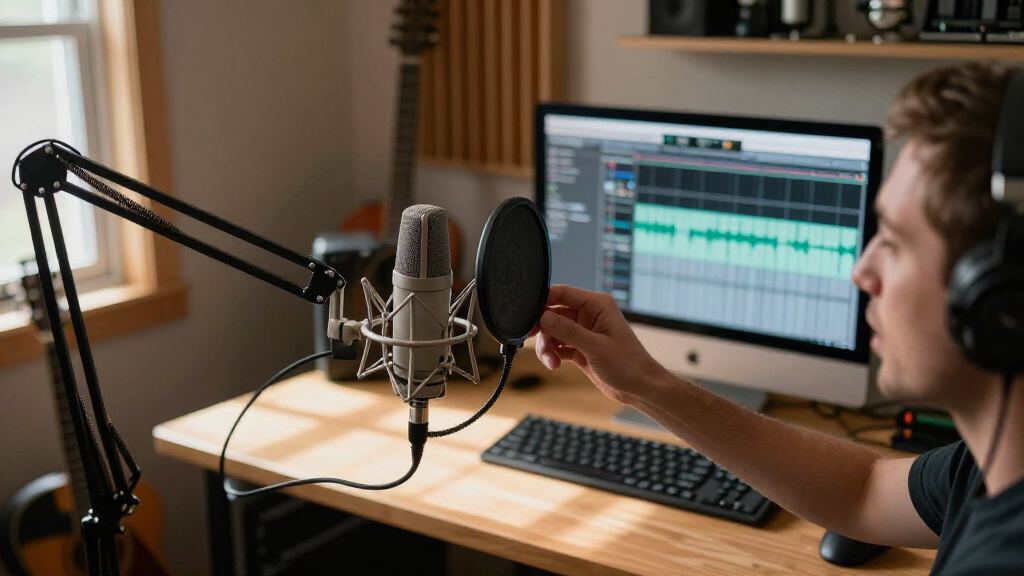
How We Picked
I compared these microphones by how well they serve actual studio recording needs: connection type, likely setup requirements, included accessories, and flexibility across voice, instruments, and home recording workflows. I gave more weight to options that make their intended use clear and fit reliably into a recording chain, rather than treating a long accessory list as a substitute for studio usefulness.
The ranking puts the RØDE NT1 5th Generation first for its unusual ability to work as either a USB-C microphone or an XLR studio mic. The NT1 Signature Series follows for a more focused XLR path; USB kits rank well for ease of setup, while XLR models such as the AT2020 and P120 suit buyers comfortable supplying an interface and accessories. The lower-ranked desktop and kit options may be practical for specific budgets or first setups, but buyers should weigh their bundled convenience against the control and expansion options of a more conventional studio chain.
| studio condenser microphone | Polar pattern | Connectivity |
|---|---|---|
| FIFINE T669 USB Condenser Micr | — | — |
| Mackie EM-91C Large-Diaphragm | Cardioid | — |
| RØDE NT1 Signature Series Stud | — | — |
| AKG Pro Audio P120 Cardioid Co | Cardioid | — |
| TZ Stellar X2 Large-Diaphragm | Unidirectional | XLR |
| MAONO A04 Gen2 USB/XLR Condens | Cardioid | USB and XLR |
| PROAR XLR Condenser Microphone | Cardioid (unidirectional) | XLR |
| RØDE NT1 5th Generation Studio | — | XLR and USB-C |
| Audio-Technica AT2020 Cardioid | Cardioid (unidirectional) | Wired, 3-pin XLRM connector |
| Maono PM320S XLR Condenser Mic | Cardioid (unidirectional) | XLR |
Factors to Consider When Choosing Studio Condenser Microphones
I’d choose a studio condenser by working backward from the recording space and signal chain I actually have. These broader checks can prevent a mic that looks capable on paper from becoming a poor fit in everyday use.
Choose USB or XLR Around Your Recording Chain
USB microphones connect directly to a computer, which removes the need to buy a separate interface and can reduce setup friction for solo voice recording. XLR microphones need an interface or mixer with a mic preamp, and condenser models commonly need phantom power from that device. That extra hardware adds cost and cables, but it gives more control over gain, monitoring, and future upgrades. A dual-connection model can bridge both workflows, though buyers should check which features work over each connection. Avoid buying XLR solely because it sounds more professional; the quality of the full recording chain and room matters more than the connector alone.
Match the Microphone to the Room
A condenser can capture detail, including room reflections, computer fans, traffic, and keyboard noise. Before choosing a sensitive mic, listen to the room during the quietest time you can record and note what the microphone might pick up. Soft furnishings may reduce some reflections, but they do not fully block outside noise or low-frequency rumble. A dynamic microphone can be a better choice in a noisy space, even if a condenser is the usual studio search. If a condenser is still the right fit, close placement and careful positioning can help give the voice more presence relative to the room.
Plan for Mounting and Vibration Control
A bundle that includes a desktop stand can make a first recording session easier, but the stand may take up desk space and transmit bumps from typing or moving nearby objects. A boom arm moves the mic off the work surface and gives more freedom to position it, though it needs a secure clamp and a desk that can support it. Shock mounts help reduce vibrations traveling through a stand, while pop filters reduce bursts of air from certain consonants. These accessories solve different problems, so a pop filter will not stop keyboard noise and a shock mount will not fix room echo. Check the microphone’s mount compatibility before buying replacements.
Consider What You Record and How You Monitor
For spoken voice, proximity, plosive control, and comfortable headphone monitoring can matter more day to day than extra recording modes. Instrument recording may call for a microphone that can handle louder sources or a setup that allows precise placement and repeatable distance. Cardioid pickup focuses on sound from the front, but it does not eliminate all sound from a home studio. Direct monitoring can help avoid distracting delays when recording through software, so check whether the microphone or interface provides a practical headphone path. If sessions include guests or changing sources, flexible routing may be more useful than a fixed desktop kit.
Spend on the Weakest Part of the Setup
A more capable microphone cannot compensate for a noisy room, poor placement, or an interface with unsuitable gain. Before paying for a higher-tier model, identify the part of the setup that currently limits clean recordings. A beginner may get more value from a complete kit that includes a workable stand and pop filter, while an existing interface owner may prefer to put more of the budget toward the microphone itself. Keep room for headphones, a stable mount, and basic acoustic improvements if those are missing. Paying more makes the most sense when it adds flexibility or solves a real workflow limitation.
Frequently Asked Questions
Can I use an XLR condenser microphone without an audio interface?
Usually, no: an XLR condenser needs a device with a microphone input, preamp, and phantom power, such as a suitable audio interface or mixer. A standard computer mic jack generally does not provide the right connection or power. Confirm that the interface supplies phantom power before choosing an XLR mic, and check that the correct cable is included or available. If you want to record directly to a computer without that extra hardware, a USB model or a dual-connection microphone may suit you better. The full signal chain matters, so plan for headphones and monitoring as well.
Is a USB microphone suitable for serious studio recording?
Yes, a USB microphone can work well for voice, podcasts, music demos, and other recordings when its sound and features fit the job. Its direct computer connection makes setup simpler, especially for a solo recording station. The tradeoff is that it may offer less flexibility for routing, external preamps, or multi-microphone sessions than an XLR setup. Consider whether you expect to expand your studio before choosing a fixed USB workflow. A quiet room and careful mic placement will still have a large effect on the finished recording.
Do I need acoustic treatment before buying a condenser microphone?
You do not need a treated studio to begin, but the room can limit how useful a detailed condenser recording sounds. Listen for echo, traffic, fans, and other steady noise before deciding how much sensitivity you want. A few changes to mic position and recording time may help, while soft furnishings can reduce some reflections without blocking outside sound. If the room is persistently noisy, a condenser may capture more unwanted sound than you want. In that case, room changes or a different microphone type may be a better next step than upgrading the mic.
Should I choose a microphone kit or buy the microphone and accessories separately?
A kit can be a convenient starting point if it includes the items you need to make a stable first recording, such as a stand and pop filter. It can also save setup time when you do not already own compatible gear. Check the quality and compatibility of each included accessory, since an entry-level stand may not suit a heavier or differently mounted microphone. Buying separately makes more sense when you already have an interface, boom arm, or shock mount you like. Compare the complete setup you need rather than counting accessories.
Will one studio condenser microphone work for both vocals and instruments?
Many cardioid condensers can record both vocals and instruments, but placement and source level change the result. For vocals, a pop filter and stable close positioning help manage plosives and keep takes consistent. For louder instruments, leave more distance or adjust gain to avoid overloading the input; check the microphone’s specifications if you plan to record especially loud sources. One microphone can be a sensible starting point for a home studio, though a different pickup pattern or second mic may help with specialized sessions. Choose based on your most common source and the recording space you have.
Conclusion
I’d choose the RØDE NT1 5th Generation as the best overall for a studio that may move between USB-C and XLR recording. For a dedicated XLR setup, the NT1 Signature Series is my premium-oriented pick, while the FIFINE T669 is my beginner-friendly choice for an accessible kit and direct USB connection. Buyers looking for a conventional XLR studio microphone can compare the Audio-Technica AT2020 and AKG P120, with the interface and accessories included in the plan. For a simpler desktop setup, consider the MAONO A04 Gen2; for an XLR bundle with a boom arm and pop filter, look at the Maono PM320S. The right choice comes down to the room, connection, and recording workflow you can support.
Fall Picks
fall essentials
As an affiliate, we earn on qualifying purchases.