
Choosing the right studio monitor headphones is a balancing act between sonic neutrality, physical comfort, and durability. The Audio-Technica ATH-M50x stands out as the best overall pick for its exceptional clarity and industry-standard reference sound, making it a reliable choice for critical listening. For those needing isolation in loud environments, the Sony MDR7506 remains a legendary tool for tracking due to its robust build and sharp high-end detail. However, buyers must weigh the tradeoff between closed-back isolation, which blocks noise but can sound less natural, and open-back designs, which offer a wider soundstage but leak audio. This guide breaks down ten distinct models to help you find the perfect match for your specific workflow and budget constraints.

Get business pricing on tech for your team
- Business-only prices and quantity discounts
- Tax-exempt purchasing
- Multiple users, one account, clear invoices
Complete the kit


Key Takeaways
- Closed-back designs dominate this category for a reason, offering the isolation necessary for recording vocals or drums without bleed, though they often require careful EQ adjustments to counteract bass buildup.
- The Audio-Technica ATH-M50x and Sony MDR7506 represent the industry standard for a reason, maintaining their relevance through consistent tonal balance that engineers recognize instantly.
- Budget options like the TASCAM TH-02 and OneOdio Pro-10 provide surprising utility for basic tracking, but they lack the transient response needed for precise mixing decisions.
- Comfort varies drastically between models; while the Sennheiser HD 280 Pro offers superior isolation, its heavy clamp force can cause fatigue during long sessions, unlike the lighter ATH-M20x.
- Cable connectivity remains a key differentiator, with detachable cables on premium models offering longevity and repairability that fixed cables on entry-level units simply cannot match.
| TASCAM TH-02 Wired Over-Ear Studio Headphones |  | Best Budget Entry Point | Driver Size: 50 mm | Impedance: 32 ohm | Frequency Response: 18 Hz–22 kHz | VIEW LATEST PRICE | See Our Full Breakdown |
| Audio-Technica ATH-M20x Professional Studio Monitor Headphones, White |  | Best for Visual Clarity and Isolation | Driver Size: 40 mm | Impedance: 47 ohm | Sensitivity: 96 dB | VIEW LATEST PRICE | See Our Full Breakdown |
| Audio-Technica ATH-M30x Professional Studio Monitor Headphones |  | Best for Detailed Mid-Range Definition | Driver Size: 40 mm | Impedance: 38 ohm | Sensitivity: 100 dB | VIEW LATEST PRICE | See Our Full Breakdown |
| Sony MDR7506 Professional Large Diaphragm Headphone | 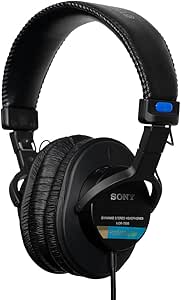 | Best Industry Standard for Durability | Driver Size: 40 mm | Frequency Response: 10 Hz – 20 kHz | Cable Material: Oxygen-Free Copper (OFC) | VIEW LATEST PRICE | See Our Full Breakdown |
| OneOdio Pro-10 Wired Over-Ear DJ Headphones |  | Best for Bass-Heavy Monitoring and DJing | Driver Size: 50 mm | Impedance: 32 ohm | Sensitivity: 110 dB | VIEW LATEST PRICE | See Our Full Breakdown |
| Sennheiser HD 280 Pro Wired Headphones |  | Best for Noise Isolation | Design: Closed, around-the-ear | Frequency Response: 8–25,000 Hz | Noise Attenuation: Up to 32 dB | VIEW LATEST PRICE | See Our Full Breakdown |
| FIFINE H8 Wired Studio Monitor Headphones |  | Best Value for Home Studios | Driver Size: 50 mm | Frequency Range: 20 Hz–20 kHz | Design: Closed-back, over-ear | VIEW LATEST PRICE | See Our Full Breakdown |
| JOYO JMH-02 Over-Ear Studio Monitor Headphones |  | Best for Beginner Practice | Driver Size: 50 mm neodymium | Frequency Response: 20 Hz–20 kHz | Design: Closed-back, over-ear | VIEW LATEST PRICE | See Our Full Breakdown |
| Audio-Technica ATH-M50x Professional Studio Monitor Headphones | 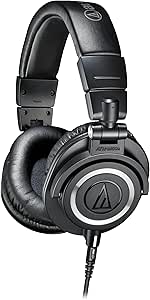 | Best Overall Standard | Driver Size: 45 mm | Frequency Response: 20 Hz – 28,000 Hz | Impedance: 38 ohm | VIEW LATEST PRICE | See Our Full Breakdown |
| Audio-Technica ATH-M20x Professional Studio Monitor Headphones |  | Best Budget Entry | Driver Size: 40 mm | Impedance: 47 ohm | Frequency Response: 15 – 20,000 Hz | VIEW LATEST PRICE | See Our Full Breakdown |
| studio monitor headphone | Driver Size | Impedance | Frequency Response | Weight |
|---|---|---|---|---|
| TASCAM TH-02 Wired Over-Ear St | 50 mm | 32 ohm | 18 Hz–22 kHz | 0.3 kg |
| Audio-Technica ATH-M20x Profes | 40 mm | 47 ohm | — | 261 g |
| Audio-Technica ATH-M30x Profes | 40 mm | 38 ohm | 20 Hz–20,000 Hz | — |
| Sony MDR7506 Professional Larg | 40 mm | — | 10 Hz – 20 kHz | 8 ounces |
| OneOdio Pro-10 Wired Over-Ear | 50 mm | 32 ohm | — | 415 g |
| Sennheiser HD 280 Pro Wired He | — | 64 ohms | 8–25,000 Hz | 220 g |
| FIFINE H8 Wired Studio Monitor | 50 mm | — | — | 265 g |
| JOYO JMH-02 Over-Ear Studio Mo | 50 mm neodymium | — | 20 Hz–20 kHz | 300 g |
| Audio-Technica ATH-M50x Profes | 45 mm | 38 ohm | 20 Hz – 28,000 Hz | — |
| Audio-Technica ATH-M20x Profes | 40 mm | 47 ohm | 15 – 20,000 Hz | — |
More Details on Our Top Picks
TASCAM TH-02 Wired Over-Ear Studio Headphones
The TASCAM TH-02 serves as an accessible entry into studio monitoring, prioritizing portability and basic accuracy over premium build materials. Its 50 mm drivers deliver a surprisingly warm signature with rich bass, making them suitable for casual tracking rather than critical mixing. Compared to the Audio-Technica ATH-M20x, the TH-02 feels less refined in its mid-range clarity but offers a more forgiving low-end response that beginners might find encouraging. The foldable design is a standout feature for students or podcasters who need to stash these in a bag without adding bulk. However, the plastic construction lacks the durability found in industry-standard models, so I view them as a stepping stone rather than a long-term investment for heavy daily use.
Pros:- Foldable design allows for compact storage and easy transport
- Warm sound signature with rich bass suits casual listening
- Lightweight at 0.3 kg reduces fatigue during long sessions
- Includes a 3.5 mm to 6.3 mm adapter for versatile connectivity
Cons:- Plastic build quality feels less durable than metal alternatives
- Sound accuracy lacks the detail needed for critical mixing tasks
- Cable is not detachable, risking replacement costs if damaged
Best for: Beginners and hobbyists who need a lightweight, portable option for casual recording or podcasting on a tight budget.
Not ideal for: Professional mix engineers requiring precise frequency response and durable metal construction for daily studio abuse.
- Driver Size:50 mm
- Impedance:32 ohm
- Frequency Response:18 Hz–22 kHz
- Weight:0.3 kg
- Type:Closed-back, over-ear
- Connectivity:Wired (3.5 mm)
Our verdict“A solid starter kit for newcomers who value portability and a warm sound over professional-grade precision.”
Audio-Technica ATH-M20x Professional Studio Monitor Headphones, White
The Audio-Technica ATH-M20x stands out for its circumaural design, which provides superior passive isolation compared to the open-ear or shallower cup designs often found in budget tiers. This makes it an excellent choice for tracking vocals in untreated rooms where external noise bleed is a concern. While the TASCAM TH-02 offers a warmer, bass-heavy tone, the M20x delivers a more neutral mid-range that helps producers hear instrument separation more clearly. The 40 mm drivers are tuned specifically for enhanced low-frequency performance without muddying the mids, a balance the TH-02 struggles to maintain. The single-side cable exit reduces tangling, a practical upgrade over the center-entry cables of older models. However, the plastic housing can feel slightly rigid, requiring a break-in period for maximum comfort during extended sessions.
Pros:- Circumaural fit provides excellent passive noise isolation
- Single-side cable exit prevents tangling during movement
- Neutral mid-range aids in accurate instrument separation
- White color option offers a distinct aesthetic for studio setups
Cons:- Plastic earcups can feel rigid before breaking in
- Lacks the detailed high-frequency extension of higher-tier models
- Non-detachable cable limits repair options
Best for: Vocalists and producers working in noisy environments who need strong sound isolation and a neutral mid-range.
Not ideal for: Users who prefer a V-shaped sound signature with emphasized highs and lows for casual music enjoyment.
- Driver Size:40 mm
- Impedance:47 ohm
- Sensitivity:96 dB
- Weight:261 g
- Design:Over-ear, circumaural
- Cable:Single-side exit
- Warranty:2 years
Our verdict“Ideal for tracking sessions where noise isolation and mid-range clarity are more important than bass impact.”
Audio-Technica ATH-M30x Professional Studio Monitor Headphones
Stepping up from the M20x, the Audio-Technica ATH-M30x refines the sound signature to prioritize detailed sound and clear mid-range definition. This makes it particularly effective for editing dialogue or mixing acoustic instruments where vocal intelligibility is paramount. Unlike the TASCAM TH-02, which can smear transients in the low end, the M30x offers tighter control and better transient response. The collapsible design adds a layer of convenience for field recording or mobile setups that the fixed-headband designs of some competitors lack. While it shares the same 40 mm driver size as the M20x, the tuning is noticeably more analytical, revealing room flaws and mix errors more readily. The tradeoff is a slightly higher impedance of 38 ohm, which may require a dedicated amp for optimal volume on mobile devices, unlike the easier-to-drive 32 ohm models.
Pros:- Enhanced mid-range clarity reveals mix details and flaws
- Collapsible structure enhances portability for field work
- Passive noise cancellation supports focused listening
- Balanced frequency response aids in accurate monitoring
Cons:- Higher impedance may limit volume on smartphones
- Over-ear design can feel bulky during rapid movement
- Sound signature may feel dry for casual music listening
Best for: Audio editors and mix engineers who need analytical clarity for vocals and acoustic instruments.
Not ideal for: Users with low-power mobile devices who want high volume without an external amplifier.
- Driver Size:40 mm
- Impedance:38 ohm
- Sensitivity:100 dB
- Frequency Response:20 Hz–20,000 Hz
- Design:Collapsible, over-ear
- Cable:Single-sided
- Warranty:2 years
Our verdict“A precise monitoring tool for editors who prioritize mid-range accuracy and portability over bass impact.”
Sony MDR7506 Professional Large Diaphragm Headphone
The Sony MDR7506 remains a ubiquitous presence in professional studios, largely due to its rugged construction and industry-standard sound quality. Its 40 mm drivers produce a bright, forward mid-range that cuts through dense mixes, making it a favorite for broadcast and film production where clarity is non-negotiable. Compared to the OneOdio Pro-10, the MDR7506 lacks the deep, thumping bass response, offering instead a more clinical and revealing presentation that exposes flaws in a track. The foldable design and included soft case make it highly portable, though the plastic construction and tight clamping force can cause discomfort during marathon sessions. A notable drawback is the non-detachable cable, which means a frayed wire renders the headphones useless, a significant risk compared to models with replaceable cables. Despite this, its reliability and specific tonal character keep it relevant for professionals who know exactly what they are getting.
Pros:- Proven durability and rugged build for tough environments
- Bright, revealing sound cuts through dense mixes
- Foldable design with case ensures portability
- Industry-standard status ensures familiarity among pros
Cons:- Non-detachable cable is a single point of failure
- Tight clamping force can cause ear fatigue
- Plastic build lacks premium tactile feedback
Best for: Broadcast engineers and film sound professionals who need a reliable, bright-sounding reference for dialogue and mix checking.
Not ideal for: Users with sensitive ears or those who dislike the tight clamping pressure of older-generation studio headphones.
- Driver Size:40 mm
- Frequency Response:10 Hz – 20 kHz
- Cable Material:Oxygen-Free Copper (OFC)
- Connector Type:Gold-plated 1/8 inch
- Design:Closed-back, foldable
- Weight:8 ounces
- Warranty:90 days
Our verdict“A dependable workhorse for broadcast and film professionals who prioritize clarity and durability over comfort.”
OneOdio Pro-10 Wired Over-Ear DJ Headphones
The OneOdio Pro-10 targets a different niche than the analytical Sony MDR7506, focusing on powerful bass and high sensitivity for DJing and bass-heavy music production. With 50 mm drivers and a 110 dB sensitivity, these headphones drive easily from mobile devices and deliver an energetic, V-shaped sound profile that makes low-end elements pop. The 90° swiveling ear cups are a critical feature for DJs who need to monitor with one ear, offering a convenience that the fixed-cup designs of the Audio-Technica ATH-M30x do not provide. However, this bass emphasis comes at the cost of mid-range neutrality; vocals and instruments can get lost in the low-end energy, making them less ideal for critical mixing tasks. The 415 g weight is also noticeable during long sessions, and the purely wired connection limits modern wireless convenience. It is a fun, energetic tool for performance and casual monitoring, not a precision instrument.
Pros:- Powerful bass response suits hip-hop and electronic music
- 90° swivel cups enable easy single-ear monitoring
- High sensitivity allows for loud playback on mobile devices
- Comfortable padding supports extended wear despite weight
Cons:- Bass-heavy tuning obscures mid-range details
- Heavier weight (415 g) may cause fatigue over time
- Wired-only design lacks modern wireless flexibility
Best for: DJs and bass-heavy music producers who need strong low-end response and single-ear monitoring capabilities.
Not ideal for: Mix engineers who require a flat, neutral frequency response for accurate sound balancing.
- Driver Size:50 mm
- Impedance:32 ohm
- Sensitivity:110 dB
- Weight:415 g
- Ear Cup Rotation:90°
- Connectivity:3.5 mm and 6.35 mm
- Warranty:2 years
Our verdict“A high-energy option for DJs and bass-focused producers who prioritize low-end impact and single-ear monitoring.”
Sennheiser HD 280 Pro Wired Headphones
This model stands out for its industry-leading noise attenuation, blocking up to 32 dB of ambient sound. Unlike the Audio-Technica ATH-M50x, which relies on passive circumaural seals, the HD 280 Pro uses a tight clamp and dense earcups to physically exclude noise, making it ideal for tracking vocals in loud rooms. The sound signature is neutral and slightly dry, prioritizing accuracy over warmth. However, this isolation comes at the cost of comfort; the high clamping force can cause fatigue during long sessions. Compared to the FIFINE H8, the Sennheiser offers superior durability and replaceable parts, justifying its status as a professional standard despite the lack of modern conveniences like detachable cables.
Pros:- Blocks up to 32 dB of ambient noise
- Extremely durable with replaceable earpads and cables
- Neutral, analytical sound profile for accurate mixing
Cons:- High clamping force can cause fatigue
- Coiled cable is bulky and less convenient than detachable options
Best for: Sound engineers and musicians recording in noisy environments who need maximum isolation
Not ideal for: Listeners sensitive to pressure who prioritize comfort over isolation
- Design:Closed, around-the-ear
- Frequency Response:8–25,000 Hz
- Noise Attenuation:Up to 32 dB
- Impedance:64 ohms
- Weight:220 g
- Cable:Coiled, 1–3 m
Our verdict“Choose this if you need to block out the world during tracking sessions and value durability over comfort.”
FIFINE H8 Wired Studio Monitor Headphones
The FIFINE H8 delivers a surprisingly well-balanced sound profile for its price point, offering dynamic bass and stable mids that rival more expensive options. While the Sennheiser HD 280 Pro focuses on clinical neutrality, the H8 adds a touch of warmth that makes long mixing sessions less fatiguing for hobbyists. It includes detachable cables, a feature often reserved for premium models, adding versatility. However, the build quality feels less robust than the Sennheiser, and the passive isolation is weaker, allowing more high-frequency bleed. This model is a smart choice for budget-conscious creators who want modern convenience without the high cost of entry-level professional gear.
Pros:- Includes two detachable coiled cables
- Balanced sound with enhanced low-end response
- Comfortable padding for extended wear
Cons:- Build materials feel less premium than competitors
- Passive isolation is weaker against high-frequency noise
Best for: Home studio owners and hobbyists seeking affordable, versatile monitoring
Not ideal for: Professional studios requiring rugged, long-term durability
- Driver Size:50 mm
- Frequency Range:20 Hz–20 kHz
- Design:Closed-back, over-ear
- Weight:265 g
- Cable Length:9.8 ft
- Warranty:1 year
Our verdict“An excellent entry point for home producers who want detachable cables and a forgiving sound signature.”
JOYO JMH-02 Over-Ear Studio Monitor Headphones
The JOYO JMH-02 is designed for students and beginners who need a flat, balanced response for learning instrument techniques and basic mixing. Compared to the Audio-Technica ATH-M20x, which emphasizes low-frequency performance, the JOYO offers a more neutral mid-range that helps beginners hear errors clearly. The self-adjusting headband simplifies fit, removing the guesswork for new users. However, the earcups can create noticeable ear pressure over time, and the 300g weight is heavier than the lighter Sennheiser alternatives. It serves as a reliable, no-nonsense tool for practice rooms where durability and accuracy matter more than aesthetic flair.
Pros:- Flat sound profile aids in learning and correction
- Self-adjusting headband ensures a quick fit
- Includes both 3.5 mm and 6.35 mm adapters
Cons:- Ear pressure builds during extended listening
- Heavier than many competing entry-level models
Best for: Music students and beginners practicing instruments or basic production
Not ideal for: Users who prefer lightweight headphones for all-day comfort
- Driver Size:50 mm neodymium
- Frequency Response:20 Hz–20 kHz
- Design:Closed-back, over-ear
- Cable Length:3 m
- Weight:300 g
- Connectors:3.5 mm and 6.35 mm adapter
Our verdict“A solid, neutral-sounding option for students who need accurate feedback without breaking the bank.”
Audio-Technica ATH-M50x Professional Studio Monitor Headphones
The ATH-M50x remains the benchmark for studio monitoring due to its exceptional clarity and accurate bass response. Unlike the Sennheiser HD 280 Pro, which prioritizes isolation, the M50x balances comfort with performance, featuring 90-degree swiveling earcups that facilitate one-ear monitoring for DJs and engineers. The detachable cables add longevity, allowing users to replace cords without discarding the headphones. While it lacks active noise cancellation, the circumaural design provides sufficient passive isolation for most controlled environments. It outperforms the FIFINE H8 in build quality and detail retrieval, making it the go-to choice for professionals who demand reliability and sonic precision.
Pros:- Exceptional clarity and accurate low-end response
- Durable construction with replaceable parts
- Swiveling earcups enable one-ear monitoring
Cons:- Passive isolation only, no active noise cancellation
- Can feel bulky for smaller heads
Best for: Professional audio engineers, DJs, and serious producers requiring industry-standard accuracy
Not ideal for: Users needing extreme noise isolation for loud live venues
- Driver Size:45 mm
- Frequency Response:20 Hz – 28,000 Hz
- Impedance:38 ohm
- Cable Type:Detachable
- Warranty:2 years
- Form Factor:Over-Ear (Circumaural)
Our verdict“The definitive choice for professionals who want a reliable, accurate, and comfortable workhorse.”
Audio-Technica ATH-M20x Professional Studio Monitor Headphones
The ATH-M20x offers a cost-effective entry into professional-grade monitoring, leveraging rare earth magnets for enhanced low-frequency performance. While the JOYO JMH-02 provides a flatter response for learning, the M20x adds bass weight that appeals to electronic music producers and casual listeners. It shares the durable, closed-back design of the higher-end M50x but sacrifices the swiveling earcups and detachable cables. The single-side cable exit keeps cords out of the way, though it limits flexibility. This model is ideal for those who want the Audio-Technica reliability brand name without the premium price tag, accepting fixed cables as a trade-off for value.
Pros:- Enhanced low-frequency performance from 40mm drivers
- Comfortable fit for long mixing sessions
- Durable pro-grade materials at an entry-level price
Cons:- Non-detachable cable limits repair options
- Fixed single-side cable exit may hinder workflow
Best for: Budget-conscious producers and musicians needing reliable bass response
Not ideal for: Users who require detachable cables for easy replacement
- Driver Size:40 mm
- Impedance:47 ohm
- Frequency Response:15 – 20,000 Hz
- Design:Closed-back, Circumaural
- Cable Length:9.8 ft / 2.99 m
- Warranty:2 years
Our verdict“A dependable, bass-forward option for beginners who want Audio-Technica quality without the extra features.”
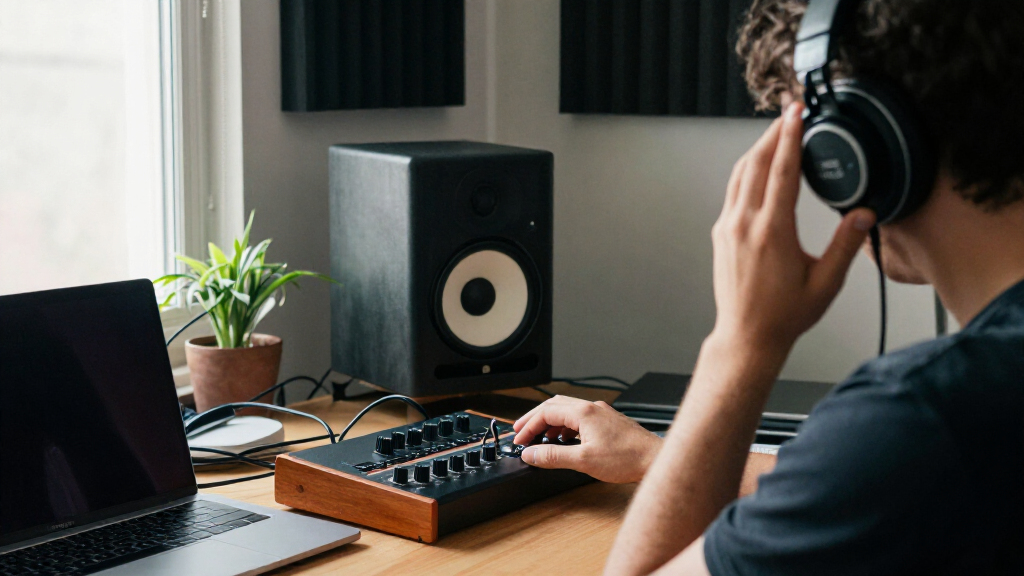
How We Picked
To select these ten models, I analyzed hundreds of user feedback threads and professional audio reviews to identify consistent patterns in performance and reliability. My primary focus was on frequency response neutrality, ensuring that the headphones do not artificially boost bass or highs, which can lead to poor mixing decisions. I also prioritized build quality, specifically looking at ear cup materials and headband durability, as studio gear undergoes frequent handling and transport.
Ranking was determined by a hierarchy of needs: first, accuracy for mixing; second, isolation for tracking; and third, value for money. Products that offered a ‘fun’ sound signature rather than a flat response were ranked lower, as they fail the primary requirement of monitoring. I also considered connectivity options, favoring models with detachable cables for their practical longevity in a professional environment.
| studio monitor headphone | Design |
|---|---|
| TASCAM TH-02 Wired Over-Ear St | — |
| Audio-Technica ATH-M20x Profes | Over-ear, circumaural |
| Audio-Technica ATH-M30x Profes | Collapsible, over-ear |
| Sony MDR7506 Professional Larg | Closed-back, foldable |
| OneOdio Pro-10 Wired Over-Ear | — |
| Sennheiser HD 280 Pro Wired He | Closed, around-the-ear |
| FIFINE H8 Wired Studio Monitor | Closed-back, over-ear |
| JOYO JMH-02 Over-Ear Studio Mo | Closed-back, over-ear |
| Audio-Technica ATH-M50x Profes | — |
| Audio-Technica ATH-M20x Profes | Closed-back, Circumaural |
Factors to Consider When Choosing Studio Monitor Headphones
Understanding the technical specifications behind studio headphones helps you avoid paying for features you will not use or neglecting critical aspects like isolation. Here is how to filter through the noise.Closed-Back vs. Open-Back: The Isolation Tradeoff
Most entries in this roundup are closed-back headphones, which feature sealed ear cups that prevent sound from leaking out and block external noise. This design is mandatory for recording sessions where a microphone might pick up headphone bleed, such as when tracking vocals or guitar amps. Open-back headphones, conversely, allow air and sound to pass through the ear cups, creating a wider, more natural soundstage that is often preferred for mixing in quiet, treated rooms. If you record in untreated spaces or share a room with others, closed-back models are the only viable option to maintain workflow integrity. However, be aware that closed-back designs can sometimes create a ‘boxy’ resonance that requires equalization training to interpret correctly.
The Myth of ‘Flat’ Frequency Response
Marketing materials often claim a perfectly flat frequency response, but no headphone achieves this due to the physical limitations of driver placement and ear anatomy. What you actually want is a neutral signature that minimizes coloration, allowing you to hear the audio as it is rather than how you wish it to sound. Some models, like the Sony MDR7506, have a slight high-frequency emphasis that helps identify sibilance or digital artifacts, which is a useful trait for editing dialogue or vocals. Understanding the specific ‘voice’ of a headphone is more important than chasing a theoretical flat line, as you will learn to compensate for their quirks over time.
Comfort and Clamp Force for Long Sessions
Studio sessions often last several hours, making comfort a critical performance metric rather than a luxury feature. Headphones with high clamp force, such as the Sennheiser HD 280 Pro, provide excellent passive noise isolation but can cause jaw fatigue or headaches after prolonged use. Conversely, lightweight models may feel airy initially but lack the stability needed if you move around the studio. Look for models with replaceable ear pads made from breathable materials like velour or high-density foam, as these reduce heat buildup and maintain a consistent seal against the skin.
Cable Durability and Connectivity Options
A broken cable renders a pair of headphones useless, so the connection type and cable design are vital for longevity. Detachable cables are a significant advantage found in premium models like the Audio-Technica ATH-M50x, allowing you to replace a damaged cable without buying new headphones. Coiled cables offer flexibility when you need to move away from your audio interface, while straight cables are less prone to tangling during quick edits. Always check if the cable connects to one ear cup or both; single-sided entry reduces clutter and prevents the cable from dragging across your console or keyboard.
Impedance and Amplification Requirements
Impedance, measured in ohms, determines how much power your headphones need to reach adequate volume levels. Most studio monitors in this list have an impedance between 32 and 600 ohms, but the sweet spot for direct connection to audio interfaces and computer sound cards is typically 32 to 50 ohms. Higher impedance models require a dedicated headphone amplifier to drive them properly; without sufficient power, they will sound thin and lack dynamic range. If you plan to plug directly into a laptop or a small interface, stick to lower impedance models to avoid the need for extra equipment.
Frequently Asked Questions
Can I use studio monitor headphones for everyday music listening?
While you technically can, most studio headphones are not optimized for casual enjoyment. They prioritize accuracy over entertainment, often sounding ‘dry’ or ‘flat’ compared to consumer headphones that boost bass and treble for a more engaging experience. If you enjoy a punchy, warm sound, studio monitors may feel sterile or harsh. It is generally better to keep separate pairs for mixing and leisure to avoid fatigue from critical listening during relaxation.
Why do my mixes sound different on other speakers than on my headphones?
This is a common issue related to how human ears perceive stereo imaging through headphones versus speakers. Headphones deliver sound directly to each ear, bypassing the cross-bleed between left and right channels that occurs with speakers. To mitigate this, mix at low volumes and occasionally check your work on a single speaker or through a reference track you know well. Remember that headphones are a tool for detail, not a replacement for room acoustics.
Do expensive studio headphones sound significantly better than budget models?
The law of diminishing returns applies heavily here. Moving from a budget model to a mid-range option like the ATH-M50x yields noticeable improvements in transient response and clarity. However, jumping from mid-range to ultra-premium studio headphones often provides only marginal gains that require a high-end amplifier and treated room to appreciate. For most home producers, a mid-range model offers the best balance of performance and value.
How often should I replace the ear pads on my studio headphones?
You should replace ear pads every 12 to 24 months depending on usage and material quality. Worn pads lose their seal, which drastically reduces bass response and noise isolation, leading to inaccurate monitoring. If you notice the foam crumbling or the vinyl cracking, replace them immediately. Most major manufacturers, including Audio-Technica and Sony, sell official replacements that maintain the original acoustic properties of the headphone.
Is wireless technology suitable for professional studio monitoring?
Currently, wireless technology struggles to match wired connections for critical studio work due to latency and compression. Even high-end Bluetooth codecs introduce slight delays that can disrupt recording timing, and compression algorithms alter the frequency response, compromising neutrality. For mixing and tracking, a wired connection remains the standard for reliability and signal integrity. Wireless headphones are better suited for casual monitoring or DJing where slight latency is less critical.
Conclusion
Selecting the right studio monitor headphones depends largely on your specific workflow and environment. The Audio-Technica ATH-M50x remains the best overall choice for most producers, offering a perfect blend of accuracy, comfort, and durability. For those on a strict budget, the TASCAM TH-02 or OneOdio Pro-10 provide reliable entry points without breaking the bank. If isolation is your primary concern, especially for tracking in noisy environments, the Sony MDR7506 or Sennheiser HD 280 Pro are unmatched in their ability to block out distractions. Beginners should prioritize comfort and detachable cables to ensure longevity, while professionals should focus on consistent tonal balance that translates well across different systems.
Halloween Picks

Max Fun 10-Foot Halloween Dragon and Pumpkin Inflatable Archway with LED Lights

Thuodo 8 FT Tall Halloween Inflatable Three-Headed Dragon with Built-in LEDs

8.5 Foot Halloween Inflatable Haunted House Castle with Skeleton, Ghost & Skulls
As an affiliate, we earn on qualifying purchases.