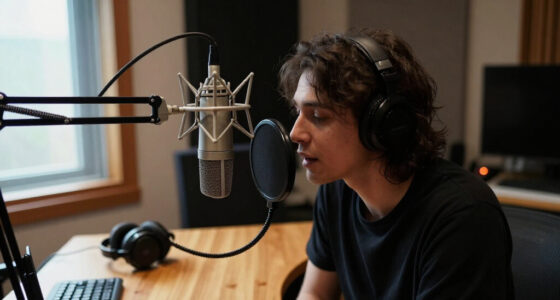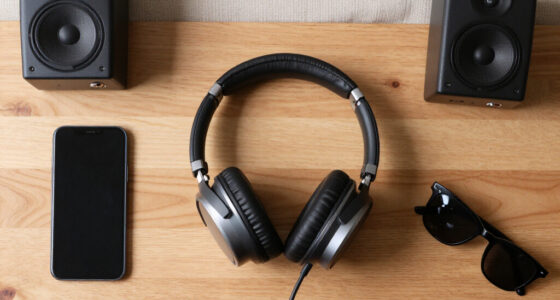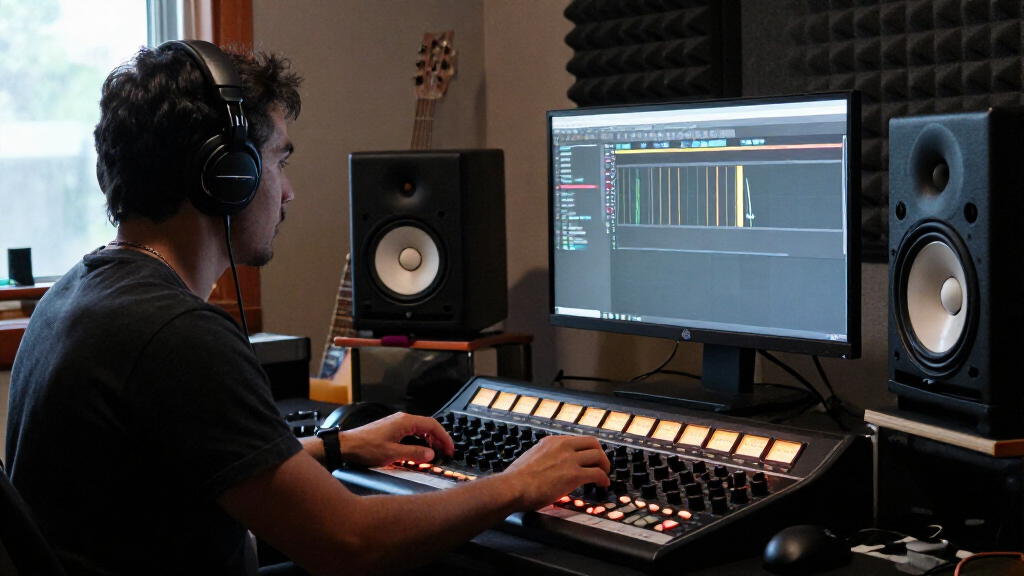

For most home studios, I’d start with the Audio-Technica ATH-M50x: its detachable cable options and versatile closed-back design make it the strongest all-rounder here. The Sony MDR-7506 is a compelling alternative for tracking and editing, while the Sennheiser HD 280 Pro prioritizes isolation for recording near live microphones. The right choice depends on how you balance detail, comfort, sound leakage, and long-session wear. Some models are better suited to straightforward tracking, while others offer greater flexibility for editing and mixing. Read on for the full comparison and guidance on choosing studio monitor headphones for your setup.

Get business pricing on tech for your team
- Business-only prices and quantity discounts
- Tax-exempt purchasing
- Multiple users, one account, clear invoices
Complete the kit


Key Takeaways
- The ATH-M50x ranks first for versatility: Its detachable cable design and adaptable closed-back format suit more studio tasks than the entry-focused models.
- The ATH-M40x is the practical step-down alternative: It retains a monitoring-oriented design while giving up some of the M50x’s broader appeal and premium positioning.
- Isolation matters most when recording: The HD 280 Pro stands apart for buyers who need to limit headphone spill near microphones.
- Audio-Technica offers the widest range in this lineup: The M20x models suit simpler setups, the M30x and M40x add intermediate choices, and the M50x is the flexible upgrade.
- Similar names do not mean identical buying decisions: The white ATH-M20xWH and black ATH-M20x share the same model family, so color preference—not a distinct studio role—separates them here.
| Audio-Technica ATH-M20xWH Professional Studio Monitor Headphones, White |  | Best for White Studio Setups | Driver size: 40 mm | Impedance: 47 ohm | Sensitivity: 96 dB | VIEW LATEST PRICE | See Our Full Breakdown |
| Sony MDR-7506 Professional Studio Headphones | 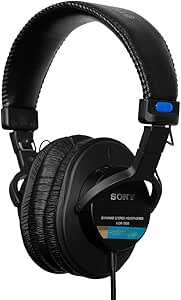 | Best for Portable Studio Monitoring | Driver size: 40 mm | Frequency response: 10 Hz to 20 kHz | Cord length: 9.8 ft | VIEW LATEST PRICE | See Our Full Breakdown |
| Audio-Technica ATH-M20x Professional Studio Monitor Headphones |  | Best Value for Basic Tracking | Driver size: 40 mm | Frequency response: 15–20,000 Hz | Impedance: 47 ohm | VIEW LATEST PRICE | See Our Full Breakdown |
| OneOdio Pro-10 Wired Over-Ear DJ Headphones |  | Best for Single-Ear DJ Monitoring | Driver size: 50 mm | Impedance: 32 ohm | Frequency response: 20 Hz–40 kHz | VIEW LATEST PRICE | See Our Full Breakdown |
| Audio-Technica ATH-M30x Professional Studio Monitor Headphones |  | Best for Field Recording | Driver type: Dynamic | Driver size: 40 mm | Frequency response: 20 Hz–20,000 Hz | VIEW LATEST PRICE | See Our Full Breakdown |
| M-Audio HDH40 Closed-Back Over-Ear Studio Headphones |  | Best for Flexible Everyday Monitoring | Design: Closed-back, over-ear | Driver: 40 mm neodymium dynamic | Impedance: 32 ohms | VIEW LATEST PRICE | See Our Full Breakdown |
| Sennheiser HD 280 Pro Closed-Back Headphones, Black |  | Best for Noise Attenuation and Long-Term Serviceability | Type: Dynamic, closed-back stereo | Noise attenuation: Up to 32 dB | Frequency response: 8–25,000 Hz | VIEW LATEST PRICE | See Our Full Breakdown |
| FIFINE H8 Wired Studio Monitor Headphones with Detachable Cables |  | Best for Cable Flexibility | Design: Over-ear, closed-back | Driver size: 50 mm | Frequency response: 20 Hz–20 kHz | VIEW LATEST PRICE | See Our Full Breakdown |
| Audio-Technica ATH-M50x Professional Studio Monitor Headphones | 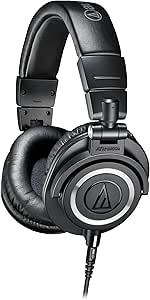 | Best for Studio-to-Everyday Versatility | Driver: 45 mm dynamic | Frequency response: 20 Hz–28,000 Hz | Impedance: 38 ohms | VIEW LATEST PRICE | See Our Full Breakdown |
| Audio-Technica ATH-M40x Professional Studio Monitor Headphones |  | Best for Flat-Tuning Monitoring | Driver size: 40 mm | Frequency response: 15–24,000 Hz | Impedance: 35 ohms | VIEW LATEST PRICE | See Our Full Breakdown |
| studio monitor headphone | Impedance | Frequency response | Driver size | Sensitivity |
|---|---|---|---|---|
| Audio-Technica ATH-M20xWH Prof | 47 ohm | — | 40 mm | 96 dB |
| Sony MDR-7506 Professional Stu | — | 10 Hz to 20 kHz | 40 mm | — |
| Audio-Technica ATH-M20x Profes | 47 ohm | 15–20,000 Hz | 40 mm | 96 dB |
| OneOdio Pro-10 Wired Over-Ear | 32 ohm | 20 Hz–40 kHz | 50 mm | 110 dB |
| Audio-Technica ATH-M30x Profes | 38 ohms | 20 Hz–20,000 Hz | 40 mm | 100 dB |
| M-Audio HDH40 Closed-Back Over | 32 ohms | — | — | 95 dB |
| Sennheiser HD 280 Pro Closed-B | 64 ohms | 8–25,000 Hz | — | — |
| FIFINE H8 Wired Studio Monitor | — | 20 Hz–20 kHz | 50 mm | — |
| Audio-Technica ATH-M50x Profes | 38 ohms | 20 Hz–28,000 Hz | — | 99 dB |
| Audio-Technica ATH-M40x Profes | 35 ohms | 15–24,000 Hz | 40 mm | 98 dB |
More Details on Our Top Picks
Audio-Technica ATH-M20xWH Professional Studio Monitor Headphones, White
The ATH-M20xWH brings the ATH-M20x’s closed-back monitoring design to a white finish that suits bright or coordinated recording spaces. Its 40 mm drivers are tuned for stronger low-frequency performance, which can help when tracking bass-heavy material, while the over-ear cups reduce sound spill and outside distractions. Compared with the black ATH-M20x, the core listed specifications are similar; the meaningful difference here is the color, not a step up in monitoring capability. The long, single-sided cable keeps a connection to an interface or mixer straightforward, but it is not detachable, so cable damage is harder to address. I’d choose this version for a clean, wired tracking setup, not for wireless listening or outdoor use: it has no water-resistance rating.
Pros:- Closed-back over-ear design helps reduce sound spill during tracking
- 40 mm drivers are tuned for enhanced low-frequency performance
- Single-sided 9.8-foot cable reaches common studio work areas
- White finish offers a visual alternative to the otherwise similar ATH-M20x
Cons:- Non-detachable wired cable limits replacement options if it is damaged
- No water-resistance rating is listed
- The white finish does not add a monitoring feature over the ATH-M20x
Best for: Home-recording musicians or creators who want closed-back wired monitoring and a white finish to match their studio setup.
Not ideal for: Buyers who need a detachable cable, wireless convenience, or headphones rated for wet or outdoor conditions.
- Driver size:40 mm
- Impedance:47 ohm
- Sensitivity:96 dB
- Connectivity:Wired, 3.5 mm headphone jack
- Cable length:9.8 ft
- Fit:Over-ear
- Weight:261 g
- Warranty:2 years
Our verdict“Choose the ATH-M20xWH if you want entry-level closed-back monitoring in white and do not need a replaceable cable.”
Sony MDR-7506 Professional Studio Headphones
The Sony MDR-7506 earns its place for buyers who move between a studio, recording location, and home setup. Its folding design and included soft case make it easier to pack than the Audio-Technica ATH-M20x, while the 9.8-foot cord gives useful reach at a fixed workstation. A supplied adapter supports both 1/8-inch and 1/4-inch connections, so switching between portable gear and studio equipment is simple. The closed-ear construction helps limit outside noise, though it is not an open, spacious presentation for listeners who prefer that feel. The tradeoff is a non-detachable cord: it can snag during travel and cannot be swapped out. I’d favor this over the ATH-M30x when foldability matters more than its listed field-recording accessories.
Pros:- Folding design and soft case support packed travel
- Included adapter works with 1/8-inch and 1/4-inch connections
- Closed-ear design helps reduce external noise
- 9.8-foot cord provides reach around a recording position
Cons:- Non-detachable cord is less convenient to replace or manage on the move
- Closed-ear design may not suit listeners who prefer an open presentation
- Listed warranty is 90 days
Best for: Location-recording engineers and home producers who want foldable closed-ear headphones with connections for both small and quarter-inch headphone jacks.
Not ideal for: Listeners who need a detachable cable, an open-back presentation, or a longer warranty than the listed 90 days.
- Driver size:40 mm
- Frequency response:10 Hz to 20 kHz
- Cord length:9.8 ft
- Cord:Non-detachable OFC cord
- Connector:Gold-plated plug with 1/4-inch adapter
- Weight:8 oz
- Folding design:Yes
- Included accessory:Soft case
Our verdict“Pick the MDR-7506 if portable, foldable monitoring and broad plug compatibility matter more than a replaceable cable.”
Audio-Technica ATH-M20x Professional Studio Monitor Headphones
The ATH-M20x is a straightforward choice for a first wired monitoring setup: it pairs closed-back isolation with a long, single-sided cable and a familiar 3.5 mm connection. Its 40 mm drivers are tuned for enhanced low-frequency performance, a useful emphasis when tracking parts where bass presence matters. Compared with the ATH-M30x, the M20x has a simpler feature set: the M30x adds folding construction and includes a protective case and adapter, making it a more practical option for field recording. Against the white ATH-M20xWH, this black version is the same basic monitoring proposition, so the choice is mainly finish. The M20x’s fixed cable is the main compromise; it also lacks listed folding features. I’d choose it for a stationary home studio, rather than a kit that travels regularly.
Pros:- Closed-back circumaural fit helps isolate sound in loud settings
- 40 mm drivers are tuned for enhanced low-frequency performance
- Long, single-sided 3 m cable suits studio tracking positions
- 3.5 mm connection fits common headphone outputs
Cons:- Cable is not detachable
- No folding design or included protective case is specified
- The ATH-M30x offers more portability features for field recording
Best for: New home-recording musicians who need closed-back headphones for tracking and mixing at a stationary desk.
Not ideal for: Field recordists who need folding storage and a protective case, or anyone who wants a detachable cable.
- Driver size:40 mm
- Frequency response:15–20,000 Hz
- Impedance:47 ohm
- Sensitivity:96 dB
- Cable length:3 m (9.8 ft)
- Fit:Over-ear
- Connectivity:3.5 mm headphone jack
- Warranty:2 years on parts and labor
Our verdict“Choose the ATH-M20x for basic, stationary tracking if isolation matters more than travel-friendly features.”
OneOdio Pro-10 Wired Over-Ear DJ Headphones
The OneOdio Pro-10 is the clearest pick here for DJ-style cueing, thanks to 90-degree swiveling ear cups that let one ear monitor a track while the other stays free. Its 50 mm drivers and stated bass, vocal, and high-frequency emphasis give it a more DJ-oriented brief than the tracking-focused Audio-Technica ATH-M20x. The shared audio port also lets another pair connect for collaborative listening without a splitter. Those conveniences come with a substantial listed weight of 415 g, so buyers seeking a lighter-feeling studio headphone may prefer the Sony MDR-7506, listed at 8 oz. The Pro-10 also requires a wired connection through 3.5 mm or 6.35 mm jacks; it is not a wireless option. I’d choose it for cueing flexibility, not as the most understated mixing pick.
Pros:- 90-degree swiveling ear cups support single-ear monitoring
- 50 mm drivers are described as delivering bass, clear vocals, and crisp highs
- 3.5 mm and 6.35 mm jacks support common audio connections
- Shared audio port allows another pair to connect without a splitter
Cons:- Listed weight of 415 g is higher than the Sony MDR-7506’s listed 8 oz
- Wired connection requires a 3.5 mm or 6.35 mm audio jack
- DJ-oriented swiveling cups may be less useful for buyers seeking a simpler tracking headphone
Best for: DJs and music instructors who need one-ear monitoring, dual jack compatibility, and a way to connect a second listener.
Not ideal for: Buyers who prioritize a lighter listed weight, wireless playback, or a headphone described primarily for studio mixing rather than DJ cueing.
- Driver size:50 mm
- Impedance:32 ohm
- Frequency response:20 Hz–40 kHz
- Sensitivity:110 dB
- Connectivity:3.5 mm and 6.35 mm audio jacks
- Ear cup rotation:90°
- Item weight:415 g
- Included items:Headphones, protective case, user manual
Our verdict“Choose the Pro-10 for DJ cueing and shared listening, but pick a different model if low weight or mixing-focused use leads your priorities.”
Audio-Technica ATH-M30x Professional Studio Monitor Headphones
The ATH-M30x suits recording work that moves beyond a desk: it combines a foldable closed-back design with a protective case and screw-on adapter, while its 40 mm dynamic drivers are tuned for detailed sound and clear mid-range definition. That midrange focus gives it a different role from the bass-emphasized ATH-M20x, which is a simpler fit for basic tracking. The Sony MDR-7506 also folds and travels well, but the M30x’s included case and adapter make its supplied kit more recording-oriented. Its single-side cable helps keep the lead orderly, though the product data does not specify that the cable detaches. No wireless or active noise-cancellation features are listed, so this is a wired, passive-isolation tool. I’d pick it for portable recording sessions, not for listeners seeking wireless convenience.
Pros:- 40 mm dynamic drivers are tuned for detailed sound and clear mid-range definition
- Closed-back circumaural design provides passive sound isolation
- Foldable construction and included protective case support portable use
- Screw-on adapter is included for compatible audio connections
Cons:- No wireless or active noise-cancellation features are specified
- Cable detachability is not specified
- ATH-M20x may suit buyers who want a simpler tracking-focused option
Best for: Field recordists and mobile musicians who want foldable closed-back monitoring, clear midrange definition, and a supplied case and adapter.
Not ideal for: Buyers who need wireless listening, active noise cancellation, or a confirmed detachable cable.
- Driver type:Dynamic
- Driver size:40 mm
- Frequency response:20 Hz–20,000 Hz
- Impedance:38 ohms
- Sensitivity:100 dB
- Design:Closed-back, circumaural
- Folding:Foldable
- Included items:Headphones, cable, protective case, user manual, screw-on adapter
Our verdict“Choose the ATH-M30x for portable wired recording when its folding design, case, and midrange focus matter more than wireless features.”
M-Audio HDH40 Closed-Back Over-Ear Studio Headphones
The M-Audio HDH40 is a straightforward pick for home recording, podcasting, and general listening when you want a closed-back fit without a complicated setup. Its 32-ohm impedance suits a range of devices, and the included 1/4-inch adapter helps connect it to studio gear. The long 2.7 m cable gives room to work at a desk, while the rotating frame can make single-ear listening easier. Compared with the more repair-friendly Sennheiser HD 280 Pro, the HDH40 has fewer replaceable components listed, so it is less compelling as a long-term workhorse. Its fixed cable also limits movement, and the closed-back padding may feel warm during long sessions. I’d choose it for versatile, uncomplicated monitoring rather than intensive daily studio use.
Pros:- Closed-back design suits recording and monitoring
- 32-ohm impedance supports use with a range of devices
- 2.7 m cable and included 1/4-inch adapter offer useful connection flexibility
- Cushioned pads, flexible headband, and rotating frame support practical everyday use
Cons:- Fixed cable cannot be swapped if damaged and can restrict movement
- Closed-back over-ear fit may feel warm during extended sessions
Best for: Home recordists and podcasters who want wired headphones that can connect to phones, computers, and studio equipment.
Not ideal for: Engineers seeking replaceable wear parts or anyone who needs to move freely while monitoring, since the cable is fixed.
- Design:Closed-back, over-ear
- Driver:40 mm neodymium dynamic
- Impedance:32 ohms
- Sensitivity:95 dB
- Cable:2.7 m, fixed
- Frame:180-degree rotatable
- Weight:9.6 ounces
- Warranty:1 year
Our verdict“Choose the HDH40 for adaptable home monitoring across several device types, but pick the HD 280 Pro if replaceable parts matter more.”
Sennheiser HD 280 Pro Closed-Back Headphones, Black
The Sennheiser HD 280 Pro is the strongest fit here for monitoring in noisy rooms: its design attenuates ambient sound by up to 32 dB, helping reduce distractions without relying on powered noise cancellation. Its collapsible, swiveling earcups are easier to pack than the fixed frame of the M-Audio HDH40, and replaceable earpads, headband padding, and cable give it a clearer path to a longer service life. The tradeoff is a coiled cable that can tug or feel restrictive, even though it extends to 3 m. At 64 ohms, it also has a higher impedance than the HDH40, a detail worth factoring in for low-powered sources. I’d favor this model for tracking and repeat studio work over casual portability.
Pros:- Up to 32 dB of ambient noise attenuation
- Replaceable cable, earpads, and headband padding support extended service life
- Collapsible, swiveling earcups aid storage and transport
- Locking 6.3 mm adapter supports connection to studio and home stereo equipment
Cons:- Coiled cable can feel restrictive and extends to a maximum of 3 m
- 64-ohm impedance may be less suited to some low-powered sources than lower-impedance options
Best for: Recording engineers and musicians working near live microphones or in noisy spaces who value isolation and replaceable wear parts.
Not ideal for: Listeners who need a light, unrestricted cable setup or primarily use very low-powered devices.
- Type:Dynamic, closed-back stereo
- Noise attenuation:Up to 32 dB
- Frequency response:8–25,000 Hz
- Impedance:64 ohms
- Cable:Single-sided coiled, 1–3 m
- Connectors:3.5 mm stereo jack; locking 6.3 mm adapter included
- Weight:220 g (7.8 oz)
- Replaceable parts:Cable, earpads, and headband padding
Our verdict“Pick the HD 280 Pro for noise attenuation and replaceable parts, especially when those matter more than a lightweight, freely moving cable.”
FIFINE H8 Wired Studio Monitor Headphones with Detachable Cables
The FIFINE H8 makes a practical case for home studios with its two detachable coiled cables: one has a 3.5 mm plug and the other a 6.35 mm plug. That means you can choose a connection to suit your setup and replace a cable without retiring the headphones. Its 50 mm drivers and closed-back construction suit monitoring and recording, while adjustable padded earcups support a personal fit. Compared with the Audio-Technica ATH-M40x, the H8’s supplied cable options are a straightforward convenience, but the provided information gives less detail about folding or one-ear monitoring features. Isolation is passive, not active, and the wired design still ties you to your equipment. I’d choose the H8 for a flexible cable package, not for mobility or noise cancellation.
Pros:- Includes two detachable coiled cables with 3.5 mm and 6.35 mm plugs
- 50 mm drivers and closed-back construction suit monitoring and recording
- Adjustable headband and padded ear cushions support fit adjustment
- Passive isolation helps reduce some surrounding sound
Cons:- Wired connection limits movement around the room
- Noise isolation is passive rather than active
- Product information does not specify folding or swiveling earcups for compact storage or one-ear monitoring
Best for: Home-studio users switching between equipment with 3.5 mm and 6.35 mm headphone outputs who want detachable cables.
Not ideal for: Mobile listeners who need wireless freedom or workers who expect active noise cancellation.
- Design:Over-ear, closed-back
- Driver size:50 mm
- Frequency response:20 Hz–20 kHz
- Weight:265 g
- Cables:Two detachable 9.8 ft coiled cables
- Connectors:3.5 mm and 6.35 mm
- Warranty:1 year
Our verdict“Choose the H8 if switching between common studio connections is your priority, but favor the ATH-M40x for its specified foldable design and one-ear monitoring support.”
Audio-Technica ATH-M50x Professional Studio Monitor Headphones
The Audio-Technica ATH-M50x is the most versatile all-rounder in this group for buyers who want monitoring headphones that also suit everyday listening. Its 45 mm drivers and stated deep, accurate bass give it a fuller low end than the ATH-M40x’s flat-tuning emphasis, which may make listening more engaging but can be less useful for listeners seeking the lineup’s more explicitly even monitoring profile. Circumaural isolation helps contain sound, and the detachable cable, foldable build, and 90-degree swiveling earcups make studio handling and storage more convenient. Unlike the Sennheiser HD 280 Pro, the supplied information does not state an ambient-noise attenuation figure or replaceable earpads. It remains wired and is not water resistant, so it is best kept for studio and indoor use.
Pros:- 45 mm drivers with stated deep, accurate bass
- Circumaural design provides sound isolation
- Detachable cable and foldable construction support storage and cable replacement
- 90-degree swiveling earcups allow one-ear monitoring
Cons:- Wired-only connectivity limits movement
- Not water resistant
- Bass-forward description may not suit buyers seeking the ATH-M40x’s explicitly flat tuning
Best for: Musicians and producers who want one wired pair for studio monitoring, one-ear cueing, and everyday listening.
Not ideal for: Buyers who prioritize a flat-tuning description above all else, need wireless listening, or want headphones for wet environments.
- Driver:45 mm dynamic
- Frequency response:20 Hz–28,000 Hz
- Impedance:38 ohms
- Sensitivity:99 dB
- Design:Wired, over-ear, circumaural
- Earcups:90-degree swiveling; foldable
- Cable:Detachable
- Warranty:2 years on parts and labor
Our verdict“Choose the ATH-M50x for a flexible studio-and-listening pair with one-ear monitoring, but opt for the ATH-M40x if flatter stated tuning is your priority.”
Audio-Technica ATH-M40x Professional Studio Monitor Headphones
For buyers who put monitoring accuracy ahead of a more bass-forward listening character, the Audio-Technica ATH-M40x is the clearest match. Its description specifies a flat tuning profile, while the ATH-M50x is presented with deep, accurate bass—an important distinction if you want a more even reference for checking mixes. The 40 mm drivers sit in a circumaural, sound-isolating design, and 90-degree swiveling earcups support one-ear monitoring. A coiled and a straight detachable cable add practical flexibility, with a protective case included. Compared with the FIFINE H8, the M40x also offers stated folding and swiveling features; the H8 instead supplies two coiled cables with different plugs. The M40x remains wired and not water resistant, so it suits studio use rather than mobile workouts.
Pros:- Flat tuning profile is specified for accurate monitoring
- Circumaural design provides sound isolation
- 90-degree swiveling earcups support one-ear monitoring
- Foldable build, two detachable cable types, and included case support studio handling and storage
Cons:- Wired connectivity limits movement
- Not water resistant
- Flat tuning may be less appealing for listeners who prefer the ATH-M50x’s stated deep-bass emphasis
Best for: Mixers and home-studio producers who want explicitly flat-tuned wired headphones with one-ear monitoring and multiple cable options.
Not ideal for: Listeners seeking wireless convenience, water resistance, or a more bass-forward everyday sound.
- Driver size:40 mm
- Frequency response:15–24,000 Hz
- Impedance:35 ohms
- Sensitivity:98 dB
- Design:Over-ear, foldable
- Earcups:90-degree swiveling
- Included cables:1.2–3.0 m coiled cable and 3.0 m straight cable
- Warranty:2 years on parts and labor
Our verdict“Pick the ATH-M40x for a flatter monitoring focus and useful cable options, while the ATH-M50x is the better fit if you want more bass emphasis for listening.”

How We Picked
I ranked these studio monitor headphones by how well their design serves common studio jobs: recording vocals and instruments, editing, monitoring playback, and working for extended sessions. I weighed closed-back isolation, cable practicality, comfort potential, build choices, and versatility, while avoiding claims that any headphone can guarantee accurate mixes on its own. The list also reflects how clearly each option’s design and role fit a particular buyer, rather than treating every model as interchangeable.
The ATH-M50x takes the top position because it offers the broadest all-purpose case in this group. The MDR-7506 and HD 280 Pro follow as focused alternatives for detail-oriented tracking and stronger isolation, while Audio-Technica’s M20x, M30x, and M40x models create clearer entry and step-up choices. The OneOdio Pro-10, M-Audio HDH40, and FIFINE H8 offer simpler or more specialized options, but their narrower roles keep them below the most adaptable picks. The two M20x color versions are treated as closely related choices, not separate performance tiers.
| studio monitor headphone | Design |
|---|---|
| Audio-Technica ATH-M20xWH Prof | — |
| Sony MDR-7506 Professional Stu | — |
| Audio-Technica ATH-M20x Profes | — |
| OneOdio Pro-10 Wired Over-Ear | — |
| Audio-Technica ATH-M30x Profes | Closed-back, circumaural |
| M-Audio HDH40 Closed-Back Over | Closed-back, over-ear |
| Sennheiser HD 280 Pro Closed-B | — |
| FIFINE H8 Wired Studio Monitor | Over-ear, closed-back |
| Audio-Technica ATH-M50x Profes | Wired, over-ear, circumaural |
| Audio-Technica ATH-M40x Profes | Over-ear, foldable |
Factors to Consider When Choosing Studio Monitor Headphones
Choosing headphones for studio work is less about finding one model that does everything and more about matching its limitations to your recording habits. These broader checks can help you avoid paying for features you will not use or choosing a fit that gets in the way of long sessions.
Match Isolation to Your Recording Setup
Closed-back headphones help keep playback from leaking into a vocal or instrument microphone, but isolation needs vary with the room and recording method. If you record close to a sensitive microphone, prioritize a secure seal and low spill over extra connectivity features. For editing or monitoring in a quiet room, extreme isolation may matter less than comfort and a sound presentation you can work with consistently. A common mistake is assuming a closed-back label means every model blocks sound equally well. Glasses, hair, and head shape can change the seal, so fit can matter as much as the design category. If possible, check return terms before committing to a long-session pair.
Separate Tracking Headphones From Mixing References
Headphones can help you hear edits, clicks, and recording problems, but a single headphone mix is not a complete substitute for checking audio on speakers or other playback systems. A model that is comfortable and isolates well for tracking may not be the one you prefer for balance decisions. Before buying, decide whether your priority is recording without spill, spotting detail during editing, or making mix judgments. Then use a consistent reference track and compare your work across more than one listening setup. Avoid choosing based only on a first impression of bass or treble; an attention-grabbing sound can make tonal decisions less dependable. This distinction helps explain why the most versatile pick is not automatically the best fit for every task.
Treat Comfort as a Session-Length Feature
Clamp force, earcup depth, padding, and weight affect whether headphones stay usable through a full recording or editing session. A snug fit may help with isolation but can become fatiguing, while a loose fit may shift during performance and weaken the seal. If you wear glasses, account for pressure at the temples, since it can change both comfort and bass response. Do not infer comfort from a product’s intended studio use; head shapes and heat tolerance vary. Consider whether replacement pads are available if you expect frequent use, because worn padding can alter fit and isolation. For long sessions, a comfortable option can be more useful than a feature-rich pair you keep taking off.
Choose Cable Practicality for Your Workspace
Cable design affects everyday studio use more than many buyers expect. A detachable cable can be replaced if it is damaged and may make storage easier, while a fixed cable has fewer connection points but can be harder to repair. Coiled cables offer reach without leaving as much slack across a desk, though their pull can feel distracting during seated editing. Check that the supplied connection suits your interface, mixer, or headphone amp, and verify whether an adapter is included rather than assuming it is. If several people share a studio pair, cable durability and replacement options may deserve more weight than a small sound difference. Pick the cable style that suits your movement and equipment layout.
Decide When an Upgrade Is Worth It
Paying more makes sense when the upgrade solves a repeated limitation, such as needing a detachable cable, greater versatility, or a more suitable fit for frequent sessions. It makes less sense when you mainly need a reliable pair for occasional practice or basic recording, where a simpler model may cover the job. Compare the role of each headphone, not just its place in a product family: a higher model number does not guarantee it will fit your head or workflow better. Also account for accessories and the possibility of replacing pads or cables over time. If you are just starting out, putting money toward room treatment, a microphone, or a stable monitoring workflow may improve your recordings more than moving up one headphone tier. Upgrade once you can name the specific tradeoff you want to fix.
Frequently Asked Questions
Can I use studio monitor headphones as my only mixing reference?
You can edit and make preliminary balance decisions on headphones, but I would not rely on them as your only reference for a finished mix. Headphones present left and right channels separately, and their fit can change how bass and treble seem from one session to another. Check important decisions on speakers, earbuds, or another familiar playback system when possible. If speakers are not practical, compare against well-known reference tracks at a controlled listening level. Consistent listening habits are more useful than assuming any one model will make every mix translate.
Should I choose the ATH-M50x or the Sony MDR-7506 for recording?
Both can serve a recording setup, but the choice depends on which tradeoff matters more to you. The ATH-M50x is the more flexible all-purpose pick in this roundup, particularly if detachable cables and use across several studio tasks appeal. The MDR-7506 is a focused alternative for tracking and editing where its familiar studio-oriented approach suits your workflow. Neither is automatically the better fit for every head or microphone setup. If possible, compare comfort and sound leakage with the microphone and interface you actually use.
Is stronger isolation more important than comfort for vocal recording?
Isolation is important when headphone playback can reach a microphone, but a poor fit can undermine both isolation and comfort. For a short take, a snug pair may be manageable; during longer sessions, pressure and heat can distract a performer and reduce consistency. Check the seal with your usual glasses or hairstyle, since those details can affect fit. You can also lower the headphone mix to reduce spill rather than relying on maximum isolation alone. Choose a pair that balances a dependable seal with a fit the vocalist can tolerate throughout the session.
Are the Audio-Technica ATH-M20xWH and ATH-M20x different headphones?
In this roundup, they are listed as white and black versions of the ATH-M20x model family, not as distinct performance tiers. The meaningful difference presented here is the finish, so choose based on appearance and availability rather than expecting a separate studio role. If color is not important, compare the M20x with the ATH-M30x or ATH-M40x instead, since those models represent more useful step-up choices in the lineup. Check the exact listing details before ordering to confirm the model designation and included accessories. That is a more useful comparison than treating the two colors as separate levels of sound quality.
When should I move from an entry-level model to the ATH-M40x or ATH-M50x?
Consider an upgrade when your current pair creates a specific limitation you encounter often, such as a cable you cannot replace or a need for one headphone to cover several studio tasks. The ATH-M40x is a sensible step-up comparison if you want an intermediate option without choosing the roundup’s most versatile pick. The ATH-M50x makes more sense when flexibility and its detachable cable design align with regular recording, editing, and monitoring work. If you use headphones only occasionally, an entry-level model may be enough. Put the upgrade off until you can identify the feature or workflow problem it would solve.
Conclusion
For a single pair to handle the widest range of studio jobs, I recommend the Audio-Technica ATH-M50x as best overall. The Audio-Technica ATH-M20x is my best value and beginner-friendly starting point for straightforward tracking, while the white ATH-M20xWH suits buyers who want that same model in a different finish. Choose the Sennheiser HD 280 Pro when isolation is your main need, or the Sony MDR-7506 for a focused tracking and editing option. The ATH-M40x is the step-up choice for someone weighing intermediate flexibility against the M50x, while the M30x, M-Audio HDH40, FIFINE H8, and OneOdio Pro-10 fit buyers whose priorities lean toward a simpler setup or a particular cable and listening preference. Pick according to the job you do most, then give comfort and fit equal weight to the model name.
Columbus Day / Indigenous Peoples' Day Picks
long weekend sales
As an affiliate, we earn on qualifying purchases.