
Get business pricing on tech for your team
- Business-only prices and quantity discounts
- Tax-exempt purchasing
- Multiple users, one account, clear invoices
Complete the kit


Key Takeaways
- The Roborock LiDAR model leads this roundup because mapped navigation and a self-emptying dock offer a useful balance of coverage and reduced bin maintenance.
- The Qrevo S Pro is the premium pick for buyers who want stronger suction and a more automated vacuum-and-mop setup, though its extra systems bring more upkeep and complexity.
- Roborock’s Q7 M5+, Q7 L5, and the H6 Pro show that mapped navigation and self-emptying features come in more approachable combinations than a full service dock.
- The Roomba 105 Vac and Shark Navigator are vacuum-first choices for shoppers who value a simpler cleaning routine over integrated mopping.
- The ILIFE V2 and eufy 11S Max prioritize straightforward vacuuming and compact designs; buyers who need room mapping, app-based control, or dock automation should look elsewhere.
| Roborock Robot Vacuum and Mop with LiDAR Navigation and Self-Emptying Dock |  | Best Overall | Suction power: 10,000 Pa | Navigation: PreciSense LiDAR | Dust bag capacity: 2.7 L | VIEW LATEST PRICE | See Our Full Breakdown |
| Roborock Q7 M5+ Robot Vacuum and Mop |  | Best for Pet Hair | Suction power: 10,000 Pa HyperForce | Navigation: PreciSense LiDAR with real-time mapping | Dust bag capacity: 2.7 L | VIEW LATEST PRICE | See Our Full Breakdown |
| ROPVACNIC S1 Robot Vacuum and Mop Combo |  | Best for App-Controlled Basics | Suction power: 5,200 Pa | Cleaning functions: Vacuuming and mopping | Water adjustment: 4 levels | VIEW LATEST PRICE | See Our Full Breakdown |
| Tikom G8000 Max Robot Vacuum and Mop Combo |  | Best for Low-Clearance Furniture | Suction power: 5,000 Pa | Runtime: Up to 150 minutes | Dustbin capacity: 450 ml | VIEW LATEST PRICE | See Our Full Breakdown |
| Shark AI Ultra Robot Vacuum with 60-Day Self-Emptying Base, Black (AV2511AE) |  | Best Bagless Self-Emptying Pick | Model: AV2511AE | Base capacity: Up to 60 days of dirt and debris | Runtime: Up to 90 minutes | VIEW LATEST PRICE | See Our Full Breakdown |
| Shark Navigator Robot Vacuum with 30-Day Self-Emptying Base (AV2110S) |  | Best Low-Maintenance Pick | Model: AV2110S | Navigation: LiDAR SmartPath mapping | Self-emptying capacity: Up to 30 days, bagless | VIEW LATEST PRICE | See Our Full Breakdown |
| H6 Pro Robot Vacuum and Mop, Self-Emptying, 6000Pa Suction |  | Best Value Hybrid | Suction power: 6000Pa | Navigation: 360° LiDAR with multi-level mapping | Self-empty station: 3L, up to 90 days hands-free | VIEW LATEST PRICE | See Our Full Breakdown |
| iRobot Roomba 105 Vac Robot Vacuum |  | Best for Beginners | Navigation: ClearView LiDAR | Cleaning system: 3-Stage Cleaning | Suction: 70x more power-lifting suction vs. Roomba 600 series | VIEW LATEST PRICE | See Our Full Breakdown |
| Shark AV2501S AI Ultra Robot Vacuum with Matrix Clean |  | Best for Allergy Sufferers | Navigation: Matrix Clean with 360° LiDAR home mapping | Self-empty base: Up to 30 days of dirt and debris | Filtration: HEPA; 99.97% of dust and allergens down to 0.3 microns | VIEW LATEST PRICE | See Our Full Breakdown |
| iRobot Roomba Plus 515 Combo Robot Vacuum and Mop with AutoWash Dock |  | Best Premium All-in-One | Suction power: 20,000 Pa | Navigation: LiDAR mapping and obstacle recognition | Mop pad drying: 113°F heat drying | VIEW LATEST PRICE | See Our Full Breakdown |
| E8S Robot Vacuum and Mop with 6500Pa Suction |  | Best for Flexible Controls | Maximum suction: 6500Pa | Suction levels: 800Pa, 1600Pa, 3000Pa, and 6500Pa | Maximum runtime: Up to 200 minutes in Eco mode | VIEW LATEST PRICE | See Our Full Breakdown |
| Roborock Q7 L5 Robot Vacuum and Mop Combo |  | Best for Mapped Cleaning | Suction power: 8,000 Pa | Navigation: LiDAR | Water tank capacity: 270 ml | VIEW LATEST PRICE | See Our Full Breakdown |
| Roborock Qrevo S Pro Robot Vacuum and Mop (2026), 18,500Pa Suction |  | Best Premium Maintenance Dock | Suction power: 18,500Pa | Dock dust bag: 2.7L; stated 7–9 weeks | Mop washing temperature: 167°F | VIEW LATEST PRICE | See Our Full Breakdown |
| ILIFE V2 Robot Vacuum Cleaner, White |  | Best for Simple Pet-Hair Pickup | Model: V2 | Color: White | Cleaning modes: Auto clean, spot clean, and edge clean | VIEW LATEST PRICE | See Our Full Breakdown |
| eufy 11S Max Robot Vacuum Cleaner | 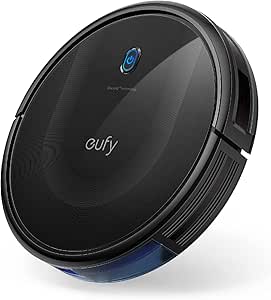 | Best Slim Pick | Profile height: 2.85 inches | Runtime: Up to 100 minutes on hardwood floors | Suction adjustment: BoostIQ adjusts within 1.5 seconds | VIEW LATEST PRICE | See Our Full Breakdown |
| robot vacuum cleaner | Navigation | Suction power |
|---|---|---|
| Roborock Robot Vacuum and Mop | PreciSense LiDAR | 10,000 Pa |
| Roborock Q7 M5+ Robot Vacuum a | PreciSense LiDAR with real-time mapping | 10,000 Pa HyperForce |
| ROPVACNIC S1 Robot Vacuum and | — | 5,200 Pa |
| Tikom G8000 Max Robot Vacuum a | — | 5,000 Pa |
| Shark AI Ultra Robot Vacuum wi | 360° LiDAR mapping with Matrix Clean | — |
| Shark Navigator Robot Vacuum w | LiDAR SmartPath mapping | — |
| H6 Pro Robot Vacuum and Mop | 360° LiDAR with multi-level mapping | 6000Pa |
| iRobot Roomba 105 Vac Robot Va | ClearView LiDAR | — |
| Shark AV2501S AI Ultra Robot V | Matrix Clean with 360° LiDAR home mapping | — |
| iRobot Roomba Plus 515 Combo R | LiDAR mapping and obstacle recognition | 20,000 Pa |
| E8S Robot Vacuum and Mop with | Gyro and inertial navigation | — |
| Roborock Q7 L5 Robot Vacuum an | LiDAR | 8,000 Pa |
| Roborock Qrevo S Pro Robot Vac | — | 18,500Pa |
| ILIFE V2 Robot Vacuum Cleaner | — | — |
| eufy 11S Max Robot Vacuum Clea | — | — |
More Details on Our Top Picks
Roborock Robot Vacuum and Mop with LiDAR Navigation and Self-Emptying Dock
Strong pickup, mapped routes, and a self-emptying dock make this the most balanced robot vacuum cleaner in this group. Its 10,000 Pa suction is a better fit for carpet and pet hair than the ROPVACNIC S1’s 5,200 Pa, while LiDAR mapping helps it cover rooms in orderly paths. The dock’s 2.7 L bag is listed for up to 7–9 weeks, which can reduce routine emptying, though actual intervals depend on debris and cleaning frequency. Three water-flow settings add basic mopping flexibility for hard floors. Compared with the Shark AI Ultra, this Roborock combines mopping with its listed feature set, while the Shark offers a bagless base. A limitation is its 2.4 GHz-only Wi-Fi, and buyers should expect to adjust water flow for different floors.
Pros:- 10,000 Pa suction is suited to carpets, edges, and pet hair
- LiDAR mapping supports organized multi-room cleaning
- 2.7 L self-emptying bag is listed for up to 7–9 weeks
- Three water-flow settings allow basic mopping adjustment
Cons:- App connectivity is limited to 2.4 GHz Wi-Fi
- The stated hands-free interval varies with cleaning frequency and debris
- Water flow may need manual adjustment between floor types
Best for: Homes with a mix of carpet and hard floors, especially households that want strong suction, scheduled mapping, and less frequent dust disposal.
Not ideal for: Buyers whose home network depends on 5 GHz Wi-Fi or who want a dock-free, compact robot.
- Suction power:10,000 Pa
- Navigation:PreciSense LiDAR
- Dust bag capacity:2.7 L
- Listed self-emptying interval:Up to 7–9 weeks
- Battery life:150 minutes
- Water flow settings:3
- Connectivity:2.4 GHz Wi-Fi
- Noise level:65 dB
Our verdict“Choose this Roborock for a mapped vacuum-and-mop routine with strong suction and less frequent bin emptying.”
Roborock Q7 M5+ Robot Vacuum and Mop
Hair management is the Q7 M5+’s clearest reason to choose it. Its JawScrapers main brush and anti-tangle side brush are designed to reduce wrapping, while 10,000 Pa suction and PreciSense LiDAR give it a capable base for carpet and multi-room cleaning. Like the Roborock Robot Vacuum and Mop with LiDAR Navigation and Self-Emptying Dock, it pairs mapping and mopping with a 2.7 L bag rated for up to 7–9 weeks. The Q7 M5+ makes the brush design more explicit, which may matter to homes that regularly collect pet hair. Three adjustable water-flow settings support light floor care, but require adjustment for different surfaces. Its app works on 2.4 GHz Wi-Fi only, and the supplied details do not specify runtime.
Pros:- 10,000 Pa suction for carpet and pet-hair pickup
- JawScrapers main brush and anti-tangle side brush target hair wrap
- LiDAR mapping supports real-time room navigation
- Self-emptying dock has a 2.7 L bag rated for up to 7–9 weeks
Cons:- Roborock App supports 2.4 GHz Wi-Fi only
- Water-flow settings may need manual changes for different floors
- Runtime is not specified in the supplied product details
Best for: Pet owners who want a mapped robot vacuum cleaner with a self-emptying dock and brushes designed to resist hair wrap.
Not ideal for: Households needing 5 GHz app connectivity or buyers who need a documented runtime before choosing.
- Suction power:10,000 Pa HyperForce
- Navigation:PreciSense LiDAR with real-time mapping
- Dust bag capacity:2.7 L
- Listed self-emptying interval:Up to 7–9 weeks
- Main brush:JawScrapers anti-tangle brush
- Side brush:Designed to resist hair tangling
- Mopping:3 adjustable water-flow settings
- App connectivity:Roborock App; 2.4 GHz Wi-Fi only
Our verdict“Pick the Q7 M5+ if pet hair and brush upkeep matter more than having a stated runtime or broader Wi-Fi support.”
ROPVACNIC S1 Robot Vacuum and Mop Combo
The ROPVACNIC S1 offers a straightforward vacuum-and-mop setup for buyers who want app scheduling and voice controls without the self-emptying dock found on the Roborock Q7 M5+. Its 5,200 Pa suction is below the 10,000 Pa listed for both Roborock models, so it is better matched to hard floors and low-pile carpets than demanding carpet-heavy homes. Four water settings and three suction levels give users some control over cleaning intensity, while obstacle sensing and automatic recharging support routine runs. Dual rotating side brushes and a no-entanglement design are intended to help with pet hair, but the supplied details provide no dustbin capacity or battery life. That makes it harder to gauge how often it needs attention or how much area it can cover per charge.
Pros:- Combines vacuuming and mopping in one robot
- Four water settings and three suction levels offer adjustment
- App, Alexa, and Google Assistant controls support scheduled cleaning
- Automatic recharging and a brush design intended to limit hair tangles
Cons:- Specified floor compatibility is limited to hard floors and low-pile carpets
- No battery life or dustbin capacity is provided
- Suction is lower than the 10,000 Pa Roborock options
Best for: Apartment dwellers with mostly hard floors or low-pile carpet who want scheduled app and voice control with adjustable mopping.
Not ideal for: Homes with thick or extensive carpeting, or buyers who need a self-emptying dock and clearly stated runtime.
- Suction power:5,200 Pa
- Cleaning functions:Vacuuming and mopping
- Water adjustment:4 levels
- Suction settings:3 levels
- Controls:Smartphone app, Alexa, and Google Assistant
- Floor compatibility:Wood, hard floors, and low-pile carpets
- Charging:Automatic return to recharge
- Brush design:Dual rotating side brushes; no-entanglement design
Our verdict“Choose the S1 for adjustable, app-scheduled cleaning on mostly hard floors if you can manage the bin yourself.”
Tikom G8000 Max Robot Vacuum and Mop Combo
At 2.99 inches tall, the G8000 Max is the clearest pick here for cleaning under low furniture. That slim profile sets it apart from the listed Roborock models, while its 5,000 Pa suction and 150-minute runtime make it a practical choice for longer runs across hard floors, rugs, and short- or medium-pile carpet. A 450 ml dustbin and 300 ml water tank allow simultaneous vacuuming and mopping, but this is a manual-emptying design rather than the dock-based routine offered by the Roborocks. Four control methods—app, remote, voice, and onboard buttons—also suit households that prefer a physical remote. The tradeoff is less specified suction than the 10,000 Pa Roborocks, and high-pile carpet may challenge it.
Pros:- 2.99-inch height can fit under some low-clearance furniture
- 150-minute runtime supports longer cleaning sessions
- Simultaneous vacuuming and mopping with separate 450 ml and 300 ml containers
- App, remote, voice, and button controls provide flexible operation
Cons:- 5,000 Pa suction is below the 10,000 Pa Roborock models
- High-pile carpets may be difficult for it to clean
- No self-emptying dock is listed, so the dustbin needs manual emptying
Best for: People with low sofas or beds and mostly hard floors who value long runtime and multiple control options.
Not ideal for: Homes with high-pile carpets or buyers who want a self-emptying dock to reduce bin maintenance.
- Suction power:5,000 Pa
- Runtime:Up to 150 minutes
- Dustbin capacity:450 ml
- Water tank capacity:300 ml
- Height:2.99 inches
- Noise level:45 dB
- Control methods:App, remote, voice, and buttons
- Cleaning modes:Spot, edge, zig-zag, and manual
Our verdict“Choose the G8000 Max for under-furniture reach and long runs on hard floors, provided you are comfortable emptying it yourself.”
Shark AI Ultra Robot Vacuum with 60-Day Self-Emptying Base, Black (AV2511AE)
The Shark AI Ultra suits buyers who want to avoid disposable dust bags. Its bagless base is listed to hold up to 60 days of debris, and 360° LiDAR mapping with Matrix Clean grid-pattern navigation gives it a structured approach to covering carpets and hard floors. Compared with the Roborock Robot Vacuum and Mop with LiDAR Navigation and Self-Emptying Dock, the Shark’s supplied details emphasize vacuuming and bagless disposal rather than mopping and adjustable water flow. It also supports recharge-and-resume, though its runtime is listed at up to 90 minutes, shorter than the Tikom G8000 Max’s 150 minutes. App and voice controls add scheduling convenience. Mopping details conflict in the supplied information, so I would treat this as a vacuum cleaner and verify the included configuration before buying for floor washing.
Pros:- Bagless base is listed to hold up to 60 days of debris
- 360° LiDAR and Matrix Clean grid navigation support mapped coverage
- Designed for pet hair and to help prevent hair wrap
- Recharge-and-resume supports cleaning beyond a single charge
Cons:- Up to 90-minute runtime is shorter than the Tikom G8000 Max’s listed 150 minutes
- Supplied details conflict on whether this model includes mopping
- No suction power or base capacity in liters is provided
Best for: Pet-owning households that want mapped vacuuming and a bagless self-emptying base for carpets and hard floors.
Not ideal for: Buyers who need a clearly specified mopping setup or longer stated runtime between charging sessions.
- Model:AV2511AE
- Base capacity:Up to 60 days of dirt and debris
- Runtime:Up to 90 minutes
- Navigation:360° LiDAR mapping with Matrix Clean
- Controls:SharkClean app, Amazon Alexa, and Google Assistant
- Cleaning surfaces:Carpets and hard floors
- Included components:Robot vacuum, XL self-empty base, side brush, and filter
- Color:Black
Our verdict“Pick the Shark AI Ultra for bagless, mapped vacuuming and pet-hair pickup if mopping is not a deciding requirement.”
Shark Navigator Robot Vacuum with 30-Day Self-Emptying Base (AV2110S)
This Shark Navigator stands out for its bagless self-emptying base, which spares you from buying replacement dust bags — an ongoing cost the iRobot Roomba Plus 515 Combo and most Roborock docks impose. The anti-hair-wrap brushroll makes this option better suited to pet households than the Roomba 105 Vac, which relies on standard bristle brushes that tangle more easily. Compared with the Shark AV2501S AI Ultra below, the tradeoff is capacity: this base holds 30 days of debris versus the AV2511AE’s 60-day base, and there’s no HEPA filtration or mopping here. What you get instead is a simpler, vacuum-only machine with LiDAR SmartPath mapping, no-go zones, and orderly row-by-row cleaning that keeps it from wandering randomly like the eufy 11S Max. App dependence is the main annoyance — map edits and schedules all run through SharkClean.
Pros:- Bagless self-emptying base avoids recurring dust bag costs
- Anti-hair-wrap brushroll handles pet hair without tangles
- LiDAR mapping supports no-go zones and targeted room cleaning
- Recharge-and-resume finishes large floor plans across multiple runs
Cons:- Requires the SharkClean app for maps, schedules, and targeted cleaning
- Vacuum only — no mopping function at all
- 30-day base capacity is half that of the Shark AV2511AE
Best for: Pet owners and busy households who want weeks of hands-off vacuuming without buying dust bags
Not ideal for: Allergy sufferers — no HEPA filtration — or anyone who wants mopping in the same machine
- Model:AV2110S
- Navigation:LiDAR SmartPath mapping
- Self-emptying capacity:Up to 30 days, bagless
- Brushroll:Self-cleaning with anti-hair wrap
- Floor compatibility:Carpets, rugs, and hard floors
- Smart features:App control, scheduling, no-go zones, Alexa and Google voice control
- Included:Robot vacuum, self-empty base, 1 side brush
Our verdict“This pick makes the most sense for buyers who prioritize truly low-maintenance, bag-free pet hair cleanup over advanced filtration or mopping.”
H6 Pro Robot Vacuum and Mop, Self-Emptying, 6000Pa Suction
The H6 Pro bundles a lot into one package: sweeping, vacuuming, and mopping in a single pass, 6000Pa suction, and a 3L self-empty station good for up to 90 days. That station capacity actually beats both Shark models in this lineup, which top out at 30-60 days. With a 150-minute runtime, it outlasts the Shark AV2501S AI Ultra by 30 minutes per charge, making it a better fit for larger single-story homes. The 360° LiDAR system with multi-floor mapping puts it ahead of budget picks like the ROPVACNIC S1 or Tikom G8000 Max in navigation precision. The tradeoffs are real, though: its 6000Pa suction trails premium models like the Roborock Qrevo S Pro by a wide margin, sloppy listing copy hints at rushed documentation, and the self-empty cycle is audible when it fires. A 2-year warranty softens the risk.
Pros:- 90-day hands-free self-emptying outlasts both Shark docks in this guide
- 3-in-1 sweep, vacuum, and mop in one pass
- 150-minute runtime with auto-recharge and resume
- Multi-floor LiDAR mapping with no-go zones
Cons:- Self-emptying station produces noticeable noise when emptying
- Unpolished product documentation raises quality-control questions
- 6000Pa suction falls well short of premium rivals
Best for: Budget-conscious buyers in larger homes who want vacuum-plus-mop automation without paying premium-brand prices
Not ideal for: Buyers who prioritize brand polish and quiet operation — the noisy empty cycle and rough documentation may frustrate them
- Suction power:6000Pa
- Navigation:360° LiDAR with multi-level mapping
- Self-empty station:3L, up to 90 days hands-free
- Dustbin capacity:250ml
- Water tank:310ml
- Runtime:Up to 150 minutes
- Controls:App, Alexa, Google Assistant
- Warranty:2-year warranty with lifetime technical support
Our verdict“A strong value play for big-floor-plan buyers who can tolerate a noisy dock in exchange for 90 days of hands-off cleaning.”
iRobot Roomba 105 Vac Robot Vacuum
The Roomba 105 Vac is the easiest entry point into mapped robot cleaning in this lineup. Its ClearView LiDAR navigation delivers neat row-by-row cleaning and obstacle avoidance — a meaningful step up from the random-bounce gyroscope navigation of the eufy 11S Max or ILIFE V2. iRobot’s 3-Stage Cleaning system and four suction levels give it more cleaning flexibility than a basic bot, and setup through the Roomba Home App is genuinely beginner-friendly, with Alexa, Siri, and Google Assistant all supported. The catch: no self-emptying base here, so you’ll empty the bin by hand every few runs — unlike the Shark Navigator AV2110S or H6 Pro. Also note the 2.4 GHz Wi-Fi only limitation, which trips up modern mesh networks, and iRobot’s ’70x more suction’ claim compares only against the old 600 series, not current rivals.
Pros:- LiDAR mapping with row-by-row cleaning and obstacle avoidance
- Works with Alexa, Siri, and Google Assistant
- 3-Stage Cleaning with four adjustable suction levels
- Self-charging with automatic resume
Cons:- No self-emptying base — manual bin emptying required
- 2.4 GHz Wi-Fi only, which can conflict with dual-band routers
- Suction claims reference only the outdated Roomba 600 series
Best for: First-time robot vacuum owners who want reliable mapped navigation and brand support without paying for a self-empty dock
Not ideal for: Hands-off seekers and large pet households — manual bin emptying and modest suction will feel like a chore fast
- Navigation:ClearView LiDAR
- Cleaning system:3-Stage Cleaning
- Suction:70x more power-lifting suction vs. Roomba 600 series
- Suction levels:4
- Connectivity:2.4 GHz Wi-Fi
- Voice assistants:Alexa, Siri, Google Assistant
- Charging:Self-charging with auto-resume
Our verdict“A sensible, low-friction starter machine for buyers who value dependable navigation over automation extras.”
Shark AV2501S AI Ultra Robot Vacuum with Matrix Clean
What separates the AV2501S from every other vacuum-only bot in this roundup is its HEPA filtration capturing 99.97% of dust and allergens down to 0.3 microns — a claim the Roomba 105 Vac, H6 Pro, and Shark Navigator AV2110S can’t match. For anyone with allergies or asthma, that’s the difference between a robot that cleans and one that also traps what it stirs up. Its Matrix Clean grid pattern makes multiple passes over the same debris, an approach better suited to high-traffic carpets than the single-pass cleaning of the Roomba 105. The 30-day bagless self-empty base matches the AV2110S, though both trail the H6 Pro’s 90-day station. Tradeoffs: the 120-minute runtime is the shortest among the self-empty models here, so multi-room homes will trigger recharge cycles, and the dock needs dedicated floor space.
Pros:- HEPA filtration captures 99.97% of allergens down to 0.3 microns
- Matrix Clean makes multiple grid passes over stubborn debris
- 30-day bagless self-empty base
- Recharge and resume supports whole-home cleaning runs
Cons:- 120-minute runtime is the shortest among self-empty rivals here
- Self-empty dock requires dedicated floor space
- No mopping capability unlike the H6 Pro or Roomba Plus 515
Best for: Allergy sufferers and pet owners who want sealed HEPA filtration and repeated-pass cleaning on carpets
Not ideal for: Very large homes — the 120-minute runtime forces mid-clean recharges — and anyone short on dock space
- Navigation:Matrix Clean with 360° LiDAR home mapping
- Self-empty base:Up to 30 days of dirt and debris
- Filtration:HEPA; 99.97% of dust and allergens down to 0.3 microns
- Runtime:Up to 120 minutes
- Voice control:Amazon Alexa and Google Assistant
- Included:Robot vacuum, HEPA self-empty base, 2 side brushes
- Color:Dark grey
Our verdict“The clear choice when airborne allergens matter more than runtime or mopping — nobody else in this lineup filters like it.”
iRobot Roomba Plus 515 Combo Robot Vacuum and Mop with AutoWash Dock
Sitting at the top of this guide’s automation ladder, the Roomba Plus 515 Combo pairs 20,000 Pa suction — more than triple the H6 Pro’s 6000Pa — with an AutoWash Dock that empties debris, washes and heat-dries mop pads at 113°F, and refills water automatically. Compared with the H6 Pro, whose mop pads you rinse by hand, this dock eliminates the grimiest job in robot ownership: pad maintenance. The 10mm mop pad lift lets it cross rugs without soaking them, and tangle-free rubber brushes handle pet hair better than bristle designs. The tradeoffs are ownership costs and upkeep — the dock needs regular maintenance plus ongoing dust bag purchases, and iRobot doesn’t publish battery life or noise figures, which makes comparison shopping harder. If maximum automation justifies the spend, this beats the Roborock Q7 models on dock capability.
Pros:- 20,000 Pa suction outclasses every other model in this lineup
- AutoWash Dock handles emptying, pad washing, heat drying, and water refilling
- 10mm mop pad lift protects rugs from getting wet
- Tangle-free rubber brushes suit pet-heavy homes
Cons:- Ongoing dock and dust bag maintenance adds to cost of ownership
- Battery life and noise levels are not disclosed by the manufacturer
- Premium feature set commands a premium price
Best for: Buyers who want the most automated vacuum-and-mop experience available and will pay for full dock-based maintenance
Not ideal for: Tinkerers on a budget — ongoing dust bag costs and dock upkeep make it expensive to own, not just to buy
- Suction power:20,000 Pa
- Navigation:LiDAR mapping and obstacle recognition
- Mop pad drying:113°F heat drying
- Mop pad lift:10 mm
- Dock functions:Auto-empty, mop pad washing and heat drying, water refilling
- Brushes:Tangle-free rubber brushes
- Included:DualClean Mop Pads, self-empty dust bag, extra filter, power cord, quick start guide
Our verdict“For buyers who want a robot that truly maintains itself — including its own mop pads — this is the most complete package here.”
E8S Robot Vacuum and Mop with 6500Pa Suction
The E8S suits buyers who want vacuuming and light mopping with a choice of ways to start a clean: use the remote, Tuya Smart app, or Google Assistant. Its four suction levels let you reserve stronger cleaning for heavier debris, while the 200-minute Eco runtime can cover larger floor areas between charges. That runtime comes with a tradeoff: it applies in Eco mode, and stronger suction is likely to use more battery. Compared with the Roborock Q7 L5, the E8S offers more stated suction levels and a longer Eco runtime, while the Q7 L5 provides LiDAR mapping, multi-floor maps, and no-go zones for more structured room-by-room cleaning. The E8S uses gyro navigation, so buyers should expect less detailed mapping. Its app also requires 2.4GHz Wi-Fi.
Pros:- Offers four suction levels, from 800Pa Eco to 6500Pa Max
- Combines vacuuming and mopping with three cleaning modes
- Can be controlled by remote, Tuya Smart app, or Google Assistant
- Returns to its dock when cleaning ends or the battery runs low
Cons:- The 200-minute runtime is specified for Eco mode only
- Gyro navigation lacks the detailed mapping features listed for the Roborock Q7 L5
- App control requires 2.4GHz Wi-Fi
Best for: Households seeking a vacuum-and-mop robot with remote, app, and voice controls and adjustable suction
Not ideal for: Buyers who need precise room maps, no-go zones, or a network that uses only 5GHz Wi-Fi
- Maximum suction:6500Pa
- Suction levels:800Pa, 1600Pa, 3000Pa, and 6500Pa
- Maximum runtime:Up to 200 minutes in Eco mode
- Coverage:Up to 1290 sq. ft.
- Dustbin capacity:300ml
- Water tank capacity:200ml
- Navigation:Gyro and inertial navigation
- Controls and Wi-Fi:Remote, Tuya Smart app, and Google Assistant; 2.4GHz Wi-Fi
Our verdict“Choose the E8S for flexible controls and adjustable cleaning, and choose the Roborock Q7 L5 if mapped routes and no-go zones matter more.”
Roborock Q7 L5 Robot Vacuum and Mop Combo
The Roborock Q7 L5 is the mapped-cleaning choice in this group: LiDAR navigation supports multi-floor maps and no-go zones, so buyers can direct the robot around areas they want left alone. Its anti-tangle brushes are designed to reduce hair wrap, a useful detail for homes with shedding pets. Compared with the E8S, the Q7 L5 offers more structured navigation, while the E8S lists a longer maximum runtime in Eco mode and several distinct suction levels. The Q7 L5’s 150-minute battery life is the stated figure, and its combined water tank and dustbin make the vacuum-and-mop setup less modular. That integrated part may also complicate switching between tasks. App and voice controls add scheduling options, but Wi-Fi is limited to 2.4 GHz.
Pros:- LiDAR navigation supports multi-floor maps and no-go zones
- Anti-tangle brushes are designed to reduce hair wrap
- Can vacuum and mop in one cleaning run
- Supports app scheduling and Amazon Echo or Google Home voice control
Cons:- Water tank and dustbin are integrated into one part
- Listed battery life is 150 minutes, shorter than the E8S’s Eco-mode maximum
- Wi-Fi support is limited to 2.4 GHz
Best for: Pet owners in multi-room or multi-floor homes who want mapped routes and app-set no-go zones
Not ideal for: Buyers who want a separate water tank and dustbin or whose home Wi-Fi is 5GHz only
- Suction power:8,000 Pa
- Navigation:LiDAR
- Water tank capacity:270 ml
- Battery life:150 minutes
- Noise level:60 dB
- Filter:Washable
- Supported surfaces:Carpet, laminate, tile, vinyl, wood, and marble
- Controls and Wi-Fi:App, buttons, and voice; 2.4 GHz Wi-Fi
Our verdict“Pick the Q7 L5 for mapped rooms, pet-hair brush design, and restricted zones; the E8S is a better fit if longer stated Eco runtime is your priority.”
Roborock Qrevo S Pro Robot Vacuum and Mop (2026), 18,500Pa Suction
The Roborock Qrevo S Pro stands apart through its dock: it empties dust into a 2.7L bag, washes its mops at 167°F, and dries them with warm air. That combination cuts down on routine cleanup compared with the Roborock Q7 L5, which offers mapping and mopping but lists no self-cleaning dock. The Qrevo S Pro also pairs 18,500Pa suction with dual-spin mopping and a 10 mm mop lift, giving it a broader toolkit for mixed floors. Smart obstacle avoidance and the anti-tangle brush design are aimed at busy homes with pets. The tradeoff is a larger commitment to dock maintenance and a 3.8-inch robot height that may not clear low furniture. It also supports only 2.4GHz Wi-Fi.
Pros:- All-in-one dock empties dust, washes mops, and dries them with warm air
- 18,500Pa suction and dual-spin mopping cover both vacuuming and floor wiping
- Anti-tangle brush system is designed for pet hair
- 55 dB listed noise level and 10 mm mop lift
Cons:- Its 3.8-inch profile may not fit under low-clearance furniture
- Wi-Fi support is limited to 2.4 GHz
- The feature-rich dock takes more space and still requires attention to its dust bag and cleaning supplies
Best for: Pet households with mixed flooring that want automatic dust emptying, mop washing, and warm-air drying
Not ideal for: Buyers with very low-clearance furniture, 5GHz-only Wi-Fi, or no need for an elaborate maintenance dock
- Suction power:18,500Pa
- Dock dust bag:2.7L; stated 7–9 weeks
- Mop washing temperature:167°F
- Mop drying temperature:113°F warm air
- Mop lift height:10 mm
- Profile height:3.8 in
- Noise level:55 dB
- Wi-Fi:2.4 GHz only
Our verdict“Choose the Qrevo S Pro if you want the lineup’s most hands-off mop and dust maintenance, provided its dock and robot fit your home.”
ILIFE V2 Robot Vacuum Cleaner, White
The ILIFE V2 keeps the job straightforward: tangle-free suction targets pet hair and everyday debris, while auto, spot, and edge modes cover routine passes and messier patches. Infrared anti-collision and anti-fall sensors provide basic obstacle and drop-off protection. This makes it a simpler choice than the Roborock Q7 L5, whose LiDAR maps, app scheduling, and no-go zones suit buyers who want more control over where the robot cleans. The V2’s simpler approach can appeal to someone who wants basic floor pickup without managing maps, but the supplied product details do not list app control, mapping, battery runtime, or a mopping function. Buyers comparing it with the E8S should note that the E8S explicitly combines vacuuming and mopping and offers remote, app, and voice controls.
Pros:- Tangle-free suction is designed to handle pet hair
- Auto, spot, and edge modes address routine and targeted cleaning
- Infrared sensors provide anti-collision and anti-fall protection
Cons:- Product details do not list app, remote, or voice controls
- No mapping or no-go zone features are specified
- No mopping function or battery runtime is specified
Best for: Pet owners who want a basic robot for floor hair and debris with simple cleaning modes
Not ideal for: Buyers who need mapping, app scheduling, voice control, or a vacuum-and-mop combination
- Model:V2
- Color:White
- Cleaning modes:Auto clean, spot clean, and edge clean
- Suction design:Tangle-free suction
- Sensors:Infrared anti-collision and anti-fall
- Mapping:Not specified in product data
Our verdict“Choose the V2 for a basic, tangle-free pet-hair cleaner, and step up to the Q7 L5 if mapped control is a priority.”
eufy 11S Max Robot Vacuum Cleaner
At 2.85 inches tall, the eufy 11S Max is the choice here for buyers whose main robot-vacuum problem is clearance under furniture. Its BoostIQ suction adjustment responds to changing surfaces, and the listed runtime reaches 100 minutes on hardwood floors. Compared with the ILIFE V2, the eufy spells out its slim profile, self-recharging, and remote control; the V2 instead highlights tangle-free suction and named cleaning modes. Neither product data set lists mapping or app control, but the eufy explicitly has no Wi-Fi connectivity, so it cannot be scheduled from an app. Remote and onboard buttons keep operation simple, while infrared obstacle and drop sensors support basic navigation. Buyers should accept hands-on control and a single-side brush design in exchange for the low profile.
Pros:- 2.85-inch profile can reach beneath more low-clearance furniture
- BoostIQ adjusts suction within 1.5 seconds as surfaces change
- Runs up to 100 minutes on hardwood floors
- Returns to recharge automatically
Cons:- No Wi-Fi or app connectivity
- Product data describes runtime on hardwood floors only
- Single-side brush design offers less brush coverage than a dual-side setup
Best for: People with low-clearance furniture who want a slim vacuum for hardwood floors and are comfortable using a remote
Not ideal for: Buyers who want app scheduling, mapped routes, mopping, or a longer listed runtime
- Profile height:2.85 inches
- Runtime:Up to 100 minutes on hardwood floors
- Suction adjustment:BoostIQ adjusts within 1.5 seconds
- Connectivity:No Wi-Fi or app connectivity
- Controls:Remote control and onboard buttons
- Safety features:Infrared obstacle sensor and drop-sensing technology
- Charging:Self-recharging
- Brush design:Single-side brush
Our verdict“Pick the eufy 11S Max when low furniture clearance matters more than app scheduling or mapped cleaning.”
How We Picked
I compared these robot vacuum cleaners on the factors that change daily ownership: navigation and coverage, vacuuming and mopping functions, dock automation, setup, and ongoing maintenance. I also considered whether each model’s feature set makes sense for a particular household, such as one that wants a basic vacuum, mapped room cleaning, or less hands-on care. Product names and listed specifications informed the comparison; I do not present these rankings as results of personal testing.
The ranking favors useful capability without unnecessary complexity. The Roborock LiDAR model takes the top spot for combining mapped navigation and self-emptying, while the Qrevo S Pro ranks higher for buyers who value extensive dock automation and strong listed suction. Vacuum-first Roomba and Shark options suit buyers who do not need a mop, and the simpler ILIFE and eufy models trade advanced controls for a more basic approach. Within each role, the tradeoffs in setup and maintenance matter as much as the feature list.
Factors to Consider When Choosing Robot Vacuum Cleaners
Choosing a robot vacuum is mostly a question of how much control and upkeep you want. I’d start with your floor plan, cleaning routine, and willingness to maintain a dock, then match those needs to the features below.Match navigation to your floor plan
A robot that can map rooms gives you more control over where and when it cleans, which is useful in homes with multiple rooms or regular no-go areas. That control matters less in a small, open space where a simple cleaning pattern can cover the accessible floor. Before paying for mapping, check that the model’s app and controls support the room-level choices you actually want. Rugs, chair legs, and clutter can affect a robot’s route regardless of its navigation system. Measure tight passages and furniture clearance if your layout has narrow gaps. A smart map is most useful when your floor plan stays fairly consistent.
Decide whether you need a mop
A combo model can handle light routine maintenance on hard floors, but adding a mop does not make every robot a substitute for manual scrubbing. Think about the mix of hard flooring and rugs in your home before choosing one. If you mostly want crumbs and dust removed, a vacuum-only model may be simpler to set up and maintain. For a combo, check how the robot handles carpets during a mopping run and how its water system is cleaned. A mop that needs frequent attention can add chores even when it saves time on the floor. Choose the feature for a recurring cleaning need, not just because it appears on the spec sheet.
Calculate the real value of a self-emptying dock
A self-emptying base can reduce how often you handle collected debris, which is helpful in busy homes or when the robot runs frequently. It does not remove maintenance altogether: you still need to replace or empty the collection bag or bin and clean filters and brushes. A larger capacity can stretch the interval between visits, but the actual interval depends on debris and cleaning frequency. Make room for the dock and check that its consumables are easy to obtain. If you run the robot only occasionally, a basic onboard bin may be easier to manage than a larger station. Pay for automation when it meaningfully reduces a task you dislike.
Budget time for upkeep, not just setup
Every robot needs brush and wheel checks, filter care, and occasional attention to tangled hair or blocked sensors. A mop adds water-system and pad care, while a wash dock introduces more components that need cleaning. Consider who will do those jobs and how often you are willing to do them. Homes with long hair or shedding pets may need more frequent brush maintenance than homes with little loose debris. A more automated dock can reduce hands-on work between cleanings, but it also has more parts to keep in good condition. Simple models can be a better fit when you want fewer maintenance steps.
Check the controls and household fit before buying
Think about whether everyone in the household can start a cleaning run, change a schedule, and resolve a stuck robot. App-based maps can help with room selection, but they may be more setup than some buyers want. If you prefer direct controls, check what the robot can do without a phone. A low-profile design may reach under more furniture, while a larger dock needs a clear, accessible parking spot. For homes with stairs, plan how the robot will handle separate floors and where it will return to charge. The best feature set is the one your household can use consistently.
Frequently Asked Questions
Is LiDAR mapping worth choosing over a simpler robot vacuum?
Mapping is most useful when you want to send the robot to specific rooms, set boundaries, or manage a multi-room layout. A simpler model can make sense in a compact, open home where scheduled whole-floor cleaning is enough. Think about how often you would use room selection after setup, rather than treating mapping as an automatic upgrade. Mapping also cannot clear clutter or guarantee that every tight area is reachable. If you want targeted cleaning and repeatable routes, the extra setup can pay off in convenience.
Should I choose a vacuum-and-mop combo or a vacuum-only model?
Choose a combo if you have hard floors and want regular light mopping as part of the same routine. A vacuum-only model is a sensible fit when most floors are carpeted or you want fewer parts to fill, wash, and maintain. Combo features do not remove the need to clean mop pads or manage water. Check how the robot treats rugs during a mopping run before relying on it across mixed flooring. Your floor mix and tolerance for extra upkeep are better guides than the number of functions listed.
Does a self-emptying dock mean I can ignore maintenance?
No. A self-emptying dock cuts down on how often you empty the robot’s small bin, but debris still collects in the base or its bag. Brushes, filters, wheels, and sensors also need regular attention to keep the robot moving and collecting debris. If the model mops, add pad and water-system care to that routine. The benefit is fewer interruptions between cleanings, not a maintenance-free appliance. Consider dock capacity and consumable availability alongside the convenience.
Which features matter most in a home with pets?
Start with the kind of debris your pets leave and how often you want the robot to run. Hair can wrap around brushes, so look closely at brush access and how easy it is to remove tangles. A self-emptying dock can reduce bin handling when cleaning is frequent, but it will not prevent brush maintenance. Mapping can help you target the rooms where pets spend the most time. For wet paw marks, a mop may help with routine upkeep, though it still needs regular cleaning.
How do I choose between the basic ILIFE or eufy models and a mapped model?
The ILIFE V2 and eufy 11S Max suit buyers who want straightforward vacuuming and do not need the room-level controls or dock automation found in mapped options. A mapped model is a better fit when you want repeatable room cleaning, scheduled zones, or more control over where the robot goes. Consider the time you’ll save from those controls against the extra setup and features you may need to maintain. Check furniture clearance and passage widths whichever type you choose. If your routine is simple, a simpler robot can be easier to operate.
Conclusion
For most households that want a balance of mapped cleaning and less frequent bin emptying, I’d start with the Roborock Robot Vacuum and Mop with LiDAR Navigation and Self-Emptying Dock. The Roborock Q7 L5 is my value-oriented choice for buyers who want a more straightforward combo, while the Qrevo S Pro is the premium fit for those seeking stronger listed suction and an automated dock. New robot-vacuum owners who prefer vacuum-first simplicity should compare the Roomba 105 Vac and Shark Navigator. For specific needs, I’d choose the eufy 11S Max for a low-profile, basic vacuuming approach and the ILIFE V2 for uncomplicated floor cleaning. Pick based on the chores you want to reduce and the maintenance you’re willing to take on.
Fall Picks
fall essentials
As an affiliate, we earn on qualifying purchases.