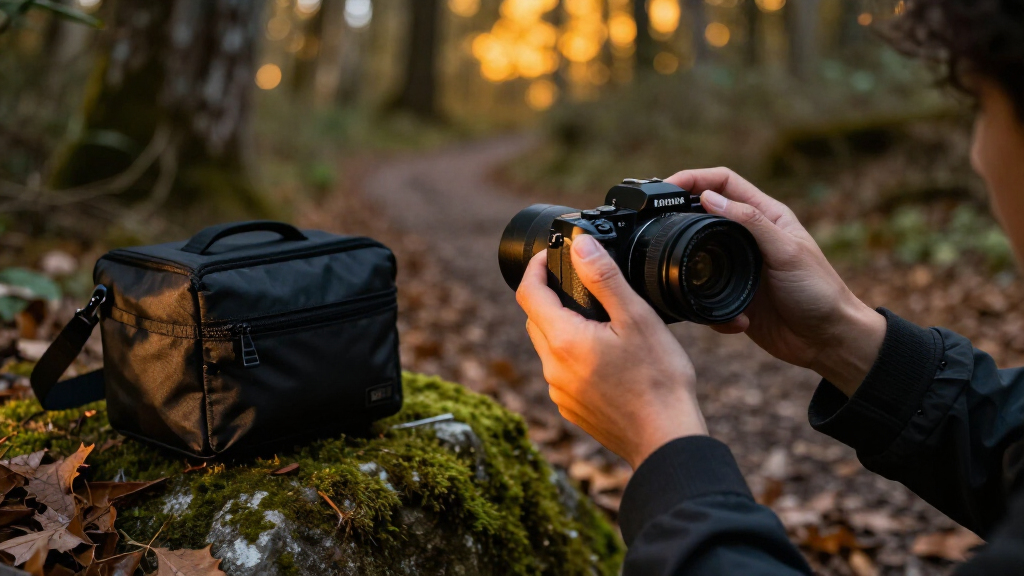

Among these mirrorless cameras, I rank the Nikon Z50II two-lens kit as the best overall choice for buyers who want a capable camera and useful focal-length range in one package. The Canon EOS R50 is a strong alternative for approachable everyday shooting, while the Canon EOS R7 is the more advanced body for people who need greater capability and are ready to choose lenses separately. The main tradeoffs are kit completeness versus room to grow, simple controls versus advanced features, and a compact setup versus longer reach. Several listings are different bundles built around the same Canon R100 or R50 body, so the lens package matters as much as the camera name. Read on for my ranking, the differences between the kits, and guidance on which type of setup fits your photography.

Get business pricing on tech for your team
- Business-only prices and quantity discounts
- Tax-exempt purchasing
- Multiple users, one account, clear invoices
Key Takeaways
- The Nikon Z50II two-lens kit ranks first because it pairs a more capable camera body with two lenses, giving buyers more shooting range without needing to choose a second lens right away.
- The Canon EOS R50 is the most balanced Canon option here. Its body appears in single-lens and double-lens bundles, so buyers can choose between a simpler starter kit and broader focal-length coverage.
- The Canon EOS R100 listings are variations on an entry-level theme. The main difference among the single-lens and double-zoom kits is the included lens coverage, not a fundamentally different camera body.
- The Sony a6400 and Canon R7 serve different priorities. The a6400 offers a compact APS-C kit with a lens, while the R7 is a body-only choice for buyers prioritizing an advanced camera platform and willing to build a lens kit.
- The Canon EOS R50 V is the specialist pick. Its power-zoom lens points toward video-focused use, while buyers chiefly seeking still-photo versatility may prefer the standard R50 or a two-lens kit.
| Nikon Z50II Mirrorless Camera Two-Lens Kit |  | Best Two-Lens Kit | Sensor: 20.9 MP APS-C CMOS | Lens mount: Nikon Z | Included lenses: NIKKOR Z DX 16–50mm f/3.5–6.3 VR and 50–250mm f/4.5–6.3 VR | VIEW LATEST PRICE | See Our Full Breakdown |
| Canon EOS R50 Mirrorless Camera with 18-45mm & 55-210mm Double Lens Bundle |  | Best Complete Starter Bundle | Sensor: 24.2 MP CMOS APS-C | Lens mount: Canon RF | Included lenses: RF-S 18–45mm f/4.5–6.3 IS STM and RF-S 55–210mm f/5–7.1 IS STM | VIEW LATEST PRICE | See Our Full Breakdown |
| Canon EOS R100 Mirrorless Camera with RF-S 18-45mm Lens Bundle |  | Best for First-Time Camera Buyers | Sensor: 24.1 MP APS-C CMOS | Image processor: DIGIC 8 | Lens: RF-S 18–45mm f/4.5–6.3 IS STM | VIEW LATEST PRICE | See Our Full Breakdown |
| Canon EOS R100 Mirrorless Camera with RF‑S18‑45mm f/4.5‑6.3 IS STM Lens Kit |  | Best Simple Lightweight Kit | Sensor: 24.1 MP APS-C CMOS | Lens mount: Canon RF | Included lens: RF-S 18–45mm f/4.5–6.3 IS STM | VIEW LATEST PRICE | See Our Full Breakdown |
| Canon EOS R50 Mirrorless Camera with RF-S 18-45mm Lens | 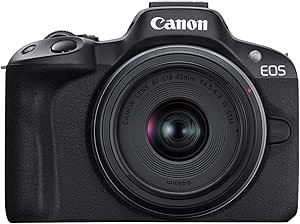 | Best Overall for Hybrid Creators | Sensor: 24.2 MP APS-C CMOS | Image processor: DIGIC X | Included lens: RF-S 18–45mm f/4.5–6.3 IS STM | VIEW LATEST PRICE | See Our Full Breakdown |
| Sony Alpha a6400 Mirrorless Camera with 16-50mm Lens |  | Best for Fast Autofocus | Sensor: 20.1MP 1-inch Exmor RS CMOS with DRAM (as listed) | Included lens: 16-50mm | Autofocus: 425 phase-detect and 425 contrast-detect points; real-time Eye Autofocus | VIEW LATEST PRICE | See Our Full Breakdown |
| Canon EOS R50 V with RF-S14-30mm F4-6.3 IS STM PZ Lens |  | Best for Video Creators | Sensor: 24.2MP APS-C CMOS | Image processor: DIGIC X | Included lens: RF-S14-30mm F4-6.3 IS STM PZ | VIEW LATEST PRICE | See Our Full Breakdown |
| Canon EOS R100 Double Zoom Lens Kit |  | Best for Long-Reach Starter Kits | Camera: Canon EOS R100 mirrorless | Standard zoom lens: RF-S 18-45mm F4.5-6.3 | Telephoto lens: RF 75-300mm F4-5.6 | VIEW LATEST PRICE | See Our Full Breakdown |
| Canon EOS R7 Mirrorless Camera Body |  | Best for Advanced Action Photography | Mount: Canon RF | Sensor: 32.5MP APS-C CMOS | Image processor: DIGIC X | VIEW LATEST PRICE | See Our Full Breakdown |
| Canon EOS R100 with 18-45mm Lens | 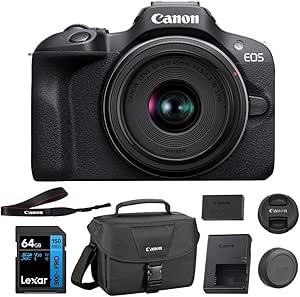 | Best Simple Starter Kit | Sensor: 24.1MP APS-C CMOS | Image processor: DIGIC 8 | Included lens: 18-45mm | VIEW LATEST PRICE | See Our Full Breakdown |
| mirrorless camera | Sensor | Video | Continuous shooting | Autofocus |
|---|---|---|---|---|
| Nikon Z50II Mirrorless Camera | 20.9 MP APS-C CMOS | 4K UHD up to 60p | — | — |
| Canon EOS R50 Mirrorless Camer | 24.2 MP CMOS APS-C | 4K (2160p) | — | Dual Pixel CMOS AF |
| Canon EOS R100 Mirrorless Came | 24.1 MP APS-C CMOS | 4K 24p; Full HD 60p | Up to 6.5 fps | Dual Pixel CMOS AF with 143 AF zones |
| Canon EOS R100 Mirrorless Came | 24.1 MP APS-C CMOS | 4K at 24 fps; Full HD at 60 fps | Up to 6.5 fps | — |
| Canon EOS R50 Mirrorless Camer | 24.2 MP APS-C CMOS | Uncropped 4K up to 30 fps; Full HD up to 120 fps | Up to 12 fps with electronic first-curtain shutter; up to 15 fps with electronic shutter | Dual Pixel CMOS AF II with 651 AF zones |
| Sony Alpha a6400 Mirrorless Ca | 20.1MP 1-inch Exmor RS CMOS with DRAM (as listed) | 4K | Up to 11 fps | 425 phase-detect and 425 contrast-detect points; real-time Eye Autofocus |
| Canon EOS R50 V with RF-S14-30 | 24.2MP APS-C CMOS | 4K 59.94p with crop; 4K 29.97p full-width | Up to 15 fps | — |
| Canon EOS R100 Double Zoom Len | — | — | — | — |
| Canon EOS R7 Mirrorless Camera | 32.5MP APS-C CMOS | 4K (2160p) | 15 fps mechanical; 30 fps electronic | Dual Pixel CMOS AF II, up to 651 zones |
| Canon EOS R100 with 18-45mm Le | 24.1MP APS-C CMOS | — | Up to 6.5 shots per second in One-Shot AF | Dual Pixel CMOS AF, up to 143 zones |
More Details on Our Top Picks
Nikon Z50II Mirrorless Camera Two-Lens Kit
The Nikon Z50II is the most adaptable ready-to-shoot choice here for buyers who want more than a standard zoom. Its 16–50mm and 50–250mm stabilized lenses cover everyday scenes through distant subjects, while subject detection for people, animals, and vehicles helps keep moving targets in focus. Compared with the Canon EOS R50 single-lens kit, this bundle reaches farther without requiring an extra lens purchase, though the Canon offers a higher-resolution 24.2 MP sensor and uncropped 4K recording up to 30 fps. Nikon lists 4K up to 60p, useful for smoother motion, but the kit’s f/3.5–6.3 maximum apertures are less suited to dim interiors than brighter lenses. The two-lens flexibility comes with a 2.4-pound kit weight, so it is less appealing for minimal-load travel.
Pros:- Two stabilized zooms cover a broad range of everyday and distant subjects.
- Subject detection and tracking supports people, animals, and vehicles.
- 4K video recording is specified up to 60p.
- Built-in flash and SnapBridge wireless sharing add useful everyday conveniences.
Cons:- The f/3.5–6.3 lens apertures limit light gathering, especially at the telephoto end.
- The 2.4-pound kit is heavier to carry than a single-lens setup.
- Its 20.9 MP sensor has lower stated resolution than the 24.2 MP Canon EOS R50 models in this roundup.
Best for: Travelers, wildlife beginners, and families who want stabilized wide-to-telephoto coverage in one camera kit.
Not ideal for: Low-light shooters and travelers prioritizing the lightest possible setup; the lenses have modest maximum apertures and the complete kit weighs 2.4 pounds.
- Sensor:20.9 MP APS-C CMOS
- Lens mount:Nikon Z
- Included lenses:NIKKOR Z DX 16–50mm f/3.5–6.3 VR and 50–250mm f/4.5–6.3 VR
- Video:4K UHD up to 60p
- Image stabilization:Optical
- Display:3.2-inch tilting LCD
- Connectivity:Bluetooth, Wi-Fi, HDMI, and USB
- Weight:2.4 pounds
Our verdict“Choose the Nikon Z50II kit if you want a broad stabilized zoom range and subject tracking more than the lightest carry or strongest low-light lens.”
Canon EOS R50 Mirrorless Camera with 18-45mm & 55-210mm Double Lens Bundle
This R50 bundle is aimed at new interchangeable-lens users who want the camera, two zooms, a bag, and a memory card together. The 24.2 MP APS-C sensor, Dual Pixel CMOS AF, and 4K video give it a stronger feature set than the simpler Canon EOS R100 kit, particularly for buyers who want more room to grow into photography and video. Its 18–45mm and 55–210mm lenses provide everyday and telephoto framing, but the listing does not specify the R50’s video frame-rate limits or autofocus-zone details, so I would not choose it over the single-lens R50 on the assumption that every feature is identical. The bundle’s stated 4.5-pound weight is substantial, and neither lens is especially bright at its long end. It also has no built-in flash listed.
Pros:- 24.2 MP APS-C sensor offers detailed still images.
- Two stabilized zoom lenses cover everyday and telephoto subjects.
- Dual Pixel CMOS AF and 4K video support mixed photo and video use.
- Bundle includes a shoulder bag and 64GB memory card.
Cons:- The listed 4.5-pound weight makes this a relatively heavy kit to carry.
- The lenses’ f/4.5–7.1 aperture range is restrictive in low light.
- No built-in flash is listed, and the bundle description omits some specific performance details.
Best for: First-time camera buyers who want an R50, two lenses, a carrying bag, and a memory card in one package for family, travel, and casual video.
Not ideal for: Buyers who need a lightweight travel kit, a built-in flash, or confirmed advanced video specifications before choosing.
- Sensor:24.2 MP CMOS APS-C
- Lens mount:Canon RF
- Included lenses:RF-S 18–45mm f/4.5–6.3 IS STM and RF-S 55–210mm f/5–7.1 IS STM
- Video:4K (2160p)
- Autofocus:Dual Pixel CMOS AF
- Image stabilization:Optical
- Connectivity:Wi-Fi
- Included accessories:Shoulder bag and 64GB memory card
- Listed weight:4.5 pounds
Our verdict“Pick this bundle if you want an R50 with two useful focal ranges and bundled accessories, but skip it if carrying weight or low-light performance is a priority.”
Canon EOS R100 Mirrorless Camera with RF-S 18-45mm Lens Bundle
The EOS R100 is the straightforward entry point for someone moving beyond a phone or compact camera without needing advanced burst speeds or extensive video controls. Its 24.1 MP APS-C sensor and included stabilized 18–45mm zoom provide a flexible starting point for family photos, trips, and everyday scenes. Compared with the Canon EOS R50, the R100 is the more basic choice: it records 4K at 24p with a crop and shoots at up to 6.5 fps, while the R50 offers uncropped 4K up to 30 fps and faster bursts. The R100 does include an electronic viewfinder and Dual Pixel autofocus, but its 3-inch LCD is less flexible than the R50’s vari-angle touchscreen. The kit lens also has a slow variable aperture, making dim rooms and background blur harder to manage.
Pros:- 24.1 MP APS-C sensor provides detailed images for a beginner-focused camera.
- Included RF-S 18–45mm lens has optical image stabilization.
- Dual Pixel autofocus supports subject tracking.
- Electronic viewfinder and Wi-Fi/Bluetooth offer useful everyday shooting and sharing options.
Cons:- 4K recording is limited to 24p and has a crop.
- The 6.5 fps continuous-shooting rate is modest for fast action.
- The kit lens’s f/4.5–6.3 aperture range is limiting in low light.
Best for: New photographers who want an electronic viewfinder, a stabilized standard zoom, and simple controls for everyday stills.
Not ideal for: Content creators who need uncropped 4K, a flexible screen, or faster action shooting; the R50 is better equipped for those jobs.
- Sensor:24.1 MP APS-C CMOS
- Image processor:DIGIC 8
- Lens:RF-S 18–45mm f/4.5–6.3 IS STM
- Autofocus:Dual Pixel CMOS AF with 143 AF zones
- Video:4K 24p; Full HD 60p
- Continuous shooting:Up to 6.5 fps
- Viewfinder:2.36-million-dot OLED electronic viewfinder
- Connectivity:Wi-Fi and Bluetooth
Our verdict“Choose the R100 bundle for approachable still photography and a viewfinder, but spend attention on the R50 if video flexibility and faster shooting matter more.”
Canon EOS R100 Mirrorless Camera with RF‑S18‑45mm f/4.5‑6.3 IS STM Lens Kit
This version of the Canon EOS R100 suits buyers who want a compact-feeling, uncomplicated setup rather than a bundle built around extra accessories or reach. It pairs the 24.1 MP APS-C sensor with the stabilized RF-S 18–45mm kit lens, keeping the lens choice simple for everyday framing. Like the other R100 bundle in this roundup, it shoots up to 6.5 fps and records 4K at 24 fps, so it falls behind the Canon EOS R50 for uncropped 4K and faster bursts. Its Dual Pixel autofocus includes eye, animal, and vehicle detection according to the listing, useful for casual subjects, but there is no in-body stabilization; handheld steadiness depends on the lens and shooting conditions. The listed weight of 2.5 g appears inconsistent with a camera kit, so I would not use it to judge carry weight.
Pros:- 24.1 MP APS-C sensor supports detailed still photography.
- The included 18–45mm lens has optical stabilization.
- Eye, animal, and vehicle detection can help with common beginner subjects.
- Wi-Fi and Bluetooth provide wireless connectivity.
Cons:- 4K is limited to 24 fps and has a crop.
- No in-body image stabilization is specified.
- A single 18–45mm lens offers less telephoto reach than the two-lens Nikon Z50II or R50 bundle.
Best for: Beginners who want a basic Canon RF camera with one stabilized standard zoom for snapshots, travel, and learning manual controls.
Not ideal for: Action photographers and video-first creators who need faster bursts, uncropped 4K, or a vari-angle screen; the R50 is a better fit.
- Sensor:24.1 MP APS-C CMOS
- Lens mount:Canon RF
- Included lens:RF-S 18–45mm f/4.5–6.3 IS STM
- Video:4K at 24 fps; Full HD at 60 fps
- Continuous shooting:Up to 6.5 fps
- Display:3-inch LCD
- Connectivity:Bluetooth, Wi-Fi, USB, and HDMI
- Stabilization:No in-body stabilization; included lens stabilization
Our verdict“This R100 kit makes sense for a beginner who wants one stabilized everyday lens, but the R50 is the stronger choice for more demanding video and action.”
Canon EOS R50 Mirrorless Camera with RF-S 18-45mm Lens
The EOS R50 is the most balanced single-lens pick here for buyers splitting time between stills and video. Its 24.2 MP APS-C sensor, subject-tracking autofocus, and uncropped 4K up to 30 fps make it a more capable hybrid camera than either EOS R100 kit, whose 4K footage is cropped and limited to 24p. Burst rates reach 12 fps with the electronic first-curtain shutter and 15 fps electronically, giving the R50 more room for children, pets, and casual sports. The vari-angle touchscreen and EVF also make framing easier across different shooting positions. Compared with the Nikon Z50II two-lens kit, however, this package includes only an 18–45mm zoom, so distant subjects require another lens. Its f/4.5–6.3 aperture range is also a constraint in dim light.
Pros:- Uncropped 4K recording up to 30 fps and Full HD up to 120 fps.
- Dual Pixel CMOS AF II with 651 zones supports subject detection and tracking.
- Fast continuous shooting reaches 15 fps with the electronic shutter.
- Vari-angle touchscreen and electronic viewfinder support flexible composition.
Cons:- The included 18–45mm lens does not provide the telephoto reach of the two-lens bundles.
- The f/4.5–6.3 maximum aperture range is limiting in low light.
- No in-body image stabilization is listed.
Best for: Hybrid creators and families who want capable autofocus, uncropped 4K, a viewfinder, and a screen that can face different directions.
Not ideal for: Wildlife or travel photographers who need long reach immediately, or low-light shooters who need a brighter kit lens.
- Sensor:24.2 MP APS-C CMOS
- Image processor:DIGIC X
- Included lens:RF-S 18–45mm f/4.5–6.3 IS STM
- Autofocus:Dual Pixel CMOS AF II with 651 AF zones
- Video:Uncropped 4K up to 30 fps; Full HD up to 120 fps
- Continuous shooting:Up to 12 fps with electronic first-curtain shutter; up to 15 fps with electronic shutter
- Viewfinder:2.36-million-dot electronic viewfinder
- Connectivity:Bluetooth and Wi-Fi
Our verdict“Choose the EOS R50 single-lens kit for a capable photo-and-video body, provided you are comfortable adding a telephoto lens later.”
Sony Alpha a6400 Mirrorless Camera with 16-50mm Lens
The Sony a6400 is the speed-focused choice here: its eye tracking and burst shooting suit people photographing moving subjects, while its tilting screen and 4K recording also cover casual vlogging. Compared with the Canon EOS R7, it is a more compact kit-oriented option, but the R7 offers a higher-resolution APS-C sensor and in-body stabilization. The included 16-50mm lens keeps the package portable, though its limited zoom range leaves less reach than the two-lens Canon EOS R100 Double Zoom Lens Kit. One key distinction in the supplied specs is that the sensor is listed as 1 inch, despite the product title describing an APS-C camera; buyers should verify the exact model specifications before choosing it. There is no built-in image stabilization, so steady handheld video may call for a stabilized lens or support.
Pros:- Eye autofocus and extensive AF coverage support subject tracking.
- Burst shooting reaches up to 11 fps for action and fleeting moments.
- 4K recording and a tilting LCD add flexibility for video.
- Includes a compact 16-50mm zoom lens.
Cons:- No in-body image stabilization, making handheld video less forgiving.
- The included lens has limited zoom reach compared with the R100 double-zoom kit.
- The supplied description and specs conflict on sensor format, so the exact configuration warrants verification.
Best for: Photographers who prioritize subject tracking and fast bursts in a compact kit, and also want a tilting screen for occasional vlogging.
Not ideal for: Buyers who need in-body stabilization, longer reach from the included lens, or a clearly confirmed APS-C sensor specification.
- Sensor:20.1MP 1-inch Exmor RS CMOS with DRAM (as listed)
- Included lens:16-50mm
- Autofocus:425 phase-detect and 425 contrast-detect points; real-time Eye Autofocus
- Continuous shooting:Up to 11 fps
- Video:4K
- Display:Tiltable LCD
- Battery:NP-FW50 rechargeable
Our verdict“Choose the a6400 for fast autofocus and a compact video-capable kit, but look to the R7 for stabilization and higher stated sensor resolution.”
Canon EOS R50 V with RF-S14-30mm F4-6.3 IS STM PZ Lens
The Canon EOS R50 V is the most creator-specific pick in this group. Its front record button, vertical tripod mount, articulating screen, and power-zoom 14-30mm lens are aimed at filming yourself or producing vertical clips with less setup. Compared with the Sony a6400, it has more explicit video controls and a wider included zoom range, while the Sony is listed with faster 11 fps bursts. The R50 V can record 4K at 59.94p, but that mode uses a crop; full-width 4K is available at 29.97p. Optical stabilization in the lens helps with handheld footage, but there is no built-in flash, and the listed f/4-6.3 aperture is not especially bright. This is a stronger fit for video-first use than for buyers seeking a stills-focused camera body.
Pros:- Power-zoom 14-30mm lens offers a useful wide-to-standard framing range.
- Front record button and vertical tripod mount suit solo and portrait-format video.
- Articulating LCD makes self-framing easier.
- Lens optical stabilization can help steady handheld footage.
Cons:- 4K at 59.94p applies a crop; full-width 4K is limited to 29.97p.
- No built-in camera flash.
- The f/4-6.3 lens aperture can limit low-light flexibility.
Best for: Solo video creators and vloggers who want a wide power-zoom lens, an articulating screen, and controls suited to vertical recording.
Not ideal for: Photographers who want a built-in flash or uncropped 4K at 60p, or buyers prioritizing stills-oriented handling over creator features.
- Sensor:24.2MP APS-C CMOS
- Image processor:DIGIC X
- Included lens:RF-S14-30mm F4-6.3 IS STM PZ
- Video:4K 59.94p with crop; 4K 29.97p full-width
- Autofocus points:399
- Continuous shooting:Up to 15 fps
- Display:3-inch articulating LCD
- Weight:1.2 pounds
Our verdict“Pick the R50 V for creator-friendly video controls and a wide power-zoom kit, but skip it if uncropped high-frame-rate 4K is a priority.”
Canon EOS R100 Double Zoom Lens Kit
The EOS R100 Double Zoom Lens Kit is the practical pick for newcomers who want to try distant subjects without choosing extra lenses separately. Its RF-S 18-45mm covers everyday scenes, while the RF 75-300mm telephoto reaches roughly 120-480mm equivalent on APS-C bodies, opening up wildlife, field sports, and distant details. That reach is the main advantage over the single-lens EOS R100 with 18-45mm; the latter is a simpler, lighter starting point, but cannot frame faraway subjects the same way. The supplied product data does not list the camera’s sensor, autofocus, video, or stabilization specifications, so this kit is harder to compare on performance than the Canon EOS R7. Two lenses and a bag also mean more gear to carry, and the telephoto’s listed f/4-5.6 aperture may constrain low-light shooting.
Pros:- Two zoom lenses cover everyday framing and distant subjects.
- Telephoto lens provides approximately 120-480mm equivalent reach on APS-C bodies.
- Shoulder bag is included for carrying the camera and lenses.
Cons:- The extra telephoto lens adds bulk compared with the single-lens R100 kit.
- The listed f/4-5.6 telephoto aperture may limit low-light use.
- Supplied product data omits key camera-body performance specifications.
Best for: Beginning wildlife, outdoor-sports, and travel photographers who want both an everyday zoom and substantial telephoto reach in one kit.
Not ideal for: Buyers who mainly photograph indoors, want a light one-lens setup, or need detailed performance specifications before choosing a camera.
- Camera:Canon EOS R100 mirrorless
- Standard zoom lens:RF-S 18-45mm F4.5-6.3
- Telephoto lens:RF 75-300mm F4-5.6
- Telephoto equivalent range:Approximately 120-480mm on APS-C bodies
- Standard zoom equivalent range:Approximately 29-72mm on APS-C bodies
- Included accessory:Shoulder Bag 200 ES
- Color:Black
Our verdict“Choose this R100 kit if telephoto reach matters more than a light, simple setup; choose the single-lens R100 for everyday portability.”
Canon EOS R7 Mirrorless Camera Body
The Canon EOS R7 is the most performance-oriented stills body in this batch, pairing a 32.5MP APS-C sensor with fast burst rates and five-axis in-body stabilization. That combination suits wildlife and sports shooters who want cropping room and better support for handheld shooting. Against the Sony a6400, the R7 offers a higher stated resolution and stabilization built into the camera; the Sony, by contrast, comes with a lens, so it is ready to shoot out of the box. The R7 is body only, making lens choice an added decision and expense. Its electronic shutter reaches 30 fps, while mechanical shooting tops out at 15 fps. This is a less straightforward starter package than either R100 kit, but it gives experienced buyers more room to build a system around their subject matter.
Pros:- 32.5MP APS-C sensor provides detail and room to crop.
- Fast shooting reaches 15 fps mechanically and 30 fps electronically.
- Five-axis in-body stabilization is rated for up to 7 stops of shake correction.
- Dual Pixel CMOS AF II offers autofocus across up to 651 zones.
Cons:- Body-only package does not include a lens.
- The supplied specifications list a maximum aperture of f/6.3, which may constrain low-light lens choices.
Best for: Wildlife, sports, and action photographers who want a high-resolution APS-C body, fast bursts, and in-body stabilization.
Not ideal for: First-time buyers who need an included lens, or casual photographers who do not need the R7’s speed and advanced body features.
- Mount:Canon RF
- Sensor:32.5MP APS-C CMOS
- Image processor:DIGIC X
- Autofocus:Dual Pixel CMOS AF II, up to 651 zones
- Continuous shooting:15 fps mechanical; 30 fps electronic
- Image stabilization:5-axis in-body, up to 7 stops of shake correction
- Video:4K (2160p)
- Weight:1.1 pounds
Our verdict“Choose the EOS R7 for action-focused performance and in-body stabilization, provided you are ready to select and buy a lens separately.”
Canon EOS R100 with 18-45mm Lens
The Canon EOS R100 with 18-45mm lens is the most straightforward entry point here for someone moving beyond a phone: it pairs a 24.1MP APS-C sensor with a general-purpose zoom and includes a bag and memory card. Its face, eye, animal, and vehicle detection gives beginners useful subject recognition without requiring manual focus-point selection. Compared with the EOS R100 Double Zoom Lens Kit, this version is easier to carry and simpler to learn, but it gives up the long telephoto reach that kit provides. It also has a more basic video ceiling than the EOS R50 V: 4K tops out at 24 fps, rather than offering the R50 V’s cropped 4K at 59.94p. The included extras make it ready for a first outing, though the supplied specs do not list stabilization or screen articulation.
Pros:- 24.1MP APS-C sensor supports detailed still photography.
- Autofocus detects faces, eyes, animals, and vehicles.
- Includes an 18-45mm lens, camera bag, and 64GB memory card.
- Records Full HD up to 60 fps and HD up to 120 fps.
Cons:- 4K recording is limited to 24 fps.
- Single 18-45mm lens lacks the distant reach of the double-zoom R100 kit.
- Supplied specs do not state image stabilization or screen articulation.
Best for: First-time interchangeable-lens camera buyers who want an everyday zoom, basic subject detection, and starter accessories in one package.
Not ideal for: People who film fast-moving action in 4K, need a telephoto lens for distant subjects, or want detailed stabilization and display specifications.
- Sensor:24.1MP APS-C CMOS
- Image processor:DIGIC 8
- Included lens:18-45mm
- Video recording:4K up to 24 fps; Full HD up to 60 fps; HD up to 120 fps
- Autofocus:Dual Pixel CMOS AF, up to 143 zones
- Subject detection:Face, eye, animal, and vehicle detection
- Continuous shooting:Up to 6.5 shots per second in One-Shot AF
- Included accessories:Camera bag and 64GB UHS-I SD memory card
Our verdict“Pick this R100 kit for an uncomplicated first camera and everyday photos, but choose the double-zoom kit for distant subjects or the R50 V for video features.”

How We Picked
I ranked these mirrorless cameras by how well each package serves a clear buyer need: general-purpose shooting, getting started, extending focal-length coverage, video creation, or building a more advanced system. I weighed the body’s apparent role alongside the included lens or lenses, since a capable camera can still be a poor fit if the kit does not cover the subjects its buyer wants to photograph. I also looked at how much choice each listing gives a new owner on day one and whether its configuration makes future lens decisions easier or more demanding.
The order reflects overall usefulness across buyer types, not a claim that every camera is best for every photographer. The Nikon Z50II kit leads for its combination of body and two-lens coverage; the R50 follows as a flexible option with several bundle choices. R100 kits rank lower because they are more entry-focused and overlap heavily, though the double-zoom version offers more reach. The Sony a6400 and R50 V earn places for distinct compact and video-oriented needs, while the body-only R7 is aimed at buyers who already know what lenses they want. These rankings are based on the listed configurations and product attributes, not hands-on testing.
| mirrorless camera | Connectivity | Image processor |
|---|---|---|
| Nikon Z50II Mirrorless Camera | Bluetooth, Wi-Fi, HDMI, and USB | — |
| Canon EOS R50 Mirrorless Camer | Wi-Fi | — |
| Canon EOS R100 Mirrorless Came | Wi-Fi and Bluetooth | DIGIC 8 |
| Canon EOS R100 Mirrorless Came | Bluetooth, Wi-Fi, USB, and HDMI | — |
| Canon EOS R50 Mirrorless Camer | Bluetooth and Wi-Fi | DIGIC X |
| Sony Alpha a6400 Mirrorless Ca | — | — |
| Canon EOS R50 V with RF-S14-30 | — | DIGIC X |
| Canon EOS R100 Double Zoom Len | — | — |
| Canon EOS R7 Mirrorless Camera | — | DIGIC X |
| Canon EOS R100 with 18-45mm Le | — | DIGIC 8 |
Factors to Consider When Choosing Mirrorless Cameras
Choosing among these mirrorless camera kits starts with the kind of photos and video you make, then moves to the lenses and controls you will use most. The camera body matters, but bundle names can obscure meaningful differences: two listings may share a body while supplying different lens coverage. I would compare the complete kit and your likely next purchase before deciding.
Match the Lens Range to What You Shoot
A standard zoom is a practical starting point for family photos, travel, and everyday scenes, but it may not reach far enough for distant wildlife, field sports, or stage performances. A second telephoto lens can solve that problem, though carrying and changing lenses adds bulk and interruptions. Before choosing a bundle, list the subjects you photograph most and estimate how often you need to zoom in from a distance. Buyers often choose the largest kit because it appears to cover more situations, then leave the extra lens at home. If you mostly shoot nearby subjects, a single-lens package may be easier to carry and learn with.
Compare Bundle Contents, Not Just Camera Names
Several entries in this roundup use the same camera body in different packages, particularly the Canon R100 and R50. Check the exact lens model, focal-length range, and whether the listing is body-only before treating two options as separate camera upgrades. Kit names can also use slightly different wording for similar lens configurations, so confirm the included items in the listing rather than relying on a shortened title. A bundle with more lenses can be useful, but it can also leave you with overlapping coverage you rarely use. I would choose the package that solves a real shooting need, not the one with the longest list of included gear.
Decide How Much Camera Control You Want
Beginners often benefit from a camera that makes automatic shooting straightforward, while experienced photographers may want direct access to settings and a body that suits a more deliberate workflow. The simplest option is not always the best long-term choice: if you expect to learn manual exposure or photograph fast-moving subjects, check whether the body’s controls and features will support that growth. On the other hand, paying for advanced capability does little for someone who mainly wants dependable snapshots and family video. Try to distinguish features you will use regularly from those that merely sound appealing. A comfortable grip, clear menus, and controls you can reach matter on every shoot.
Treat Video as Its Own Buying Requirement
A camera described as capable of recording video is not automatically the best choice for a video-first creator. Think about whether you need a lens suited to changing framing while recording, how you plan to hold or mount the camera, and whether you will record long sessions or short clips. A power-zoom kit such as the R50 V configuration signals a different emphasis from a general-purpose still-photo kit. Buyers who split time between photos and video should compare the whole setup, including lens handling, rather than selecting by a video feature in isolation. If most of your work is still photography, a video-focused configuration may bring compromises you do not need.
Plan for the Camera You Will Carry
A mirrorless system only helps when you are willing to bring it along. A compact body with one lens can be easier to pack for travel than a two-lens kit, while the larger kit may prevent missed shots when subjects are far away. Consider the total size of the camera and every lens you expect to carry, not the body alone. New buyers sometimes prioritize maximum reach without accounting for the extra weight and lens changes. If you expect to walk all day, a simpler setup may lead to more photographs; if you regularly shoot wildlife or sports, carrying an additional telephoto lens may be worth the effort.
Choose a System You Can Build Around
Buying a camera body also sets the direction for future lens purchases, so consider the system beyond the first kit. A bundled lens is a sensible way to start, but your next lens should address a specific limitation, such as low-light shooting, portraits, or distant subjects. A body-only option like the R7 makes the most sense when you already own compatible lenses or have a clear lens plan. New system buyers should check lens availability for the subjects they care about before committing. Avoid spending the whole decision on the body’s headline features if the lenses you need will be difficult to find or carry.
Frequently Asked Questions
Should I choose the Canon R50 or one of the R100 kits as my first mirrorless camera?
I would choose between them by deciding whether ease of entry or room for broader use matters more to you. The R100 kits offer a straightforward starting point, and the double-zoom configuration adds reach for distant subjects. The R50 is the more balanced Canon choice in this lineup, with a single-lens and a two-lens package to suit different needs. If you expect to photograph a mix of everyday scenes and more demanding subjects, the R50 is the stronger fit. If you want a basic kit and know which lens coverage you need, an R100 bundle may be enough.
Is a two-lens kit worth choosing over a single-lens kit?
A two-lens kit makes sense when the added lens covers subjects that your standard zoom cannot reach well, such as wildlife or sports from a distance. It also lets you start with more focal-length flexibility without having to pick another lens right away. The tradeoff is extra size, weight, and the need to change lenses when a scene calls for a different range. If your photography is mostly travel, family, or everyday snapshots, a single-lens kit may be the one you actually carry. Base the decision on your subjects, not on the assumption that more included gear is always better.
Is the Canon R7 body-only camera a sensible choice for someone new to mirrorless cameras?
It can be a sensible choice for a beginner who already owns compatible lenses or has a specific plan for buying them. Without an included lens, though, the body-only R7 requires a separate lens decision before it becomes a complete shooting setup. That adds another layer of system research and can make the first purchase less straightforward than choosing an R50 or R100 kit. I would favor a bundled camera for a first-time buyer who wants to start shooting right away. Choose the R7 body when its more advanced role matches your needs and you are comfortable building a kit around it.
Which option should I choose if I care about video as much as still photos?
Start by deciding whether video is an occasional extra or a central part of your work. The Canon R50 V package is the clearest video-oriented configuration in this group, particularly because it includes a power-zoom lens. For a mixed photo-and-video kit, compare that setup with the standard R50 bundles and decide which lens arrangement better fits your still subjects. Also think about how you will hold or mount the camera and how often you will adjust framing while recording. A video-focused label alone does not settle the choice if most of your use is photography.
What should I check before ordering one of the similarly named Canon R100 kits?
Confirm the exact lens or lenses included, since the R100 entries in this roundup range from a standard single-lens kit to double-zoom configurations. Check the full listing for the lens model and focal-length range rather than assuming every package with “18-45mm” in its title is identical in all other respects. Also verify whether the listing is for a body with a lens or a wider bundle containing additional items. Think about whether you will use the extra reach often enough to justify carrying a second lens. Comparing the contents line by line helps prevent choosing a bundle that does not match your intended subjects.
Conclusion
For most buyers who want a ready-to-shoot system with useful range, my best overall pick is the Nikon Z50II two-lens kit. For best value and a straightforward first camera, I would compare the Canon R100 kits and select the single- or double-zoom version based on whether you need telephoto reach; buyers wanting a more flexible Canon body should choose an R50 bundle. The best premium choice here is the Canon R7 body for photographers who want an advanced platform and already have, or plan to buy, suitable lenses. For beginners, the R50 is the more balanced starting point, while an R100 kit suits buyers who want a simpler entry. For video-focused creators, the R50 V power-zoom kit is the most specialized option; for a compact APS-C setup, consider the Sony a6400. Choose by the work you do most and the lens range you will carry, rather than by the body name alone.
Halloween Picks
halloween
As an affiliate, we earn on qualifying purchases.