
TL;DR

Get business pricing on tech for your team
- Business-only prices and quantity discounts
- Tax-exempt purchasing
- Multiple users, one account, clear invoices
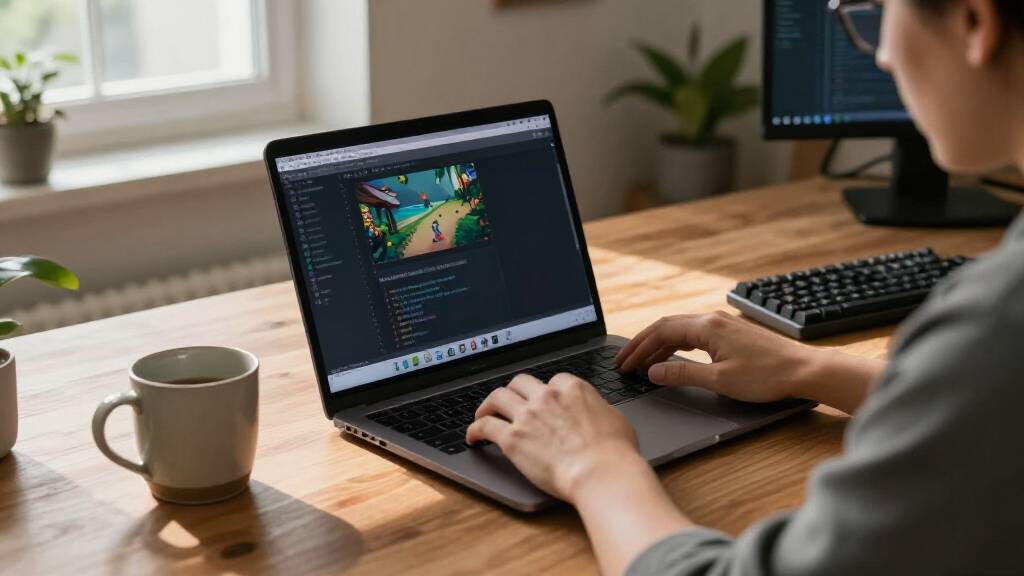
A Tom’s Hardware headline reports that Anthropic confirmed new Claude Code limits intended to prevent game cloning. The same headline says users report Opus 5.5 blocking reverse-engineering tasks; the details and scope of those reports are not available here.
Anthropic has confirmed new limits for Claude Code intended to prevent game cloning, according to a Tom’s Hardware headline. The headline also says users report Opus 5.5 blocking reverse-engineering tasks, but the available details do not establish which requests are affected or how broadly the limits apply.
The reported development concerns Claude Code, Anthropic’s coding assistant, and safeguards aimed at requests to reproduce games. The headline describes the limits as a measure to prevent game cloning, but it does not provide Anthropic’s exact wording, technical explanation, or examples of requests that trigger a restriction.
The same headline separately characterizes Opus 5.5 behavior as something users have reported: the model is said to be actively blocking reverse-engineering tasks. That is a user-reported claim, not enough by itself to show that every such task is blocked or that the behavior is part of the same announced policy.
No quoted statement, user account, test result, or product documentation is available in the material accompanying the headline. Details such as the release date, affected plan or model versions, enforcement mechanism, and appeals or alternatives therefore cannot be confirmed from the information at hand.
AI policy • Reported development
Claude Code Limits: What’s Confirmed and What Remains Unclear
A Tom’s Hardware headline says Anthropic confirmed new limits intended to prevent game cloning. The same headline cites user reports that Opus 5.5 blocks reverse-engineering tasks. The available details do not establish the scope of either claim.
The confirmed headline claim
New Claude Code limits are intended to prevent game cloning.
01 / At a glance
Two claims, different evidence
The headline distinguishes an Anthropic-confirmed purpose from user-reported model behavior. It does not show whether the two are linked.
Reported as confirmed
Claude Code limits
Anthropic is reported to have confirmed new limits aimed at preventing game cloning.
Purpose statedUser reports
Opus 5.5 refusals
Users reportedly say Opus 5.5 is actively blocking reverse-engineering tasks. No examples or frequency data are supplied.
Unverified scopeNot established
Shared enforcement
The available information does not establish that Opus 5.5 reports stem from the Claude Code limits or a shared policy.
Connection unknown02 / Why scope matters
One phrase covers different work
“Reverse engineering” can describe requests with very different purposes and outcomes.
Recreating a commercial game may raise concerns about copying protected work. Examining software can also support compatibility, maintenance, preservation, security research, or study.
Those categories can overlap. The headline does not explain how Anthropic defines game cloning, where it draws boundaries, or whether users can appeal a refusal.
Potential task range — illustrative only
The marker indicates no confirmed policy boundary. The material gives no examples that locate permitted or restricted requests on this spectrum.
03 / Open questions
What the headline does not answer
No quoted statement, product documentation, user account, or test result is available in the material provided.
Which requests are restricted?
Specific prompts, workflows, and the definition of “game cloning” are not supplied.
Which products and versions?
Covered Claude Code plans, model versions, and whether Opus 5.5 follows the same rules remain unknown.
When did it take effect?
The announcement date, rollout timing, and enforcement mechanism are not stated.
How consistent are refusals?
No examples, dates, settings, response comparisons, or independent tests are described.
04 / What would clarify it
A useful evidence trail
Clear documentation and reproducible examples would help separate narrow anti-copying limits from broader analysis restrictions.
Policy
Define the boundary
Anthropic explains what it considers game cloning and how adjacent tasks are treated.
Product details
Identify coverage
Documentation names affected tools, models, versions, timing, and review options.
Examples
Make reports repeatable
Users provide dated prompts and responses that can be checked consistently.
Assessment
Test adjacent tasks
Independent checks show whether legitimate analysis remains usable.
05 / Key questions
What can be answered now?
What limits did Anthropic confirm?
The headline says new Claude Code limits are intended to prevent game cloning. Specific rules and technical details are not provided.
Is Opus 5.5 blocking all reverse engineering?
No broad conclusion is established. The headline cites user reports but gives no examples or measure of frequency.
Are the reports tied to the new limits?
The available details do not establish a link or a shared enforcement mechanism.
When do the limits take effect?
The announcement date and rollout timing are not specified in the headline-only information available here.
Limits Affect Coding Assistant Use
Restrictions aimed at game cloning could change how developers use Claude Code for software analysis, particularly when a request involves recreating mechanics or examining an existing game. Users who rely on coding assistants for legitimate compatibility, preservation, security, or research work may also want to know where Anthropic draws the line.
The distinction matters because reverse engineering covers varied activities. A refusal on a request to reproduce a commercial game would have a different scope from a broad block on examining code or behavior for other purposes. The headline does not say how Anthropic defines game cloning, whether its restrictions distinguish these cases, or whether affected users have a way to appeal.
Products Worth Considering

Bose QuietComfort Wireless Noise-Cancelling Headphones, Petal Pink

DJI Osmo Mobile 8 Gimbal with Mic Mini Transmitter, Infinity Black

Bose QuietComfort Ultra Wireless Noise-Cancelling Headphones with Spatial Audio, Black
As an affiliate, we earn on qualifying purchases.
Game Cloning and Code Restrictions
AI coding tools can generate and modify software from user instructions. Some requests to reproduce a game may raise questions about intellectual property and copying, while reverse engineering may also be used for analysis, interoperability, maintenance, or research. These categories can overlap, which makes the precise policy and its implementation relevant to users.
Here, the confirmed scope is narrow: the headline attributes to Anthropic confirmation of new Claude Code limits with a game-cloning purpose. It gives no timeline or policy text, and it does not establish whether the reported Opus 5.5 refusals are new, linked to that limit, or the result of separate safeguards.
Scope of the Restrictions
The available information leaves the central implementation questions unanswered. It is unclear which prompts or workflows are restricted, whether limits apply only to game cloning or to other reverse-engineering requests, and whether Claude Code and Opus 5.5 use the same enforcement rules.
The user reports are also not detailed enough to assess frequency or consistency. There are no examples, dates, model settings, or responses to compare, and no independent testing is described. Anthropic’s exact explanation and any guidance for researchers or developers are not included in the headline-only material.
Policy Details and User Reports
The next useful information would be Anthropic’s full policy explanation, including what it considers game cloning and how its limits affect adjacent analysis tasks. Product documentation or release notes could clarify which Claude Code and model versions are covered, when the change took effect, and whether users can request review of a refusal.
More detailed user accounts and reproducible examples could help establish whether Opus 5.5 blocks a broad class of reverse-engineering work or particular requests to recreate games. Until those details are available, the reported restrictions’ reach remains uncertain.
Where I land
My assessment is that the reported limits address a real boundary problem: an assistant should not make it easy to reproduce a game in ways that violate a creator’s rights. But the headline alone does not show whether Anthropic’s rules are narrowly aimed at copying or also interfere with legitimate work involving compatibility, preservation, or security research.
The strongest counterargument is that broad restrictions may be needed because intent is difficult to infer from a prompt and generated code can be used to make close copies. I would change my assessment if Anthropic published clear examples and scope, and if independent testing showed that ordinary analysis tasks remain usable while requests to recreate protected games are consistently limited.
Source: Anthropic
Key Questions
What limits did Anthropic confirm?
A Tom’s Hardware headline says Anthropic confirmed new Claude Code limits intended to prevent game cloning. The specific rules and technical details are not provided here.
Is Opus 5.5 blocking all reverse engineering?
No such broad conclusion is established. The headline says users report Opus 5.5 blocking reverse-engineering tasks, but it gives no examples or measure of how often this happens.
Are the Opus 5.5 reports tied to the new Claude Code limits?
The available details do not establish a link. The headline mentions both developments but does not say whether they share a policy or enforcement mechanism.
When do the limits take effect?
The announcement date and rollout timing are not specified in the headline-only information available here.
Source: Anthropic