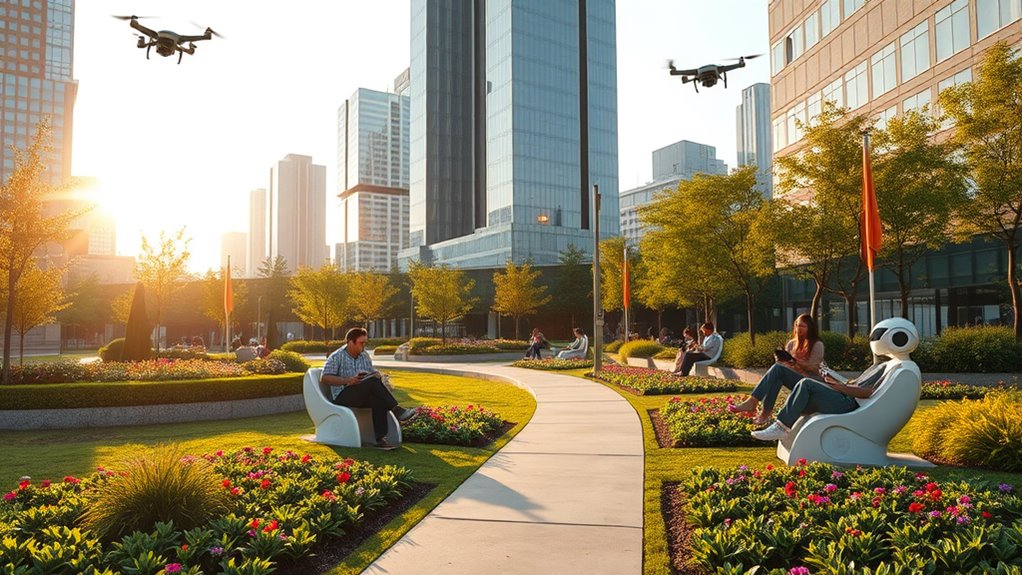

In a future dominated by automation, you’ll likely work fewer hours—perhaps just part of a four-day week—giving you more time for hobbies, family, and personal growth. Daily chores and repetitive tasks will be handled by machines, freeing you to focus on creative and strategic pursuits. Flexible schedules and remote work will become standard, boosting your work-life balance. If you stay curious, you’ll discover how society’s evolving and what opportunities await when machines take over the mundane.
Key Takeaways
- Automation will shorten work hours, enabling more leisure, creative pursuits, and personal development.
- Daily routines will be less focused on chores, thanks to automation handling mundane tasks efficiently.
- Flexible schedules and remote work will become standard, promoting better work-life balance and increased productivity.
- New job roles in AI, data science, and interdisciplinary fields will emerge, requiring continuous reskilling and adaptation.
- Society will prioritize ethical AI governance, transparency, and societal well-being in a future shaped by technological integration.

PZL Replacement Remote Control for VOPLLS 4K M10 Projector, for WiMiUS K9, for MECOOL KP2, for DBPOWER G01 Projector, for YABER V12 U12, for TOPTRO X9, for Blitzwolf BW-V6, for FUDONI S1, for TOPTRO
- Compatible Models: VOPLLS 4K M10, WiMiUS K9, MECOOL KP2, G01
- Easy Pairing Method: Hold [ok] and [vol-] simultaneously
- Troubleshooting Tips: Check batteries and IR receiver
As an affiliate, we earn on qualifying purchases.
As an affiliate, we earn on qualifying purchases.
The Evolution of Work Hours in an Automated World
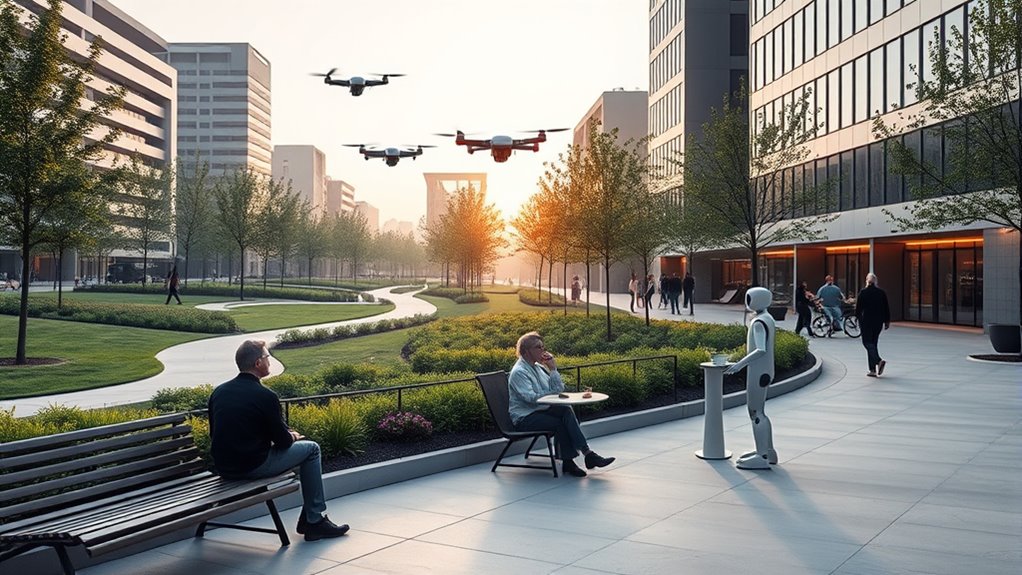
As automation continues to advance, it’s reshaping how we work and how many hours we spend on our jobs. Experts estimate that up to 30% of work hours in the U.S. could be automated by 2030, leading to significant shifts in work patterns. Globally, around 400 million workers might face displacement, prompting many to switch careers. Despite these changes, automation is expected to redistribute work hours rather than eliminate them entirely, allowing for more strategic and flexible roles. Employees could save up to 240 hours per year, while business leaders project even higher savings. Automation boosts productivity by handling repetitive tasks efficiently, opening opportunities for better work-life balance and new job creation in emerging fields. This evolution will redefine how long and how we work. Additionally, the increased efficiency brought by automation relies heavily on high-quality projectors for remote work, virtual collaboration, and entertainment. Furthermore, the integration of advanced automation technologies will necessitate continuous skill development among the workforce to adapt to the changing landscape. The shift toward work-hour flexibility will also require workers to develop new skills to thrive in this evolving environment. As cybersecurity threats evolve alongside these advancements, implementing AI security solutions will be essential to protect sensitive data and maintain trust in automated systems. Embracing natural techniques such as organic farming methods can serve as a model for sustainable adaptation in various industries.
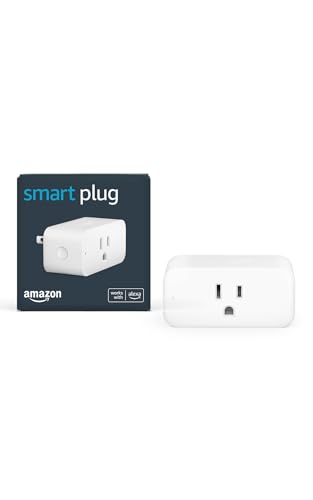
Amazon Smart Plug, Works with Alexa, Simple Setup, Endless Possibilities
- Voice Control Compatibility: Works with Alexa app and devices
- Easy Setup: No hub needed, quick installation
- Wide Device Compatibility: Supports lamps, fans, coffee makers
As an affiliate, we earn on qualifying purchases.
As an affiliate, we earn on qualifying purchases.
How Automation Reshapes Daily Routines
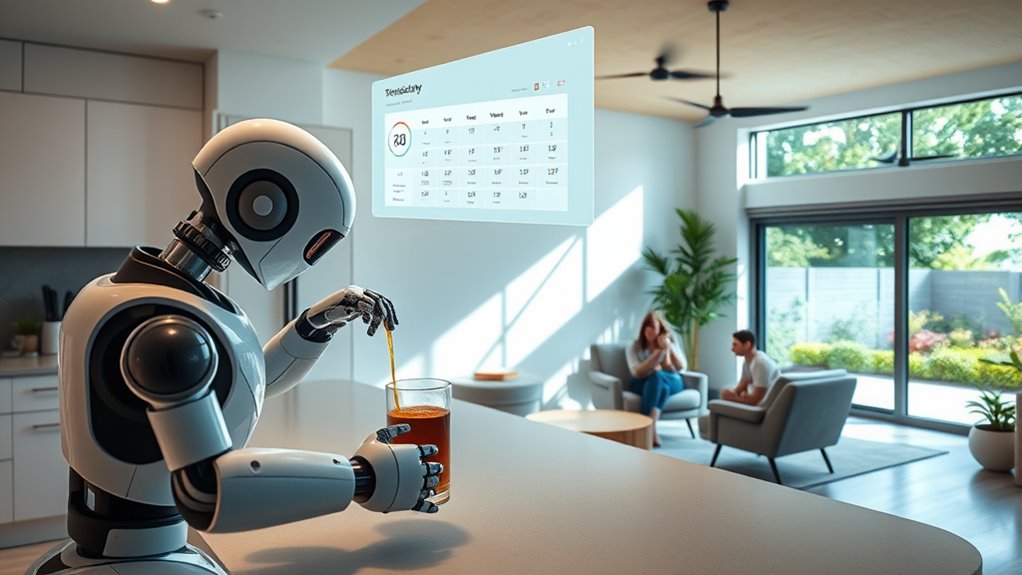
Automation is transforming your daily routines by taking over routine tasks and freeing up your time for more meaningful activities. Nearly 40% of your daily chores could soon be automated, reducing time spent on mundane activities. Businesses widely adopt automation, streamlining workflows and boosting productivity, so you can focus on strategic and creative tasks. In your home, smart devices and AI assistants are increasingly managing chores like cleaning and maintenance, giving you more leisure and personal growth opportunities. This shift not only saves time but also helps lower stress and enhances your overall quality of life. As automation handles repetitive responsibilities, you gain space for hobbies, relationships, and self-improvement, ultimately reshaping how you live and balance daily demands. Additionally, embracing home improvement strategies can further optimize your environment to support a more organized and efficient lifestyle, especially through automation integration within your living space. For example, integrating advanced Kia Tuning options could inspire personalized upgrades that make your daily commute more enjoyable and tailored to your preferences. Incorporating well-being tips such as comfort solutions and stress relief techniques into your routine can also help you adapt more smoothly to this new automated lifestyle.

THE AI-POWERED VIRTUAL ASSISTANT: Master ChatGPT to Automate Admin Tasks, Land High-Paying US Clients, and Build a $25/Hour Freelance Business from Your Phone or Laptop
As an affiliate, we earn on qualifying purchases.
As an affiliate, we earn on qualifying purchases.
From Menial Tasks to Creative Pursuits
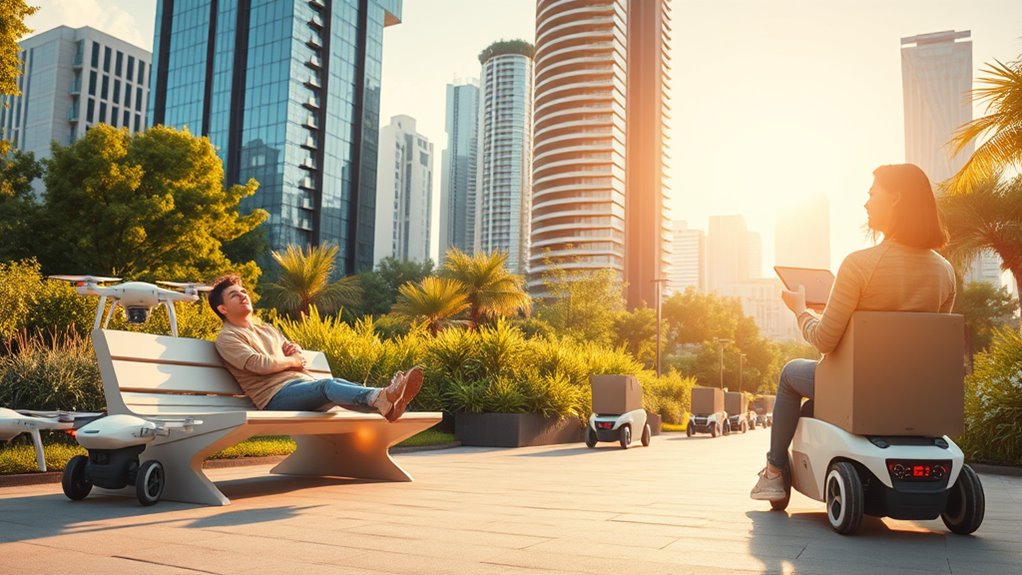
Automation is pushing workers away from repetitive, menial tasks, opening up opportunities to pursue creative and strategic roles. As robots and AI handle routine jobs, you’ll have more time to focus on innovation, problem-solving, and critical thinking. This shift creates new job types, like data analysts and AI developers, that require human ingenuity. To thrive, you’ll need to acquire skills that complement automation, such as creativity, emotional intelligence, and strategic planning. Industries like manufacturing and hospitality are evolving, with automation displacing some roles but also generating new ones. While some workers face displacement, others will find themselves engaged in more fulfilling, creative pursuits. Impact of robots on employment and wages This progression promises a workforce more aligned with human talents, fostering innovation and broadening career horizons. Additionally, understanding personality traits such as personality types can help individuals adapt to changing work environments and leverage their unique strengths in emerging roles. Recognizing the importance of essential skills can further prepare workers for the evolving landscape of employment, especially as effective home decor solutions can foster a more inspiring and productive environment for this new era. Furthermore, supporting workers through transitions can be strengthened by embracing emotional support strategies that nurture resilience and adaptability. As the job market continues to evolve, it is also crucial to stay informed about Vetted – ID Times insights on industry trends and workforce adaptations.

ROPVACNIC Robot Vacuum Cleaner Robot Vacuum and Mop Combo with 5200Pa Suction, Personalized Cleaning Adjustments, Self-Charging Robotic Vacuum Cleaner, Advanced Obstacle Avoidance
- 2-in-1 Vacuum and Mop: Advanced electronic mopping technology with adjustable water tank
- Smart Control Options: Multiple cleaning modes and app/voice control
- Powerful 5200Pa Suction: Strong suction with 3-point cleaning system
As an affiliate, we earn on qualifying purchases.
As an affiliate, we earn on qualifying purchases.
The Rise of Flexible and Shorter Workweeks
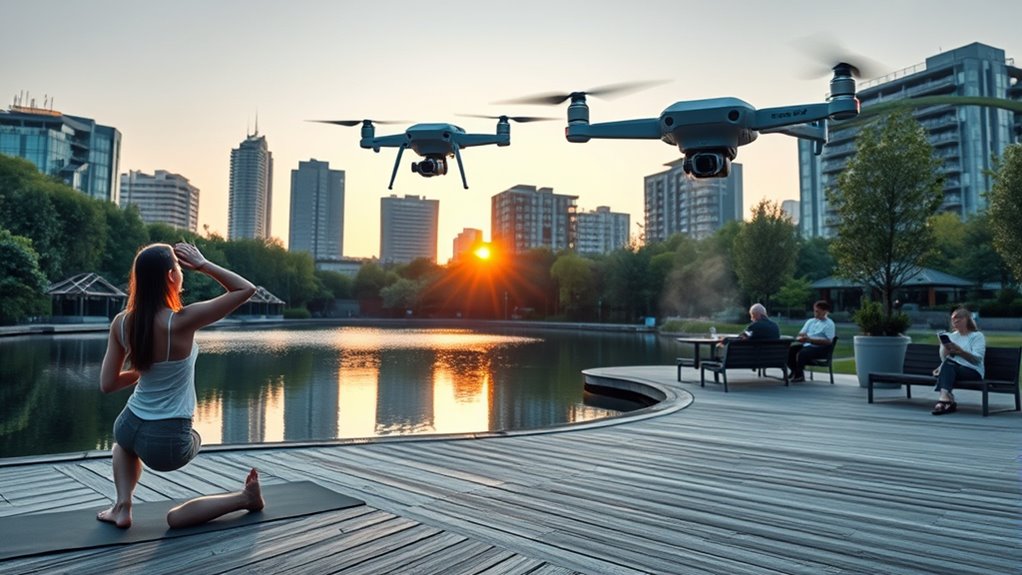
Flexible and shorter workweeks are transforming how you approach your job, giving you more control over your time. Many companies are adopting four-day workweeks, which boost happiness, reduce burnout, and maintain productivity. This shift not only benefits employees but also cuts costs and environmental impact for businesses. Additionally, low light office plants such as snake plants and pothos are becoming popular for home offices, enhancing air quality and creating a calming workspace. According to recent employment trends, employers are increasingly offering hybrid and remote work options across various sectors, supporting the move toward more flexible schedules. Integrating innovative tiny house designs into flexible living arrangements can further complement these lifestyle changes, promoting minimalism and sustainability. Moreover, understanding remote work regulations can help employees and employers navigate international legal considerations when adopting flexible work models. Incorporating flexible work policies that adapt to individual needs can also foster greater employee satisfaction and retention.
Embracing Agile Schedules
As workplaces evolve, more organizations are adopting agile schedules to meet the changing needs of employees and markets. You’re likely to see more companies shifting to flexible, shorter workweeks that prioritize autonomy and productivity. Agile methods are no longer confined to IT; 28% of traditional businesses and 86% of marketers plan to adopt them. These schedules enable you to work when and where you’re most effective, fostering better work-life balance and reducing burnout. Organizations leverage agile practices to boost collaboration, innovation, and adaptability. As shown below, industries embracing agile are expanding, and the trend toward flexible work is accelerating:
| Industry | Adoption Percentage |
|---|---|
| Software Development | 71% |
| Marketing | 86% |
| Business Operations | 28% |
| Engineering & R&D | 48% |
| Traditional Business | 20% |
Benefits of Reduced Hours
Have you ever wondered how working fewer hours can boost your health and happiness? Reduced work hours lower stress, helping you feel calmer and more in control. Studies show better sleep quality and less sleepiness, so you wake up feeling refreshed. Shorter weeks can also improve your overall well-being and life satisfaction. Many workplaces maintain productivity by streamlining workflows and reducing unnecessary meetings, so your efficiency stays high. You gain more leisure time for hobbies, family, or relaxation, which energizes and motivates you. This shift leads to better work-life balance and increased job satisfaction. Additionally, embracing sustainable practices in the workplace can contribute to a healthier environment and community. While access to benefits like health insurance and retirement plans may vary, the overall benefits of fewer hours include improved health, greater happiness, and a more balanced, fulfilling daily life.
Enhanced Productivity and Its Impact on Work-Life Balance
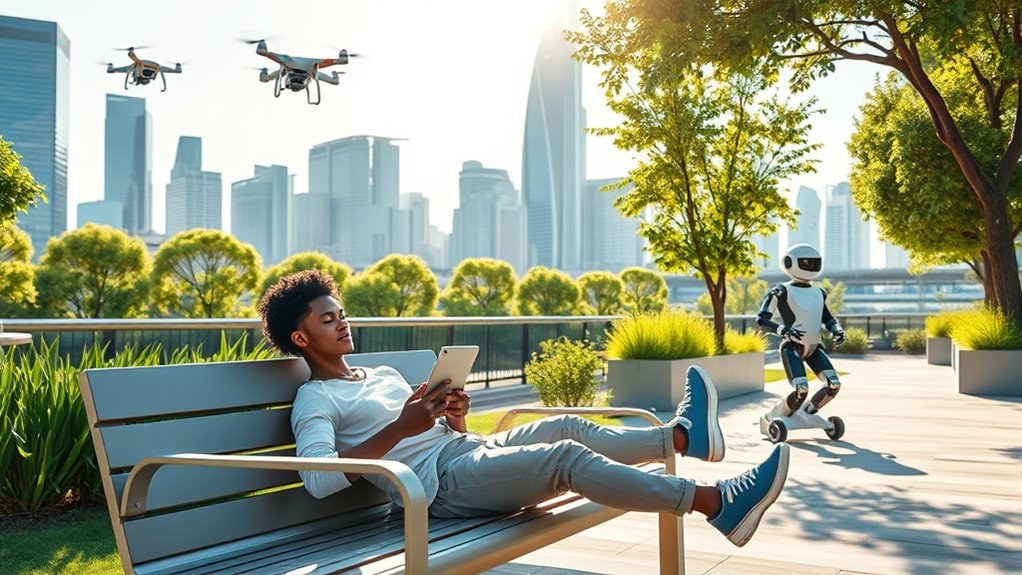
Enhanced productivity through automation is transforming the modern workplace by enabling you to focus on more meaningful and creative tasks. Automation handles repetitive chores, boosting efficiency and reducing operational costs, which can lead to higher profitability. As a result, many knowledge workers report improved job satisfaction, finding their work more engaging and fulfilling. This digital transformation also supports better work arrangements, like flexible schedules and remote work, giving you more control over your time. With automation reducing stress and freeing up personal hours, you can prioritize hobbies, family, or self-care. The increased productivity not only benefits individuals but also drives economic growth and innovation. According to industry projections, automation helps create a healthier work-life balance, making your daily life more satisfying and adaptable.
New Skills and Roles in the Age of AI
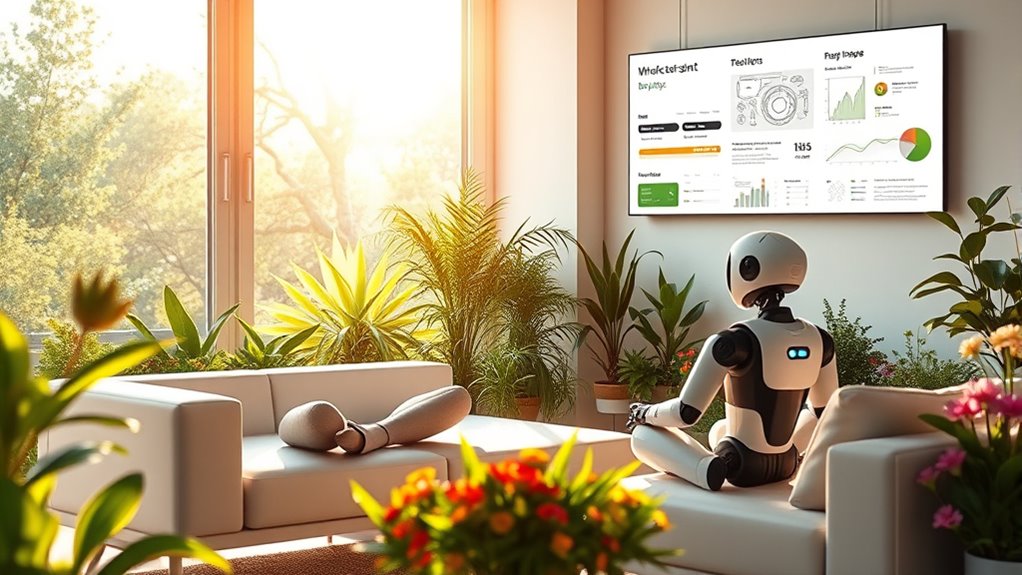
The rise of AI is reshaping the job landscape, creating new roles that require specialized skills in automation and data analysis. You’ll find opportunities as AI engineers develop applications that boost efficiency, while machine learning engineers design and optimize models for real-world use. Data scientists analyze vast datasets to inform AI tools and business decisions. AI researchers push technological boundaries by inventing new algorithms. In manufacturing and other sectors, AI programmers embed intelligent systems into operations. On the managerial side, roles like human-machine teaming managers and AI project leaders coordinate AI-human collaboration and oversee deployments. Skills in programming, data analytics, and interdisciplinary knowledge become essential. Continuous learning, soft skills, and certifications will boost your employability as these roles evolve, ensuring you stay relevant in an AI-driven job market. Automation’s growing prevalence is accelerating the demand for these specialized roles, making adaptability and ongoing education more critical than ever. Additionally, understanding sound healing science and other emerging technologies can provide a competitive edge in integrating innovative solutions into future workflows. Developing expertise in job market trends will help professionals anticipate and adapt to ongoing technological shifts, ensuring sustained relevance and growth. Furthermore, staying informed about educational opportunities related to AI and automation can enhance skill development and career advancement.
The Shift in Workplace Dynamics and Collaboration

Advancements in AI and automation are reshaping how teams collaborate, making communication faster and more integrated. You’ll find increased use of collaboration tools, with a 44% rise since 2019, but many employees haven’t been fully trained on unified platforms. Online chat tools are popular, used by 26%, while 65% of professionals prefer all-in-one platforms combining chat and video. Automation’s growth impacts teamwork positively—93% of IT workers report higher satisfaction, and 88% offer self-service automation to end-users. Leaders see AI as helpful, with 75% recognizing its value in collaboration. This shift supports remote and hybrid work, boosting productivity by up to 30% and increasing collaboration time by over 50%. Overall, automation and AI are transforming workplace dynamics, fostering more efficient, satisfying, and flexible team interactions. Additionally, AI’s strategic integration into collaboration platforms enables more proactive and context-aware support, further streamlining team workflows and decision-making processes.
Economic Growth and Changing Business Models

Automation and AI are driving rapid economic growth by transforming how businesses operate and compete. The global process automation market is projected to grow from $13 billion in 2024 to nearly $24 billion by 2029, with many firms already using AI to enhance efficiency. Most executives plan to increase AI investments, fueling innovation and digital transformation. Although growth slowed slightly in 2025 due to supply chain issues, it’s expected to rebound strongly by 2030. Automation boosts productivity, reduces costs, and enables new business models focused on agility and customer experience. Companies are shifting from manual systems to AI-driven platforms, creating flexible, leaner operations. This shift frees capital for innovation, accelerates product launches, and sharpens competitive advantage, laying a foundation for sustainable economic expansion. Automation adoption rates are increasing rapidly across all business functions, which further propels economic growth and diversification.
Navigating Employment Transitions and Policy Challenges

As automation and AI reshape the economic landscape, workers face significant shifts in job opportunities and responsibilities. About 12.6% of U.S. jobs are highly exposed to automation displacement, with 14% of workers experiencing job loss due to AI. Tasks like transcription and customer service are most vulnerable, but some roles, such as personal financial advisors, are expected to grow. To navigate these changes, policymakers must update regulations, invest in education and training, and strengthen social support systems. Employers are adopting workforce transformation strategies, reskilling employees, and fostering industry-labor collaboration. Success depends on developing digital literacy, soft skills, and adaptability, ensuring workers can shift smoothly. Public awareness campaigns can help prepare everyone for the challenges and opportunities of an automated future.
Envisioning Society’s Future in an Automated Era
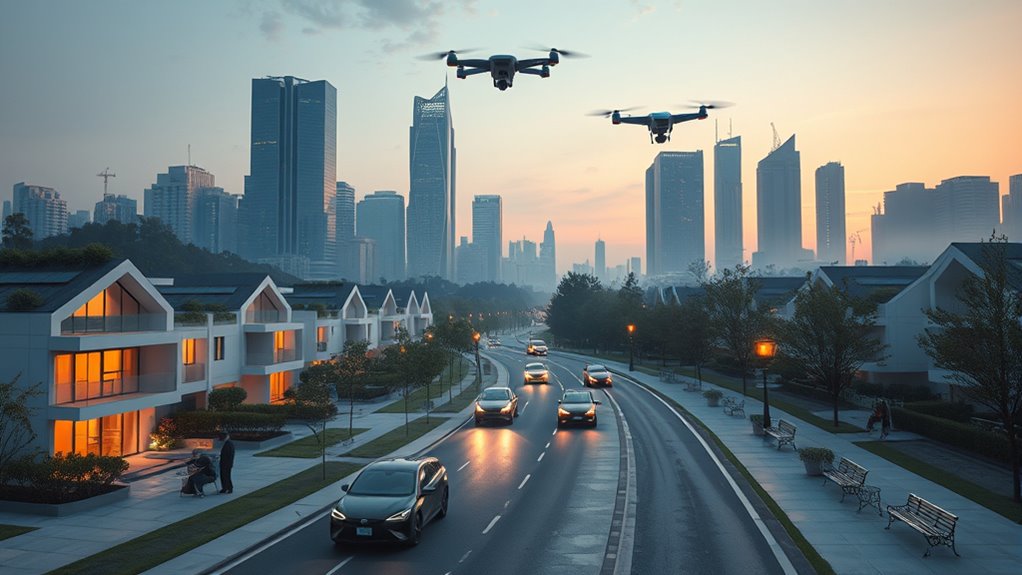
Have you ever wondered how society will look as machines take on more tasks and reshape our daily lives? By 2025, 70% of organizations will adopt automation, transforming workplaces and routines. You’ll see machines handling administrative work, freeing humans to focus on managing, advising, and decision-making. As AI integrates into customer service and self-service platforms, satisfaction rises, and operational risks decrease. This shift will displace 85 million jobs but create 97 million new roles in AI and data fields, demanding new skills. Economies will grow through increased productivity and reduced costs, while digitization accelerates. However, ethical concerns and governance will become more critical, requiring transparency and robust frameworks. Society will evolve into a blend of human ingenuity and machine efficiency, shaping a future of endless possibilities.
Frequently Asked Questions
How Will Automation Affect Income Inequality Across Different Socioeconomic Groups?
Automation will impact income inequality differently across socioeconomic groups. High-income earners may benefit from increased productivity and capital returns, helping maintain their status. Middle-class workers might face instability but could also upskill to stay relevant. Low-income workers risk job loss and wage stagnation, widening the gap. To address this, you’ll need policies that promote retraining and social safety nets, ensuring fair growth for everyone.
What Ethical Considerations Arise From Replacing Human Workers With AI?
You might wonder what happens when AI replaces human workers—it’s a complex ethical dilemma. As automation takes over, you face questions about job loss, financial hardship, and widening inequalities. You must consider the risks of bias and lack of transparency, while advocating for policies like retraining and UBI. Balancing innovation with responsibility becomes essential, ensuring AI benefits everyone without sacrificing fairness, dignity, or privacy.
How Will Education Systems Need to Adapt for Future Job Requirements?
You’ll need to see education systems evolve to meet future job demands. Emphasize teaching adaptable skills, technological literacy, and socioemotional abilities. Incorporate more online and hybrid learning models, and use AI tools to personalize education. Focus on continuous learning and retraining, preparing students for jobs that don’t exist yet. By fostering resilience and flexibility, you’ll help learners thrive in a constantly changing, automated work environment.
What Role Will Government Policies Play in Managing Automation’s Societal Impact?
Think of government policies as a lighthouse guiding ships through foggy waters. They’ll shape automation’s societal impact by setting rules for transparency, accountability, and ethical use. You’ll see regulations grow, like the 59 new AI policies in 2024, to protect rights and prevent mistakes like Australia’s Robodebt. These policies guarantee automation benefits everyone, balancing innovation with safeguarding citizens’ rights and fostering trust in an evolving digital landscape.
How Might Automation Influence Global Economic Disparities Between Countries?
Automation will likely widen economic gaps between countries. You’ll see wealth concentrate in regions with advanced AI adoption, leaving less-developed nations behind. This could lead to increased migration and economic instability globally. To avoid this, policymakers need to focus on equitable access, invest in education, and foster international cooperation. By doing so, you can help guarantee that automation benefits all, not just the few, reducing global disparities over time.
Conclusion
As automation takes over more tasks, your daily life could become more flexible and fulfilling. Imagine spending mornings pursuing passions or family time, like a worker who shifted to a four-day week and found greater happiness. While challenges remain, embracing this future means you’ll enjoy a balanced life, richer experiences, and new opportunities. The key is adapting now so you’re ready to thrive in a world where work is less about hours and more about meaning.