
By Thorsten Meyer | ThorstenMeyerAI.com | October 2025

Get business pricing on tech for your team
- Business-only prices and quantity discounts
- Tax-exempt purchasing
- Multiple users, one account, clear invoices
Introduction: The AI Revolution in Retail
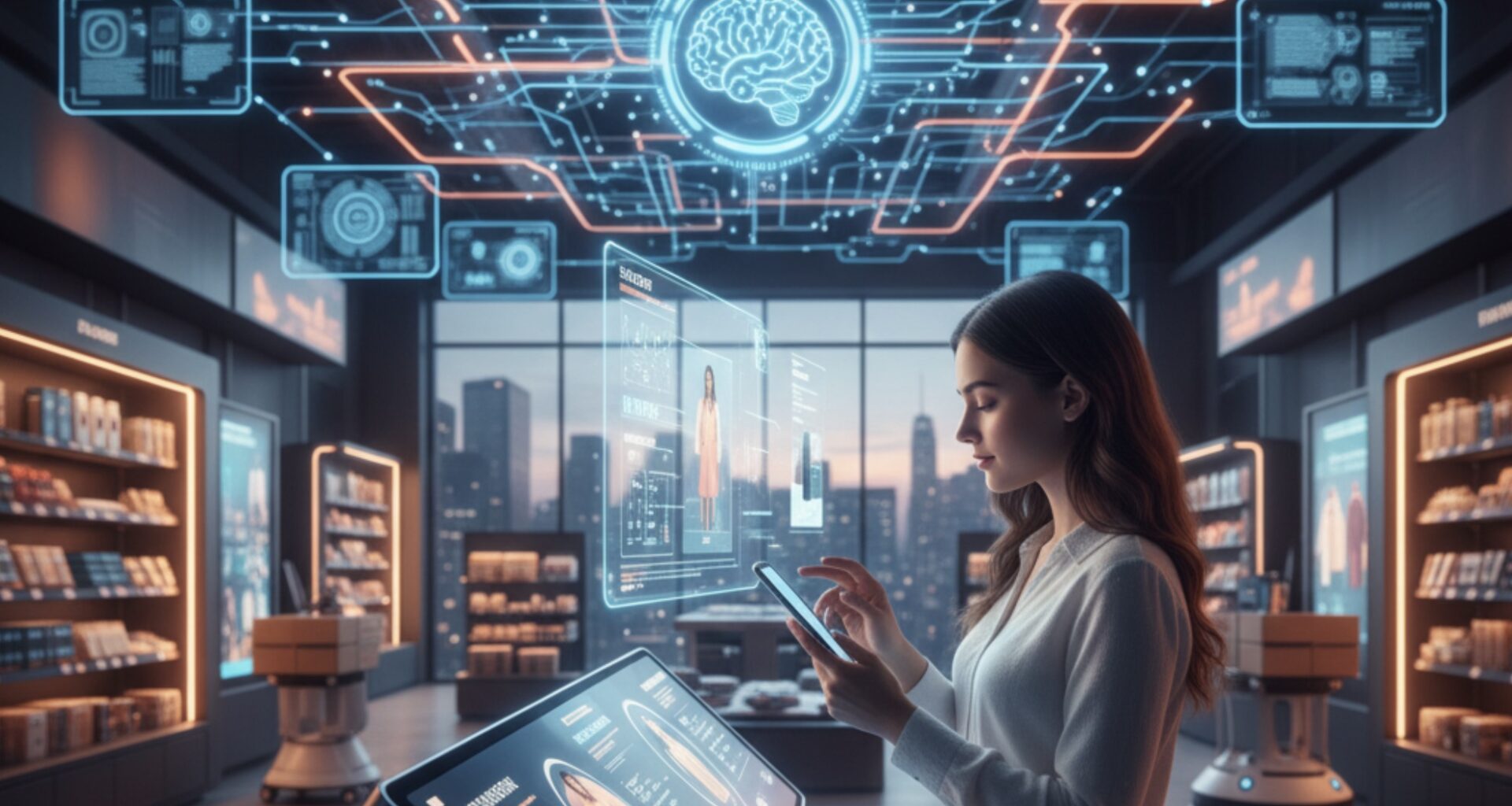
The shopping experience is undergoing its biggest transformation since the birth of e-commerce. Artificial intelligence now powers nearly every stage of the retail journey — discovery, personalization, pricing, logistics, and even product design.
What was once a linear sales funnel is becoming an intelligent, adaptive ecosystem that learns and evolves in real time.
Products Worth Considering

Anker SOLIX C200 DC Portable Power Station, 192Wh, 200W

Jackery Explorer 300 Portable Power Station, 292Wh

Jackery HomePower 3600 Plus Portable Power Station, 3584Wh, 3600W
As an affiliate, we earn on qualifying purchases.
1. Search Becomes Conversational and Visual
Text-based search is fading fast. With Google’s AI Mode and similar systems, users can now speak, show, and shop — uploading a photo, asking natural questions, and receiving results enriched with reviews, prices, and real-time availability.
AI blends visual recognition, contextual understanding, and commerce data to deliver precisely what the user intends — not just what they type.
For retailers, this marks a shift from SEO to AIO (Artificial Intelligence Optimization) — optimizing data, imagery, and language for AI interpretation.
Strategic Implication: Brands must ensure their product catalogs are AI-readable — with detailed attributes, structured metadata, and optimized imagery that AI systems can “see.”
2. Personalization at Planetary Scale
AI-driven personalization now reaches beyond user segments. Machine learning models analyze behavior, mood, and micro-context — including time, location, and device type — to deliver one-to-one commerce.
A visitor in Berlin might see a different homepage layout, product lineup, and even pricing strategy than someone browsing from Tokyo. This isn’t just personalization; it’s predictive adaptation, happening in milliseconds.
Key Insight: AI doesn’t just react to what customers want — it anticipates it, rewriting the rules of digital merchandising.
3. Generative Commerce: The Rise of Synthetic Shopping
Generative AI has unlocked what can be called synthetic retail — experiences where customers visualize and interact with products before they exist.
Virtual try-ons, AI stylists, and product visualization tools are merging imagination with commerce. Shoppers can preview how a jacket fits or how a couch looks in their living room.
For brands, generative models reduce creative costs while expanding possibilities — from AI-generated campaign visuals to instant 3D product renders.
Example: Retailers like Zara and IKEA are experimenting with generative design for catalog creation and home visualization, cutting photography and setup time by over 70%.
4. Supply Chains That Think for Themselves
AI is also transforming operations beneath the surface. Predictive analytics models now anticipate inventory shifts, supplier delays, and emerging demand signals long before they manifest.
AI-driven logistics connect global data streams — weather patterns, social media trends, and even geopolitical events — to adjust pricing, routing, and stock allocation dynamically.
Meanwhile, warehouse robots and smart fulfillment hubs operate with minimal human intervention.
Result: A supply chain that doesn’t just respond — it learns, forecasts, and acts.
5. Trust, Transparency, and Human Connection
As automation grows, trust becomes currency. Consumers want transparency about how AI shapes recommendations and pricing.
Retailers that adopt explainable AI — revealing why a product or deal is shown — will strengthen customer loyalty and regulatory compliance alike.
At the same time, human creativity remains irreplaceable. The new retail frontier belongs to brands that combine machine precision with human empathy — crafting stories, values, and experiences that resonate emotionally.
The Future: AI as the Retail Co-Strategist
AI has evolved from tool to co-strategist — influencing not only how consumers buy, but how businesses plan.
Every click, glance, and prompt is data — feeding a loop of continuous improvement.
In this new commerce DNA, AI doesn’t just follow demand; it generates it. The next era of shopping won’t be about algorithms replacing humans — it will be about intelligence, creativity, and data working together to make retail more personal, predictive, and purposeful.