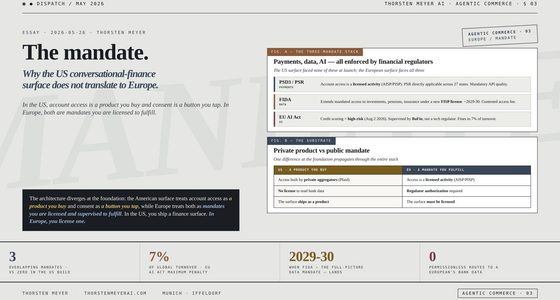

Why “Sovereign AI” Is Now Core Strategy
Europe is converging privacy, security, and competitiveness into one agenda: AI under European control. In practice that means sovereign clouds (EU data residency, EU-only operations, independent governance) and sovereign AI stacks (EU-built or EU-operated models, auditable, interoperable). The EU AI Act accelerates this with phased obligations for general-purpose AI, transparency, testing, and incident handling through 2027.

As an affiliate, we earn on qualifying purchases.
Country Snapshots (confirmed moves & credible signals)
Germany: OpenAI pilot via Delos on Azure; AWS sovereign region
- Confirmed: OpenAI for Germany (SAP + OpenAI), operated through Delos Cloud on Microsoft Azure for the public sector (ministries, agencies, research), with Delos scaling to ~4,000 GPUs.
- AWS European Sovereign Cloud: first EU-only region in Brandenburg (EU-resident staff, separate control and trust services).
- Google x T-Systems Sovereign Cloud: German data residency, EU support, external key management by T-Systems.
Take: Germany is the reference market for sovereign AI, running parallel tracks (OpenAI pilot, AWS sovereign region, Google sovereign controls). Expect copy-cat models for sectors with strict requirements (health, finance, defense).
France: “Cloud de Confiance” + Mistral as EU champion
- Bleu (Orange + Capgemini + Microsoft): SecNumCloud-compliant Azure services in France under French operational control.
- Mistral AI: Europe’s flagship model builder; major funding, open(ish) releases, focus on reasoning; strong political and industry backing.
Take: France couples trusted-cloud labels with European models. Expect deeper integration of Mistral with EU HPC and sovereign clouds.
Spain: Language sovereignty + edge AI
- Government × IBM: open, Spanish/co-official language models (Castilian, Catalan, Basque, Galician) built and governed in Spain.
- Telefónica × NVIDIA: edge AI fabric with hundreds of GPUs for low-latency, privacy-preserving inference inside Spain’s network.
Take: Spain is a model for linguistic sovereignty and decentralized inference—ideal for public services and regulated domains.
Italy: Sovereign cloud build-out + national models
- Microsoft: €4.3B investment; “Italy North” among Azure’s largest EU regions; EU data-boundary commitments; workforce upskilling.
- Fastweb: DGX SuperPOD “NeXXt AI Factory” and MIIA, an Italian-language LLM; first telco-native sovereign AI suite.
- CINECA/EuroHPC: Leonardo/LISA upgrades and access for European AI training.
Take: Italy blends hyperscaler capacity under EU constraints with national compute and model initiatives.
Netherlands: Leverage via semiconductors & policy
- ASML → Mistral lead investor: strategic chip-to-model axis linking NL and EU AI scale-up.
- Acts as cloud/network hub and pushes Gaia-X hubs & data spaces.
Take: The Dutch amplify Europe’s AI through industry capital, connectivity, and governance expertise.
EU data residency compliant servers
As an affiliate, we earn on qualifying purchases.
As an affiliate, we earn on qualifying purchases.
EU-Level Pillars: Gaia-X, Data Spaces & Regulation
- Gaia-X: from “build an EU hyperscaler” to trust/label/interoperability framework (transparency, portability, compliance). The Fulcrum concept targets a multi-provider cloud/compute exchange so workloads can roam across compliant EU providers.
- EU AI Act: phased obligations for general-purpose AI (transparency, evaluations, copyright safeguards, incident processes). A Code of Practice operationalizes compliance for providers and deployers.
- Data Governance/Data Act: trusted data spaces and intermediaries unlock cross-border training data under European rules; portability and anti-lock-in by design.

AI Systems Performance Engineering: Optimizing Model Training and Inference Workloads with GPUs, CUDA, and PyTorch
As an affiliate, we earn on qualifying purchases.
As an affiliate, we earn on qualifying purchases.
Broader Market Moves (confirmed)
- AWS European Sovereign Cloud: separate EU cloud with its own governance, SOC, certificate authority, networking; first region Germany.
- Microsoft Sovereign Solutions: National Partner Clouds (e.g., Bleu in FR; Delos-operated stack in DE), Azure EU Data Boundary.
- Google Sovereign Controls: with T-Systems (DE) and Thales (FR)—external key management, EU-only support paths, strict residency.
- OpenAI in Europe: OpenAI for Germany as a sovereign public-sector pilot via SAP/Delos (Azure).
- Telcos × NVIDIA: Orange, Telefónica, Fastweb and others build edge/AI fabrics for on-network inference and agentic workloads.

Federated Learning for Privacy-Preserving AI Systems: Theory, Applications, and Implementation
As an affiliate, we earn on qualifying purchases.
As an affiliate, we earn on qualifying purchases.
5–10 Year Outlook (2026–2035)
1) Pan-EU sovereign-cloud meshes
By 2027–2030, AWS, Azure, and Google sovereign offerings operate in multiple EU states; Gaia-X labels shape public/regulated procurement; Fulcrum-like exchanges enable workload roaming across EU providers. Result: multi-cloud sovereignty replaces single-vendor lock-in.
2) European model libraries + domain stacks
Europe curates multilingual and domain-specific LLMs (health, industry, climate, justice)—many open or inspectable. Public data spaces feed training/fine-tuning lawfully and reproducibly.
3) “AI fabrics”: Edge + HPC as twin backbones
EuroHPC centers handle training/fine-tune; telco edge handles privacy-sensitive, low-latency inference. National AI factories deliver thousands of GPUs for research and industry.
4) Compliance features by design
EU-specific model and platform builds expose transparency reports, eval/red-team artifacts, copyright controls, and incident pipelines—natively integrated into cloud operations. Expect a boom in EU-native audit, safety, and governance tooling.
5) Competition & risk
- Most likely: Co-existence—US tech under EU operational control plus strong EU models in key domains.
- Risks: Cost deltas vs. global clouds; power/cooling/network constraints; talent competition.
- Upside: Europe exports “governance tech” (compliance stacks, auditing, privacy-preserving ML) as a global standard.
Bottom Line
Europe is turning sovereignty into an architectural principle: data centers, key management, staffing, law, and audit—all inside the EU. Germany (OpenAI pilot via Delos/Azure; AWS sovereign region), France (Bleu/SecNumCloud + Mistral), Spain (state-backed language LLMs + edge fabric), and Italy (€4.3B Microsoft build-out; Fastweb MIIA; CINECA) illustrate complementary paths. With the AI Act as metronome, a federated, auditable AI ecosystem is emerging—mixing global innovation with European control. Over the next decade, winners will be those who blend technical excellence with sovereignty-by-design.