
Automation may displace routine jobs, but it also creates new roles in emerging industries like biotech, renewable energy, and digital entertainment. As AI transforms sectors, demand shifts toward skills in tech, creativity, and human-centric tasks. This sparks economic growth and industry innovation, leading to fresh employment opportunities. By understanding these changes, you’ll see how new jobs keep arising despite AI advances. Keep exploring to uncover how you can stay ahead in this evolving landscape.

Get business pricing on tech for your team
- Business-only prices and quantity discounts
- Tax-exempt purchasing
- Multiple users, one account, clear invoices
Key Takeaways
- New roles in tech, healthcare, and renewable energy offset job losses from AI automation.
- Evolving skills and continuous reskilling enable workers to adapt to changing industry demands.
- AI-driven industry growth fosters innovation and creates entirely new sectors and job opportunities.
- Demographic shifts show older workers maintaining stability while younger workers face evolving entry-level roles.
- Strategic investments and policies in education promote workforce resilience despite automation advances.
As an affiliate, we earn on qualifying purchases.
The Impact of AI on Workforce Displacement and Creation

AI is transforming the workforce by displacing some jobs while simultaneously creating new opportunities. You might notice that around 6-7% of jobs could be lost as AI automates routine tasks like data entry and customer support. However, this displacement is balanced by the emergence of new roles, especially in fields requiring human creativity, problem-solving, and emotional intelligence. For instance, industries like tech, healthcare, and finance are developing new positions that didn’t exist before AI’s rise. While some jobs become obsolete, others evolve, demanding different skills. This shift encourages workers to adapt and reskill. Honda Tuning offers a clear example of how customization and skill development in specific niches can thrive alongside automation. Overall, AI’s impact isn’t solely about replacing workers; it also opens doors for innovation, new industries, and enhanced job quality for those who embrace change.
reskilling certification programs
As an affiliate, we earn on qualifying purchases.
As an affiliate, we earn on qualifying purchases.
Sectoral Shifts and the Rise of New Industries

As automation reshapes the job landscape, its impact varies markedly across different industries. You’ll see new sectors emerge, driven by AI innovations and shifting consumer demands. For example, renewable energy, biotech, and digital entertainment are expanding rapidly. These industries create roles that didn’t exist a decade ago, requiring fresh skills and expertise. Traditional sectors like manufacturing and agriculture adopt AI to optimize processes, but they also spawn entirely new markets. Here’s a snapshot:
| Sector | New Industry Examples | Key Jobs Created |
|---|---|---|
| Renewable Energy | Solar, wind, energy storage | Solar installers, tech developers |
| Biotechnology | Gene editing, personalized medicine | Bioinformatics specialists |
| Digital Entertainment | Virtual reality, streaming | Content creators, VR designers |
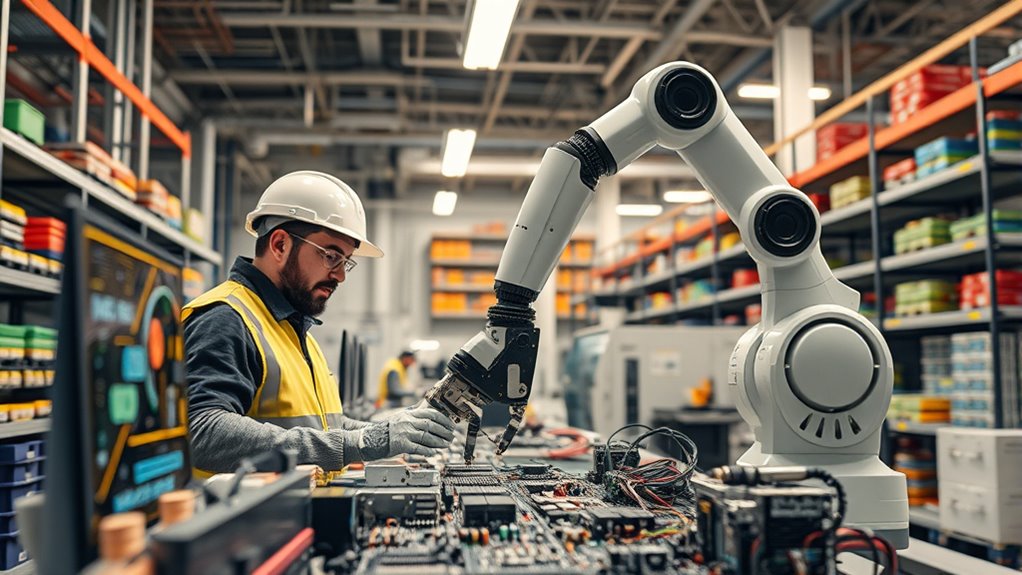
| Manufacturing | Smart factories, 3D printing | Robotics technicians, designers |
| Agriculture | Precision farming, agri-tech | Data analysts, drone operators |
Additionally, as shown in health benefits, innovations in technology also influence sectors like health and wellness, leading to new job opportunities and industry growth.
creativity and emotional intelligence training
As an affiliate, we earn on qualifying purchases.
As an affiliate, we earn on qualifying purchases.
Skills Evolution and the Importance of Reskilling

The rapid pace of technological change makes reskilling essential for workers who want to stay relevant in the evolving job market. To adapt successfully, focus on three key areas:
- Acquiring new tech skills—especially AI-related knowledge—helps you stay competitive.
- Developing soft skills like creativity, problem-solving, and emotional intelligence, which are less automatable.
- Engaging in continuous learning through online courses, workshops, or certifications to keep pace with industry shifts.
Reskilling isn’t a one-time effort; it’s an ongoing process that boosts your employability. As automation automates routine tasks, your ability to learn and adapt becomes your strongest asset. Staying proactive in skill development guarantees you remain valuable, relevant, and ready for the jobs of tomorrow. Additionally, understanding the capabilities and limitations of projector technology can inspire innovative approaches to workplace training and development.
As an affiliate, we earn on qualifying purchases.
Demographic Trends and Changing Employment Patterns

As automation reshapes the job market, younger workers face unique challenges, especially in tech-related fields. You might notice employment declines among those aged 22-25, while older workers see more stability or growth. Adapting quickly to new skills is essential for younger workers to stay competitive in this evolving landscape. Additionally, understanding resources and tools available can help navigate these changes effectively.
Younger Workers’ Challenges
Younger workers, especially those in their early twenties, face mounting challenges due to AI-driven changes in the job market. You might notice fewer opportunities in entry-level roles that rely on routine tasks. To adapt, consider these key points:
- Many jobs for young workers in sectors like customer service and data entry are declining as AI automates repetitive tasks.
- The unemployment rate for 22-25-year-olds in AI-affected fields has increased, making job hunting more competitive.
- Rapid technological shifts require you to quickly acquire new skills, especially in AI and digital tools, to stay relevant.
- The evolving landscape underscores the importance of differentiating skill sets that set you apart from automation.
Staying ahead means embracing continuous learning and developing skills that AI can’t easily replace—creativity, problem-solving, and emotional intelligence.
Age-Related Employment Shifts
Demographic shifts driven by AI adoption are reshaping employment patterns across age groups, with noticeable differences between younger and older workers. You might observe that older workers are experiencing growth in employment, as their skills are often less replaceable by automation. In contrast, younger workers, especially those in entry-level roles or tech-heavy fields, face higher unemployment or job displacement due to AI’s focus on automating routine tasks. Younger workers are pressured to upskill rapidly to stay relevant, while older workers benefit from experience and adaptability. These shifts highlight the importance of continuous learning and retraining programs tailored to different age groups. Additionally, AI-driven data analysis can help identify emerging job opportunities suited to various demographics, supporting more targeted employment strategies. Overall, AI’s influence is creating a nuanced landscape where age-specific strategies are essential for maintaining employment stability.
Technological Advancements Driving Economic Growth

You can see how innovation boosts productivity and sparks industry growth, fueling economic progress. Investment in technology accelerates this trend, creating new opportunities and markets. As these advancements evolve, they reshape the economic landscape and influence job dynamics across sectors. Recognizing the importance of emotional support in adapting to these changes can help workers and communities navigate the transitions more effectively.
Innovation Fuels Productivity
Technological advancements are the driving force behind increased productivity and economic growth, as innovations in AI and automation streamline operations across industries. Your ability to leverage these innovations accelerates business performance and competitiveness. Consider these key impacts:
- Efficiency Gains: Automation reduces manual work, speeding up processes and minimizing errors.
- Cost Reductions: AI-driven systems lower operational costs, freeing resources for reinvestment.
- New Opportunities: Cutting-edge tech opens markets and creates innovative products, fueling growth.
The development of 5G networks is also expected to significantly enhance connectivity, enabling more efficient data transfer and supporting the expansion of Internet of Things (IoT) applications.
Industry Growth Accelerates
Advancements in AI and automation are propelling industry growth at an unprecedented pace. You’ll notice how sectors like manufacturing, healthcare, and finance are experiencing rapid revenue increases as they adopt new technologies. These innovations streamline operations, reduce costs, and open opportunities for new services and products. As a result, businesses can scale faster and reach larger markets than ever before. You’ll also see investments pouring into tech-driven industries, fueling even more development. This cycle of technological progress creates a ripple effect, boosting employment in emerging fields and enhancing productivity across traditional sectors. Additionally, tent camping and outdoor recreation are benefiting from increased disposable income and a desire for experiences outside of digital environments. Overall, the rapid integration of AI accelerates economic expansion, transforming industries into more dynamic, competitive entities that drive growth and create new opportunities for workers and entrepreneurs alike.
Investment in Tech
Investing in technology has become a key driver of economic growth, fueling innovation and boosting productivity across industries. Your focus on tech investments accelerates progress and creates new opportunities. Consider these impacts:
- Increased Revenue: Industries adopting AI see nearly quadrupled revenue growth since 2022, fueling economic expansion.
- Job Market Shifts: Investments in AI development lead to the emergence of new sectors, requiring fresh skills and creating jobs.
- Global Competitiveness: Countries prioritizing technological advancement strengthen their economic position and attract further investments.
Your commitment to tech innovation not only enhances efficiency but also prepares the workforce for evolving demands. As AI continues to develop, sustained investment guarantees industries stay competitive and resilient, fostering long-term economic growth.
Preparing for the Future: Education and Policy Responses

As AI continues to reshape the job landscape, education and policy responses become essential for preparing workers to thrive in this new environment. You need targeted learning programs that develop skills in AI, data analysis, and human-centric roles. Governments and institutions must invest in reskilling and upskilling initiatives, focusing on industries less vulnerable to automation, such as creative fields and human services. Policies should promote lifelong learning, flexible work arrangements, and support for displaced workers. Encouraging collaboration between industry and education systems ensures curricula stay relevant. By fostering an adaptable workforce equipped with essential digital and cognitive skills, you can better navigate AI’s impact, ensuring economic resilience and reducing inequality as automation advances. Incorporating performance metrics can help track the effectiveness of these initiatives and adapt strategies accordingly.
Frequently Asked Questions
How Do Ai-Driven Automation Affect Global Job Markets Beyond the US?
You see AI-driven automation transforming global job markets by affecting industries worldwide, not just in the US. As AI replaces routine tasks, jobs in sectors like manufacturing, agriculture, and customer service decline. However, new opportunities emerge in tech, AI management, and creative fields. To stay relevant, you need to upskill and adapt, because across the globe, workers who embrace change benefit from new roles and economic growth driven by AI advancements.
What Industries Are Least Likely to Be Impacted by AI Automation?
Think of certain industries as islands in a storm, shielded from the waves of AI automation. You’re less likely to see jobs in creative fields, like arts, design, and entertainment, hit hard. Human-centric roles such as counseling, teaching, and healthcare also resist full automation because they require empathy and nuanced understanding. These sectors rely on uniquely human skills, making them a safe harbor amid the rapidly shifting landscape of AI-driven change.
How Do AI Advancements Influence Workplace Diversity and Inclusion Efforts?
AI advancements can support workplace diversity and inclusion efforts by reducing biases in hiring and promotion processes. You can leverage AI tools to analyze data objectively, helping to eliminate unconscious biases and promote fairer decisions. Additionally, AI enables accessible accommodations for employees with disabilities, fostering a more inclusive environment. Embracing these technologies helps you create a diverse workplace where all employees have equal opportunities to thrive and contribute.
What Role Do International Policies Play in Ai’s Impact on Employment?
International policies shape AI’s impact on employment by setting standards, promoting fair labor practices, and encouraging innovation. You can influence this by advocating for policies that protect workers from displacement, ensure equitable access to AI training, and support industries in adapting to technological changes. These policies help balance AI benefits with employment stability, guiding global efforts to create job opportunities while managing automation’s challenges.
How Can Small Businesses Leverage AI to Create New Employment Opportunities?
You can leverage AI in your small business by automating routine tasks, freeing up time for your team to focus on creative and customer-focused roles. Use AI tools to analyze data, personalize marketing, and streamline operations. This not only boosts productivity but also creates new job roles, like AI management or data analysis. Embracing AI helps you stay competitive, innovate, and generate employment opportunities within your business.
Conclusion
As you navigate this brave new world, remember that history’s great shifts, like the Industrial Revolution, show us that innovation sparks new opportunities. Though AI may seem like a modern-day Pandora’s box, your adaptability and willingness to learn guarantee you’ll thrive. Just as Gutenberg’s press revolutionized knowledge, today’s tech advances create fresh jobs and industries. Embrace change, stay curious, and build a future where humans and machines work side by side, forging progress together.
Halloween Picks
halloween
As an affiliate, we earn on qualifying purchases.