
Executive Summary
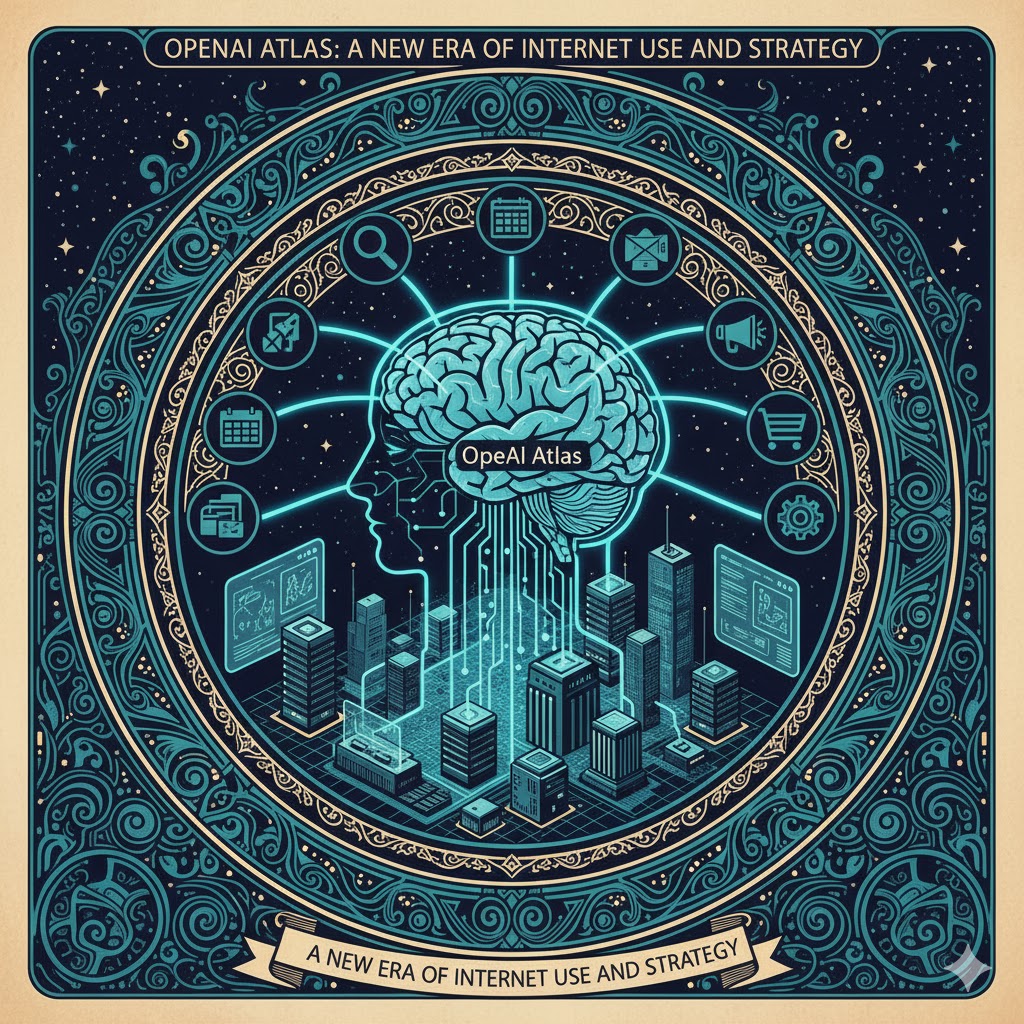
OpenAI’s launch of ChatGPT Atlas marks a transformative shift in how people engage with the internet. Atlas is an AI-powered web browser with OpenAI’s ChatGPT at its core, aiming to become a “super-assistant” for users’ online activitiesopenai.com. This report examines how Atlas could fundamentally reshape internet use across key domains and what that means for individuals, organizations, and industry stakeholders:
- Productivity & Workflows: Atlas integrates an intelligent assistant directly into the browser, automating routine tasks and streamlining workflows. Users can summarize content, draft communications, fill forms, and even have an AI “agent” complete multi-step tasks like shopping or scheduling on their behalfreuters.comiaccessibility.net. This promises major efficiency gains for both individual users and enterprise teams, while raising considerations around trust and oversight of AI-driven work.
- Education & Learning: By understanding the context of what a user is viewing, Atlas enables more interactive learning experiences. Students and professionals can ask the browser to explain complex material or generate practice questions on the fly, without toggling between appsopenai.com. This on-demand tutoring capability can enhance comprehension and skill development, though educators and institutions will need strategies to ensure ethical use.
- Accessibility & Inclusion: Atlas has the potential to make the web more accessible. Its AI can summarize or interpret web content for users who have visual, cognitive, or literacy challenges, and it can execute voice or text commands to navigate sites and perform actions. Early tests show context-aware prompts (e.g. offering to “summarize unread emails” on a mail page) that could significantly assist users with disabilities in completing tasks more easilyiaccessibility.net. With further refinement, Atlas could become a truly inclusive browsing tool that helps everyone “browse, learn, and create more efficiently”iaccessibility.net.
- Information Retrieval & Search: Atlas shifts the search paradigm from traditional keyword queries and link lists to conversational information retrieval. When users search in Atlas, a ChatGPT answer is presented first – synthesizing information from across the web – with traditional links and media results as secondarywired.com. This AI-centric search experience caters to users’ desire for instant, summarized answersreuters.com. Atlas’ optional browser memory even remembers past queries and browsing context to personalize future resultswired.com. The result is faster, more intuitive access to knowledge, though it will require new approaches to ensure answer quality and source transparency.
- E-commerce & Consumer Behavior: By leveraging its agent capabilities, Atlas can act as a shopping assistant. It can compare product options, summarize reviews, and even carry out purchases end-to-end. In one demonstration, Atlas autonomously found a recipe online and then added all the ingredients to an Instacart cart for purchasereuters.com – all on behalf of the user. This level of automation could redefine online shopping by minimizing tedious search and checkout processes. Businesses will likely need to adapt marketing and sales strategies for an era when AI agents, rather than consumers directly, engage with e-commerce platforms.
- Browsing Habits & User Experience: Atlas represents a reimagined web experience where the browser itself becomes a conversational partner. Instead of manually navigating via multiple tabs and menus, users may simply ask Atlas to fetch information or perform tasks. OpenAI’s CEO Sam Altman envisions a future where a chatbot interface replaces the traditional URL bar as “the center of how…people use the internet”apnews.com. Web browsing could become less about point-and-click and more about dialogue and delegation – “using the internet for you,” as Altman describes Atlas’ agent modeapnews.com. This hands-free modality stands to increase convenience and efficiency, but also raises questions about user autonomy, privacy, and the preservation of serendipitous exploration in a highly personalized, AI-curated web.
Strategic Implications: The advent of Atlas carries significant strategic implications for the tech industry. For OpenAI, it leverages ChatGPT’s massive user base (800 million weekly users by one estimatereuters.com) to challenge established players on their home turf. For Google and other search providers, Atlas accelerates the shift toward AI-driven search and threatens incumbent revenue models – analysts note that an AI-centric browser could siphon a share of the lucrative search advertising market away from Googlereuters.com. Digital content providers (news media, websites, e-commerce sellers) may see traffic patterns change as more users get answers or complete transactions without clicking through to sitesapnews.com, pressuring them to adapt via partnerships or new revenue-sharing arrangements (as some AI startups have begun exploringinkl.com). Overall, Atlas foreshadows an internet ecosystem where AI assistance is the default interface, consumer expectations for immediacy and personalization are higher than ever, and competitive dynamics pivot around who controls the gateway to information and services.
The following report delves into these points in detail, exploring how OpenAI Atlas might reshape digital behavior and what that means for both individuals and organizations, as well as the broader competitive landscape.

Building Browser Extensions: Create Modern Extensions for Chrome, Safari, Firefox, and Edge
As an affiliate, we earn on qualifying purchases.
As an affiliate, we earn on qualifying purchases.
Introduction
OpenAI’s ChatGPT Atlas browser launch in October 2025 signals a bold attempt to reinvent how we access the web. Atlas is a full-featured web browser built on Chromium, but its defining feature is the deep integration of OpenAI’s AI assistant into every aspect of the browsing experienceiaccessibility.net. In Atlas, the user can interact with a persistent ChatGPT sidebar to ask questions about any webpage, get summaries, or issue commands – effectively making AI assistance ubiquitous during web usewired.comwired.com. As Sam Altman put it, “AI represents a rare, once-a-decade opportunity to rethink what a browser can be about”wired.com.
The strategic intent behind Atlas is clear: OpenAI aims to make ChatGPT the starting point for online activity, supplanting the traditional search engine-centric model. Tech analysts observe that this move “puts pressure on Google” by positioning an AI interface as the first point of contact for internet usersinkl.com. In other words, instead of beginning a task by going to a search engine or typing a URL, a user might simply ask Atlas to handle it. This marks a profound shift in user behavior – one that could challenge Google’s longstanding role as the gateway to the webapnews.com.
Beyond competing for market share, Atlas embodies a broader trend of convergence between web browsers and AI agents. Companies from Microsoft to Brave and Opera have been adding AI features to their browsers, but Atlas is OpenAI’s bid to leapfrog those efforts with a browser that is AI-first by designwired.com. The implications extend across many domains: from how we work and learn, to how businesses reach customers, to how information flows through the digital economy. This report explores these implications in depth, examining Atlas’ potential impact on productivity, education, accessibility, information retrieval, e-commerce, and general browsing habits. It also analyzes what Atlas’ rise could mean for different stakeholders and outlines future trends that business leaders should anticipate in an AI-driven internet landscape.

AI VoiceWriter – Smart Dictation & AI Writing Assistant for Windows & Mac | USB Dongle & Mobile App for Voice Input, Proofreading, Rewriting & Multilingual Support
- Hands-Free Voice Typing: Speech-to-text for Windows & Mac
- AI Writing Assistant: Proofreading, rephrasing, formatting
- Universal App Compatibility: Works in Word, Google Docs, emails
As an affiliate, we earn on qualifying purchases.
As an affiliate, we earn on qualifying purchases.
Impact on Productivity and Workflows
One of the most immediate impacts of Atlas will be on personal and workplace productivity. By embedding an intelligent assistant directly into the browsing environment, Atlas allows users to delegate a variety of tasks to AI and reduces the friction of switching contexts. Routine tasks that once required manual effort across multiple apps or sites can now be handled in-browser through natural language commands.
For example, Atlas’ ChatGPT sidebar can summarize lengthy web pages or documents instantly, saving professionals time in extracting key information from articles, reports, or emails. Instead of reading through dozens of pages, a user can ask, “What are the main takeaways of this report?” and get a concise summary in real time. The assistant can also draft content on behalf of the user – from replying to emails to writing code snippets – all without leaving the page. In Atlas, users can even highlight a portion of text they are writing (such as a draft proposal or a social media post) and prompt ChatGPT for suggestions or improvements, effectively providing an on-demand writing coachwired.com.
More powerfully, Atlas introduces an Agent Mode that automates multi-step processes online. In agent mode, ChatGPT can control the browser to perform tasks for the user, working through the required web interactions from start to finish. OpenAI demonstrated this capability with use cases like trip planning and shopping: the AI agent can research travel options, navigate to booking sites, and complete purchase forms autonomouslyreuters.com. In one demo, Atlas found a recipe on the web and then automatically purchased all the ingredients by navigating to an online grocery service and adding items to the cartreuters.com. What would normally require a user’s dedicated attention—searching for recipes, compiling a shopping list, then buying each item—was handled by the AI in a matter of minutes.
Such automation can dramatically boost individual productivity. Busy users can offload mundane or time-consuming tasks to their AI assistant: imagine researchers delegating literature reviews to Atlas, or a salesperson having Atlas log into various dashboards and compile a daily summary. In a work context, employees could use Atlas to gather data, populate forms, or generate first-draft documents, freeing up time for higher-level work. Early adopters note that Atlas is capable of context-aware actions, like recognizing when you’re viewing your inbox and offering to “summarize unread emails” for youiaccessibility.net. This kind of initiative from the AI can streamline workflows and ensure important information doesn’t get missed in busy environments.
From an organizational standpoint, integrating Atlas into the workplace could lead to significant efficiency gains, but also demands careful governance. Enterprises could see faster research cycles, more consistent outputs, and assistance with employee training (as Atlas can answer questions about internal web-based resources or company wikis). However, companies will need to manage how Atlas is used with sensitive data. OpenAI’s business documentation for Atlas notes that it is initially provided in a beta capacity for corporate users, advising caution especially in regulated or confidential data contextshelp.openai.comhelp.openai.com. Organizations might restrict agent mode for certain employees or workflows until trust is built. They must also consider oversight: when an AI agent acts on behalf of an employee (for instance, executing transactions or sending communications), accountability and accuracy become key issues.
Despite these challenges, the overall trajectory is clear – Atlas pushes the boundaries of what “productivity software” means by turning the web browser into an active collaborator. For C-level executives, this heralds opportunities to improve knowledge worker output and responsiveness. Teams equipped with AI-augmented browsers could achieve more in less time, automate standard operating procedures, and even reduce errors (as AI can be programmed to follow best practices or check work). The competitive advantage will lie with organizations that can effectively harness such tools while instituting proper controls. In sum, Atlas stands to reshape workflows by handling the grunt work of the internet, allowing humans to focus on strategy, creativity, and decision-making.

AI Productivity Playbook: A Practical Guide for Professionals and Freelancers to Save Time Automate Tasks and Work Smarter with Artificial Intelligence Tools
As an affiliate, we earn on qualifying purchases.
As an affiliate, we earn on qualifying purchases.
Impact on Education and Learning
In the realm of education and personal development, OpenAI Atlas offers a dynamic new medium for learning. By providing on-demand explanations and contextual assistance, Atlas can transform how students, teachers, and self-learners interact with educational content online. The integration of ChatGPT into the browser means that the web itself becomes a hands-on tutor or study partner that is available whenever curiosity strikes.
Students can use Atlas to enhance their understanding of course materials in real time. For instance, instead of passively reading an online textbook or watching a lecture video, a learner can engage in dialogue with the content. If a concept is confusing, the student might highlight a paragraph and ask Atlas to clarify it in simpler terms, or request an example that applies the theory in a real-world scenario. One early Atlas tester, a college student, noted how it improved her study routine during lectures: previously she would switch between her lecture slides and ChatGPT in a separate app, even taking screenshots to ask questions; now “ChatGPT instantly understands what I’m looking at” on the slide and helps her generate practice questions and check her knowledge on the spotopenai.com. This kind of immediate, contextual support can reinforce learning by addressing gaps in understanding at the moment they arise.
Educators and academic institutions could also leverage Atlas to enrich their teaching methods. Teachers might encourage students to use the AI sidebar to explore supplementary information or different perspectives on a topic as they browse. It can serve as a research assistant for writing assignments – for example, helping to locate relevant sources or summarizing reference articles – thereby teaching students how to gather and synthesize information more efficiently. Additionally, Atlas could aid teachers in administrative tasks like drafting lesson plans or grading rubrics by quickly collating material from educational resources.
There is a strong potential for personalized learning experiences. Since Atlas can remember browsing context (through the browser memory feature) and prior interactions, it could in theory tailor its support to each learner’s progress. For example, if a student has repeatedly asked about a certain historical event or a math formula, Atlas might proactively suggest a refresher or advanced material related to that topic later on. This resembles having a personal tutor who recalls your past difficulties and adapts accordingly. It could especially benefit independent learners outside formal education, who can use Atlas as a guide through any subject available on the web – from learning a new programming language by having Atlas explain code examples, to studying a foreign language with instant translations and usage examples.
However, the rise of Atlas in education also brings new challenges. Educators will need to address the ethical use of AI assistance – for instance, ensuring that students use Atlas to learn and not simply to cheat or plagiarize. Just as calculators eventually found a constructive place in math education, AI browsers might require updated curricula and digital literacy training so that learners understand how to use these tools responsibly (cross-checking facts, not taking AI outputs at face value, etc.). Another consideration is the accuracy of information: while Atlas can synthesize answers from the internet, it may occasionally produce incorrect or biased information (the well-known AI hallucination problemapnews.com). Teaching students to verify AI-provided information against credible sources will be an important part of using such tools effectively.
Overall, Atlas has the potential to make education more interactive, engaging, and tailored to individual needs. It effectively blurs the line between consuming information and having a dialogue with that information. For forward-looking educational institutions and EdTech providers, this presents an opportunity to incorporate AI-driven browsers into learning platforms – for example, an online course might include guided Atlas queries as part of the lesson. The net impact could be a generation of learners who are more self-sufficient in seeking knowledge and more accustomed to an active learning process, where the browser doesn’t just display content but also converses, quizzes, and guides them through the material.

Building Smart Home Automation Solutions with Home Assistant: Configure, integrate, and manage hardware and software systems to automate your home
As an affiliate, we earn on qualifying purchases.
As an affiliate, we earn on qualifying purchases.
Impact on Accessibility and Inclusion
One of the most promising ways Atlas could reshape internet use is by making the web more accessible to people with disabilities or those facing other accessibility barriers. By acting as an intelligent intermediary, Atlas can adapt or simplify web content to meet various user needs, lowering the hurdles that some users face when navigating the internet. If developed with inclusivity in mind, AI browsers like Atlas can help ensure that the digital world is usable by a much broader audience.
For users with visual impairments, Atlas can supplement or enhance traditional screen readers. Since ChatGPT can summarize and interpret content, a visually impaired user might ask Atlas to give a high-level summary of a webpage or describe the content of an image (leveraging AI vision capabilities) in more detail than alt-text would provide. Voice interaction is another aspect: a user could potentially control the browser through voice commands given to ChatGPT (e.g. “scroll down,” “click the third result,” “read this section to me”), which would be executed by the agent. This hands-free, voice-driven browsing can empower users who cannot easily use a mouse or keyboard.
The Atlas agent’s ability to fill out forms and perform clicks on behalf of the user is especially useful for people with motor disabilities or cognitive difficulties. Many websites have complicated forms or navigation structures that can be cumbersome; with Atlas, a user might simply say, “Book an appointment on this website for Tuesday afternoon”, and have the agent traverse the necessary steps. This not only saves effort but can make certain online services achievable for users who previously struggled with them. In tests, Atlas already demonstrates context awareness by suggesting actions in familiar web applications – for instance, upon opening Gmail it offered the prompt “Summarize unread emails”iaccessibility.net. For someone with a cognitive disability or attention deficit, having the AI proactively identify and summarize key information (like important emails or notifications) could significantly improve their ability to manage information without being overwhelmed.
Cognitive and learning differences are another area where Atlas can help level the playing field. The AI can rephrase complex text in simpler language on the fly, which benefits those with lower literacy levels or language processing disorders. It can also break down instructions into step-by-step guidance if a user is confused by a process on a website. Essentially, Atlas can function as a real-time assistant who translates the often unintuitive or dense web interfaces into a more understandable dialogue. For non-native language speakers, Atlas might instantly translate content or allow them to interact with a foreign-language site by asking questions in their own language and getting responses that the agent translates back.
It’s important to note that while Atlas holds great promise for accessibility, it is not yet a fully polished solution in this regard. Early accessibility reviews have pointed out shortcomings in the current version of Atlas, such as unlabeled buttons and inconsistent screen reader feedbackiaccessibility.netiaccessibility.net. OpenAI will need to address these issues to ensure blind and low-vision users can navigate the Atlas interface itself effectively. The company has acknowledged that Atlas is “not yet fully compliant with WCAG accessibility standards”help.openai.com at this stage. Despite these initial hurdles, accessibility experts see substantial potential. The intelligent prompts and context-aware assistance in Atlas illustrate a “clear vision for the future of AI-powered browsing” that, with improvements, could be a “major step forward for accessibility and productivity alike”iaccessibility.net.
For business and government leaders focused on digital inclusion, AI browsers like Atlas open up new strategic avenues. They could recommend or provision such tools to employees or citizens who need accommodations, thus improving workplace inclusivity and access to e-services. Moreover, as Atlas matures, organizations might develop custom AI “assistants” tuned to their applications – for example, a healthcare portal that works with Atlas to guide patients with cognitive impairments through appointment scheduling. The key will be collaboration between AI developers and accessibility communities to ensure that the technology truly addresses user needs. If successful, Atlas and similar AI interfaces could significantly narrow the accessibility gap on the internet, fulfilling the ideal that technology should adapt to the user, not the other way around. As one reviewer summed up, with better accessibility support, Atlas could become a truly inclusive tool that helps everyone browse, learn, and create more efficientlyiaccessibility.net.
Impact on Information Retrieval and Search
Perhaps the most far-reaching change with OpenAI Atlas is in how people find and retrieve information online. For decades, web search has been dominated by the paradigm of typing keywords into a search engine and scanning through pages of results. Atlas challenges this model by making conversational query and response the new norm for information retrieval. The AI-driven search capabilities of Atlas blur the line between search engine and web browser, potentially uprooting entrenched user habits around Google and other search platforms.
When a user searches via Atlas, the experience is fundamentally different from a traditional Google query. By default, Atlas presents an AI-generated answer at the top of the search results – essentially a tailored summary or direct response to the user’s questionwired.com. For example, if someone asks Atlas, “What are the latest developments in renewable energy?”, ChatGPT might compile a brief report drawing on news articles, research sites, and statistics, delivered instantly in the chat interface. Only after this synthesized answer does Atlas offer the option to view the more conventional list of links, images, or news articles related to the querywired.com. This inversion of the typical search result page – with the AI answer first and raw links second – signals a user experience centered on getting insights, not just retrieving documents.
The convenience of this approach for users is clear. It saves time and effort by condensing what might have been an hour of clicking and reading into a single coherent response. It’s especially powerful for complex or open-ended inquiries (the kind one might previously break into multiple searches). Atlas can synthesize information across sources – for instance, comparing different products or summarizing “pros and cons” from various reviews – which humans would otherwise have to manually collate. As a result, users may increasingly treat the browser as an oracle for quick answers or analyses, rather than a portal to multiple websites. Indeed, industry trends show that many people have already started relying on AI chatbots for search: about 60% of Americans (and 74% of those under 30) report using AI to find information at least some of the timeapnews.com. Atlas stands to accelerate this shift in behavior by integrating the chatbot directly into the primary tool for web access.
Furthermore, Atlas’ browser memory introduces continuity to information retrieval. Because the AI can remember what the user has searched and which sites were visited, it can contextualize new queries against past oneswired.com. For example, if last week you researched electric vehicles and today you ask Atlas about “global EV market leaders,” it can recall that prior context and perhaps tailor the answer to avoid repeating information you already saw. It might even pro-actively suggest, “You viewed an article on battery innovations before – would you like a summary of any updates on that topic?” This kind of personalized recall transforms search from a stateless transaction (as it is on Google) into a continuous conversation that builds on your knowledge journey. For knowledge workers and researchers, such memory could be invaluable – the browser becomes an external knowledge base of sorts, remembering references and helping connect dots across sessions.
However, these benefits come with significant implications. The trustworthiness and objectivity of AI-aggregated answers are hotly debated. Users risk becoming further removed from original information sources, which can be problematic if the AI’s summary omits nuance or contains errors. The AP, for instance, noted concerns in the news industry that chatbots which confidently deliver information can sometimes get facts wrong or “hallucinate” answers that sound plausible but are falseapnews.com. There’s also the question of transparency: Will Atlas clearly cite its sources or give users the option to verify facts? In professional settings, due diligence may require users to click through to the underlying sources even if the AI answer looks correct. To maintain credibility, tools like Atlas might need to incorporate source attributions (e.g., footnotes linking to sites) or flags for uncertain information. It’s worth noting that publishers like the Associated Press have begun licensing content to OpenAIapnews.com, which could improve the reliability of information provided but also underscores the need to financially support content creators whose information Atlas is summarizing.
From a user behavior standpoint, the dominance of AI-driven answers could reduce the diversity of websites that people visit. If Atlas gives a satisfactory answer, a user might never scroll down to see the 10 blue links of search results beneath. This means fewer opportunities for websites to attract visitors, unless the AI explicitly encourages further reading (for example, “Here are two sources that provide more detail: [Link A] and [Link B]”). Over time, we may see the concept of “browsing” evolve from clicking sequentially through pages to chatting and drilling down only when needed. It’s a more efficient but also a more mediated form of information consumption.
In summary, Atlas is poised to redefine information retrieval by making search more conversational, context-aware, and integrated into one’s workflow. Individuals will enjoy faster answers and a sense that the web is tailored to their questions. Organizations, from libraries to corporate research departments, might integrate Atlas into their knowledge management, using it to quickly gather intelligence or summarize competitive data. But both users and enterprises will need new literacy skills to navigate this AI-curated information world – balancing speed with skepticism, and convenience with the diligence of verifying crucial information. The overall impact is a democratization of knowledge access (since one doesn’t need advanced search skills to get answers), albeit one that must be carefully managed to ensure accuracy and fairness in the information provided.
Impact on E-Commerce and Consumer Behavior
OpenAI Atlas is also set to disrupt how consumers discover and purchase products and services online. By equipping the browser with agentive and analytical capabilities, Atlas effectively becomes a personal shopping assistant that can handle everything from product research to transaction execution. This could lead to a profound change in e-commerce dynamics and consumer decision-making processes.
Traditionally, online shopping involves a series of manual steps: searching for a product, comparing options (reading reviews, checking prices on different sites), choosing a vendor, and then going through the checkout process. Atlas has the ability to streamline or even automate many of these steps. For example, a user interested in buying a new smartphone could simply tell Atlas their requirements (budget, desired features, etc.). The AI could then scour multiple retailer websites, tech review pages, and user forums to present a short list of the best-fit models, complete with summarized pros/cons and price comparisons. Instead of the user visiting five different websites and jotting down notes, Atlas does the legwork and delivers a synthesized recommendation list in chat form. This agent-mediated comparison shopping is a game-changer for productivity and convenience in consumer behavior.
Moreover, Atlas can convert decisions into actions. With agent mode enabled, the AI can follow through on a purchase. As demonstrated by OpenAI, after finding a recipe the agent didn’t just list the ingredients—it went to Instacart and added all the required items to the cart automaticallyreuters.com. We can extrapolate this behavior to many scenarios: booking the cheapest flight that meets a traveler’s criteria across airlines, or registering the user for an event after finding a suitable one. Consumers could increasingly offload the execution of transactions to AI, only providing initial input and final approval. In effect, the AI becomes the intermediary for commerce, acting on behalf of the user in online marketplaces.
This shift carries significant implications for e-commerce businesses and marketers. In a world where AI assistants curate what the user sees (e.g., which products make it into the AI’s shortlist), the traditional levers of digital marketing may need rethinking. For instance, search engine optimization (SEO) and online ads are currently aimed at influencing human search behavior and catching the eye on a results page. But if Atlas is fetching information, how do companies ensure that their product is recommended by the AI? It introduces the concept of AI optimization – businesses may need to structure their data (prices, specs, reviews) in ways that are easily parsed and evaluated by AI algorithms. Those with richer, more machine-readable content (like well-structured product information or robust customer reviews) could be favored in the AI’s analysis. The quality and transparency of product data might directly impact an AI’s recommendations more than brand advertising hype. We might see new partnerships where retailers feed their inventory data directly into AI systems to ensure accuracy and presence in agent-driven shopping.
Another strategic consideration is customer loyalty and brand differentiation. If consumers rely on AI to make optimal choices, brand loyalty might weaken. For example, a shopper might normally stick to a preferred grocery store’s website, but Atlas, when instructed to buy weekly groceries, might optimize purely for price or delivery speed across all stores. The user might not even care which store the AI chooses as long as criteria are met. This could commoditize certain services – the AI will treat providers as interchangeable unless they offer something quantifiably better. Brands may need to find ways to appeal to not just consumers, but also the algorithms (perhaps via guaranteed quality metrics, subscription integrations, or AI-centric promotions).
On the flip side, consumers could benefit from more informed and impartial purchasing decisions. The AI can aggregate user reviews and expert opinions in a balanced manner that an individual might not have time to do. It might also factor in the user’s personal history or preferences stored in memory (for instance, reminding “You’ve bought brand X before and had to return it, are you sure you want to include it?”). This level of personalization and memory could lead to higher satisfaction with purchases and reduced buyer’s remorse, as decisions are vetted by an unemotional, data-driven process.
However, handing over commerce to AI agents raises questions of transparency and trust. Users will need confidence that Atlas is acting in their best interest. If Atlas or OpenAI were to introduce sponsored placements or affiliate biases in its shopping suggestions, it could undermine user trust. An open question is whether AI browsers will eventually incorporate advertising in their recommendations – analysts have pointed out that integrating chat into a browser could be a precursor to OpenAI selling ads, much as Google does with search adsreuters.com. A scenario might emerge where companies pay to have their product be the one the AI selects (akin to bidding for a top ad spot), unless regulations or design choices prevent this. C-level strategists in e-commerce will need to monitor such developments closely, as it could change how marketing budgets are allocated (from human-focused ads to AI-focused promotions or data partnerships).
In conclusion, Atlas stands to make online shopping faster, easier, and more data-driven for consumers, altering buying habits significantly. Companies in retail, travel, and other consumer services should anticipate a future where the customer is an AI agent as often as it is a human. Catering to this “AI customer” – by providing seamless APIs, ensuring excellent data quality, and perhaps negotiating revenue-sharing models for transactions the AI drives – could become as important as traditional customer service. The competitive landscape in e-commerce may tilt in favor of those who successfully integrate with or leverage AI platforms like Atlas, while those clinging solely to old models of web storefronts and human-only interaction could be left behind as consumer behavior evolves.
Changing Browsing Habits and User Experience
Atlas doesn’t just add features to the browsing experience; it proposes a fundamentally different mode of interaction with the web. If widely adopted, Atlas could lead to a broad shift in browsing habits, where users move from a manual, exploratory style of web navigation to a more guided, conversational style. Several key changes in user experience and habits can be anticipated:
1. From Multiple Tabs to One Conversational Interface: Traditional browsing often involves juggling multiple tabs, copying and pasting information between sites, and manually coordinating tasks (for example, reading a review on one tab while comparing specs on another). Atlas, with ChatGPT at the center, offers to handle that juggling act. Users can ask Atlas to compare, summarize, or transfer information across sites, all within the chat sidebar, reducing the need to open numerous tabs themselves. This doesn’t mean tabs will disappear overnight, but the reliance on them could diminish as the AI provides a single control center. Sam Altman’s comment that “tabs were great, but we haven’t seen a lot of browser innovation since then” hints that Atlas aspires to move beyond the tab paradigm entirelywired.com. In practical terms, users might find themselves staying on one primary Atlas window, issuing requests and only diving into a full webpage when necessary for more detail.
2. Decline of the URL and Manual Navigation: In the Atlas vision, the exact address or source of information becomes less important to the user than the information or functionality itself. The classic behavior of typing a URL (or even knowing which website to go to) could diminish. Why visit a travel forum and a weather site and a mapping site separately when you can ask, “Atlas, plan me a weekend hiking trip in the Swiss Alps in July” and have it compile the relevant info? Altman predicts the chatbot interface will replace the URL bar as the primary gateway for usersapnews.com. This means users might increasingly describe what they want in natural language and let the browser find the appropriate web resources behind the scenes. Over time, users could become less aware of (or concerned with) which specific websites are providing the content – a major departure from today’s brand-centric web use.
3. Proactive Assistance and Fewer Manual Searches: Atlas’ design encourages a more proactive browser. Instead of the user always initiating actions, the AI can suggest what to do next, based on context. We saw earlier how Atlas might suggest summarizing emails or recalling past pages. This anticipatory design could extend to many scenarios: for instance, if it’s midday and Atlas notices you often order lunch online, it might prompt “It’s around noon. Would you like me to reorder your last lunch or find a nearby restaurant?” Some users will appreciate these time-saving prompts and come to expect the browser to know their routine. Others might find it intrusive, so achieving the right balance (and offering easy controls) will be important. Nonetheless, as AI learns user preferences, it could reduce the need for users to perform repetitive searches or clicks for recurring tasks – the browser becomes an assistant that preempts your needs in some cases.
4. Altered Content Consumption Patterns: With AI summarization at one’s fingertips, users may opt to consume condensed versions of content rather than full articles or videos as often. For example, a user might have Atlas summarize a 20-minute news video into a few bullet points, or extract the key findings from a long research paper. This bite-sized consumption habit could become prevalent. While it helps users deal with information overload, it may also shorten attention spans further and reduce exposure to the richness or context that full content provides. People might rarely scroll through a lengthy blog if the headline summary suffices. In effect, the depth vs. breadth of browsing could shift: breadth increases (covering more sources in summary form), depth might decrease unless the user intentionally digs in.
5. Personalization vs. Serendipity: Atlas’ personalized memory and AI guidance will tailor the web experience closely to the individual. Over time, two Atlas users might have very different web experiences even with the same starting query, because the assistant will incorporate their past interests and behavior. This personalization can be extremely convenient – the user feels the internet is speaking directly to their needs. However, it raises the risk of echo chambers or loss of serendipitous discovery. If the AI always serves you what it thinks you want or need, you might miss out on perspectives outside your usual ambit or stumble upon new topics by chance. Maintaining some element of exploration will be important. Designers of AI browsers might need to deliberately include diversity or randomization features (“show me something new”) to ensure users’ worlds don’t become too narrow.
Another concern is the loss of user agency if habits fully shift to passive reliance on the AI. One analyst warned that an agent doing everything could be “taking personality away from you,” questioning if it’s “really what you’re thinking, or what the engine decides” on your behalfapnews.com. Indeed, if a user simply says “book whatever you think is best,” they are ceding choices to the AI’s judgment (which could be swayed by its training data or, in the future, paid biases). Over time, this might diminish users’ skills in independent web navigation or critical evaluation of information. It’s akin to the autopilot in aviation – extremely useful, but pilots still need manual flying ability for when the situation demands it. In the browsing context, users will benefit from Atlas but should remain mindful of how to browse independently when needed, and when to question the AI’s outputs.
In summary, Atlas fosters a mode of browsing that is highly efficient, personalized, and conversational. Users may develop new habits where they treat the browser as a partner or concierge for all online interactions. It will likely increase expectations for immediacy and effortlessness – future consumers might be impatient with any service that doesn’t respond to natural language commands or cannot integrate into an AI assistant’s workflow. Businesses providing online services may therefore need to adapt their user interfaces or provide AI hooks to stay relevant in an Atlas-dominated usage pattern.
Overall, browsing could become less about where you go on the web, and more about what you get from the web, facilitated by AI. It’s a fundamental change in mindset: from surfing the web to consulting the web via an AI. This shift will take time to play out, and user comfort levels will vary. Tech-savvy early adopters may embrace it quickly, while others continue to use traditional methods in parallel. During this transition, feedback and human oversight will be crucial to refine the AI’s role—ensuring that as we gain convenience and speed, we do not lose the openness and exploratory spirit that has long been a hallmark of the internet.
Strategic Implications for Industry Stakeholders
The widespread adoption of OpenAI Atlas would send ripples across the technology sector and the digital economy. By altering how users interface with the internet, Atlas can impact the competitive positions of various industry players – from big tech companies and search engine providers to online publishers and content creators. Below, we outline strategic implications for key stakeholders:
Technology Companies and Browser Providers
For OpenAI, Atlas represents a strategic expansion from AI software into the browser (and potentially broader platform) market. If Atlas gains significant market share, OpenAI would solidify its role as a consumer platform company, not just an AI model provider. This opens revenue opportunities such as advertising or premium services integrated into the browser. In fact, experts note that integrating chat into a browser could be a precursor to OpenAI starting to sell ads and monetizing the vast query volume, directly challenging Google’s core businessreuters.com. OpenAI will need to balance monetization with user experience; one possibility is carefully curated sponsored answers or enterprise partnerships, but they must avoid eroding trust in Atlas’ impartiality.
For incumbent browser makers like Google (Chrome), Apple (Safari), Microsoft (Edge), and Mozilla (Firefox), Atlas is both a competitive threat and a validation of the direction they themselves are heading. Google Chrome, with roughly 72% of the global browser marketreuters.com and an install base of ~3 billion usersapnews.com, is the dominant incumbent. Google has already been incorporating AI features (e.g., its Gemini AI “sparkle” button in Chromewired.com) to defend this position. Atlas, however, targets Chrome’s dominance by offering a qualitatively different experience. Google now faces the dilemma of innovating aggressively to match or exceed Atlas’ AI capabilities without cannibalizing its own search revenue model. The company’s quick integration of AI summaries in search resultsreuters.com and experiments with an AI-enabled Chrome experience can be seen as a direct response. History shows that even dominant browsers can be unseated when a disruptive alternative offers clear advantages – Google’s Chrome itself toppled Microsoft’s Internet Explorer by being faster and more innovative back in 2008apnews.com. Similarly, if Atlas truly delivers a superior user experience, it could chip away at Chrome’s user base over time, despite the inertia of defaults and user habits.
Microsoft’s Edge has been a smaller player, but Microsoft’s partnership with OpenAI (as an investor and cloud provider) puts it in a complex position. On one hand, Edge with Bing AI was among the first traditional browsers to integrate an AI sidebar, so Microsoft validated the concept earlywired.com. On the other hand, Atlas directly competes with Edge for users on Windows and other platforms once it becomes available beyond macOS. Microsoft could benefit indirectly if Atlas drives more Bing search API calls or Azure cloud usage under the hood, but it might also see Edge’s modest market share threatened. We may see Microsoft respond by doubling down on AI features in Edge or even adjusting its relationship with OpenAI in this domain.
Smaller browser companies (Brave, Opera, DuckDuckGo, etc.) have typically differentiated themselves through privacy or niche features. Many of these have begun adding or partnering for AI (Opera’s Neon project, Brave’s integration of AI assistantsreuters.com). They will likely continue to find unique angles, such as emphasizing privacy of AI interactions (ensuring AI doesn’t phone home data) or integrating specific services. For them, Atlas raises the bar of what users will expect – a small browser without AI may soon feel outdated. We might anticipate more acquisitions or partnerships where these companies incorporate third-party AI models to stay competitive if developing their own is infeasible.
Search Platforms and Online Advertising
The strategic stakes are perhaps highest for search engine platforms, primarily Google, but also Bing, Baidu, and others. Atlas’ approach accelerates the industry trend from keyword search towards AI-curated answers. If users flock to Atlas or similar AI browsers, traditional search engines risk losing traffic. Google currently commands an estimated 90% of the search advertising market sharereuters.com. Any erosion of search volume – e.g., users asking Atlas instead of typing into Google – could directly translate to lost ad impressions and revenue for Google. Indeed, immediately after Atlas’ announcement, Alphabet’s stock saw a dip, reflecting investor sensitivity to this competitive threatreuters.cominkl.com.
In response, search platforms are adopting adaptation strategies:
- AI Integration: Google’s integration of AI (Gemini) into search results and its Chrome browser is aimed at keeping users within its ecosystem by offering similar AI Q&A capabilitiesreuters.com. Bing, having launched its GPT-4 powered chat earlier, will continue to differentiate on tie-ins with Windows and Office. The competition may evolve into whose AI provides the most accurate, helpful answers with the least friction, as much as it is about index size or classic ranking algorithms.
- Speed and Scale: One open question is whether Atlas (and OpenAI’s infrastructure) can handle the scale of global search queries with the responsiveness and reliability of Google. Google’s advantage includes massive infrastructure and decades of search optimization. Analysts have flagged that a key challenge for OpenAI will be ensuring Atlas performs under heavy load and billions of user interactionsinkl.com. If Atlas falters in performance or uptime, users might revert to ingrained habits (e.g., using Google).
- Distribution and Defaults: Google has long protected its search dominance through deals making it the default search provider in browsers and devices (Apple’s Safari deal, Android defaults, etc.). If Atlas gains traction, those distribution channels become even more vital. The recent antitrust discussions in the U.S. (Judge Mehta’s case) even considered forcing Google to divest Chrome or stop paying for defaultsapnews.cominkl.com. While Google avoided a breakup, regulators acknowledged that AI is reshaping the competitive landscape in searchapnews.com. We might see increased regulatory scrutiny if Google tries to tie its search or AI more forcefully to its other products to block out Atlas. Conversely, OpenAI will seek partnerships to increase Atlas adoption (for example, perhaps collaborating with hardware OEMs or other software where Atlas could be pre-installed or easily integrated).
- Monetization Shifts: If OpenAI (and similar AI browser providers) start to monetize via search-like ads embedded in answers or via referral fees (affiliate commissions for driving purchases), this directly draws from the pie that currently belongs to search engines. We’re likely to see an arms race: Google embedding more direct transactions in its search (so users don’t go to an AI agent to book a flight, for instance) and AI browsers building up ad ecosystems. Interestingly, newer entrants like Perplexity’s Comet browser have proposed revenue-sharing with content publishers for ad revenue generatedinkl.com. This model could gain traction and put pressure on Google’s traditional model of keeping most ad revenue to itself. It’s a space ripe for innovation – for example, an AI browser might let users subscribe for an ad-free experience that still compensates content creators via a pool.
Digital Content Providers and Publishers
For online publishers, media outlets, and other content providers, Atlas is a double-edged sword. On one hand, it could drive more traffic to those who adapt well; on the other, it threatens to disintermediate content by providing answers without requiring a click to the source.
The risk is clearly articulated by observers: if ChatGPT Atlas “so effectively feeds people summarized information that they stop exploring the internet and clicking on traditional web links,” it could “cut off the lifeblood of online publishers” that rely on page views and ad revenueapnews.com. Many publishers are already grappling with the rise of featured snippets and AI answers in search that reduce clicks. Atlas takes this to another level by potentially becoming the primary way users consume content summaries. For example, instead of visiting a news website to read full articles, a user might get a morning briefing from Atlas that summarizes top stories from various outlets. Unless the AI actively drives the user to click through for detail, those outlets lose direct engagement.
In anticipation of this, we see a few strategic responses emerging among content providers:
- Licensing and Legal Action: Major media organizations are pursuing licensing agreements or legal remedies to ensure they are compensated when AI models use their content. The New York Times and others have filed lawsuits against OpenAI for copyright infringement in training data, while some (like AP) have struck licensing dealsapnews.com. If Atlas leads to widespread use of publisher content in summaries, expect an expansion of such deals. OpenAI might have to share a portion of its revenue or pay licensing fees to content creators to maintain a healthy content ecosystem (much as radio stations pay music royalties).
- Technical Measures: Some sites may implement code to block or limit AI scraping. Earlier this year, Reddit and other platforms changed their API terms, effectively charging AI companies for access to content. Publishers might push for standards where an AI browser identifies itself and respects a “do-not-summarize” flag unless a license is in place. There could even be negotiations for delayed access (e.g., AI can’t summarize an article until it’s been out for a certain period, encouraging direct human readership first).
- Value-Added Content & Differentiation: Content providers might pivot to forms of content that AI summaries can’t fully replicate. For instance, interactive multimedia features, videos, community discussions, or live events – experiences where being on the site adds value beyond text. If much of straightforward news reporting becomes commoditized in AI summaries, media companies may emphasize investigative journalism, unique analysis, or subscriber-only content that AI can’t easily substitute. Some may also produce their own AI-powered tools (for example, a news outlet might have a chatbot fine-tuned on its archives to engage users directly, thus keeping them within the outlet’s platform).
- Collaboration with AI Platforms: Forward-thinking publishers could choose to collaborate rather than compete. For example, providing AI-ready feeds of content that ensure proper attribution and maybe even enable the AI to present “native” content cards from that publisher (with branding and an option to read full story). This way, even if the summary is delivered through Atlas, the look-and-feel or quick links might entice users to visit the source. If revenue-sharing is in play (like Perplexity’s modelinkl.com or potential affiliate commissions for purchases driven by AI), content providers will want to be part of those networks early.
E-commerce Platforms and Online Services
Digital content isn’t just news and articles; e-commerce sites (Amazon, eBay, etc.) and service platforms (travel booking, food delivery) must also strategize. If Atlas’ agent can interface with these services, it might reduce loyalty to any single platform. For instance, rather than going straight to Amazon, a user might ask Atlas to find a product, and Atlas could compare Amazon with other retailers seamlessly. This could intensify competition among e-commerce players on price and service since the AI will likely choose what is “best” for the user in objective terms (unless influenced by partnerships). Companies may need to open up their systems to AI agents via APIs so that the AI can reliably transact (an opportunity for those who do it well, and a threat to those who don’t – if Atlas has difficulty using a site, it might favor others).
Services like travel aggregators (Expedia, Booking.com) might similarly either integrate or risk being bypassed if the AI goes directly to airlines and hotels. On the flip side, an aggregator could partner with OpenAI such that Atlas’s travel planning agent uses the aggregator’s API behind the scenes. Strategic alliances between AI providers and service aggregators could become a competitive differentiator (e.g., “Atlas+Expedia” vs a hypothetical “Google Bard+Kayak” in travel planning efficiency).
Consumer Expectations and the Competitive Landscape
From a higher vantage point, the launch of Atlas is a harbinger of an AI-centric competitive landscape. Consumers will come to expect their primary interfaces (browsers, operating systems, mobile apps) to have intelligent assistance baked in. The winner in this race will be the company (or companies) that can provide the most seamless, reliable, and trustworthy AI assistant across users’ devices and services. OpenAI has an early lead with Atlas in terms of vision, but competitors are close on its heels. We can anticipate a few possible futures:
- Ecosystem Wars: We might see a world where different AI ecosystems compete much like mobile OS ecosystems did. An Apple AI (deeply integrated into Safari, iOS, Siri) vs. OpenAI’s Atlas vs. Google’s AI in Chrome/Android, etc. Each will try to lock in users by integrating with unique services (Apple leveraging device integration and privacy stance, Google leveraging its knowledge graph and apps, OpenAI leveraging its head start in AI capabilities and neutrality to platform). This competition could drive rapid innovation – more features and better AI – which benefits users, but it could also lead to fragmentation (AI assistants that don’t talk to each other easily).
- Standards and Interoperability: Alternatively, to avoid fracturing the web’s usability, there may be pushes for standards. For example, standard protocols for website-to-AI communication (so any AI browser can book a flight on any airline site reliably). Industry groups might form to set guidelines for fair access to content and data for AI browsing, balancing innovation with fairness to content owners.
- Regulatory Landscape: With AI taking a central role in directing internet traffic and mediating information, regulators will be keenly interested. There will be questions about how AI decides what information to show or what product to buy – essentially the transparency and potential biases in the AI’s “decision-making” algorithms. Already, concerns about AI chatbots spreading misinformation or favoring certain sources are on the radarapnews.com. We might see regulatory requirements for AI browsers to disclose when content is sponsored or to provide source links for factual claims. Consumer protection laws could evolve to cover scenarios where an AI agent makes a mistake in a transaction (e.g., ordering the wrong item – who is liable?).
In all these strategic dimensions, one theme is evident: the lines between sectors are blurring. Browser companies are becoming AI companies, AI companies are moving into search and browsers, search companies are adding AI and venturing into commerce (e.g., Google’s push into bookings). The Atlas launch exemplifies this convergence. For C-level executives across industries, the key implication is that digital strategy must increasingly account for AI as the new intermediary of customer interaction. Whether you’re in retail, media, or software, you may soon be interfacing with customers who come via an AI agent. Ensuring your content, services, and business models are compatible with that reality will be crucial for staying relevant.
Future Outlook: Digital Ecosystems and Consumer Expectations
Looking beyond the immediate impacts, the introduction of OpenAI Atlas points to longer-term trends that could reshape digital ecosystems and consumer expectations in the coming years. In this speculative outlook, we consider how Atlas and similar AI platforms might change the game:
1. AI-First Digital Ecosystem: Atlas suggests a future where AI mediation is the norm for digital interactions. This could evolve into a full AI-first ecosystem – envision personal AI assistants not just in browsers, but embedded across devices, cars, smart homes, and workplaces, all interconnected. For consumers, this means expecting fluid continuity of assistance. For example, a user might start a task with Atlas on their laptop (researching a vacation), and continue via a voice assistant in their car (asking for nearby travel clinics for vaccinations), then finalize via their smart TV (viewing a destination documentary the AI recommends). The assistant (Atlas or its kin) travels with the user through contexts. Consumer expectation will shift towards services being omnipresent and context-aware. Companies will need to ensure their offerings can plug into such AI-driven ecosystems – through APIs, data sharing, or adopting common AI platforms – or risk being invisible to the end-user who relies on AI suggestions.
2. Evolution of Consumer Behavior: As people become comfortable with AI doing more of their browsing and decision-making, their behavior and preferences will adapt. Convenience could trump all else – the path of least effort will often be chosen. A generation growing up with AI browsers might have little patience for websites that aren’t instantly informative or for processes that aren’t automated. They might also place increasing trust in their AI, perhaps more than in traditional institutions. For instance, rather than reading product descriptions or editorial reviews, a future consumer might fully trust an AI’s summary of “which product is best for me.” This elevates the role of AI as a taste-maker and gatekeeper of information and choices. Companies will compete to have algorithms favor their offerings (much like SEO, but more opaque). It also suggests that brand loyalty might diminish unless cultivated via channels that AI can’t override – such as genuine emotional connections, community, or unique brand experiences. Consumers may be loyal to their AI assistant above any brand (“I’ll let Atlas pick a hotel for me; I know it understands my preferences”).
3. Changing Digital Competitive Landscape: If Atlas or similar tools become the preferred gateway to the internet, the balance of power could shift significantly. Traditional web architecture (websites, search engines) might play a second fiddle to AI platforms. This could spur consolidation or new alliances: for example, content providers might band together to negotiate with AI platforms as a bloc (to avoid a scenario similar to how music labels negotiated with streaming services). Or we might see new entrants – perhaps telecom companies, or device manufacturers – launching their own AI assistants to retain relevance (for instance, an ISP providing an “in-house” AI browser with guaranteed privacy, trying to differentiate from Big Tech offerings). The competitive landscape might also expand to include AI-rich “super apps” (like how WeChat in China integrates everything – an AI-driven WeChat-like app could incorporate browsing, shopping, communication, all via natural language).
4. Monetization and Economic Shifts: With AI at the center, monetization models on the internet will evolve. Advertising won’t disappear, but it may transform. We could see conversational ads or sponsored answers, where the AI discloses, for example, “The following recommendation is sponsored by Company X” – akin to a knowledgeable shop assistant suggesting a particular brand. Performance marketing might shift to focusing on being recommended by AI (perhaps paying per successful action taken by the agent). Subscription models could also gain prominence: if users come to highly value their AI assistant, they might pay for premium tiers that include better features or ad-free guarantees. We already see early signs of this with ChatGPT’s Plus and Enterprise plans. An AI-centric web might rely less on the current open-web advertising that fuels many free websites, prompting a possible contraction of the ad-supported free content model. Content providers might pivot to subscription or micropayment models with AI facilitation (e.g., an AI that manages your various content subscriptions and only fetches from sources you’re subscribed to, ensuring those creators are paid).
5. Societal and Ethical Considerations: The widespread reliance on AI like Atlas will raise broader societal questions. If an AI mediator stands between people and information, who guards the guardian? Issues of bias and fairness become paramount – e.g., does the AI give equal weight to sources, or could it inadvertently marginalize certain viewpoints? If AI agents filter news, this could influence public opinion formation; concerns about AI-driven echo chambers or manipulation will grow. There will be calls for transparency (like algorithms being auditable by third parties, or regulations requiring multiple viewpoints in information answers). On the positive side, an AI that’s well-designed could help counter misinformation by instantly fact-checking claims against reputable databases, thereby enhancing the quality of information people consume. This could actually raise consumer expectations that information be vetted or supported by evidence – a sort of “accuracy by default,” which could put pressure on purveyors of low-quality content.
6. Innovation Opportunities: Finally, Atlas is just the beginning. Its launch will likely spur a wave of innovation. We might see specialized AI browsers tailored for different domains: for example, an Education Atlas fine-tuned for academic content and learning styles, or an Enterprise Atlas deeply integrated with company knowledge bases and productivity tools. There’s an opportunity for startups to build extensions or plugins for Atlas (if OpenAI opens a plugin ecosystem, similar to how browser extensions or ChatGPT plugins work). These could extend Atlas’ capabilities in niche ways – such as an AI plugin that provides legal briefings from statutes for lawyers, or one that helps doctors navigate medical literature with expert context. In essence, Atlas could become a platform upon which many industry-specific assistants are built. Companies will need to watch these developments and possibly contribute to or leverage them, ensuring that their domain expertise is represented in the AI assistant world.
In conclusion, the future shaped by OpenAI Atlas is one where the digital landscape is highly personalized, AI-mediated, and efficiency-driven. Consumers will expect intuitive, immediate assistance in all digital interactions, and they’ll gravitate towards services that offer that convenience. The competitive and collaborative dynamics among tech companies, content creators, and service providers will adjust to revolve around AI platforms. Those organizations that anticipate these changes – by adapting their strategies for discovery, engagement, and monetization – will be best positioned to thrive. As with any disruptive technology, there will be challenges to navigate (ethical, practical, economic), but also significant opportunities to create value in new ways. The launch of Atlas offers a glimpse into that AI-enhanced future of the internet, and it invites all stakeholders to start planning for the world it foreshadows.
Conclusion
The arrival of OpenAI ChatGPT Atlas marks a pivotal moment in the evolution of internet usage. By weaving a conversational AI assistant into the core of web browsing, Atlas challenges long-established patterns of how individuals seek information, perform tasks, and interact online. This report has explored the multifaceted impacts Atlas could have – from boosting productivity through automation and transforming educational engagement, to improving web accessibility and reinventing search and shopping behaviors. Across these domains, one theme stands out: the user’s experience is becoming more intelligent, personalized, and hands-free. People may soon navigate the digital world less by manual clicks and more by articulated intents, with AI handling the heavy lifting of execution and curation.
For organizations and C-level executives, Atlas exemplifies the kind of disruptive innovation that can redraw competitive lines. Technology companies must grapple with new competition in browsers and search; those who lag in AI integration risk losing relevance as consumers flock to more advanced experiences. Search platforms and advertisers face a future where traditional funnels are upended by AI intermediaries, demanding agile strategy shifts and perhaps new business models. Content providers and online businesses are pressed to adapt so that their value remains visible in an AI-mediated ecosystem – whether through partnerships, data strategies, or differentiating content that AI alone cannot replicate.
Strategically, the launch of Atlas is a harbinger of an AI-centric era of the internet. It underscores how critical AI capabilities will be in defining user expectations and industry leadership going forward. Executives should view Atlas not just as a single product, but as a prototype of the future digital landscape: one where ease of use, immediacy of information, and breadth of capability are table stakes for any platform or service. In this landscape, success will hinge on leveraging AI to enhance user value while also navigating the attendant risks (from misinformation to privacy) with diligence and responsibility.
In closing, while it remains early days for ChatGPT Atlas – with its initial release limited and some features still in refinement – the broader trajectory it sets is unmistakable. Atlas invites us to rethink what a browser (and by extension, any digital interface) can be. Should its vision take hold, we will witness a fundamental reshaping of how people use the internet: an evolution from the web as a vast landscape we manually traverse, to the web as a rich universe of information and services that an ever-present AI guide helps us seamlessly explore. Organizations that recognize and prepare for this shift stand to ride the wave of innovation, improving their offerings and operations through AI. Those that ignore it may find themselves bypassed in a world where users increasingly ask not “How do I find it?” but “Why can’t my AI just handle it for me?”.
Sources:
- OpenAI, Introducing ChatGPT Atlas (Oct 2025) – Official product announcementopenai.comopenai.com
- Reuters, “OpenAI launches AI browser Atlas in latest challenge to Google” (Oct 2025) – News report on Atlas features and competitive contextreuters.comreuters.com
- Associated Press, “OpenAI launches Atlas browser to compete with Google Chrome” (Oct 2025) – Analysis of Atlas’ implications for search and publishersapnews.comapnews.com
- WIRED, “OpenAI’s Atlas Browser Takes Direct Aim at Google Chrome” (Oct 2025) – Description of Atlas’ functionality and design philosophywired.comwired.com
- Taylor Arndt, Accessibility Review of OpenAI’s New Atlas Browser on Mac (Oct 2025) – Evaluation of Atlas from an accessibility standpointiaccessibility.netiaccessibility.netiaccessibility.net
- AFP (via TechXplore/Inkl), “OpenAI Unveils Search Browser In Challenge To Google” (Oct 2025) – Insight on industry reaction and competitive landscapeinkl.com