

Get business pricing on tech for your team
- Business-only prices and quantity discounts
- Tax-exempt purchasing
- Multiple users, one account, clear invoices
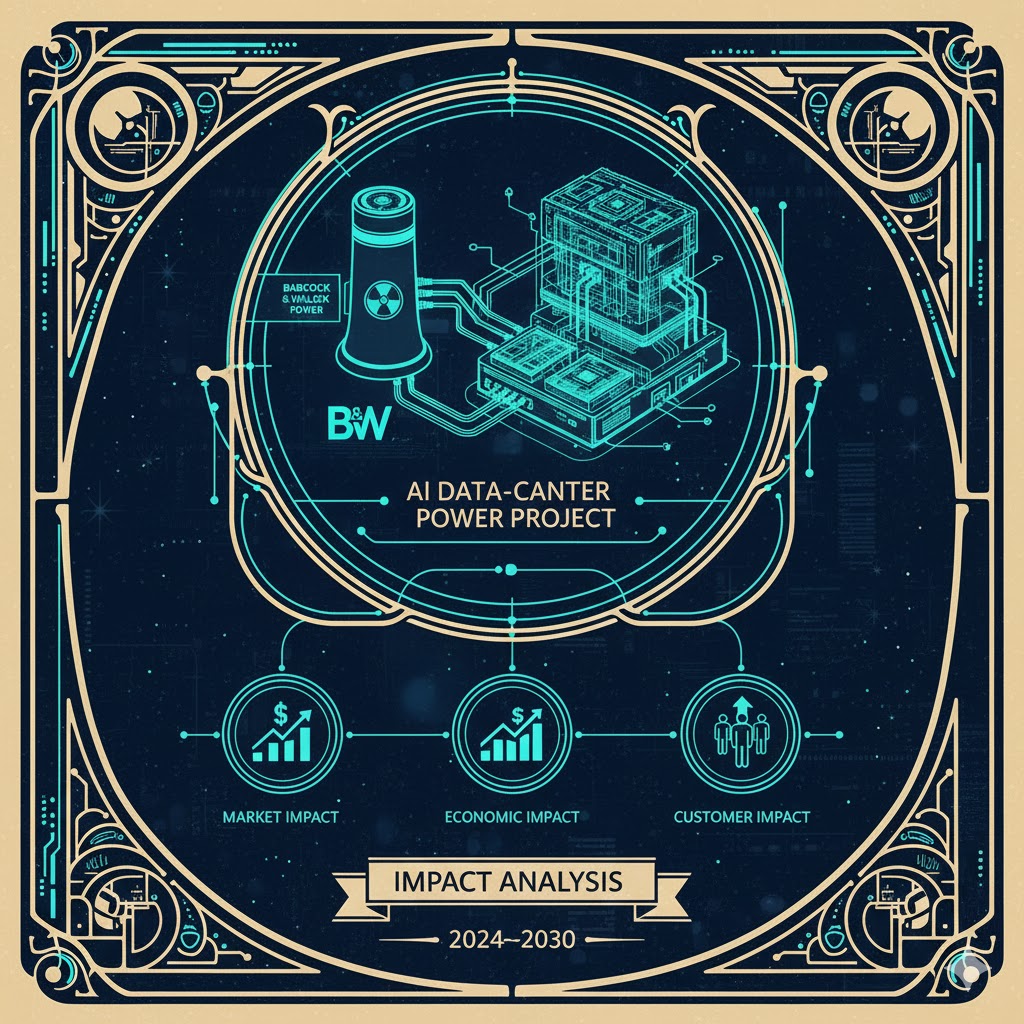
Overview of the project and AI‑energy context
Babcock & Wilcox (B&W) is a 155‑year‑old steam‑generation company best known for utility and industrial boilers. In November 2025 it announced a limited notice to proceed (LNTP) with Applied Digital for a $1.5 billion project to deliver 1 gigawatt (GW) of electric capacity for an AI “factory”. The plan calls for four 300‑MW natural‑gas‑fired plants using proven boilers and steam turbines, with operations targeted for 2028babcock.com. The full contract is expected in Q1 2026babcock.com. B&W emphasises that its steam‑based design can be deployed faster than simple‑cycle or combined‑cycle gas turbines and leverages its large installed basebabcock.com. The project has already added more than US$3 billion to B&W’s AI data‑center project pipeline, pushing the company’s global pipeline to over US$10 billionbabcock.com.
This project comes at a time when AI and cloud‐computing demand is causing explosive growth in data‑center electricity consumption. U.S. data centers used 183 TWh of electricity in 2024 (≈4 % of U.S. consumption) and consumption is projected to more than double to 426 TWh by 2030pewresearch.org. The Department of Energy warns that demand could double or triple by 2028 (325–580 TWh)stout.com. Hyperscale AI centers can consume as much electricity as 100 000 householdspewresearch.org. Natural gas currently supplies more than 40 % of the electricity used by U.S. data centers and is expected to remain the largest share through 2030pewresearch.org, making rapid deployment of gas‑fired power a central near‑term strategy.
As an affiliate, we earn on qualifying purchases.
Market impact
Surging data‑center demand drives natural‑gas buildouts
Demand forecasts indicate that U.S. data‑center power requirements will rise 22 % in 2025 and nearly triple by 2030 to about 134 GWspglobal.com. In states such as Ohio, Texas and Virginia, utilities have more than 24 GW of new demand commitmentsspglobal.com and are fast‑tracking generation. B&W’s LNTP fits this trend: by securing a dedicated 1 GW supply for a hyperscaler, it is tapping into a market characterised by long development queues for gas turbines, grid congestion and urgent demand for baseload generation.
Natural‑gas plants remain the fastest large‑scale solution. The Yes Energy summary of plant construction notes that bringing new gas‑fired plants on line typically takes 12–48 months, depending on plant type and permittingblog.yesenergy.com. Simple‑cycle turbines and reciprocating engines provide quick start‑up and load flexibility, whereas combined‑cycle plants offer higher efficiency but longer construction timestetratech.com. B&W’s steam‑cycle solution aims to combine proven technology with faster deployment than combined‑cycle unitsbabcock.com.
The market for gas power has become highly competitive. Analysts at Enverus estimate that gas‑powered generation assets changed hands at about US$1.93 million per MW in 2025—double 2024 values—because data‑center demand has increased valuationsutilitydive.com. Even technology giants are entering the market; for example, Google signed a corporate offtake for a 400‑MW gas‑fired plant with carbon‑capture in Illinois, which will create an estimated 750 construction jobs and dozens of permanent jobspowermag.com.
Expansion of B&W’s pipeline and competitive positioning
B&W’s Q3 2025 results show a 56 % increase in backlog to US$393.5 million and an 80 % expected growth in 2026 adjusted EBITDA (US$70–85 million)babcock.com. The AI‑data‑center project has added more than US$3 billion to its pipelinebabcock.com, signalling a transformational pivot towards digital‑infrastructure customers. However, B&W’s financial metrics remain pressured: third‑party analyses note negative profit margins and a heavy debt loadgurufocus.com, so the successful execution and financing of this project are critical for its balance sheet.
Competitively, B&W is not alone. Utilities such as Arizona Public Service (APS) plan to build the 2 GW Desert Sun natural‑gas plant with a subscription model that requires extra‑large customers to pay long‑term contracts covering capacity costs, protecting other customersaps.com. In Ohio, the Public Utilities Commission approved AEP Ohio’s tariff requiring large data centers to pay for at least 85 % of subscribed energy, even if unusedaep.com, with penalties for early terminationaep.com. These models indicate that dedicated power deals for data centers will increasingly involve long‑term payment obligations and risk sharing, shaping how future projects are financed.
Natural‑gas and energy‑market effects
Natural‑gas demand is rising with data‑center growth. The EIA projects Henry Hub gas prices averaging US$3.90 per MMBtu in 2026eia.gov, with base‑case forecasts from independent analysts suggesting prices could trend US$4–5 per MMBtu because of LNG exports and data‑center demandstout.com. While natural gas is expected to remain the largest share of U.S. electricity (≈40 % of generation) through 2026reuters.com, it will only account for 16 % of new generation additions through 2028utilitydive.com as renewables dominate pipelines. The mismatch between surging load additions and slower generation build‑outs has created a seller’s market for gas‑fired capacity and elevated valuations.
industrial steam turbine for power generation
As an affiliate, we earn on qualifying purchases.
As an affiliate, we earn on qualifying purchases.
Economic impact
Investment, jobs and GDP
The digital‑infrastructure boom is bringing enormous capital investment. McKinsey estimates that more than US$6.7 trillion will be invested globally in data‑center infrastructure by 2030, with over 40 % in the United Statesmckinsey.com. A typical large U.S. data center (≈250 000 ft²) can require up to 1 500 workers during construction and create over 50 high‑paying operations jobsmckinsey.com. For every direct data‑center job, about 3.5 indirect jobs are created in the surrounding economymckinsey.com. In 2023 alone, Northern Virginia’s data‑center industry generated US$31 billion in supported economic outputmckinsey.com.
Dedicated power plants also deliver economic benefits. APS notes that its Desert Sun project will generate hundreds of construction jobs and a smaller number of long‑term operational positionsaps.com. In Illinois, Google’s Broadwing gas‑plant project is projected to create approximately 750 full‑time construction jobs and support permanent jobs once operationalpowermag.com. These projects can stimulate local supply chains, increase tax revenues and attract ancillary industries. B&W’s partnership with Denham Capital to convert idled coal plants to natural gas aims to fill a projected 45 GW gap between grid capacity and data‑center demand by 2028babcock.com, potentially repurposing stranded assets and preserving jobs in coal‑plant communities.
Nevertheless, job promises should be viewed critically. A Good Jobs First study of data‑center subsidies finds that almost half of state incentives do not require job creation, and those that do often mandate only 50 or fewer jobsgoodjobsfirst.org. It notes that companies sometimes claim hundreds of jobs but are legally obligated to create far fewer, with many positions temporary or subcontractedgoodjobsfirst.org. Local hiring is rarely stipulatedgoodjobsfirst.org, meaning that some economic benefits may leak to non‑local labour forces. Policymakers must therefore balance incentives against verifiable job outcomes.
Energy costs and grid stress
Rapid data‑center growth strains the grid and raises energy prices. A joint Carnegie Mellon University and North Carolina State University study projects that data‑center and cryptocurrency demand could drive wholesale electricity costs 8 % higher nationally by 2030, with a 25 % increase in central and northern Virginiaenergy.cmu.eduenergy.cmu.edu. Without intervention, this demand could keep 25 GW of aging coal plants operatingenergy.cmu.edu. Local grid operators already feel the pressure; in the PJM region, data centers added US$9.3 billion to capacity market costs, raising residential bills by US$18/month in western Maryland and US$16/month in Ohiopewresearch.org. Studies cited by the Pew Research Center foresee an 8 % increase in average U.S. electricity bills by 2030 due to data centers and crypto miningpewresearch.org. The typical U.S. household bill was US$142 per month in 2024pewresearch.org, so bill increases could materially impact consumers.
Natural‑gas‑centric solutions also risk prolonging carbon emissions. The World Resources Institute warns that data‑center growth could push U.S. consumption to 300–400 TWh per year by 2030, causing higher energy bills, increased emissions and reliability issueswri.org. It cautions that converting coal plants to natural gas and building new gas plants could lock in emissions for decadeswri.org. Environmental groups such as the Southern Environmental Law Center argue that much of the projected data‑center demand is speculative and that massive gas build‑outs could saddle Southern consumers with unnecessary infrastructure and climate risksselc.org.
gas-fired power plant control system
As an affiliate, we earn on qualifying purchases.
As an affiliate, we earn on qualifying purchases.
Customer impact
Benefits for hyperscalers and data‑center operators
For customers like Applied Digital, B&W’s project offers a dedicated, redundant power supply tailored to high‑density AI workloads. By using proven steam and boiler technology, the project aims to deliver power faster than conventional combined‑cycle plants, giving Applied Digital a speed‑to‑market advantage and reliability for continuous 24/7 loadsbabcock.com. Operating under a 15‑year lease, Applied Digital’s existing campuses (such as Polaris Forge) generate billions in revenue from AI tenantsir.applieddigital.com, making secure power integral to their business model. B&W’s solution could reduce energy purchase uncertainty and allow hyperscalers to concentrate on compute capacity.
However, dedicated on‑site or near‑site generation ties customers to long‑term fuel and capacity payments. The AEP Ohio tariff requires large data‑center customers to pay at least 85 % of subscribed energy regardless of actual usage and imposes exit fees for early cancellationaep.com. APS’s subscription model similarly obligates data‑center operators to fund capacity costs over long contractsaps.com. This transfers investment risk to hyperscalers, ensuring they shoulder infrastructure costs rather than shifting them onto residential or small‑business ratepayers. Customers will need to hedge natural‑gas price exposure and may face higher costs if gas prices rise.
Implications for residential and small‑business customers
Regulators are increasingly trying to protect other customers from the costs of data‑center expansion. AEP Ohio’s tariff shields existing customers by enforcing the 85 % minimum payment ruleaep.com. APS’s “growth pays for growth” strategy ensures that extra‑large users fund Phase 2 of the Desert Sun plant, while residential customers benefit from improved reliability without paying for unused capacityaps.com. Such mechanisms may become standard as more utilities seek to integrate large data centers without burdening ratepayers.
Nevertheless, the broader demand surge still impacts consumers. Capacity market costs and transmission upgrades associated with data centers have already increased residential bills in multiple statespewresearch.org. Nationally, energy bills could rise 8 % by 2030pewresearch.org, and local increases may be higher in regions like Northern Virginiaenergy.cmu.edu. Consumers also face indirect impacts from higher natural‑gas prices and the risk of over‑building gas infrastructure that becomes stranded if demand assumptions prove unrealistic.
As an affiliate, we earn on qualifying purchases.
Risk and opportunity analysis
Execution risk: The B&W project is still at the LNTP stage; final release is expected in early 2026babcock.com. Regulatory approvals, financing, supply‑chain delays and gas price volatility could derail or postpone the project. The specialized steam‑cycle design must demonstrate that it can indeed be deployed faster than competing solutions and meet stringent reliability requirements.
Financial risk: B&W’s debt burden and thin profitabilitygurufocus.com mean that successful project execution is critical to maintaining investor confidence. Cost overruns or delays could strain cash flow. Applied Digital, the customer, is projecting rapid revenue growth but is not yet profitableinvesting.com, so its ability to meet long‑term payment obligations should be monitored.
Market risk: Analysts warn of overbuild risk reminiscent of the early 2000s gas boom; utilities forecast exponential demand growth, but actual demand may fall short, leaving stranded assetsutilitydive.com. Environmental groups challenge speculative demand projections and the climate impacts of methane gasselc.org. If AI‑compute efficiency improves or regulatory policy changes, long‑lived gas assets could become liabilities.
Opportunity: The project positions B&W at the forefront of a large, fast‑growing market. Its pipeline of more than US$3 billion in AI projectsbabcock.com offers potential revenue diversification, and partnerships with investors such as Denham Capital provide financing capacitybabcock.com. Should the steam‑cycle concept prove faster and more reliable, B&W could replicate the model for other hyperscalers. There is also potential to integrate carbon‑capture or hydrogen‑ready designs, aligning with corporate decarbonisation goals.
Conclusion
The Babcock & Wilcox/Applied Digital project exemplifies the tension between skyrocketing data‑center electricity demand and the need for reliable, low‑carbon power. In the short term, natural‑gas plants offer the only scalable, dispatchable option, and B&W’s steam‑cycle design promises faster deployment than traditional gas turbinesbabcock.com. Market valuations for gas generation are risingutilitydive.com and utilities are adopting innovative tariff structures to ensure data centers pay for the capacity they requireaep.comaps.com. At the same time, policymakers and environmental advocates warn that unchecked data‑center growth could lock in fossil‑fuel infrastructure, drive up electricity bills and produce limited local jobsenergy.cmu.edugoodjobsfirst.org.
For investors, the project offers significant upside if B&W executes well and demand forecasts materialise. For the economy, data‑center power projects bring capital investment, support thousands of construction jobs and generate broader GDP growthmckinsey.comaps.com, yet they also raise wholesale power prices and may prolong fossil‑fuel useenergy.cmu.eduwri.org. Customers, both hyperscalers and households, will see higher energy costs but also improved reliability if subscription models fairly allocate costs. Looking ahead, balancing speed, cost, climate impacts and fairness will determine whether the AI‑power boom delivers sustainable benefits or simply shifts costs and risks onto future generations.
Fall Picks
fall essentials
As an affiliate, we earn on qualifying purchases.