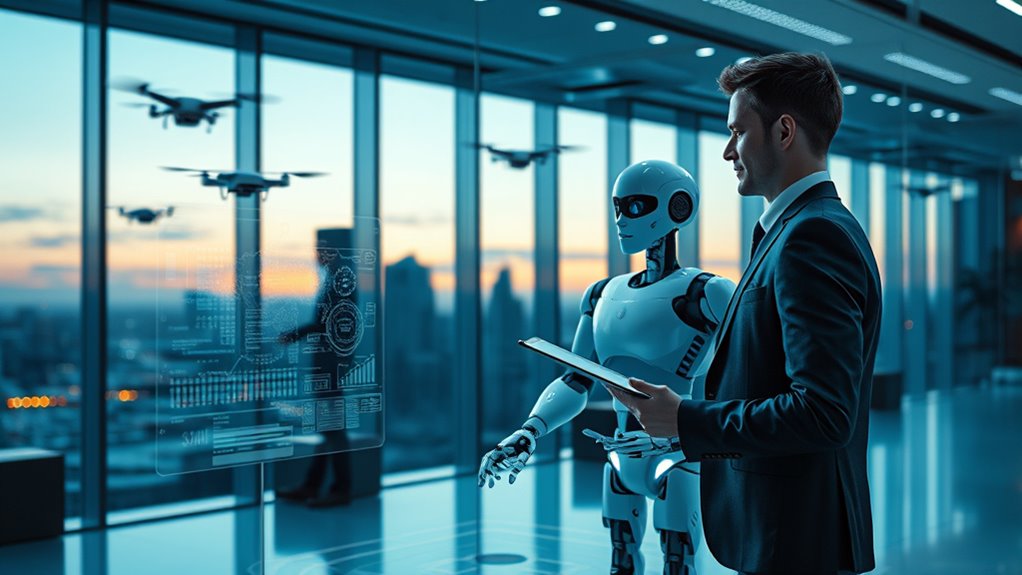

Beyond chatbots, autonomous AI agents are transforming the future of work by offering smarter, adaptable digital deputies that handle complex tasks, coordinate with other agents, and support decision-making. These agents improve efficiency, free up employee focus, and enable seamless collaboration across platforms. Powered by advanced tech like multiagent systems and real-time intelligence, they are reshaping workplaces. To discover how these innovations will impact your work environment, consider exploring the evolving role of AI agents.
Key Takeaways
- Autonomous AI agents utilize advanced NLP, decision-making, and multi-platform capabilities to perform complex tasks beyond scripted chatbots.
- Digital deputies handle routine work, automate processes, and support workplace efficiency, transforming organizational operations by 2025.
- Automation improves productivity, decision speed, and customer support, with AI expected to displace millions of jobs while boosting worker efficiency.
- Human-AI collaboration requires ethical management, robust security, and seamless integration to maximize benefits and address worker well-being concerns.
- Rapid growth in AI investment and adoption is reshaping roles and workflows, driving the future evolution of work environments and talent development.

AI Voice Recorder with Playback, Digital Voice Recorder with Unlimited Transcription, Summary, Translation, 80GB Voice to Text Meeting Recorder and Transcriber, AI Recorder for Lectures, Interviews
【Real-Time Voice-to-Text】The HUREWA AI voice recorder features advanced free voice-to-text (no time limit), supporting 13 major languages. Users…
As an affiliate, we earn on qualifying purchases.
As an affiliate, we earn on qualifying purchases.
Defining AI Agents: Moving Beyond Traditional Chatbots

While traditional chatbots are limited to scripted responses and narrow tasks, AI agents represent a significant evolution in artificial intelligence. They feature advanced natural language understanding, allowing them to execute complex, multi-step tasks beyond simple interactions. Unlike chatbots, which rely on static decision trees and predefined responses, AI agents use real-time decision-making and context awareness to adapt dynamically to new information and changing environments. They can handle multi-platform interactions, break down complex commands, and autonomously coordinate activities like booking trips or researching data. With greater autonomy, AI agents react flexibly to user needs, sustain longer, more meaningful conversations, and synthesize knowledge from diverse sources. This makes them capable of managing intricate processes that go far beyond the capabilities of traditional chatbots. AI agent capabilities continue to expand, transforming how automation and user interaction are approached in various industries, including home theatre projectors and other advanced technologies. Additionally, advancements in natural language processing are fueling these capabilities, enabling AI agents to better understand and respond to human input. Furthermore, ongoing research into AI security vulnerabilities emphasizes the importance of developing safe and trustworthy autonomous systems.

Agentic AI Engineering System: The End of Prompt Engineering | Architecting State-Aware Agents and Autonomous Swarms
As an affiliate, we earn on qualifying purchases.
As an affiliate, we earn on qualifying purchases.
The Role of Autonomous Digital Deputies in Workplaces
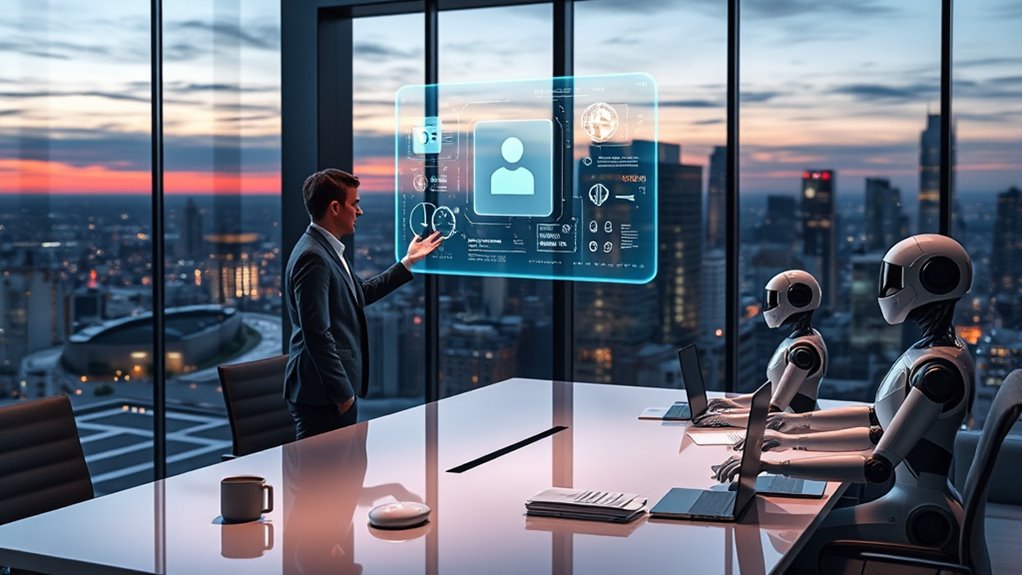
Autonomous digital deputies handle routine tasks, freeing you to focus on strategic work. They improve workplace efficiency by delegating responsibilities and managing complex workflows. As you collaborate with these systems, you’ll find that human-AI teamwork boosts productivity and innovation. They are powered by AI/ML algorithms that enable self-configuring, self-healing, and self-securing operations, which helps maintain system stability with minimal human intervention. Incorporating adaptive learning capabilities allows these deputies to evolve and optimize their functions over time, further enhancing their effectiveness. Additionally, integrating sample development techniques can help tailor these systems to specific project needs, ensuring they align with core personality traits to facilitate better interaction and understanding. Emphasizing continuous improvement strategies ensures these autonomous systems remain resilient and adaptable in dynamic work environments.
Tasks Automation and Delegation
Tasks automation and delegation are transforming workplaces by enabling digital deputies to handle routine activities efficiently. Data entry leads the way with 38%, followed by document creation and organization at 32%. Lead management and inventory tasks are also commonly automated, at 30% and beyond. Strategic planning sees potential, with about 50% of activities possibly automated, though only 15% are now. Network-related tasks are increasingly targeted; Gartner predicts over half of enterprise network activities will be automated by 2026. CFOs are adopting AI for forecasting, with 28% already using it and 39% planning to. These digital deputies free you from repetitive tasks, allowing you to focus on strategic and creative work. As automation grows, workplaces become more efficient, supporting better decision-making and operational reliability. Additionally, the integration of autonomous agents in various sectors, including logistics and customer service, reflects the expanding role of automated systems in enhancing productivity.
Enhancing Workplace Efficiency
Autonomous agents are transforming workplaces by analyzing data and making decisions on your behalf, substantially boosting efficiency. This shift helps you work smarter, not harder, by automating routine tasks and enhancing decision-making. Companies adopting these agents see a 72% increase in feelings of productivity. Some sectors, like tech and retail, use AI more extensively, giving early adopters a competitive edge. Here’s how autonomous deputies impact your work:
| Benefit | Challenge |
|---|---|
| Improved resource allocation | Lower employee well-being |
| Faster decision-making | Increased electronic monitoring |
| Enhanced frontline productivity | Impact on job satisfaction |
Moreover, the integration of autonomous agents can lead to increased automated surveillance, raising concerns about how monitoring affects worker health, safety, and satisfaction. Understanding the regional legal resources available can help organizations navigate compliance and protect employee rights as these technologies become more prevalent. Additionally, the data-driven decision-making capabilities of autonomous agents can improve operational efficiency but require careful management to ensure ethical use. Incorporating ethical guidelines is essential to address potential misuse and maintain trust in automated systems. Recognizing the importance of home decor elements can also contribute to creating more comfortable and engaging work environments, further supporting employee well-being. Considering the potential for health impacts from constant digital monitoring is crucial to developing balanced policies.
Human-AI Collaboration
As workplaces harness AI to boost efficiency, collaboration between humans and digital agents becomes increasingly essential. Autonomous digital deputies are designed to perform specific tasks independently while understanding your intent through advanced AI, NLP, and machine learning. They work alongside you, automating routine processes and providing insights from large datasets to support decision-making. These agents can handle high volumes of work without fatigue, improving scalability and reducing errors. By taking on mundane tasks, they free you to focus on strategic, creative, or complex issues. This collaboration enhances your overall work experience, making processes smoother and more efficient. The market for AI-driven digital workers is expected to grow significantly, ensuring ongoing innovation and integration in various industries. Additionally, implementing these agents with robust security protocols is essential to protect sensitive data and maintain trust. Moreover, addressing algorithmic bias is crucial to ensure fair and equitable treatment of all users and prevent unintended discrimination. Proper data quality management and workflow compatibility are vital for maximizing the effectiveness of these digital deputies. Ensuring seamless workflow integration is also key to achieving optimal performance and user satisfaction. Investing in training and support for users can further enhance the successful adoption of autonomous digital deputies, enabling organizations to realize their full potential. However, integrating these digital deputies requires careful attention to data quality and workflow compatibility, ensuring they complement your efforts without disrupting existing systems.
AI Multi-Platform Scaling Blueprint: Automate Sales, Inventory, Marketing & Customer Support Across Amazon, Etsy, Shopify & Walmart (The AI-Powered Marketplace Seller)
As an affiliate, we earn on qualifying purchases.
As an affiliate, we earn on qualifying purchases.
How AI Agents Are Transforming Workplace Operations in 2025

In 2025, AI agents are fundamentally reshaping workplace operations by taking on specialized roles that boost efficiency and decision-making. They act as digital deputies, handling tasks like processing payments, detecting fraud, and managing logistics autonomously. Unlike traditional AI, these agents are designed for specific functions, enabling seamless integration into daily workflows. Enterprises are orchestrating multiple AI agents and models to coordinate complex tasks, creating a synchronized digital workforce. As adoption accelerates, a strong compliance framework guarantees accountability while scaling these systems. The market valuation is projected to reach $7.6 billion, reflecting rapid growth. AI agents also enhance talent development by automating logistics and personalizing training. Moreover, their ability to synthesize data and collaborate with humans is transforming how organizations operate in 2025. Relationship skills like active listening and empathy are increasingly important for effective human-AI collaboration. Additionally, the integration of remote collaboration tools is facilitating these advancements across geographically dispersed teams. Developing a clear understanding of human-AI interaction principles is essential for optimizing these partnerships and ensuring productivity. Furthermore, insights from Vetted – ID Times highlight the importance of understanding specialized roles in evolving digital workforces.

Natural Language Processing with Transformers, Revised Edition
As an affiliate, we earn on qualifying purchases.
As an affiliate, we earn on qualifying purchases.
Enhancing Efficiency and Productivity With Ai-Driven Tasks
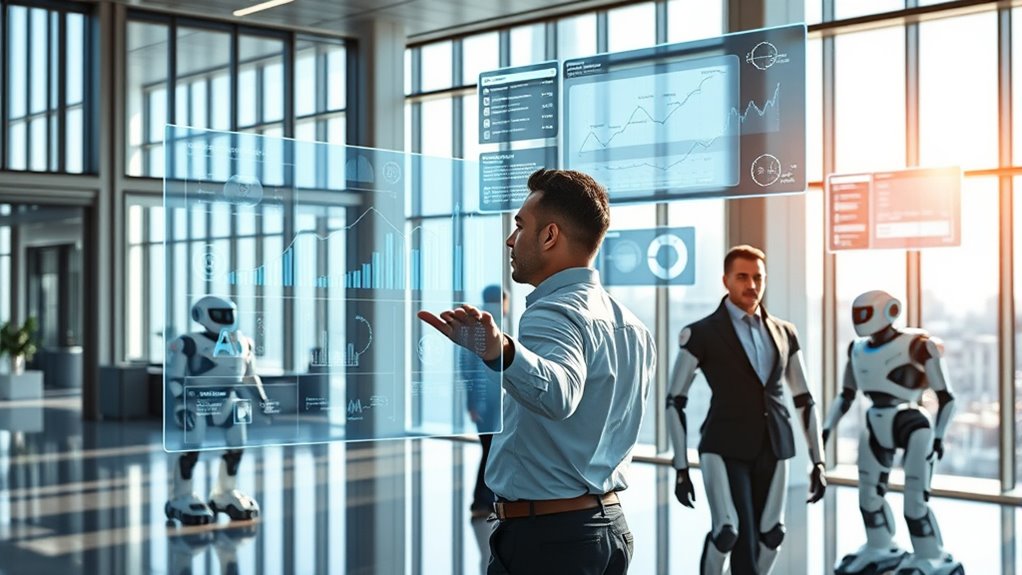
AI-driven tasks are revolutionizing workplace efficiency by automating routine activities like scheduling meetings and generating reports. This saves you time and reduces errors, allowing you to focus on higher-value tasks. AI-powered customer support agents now handle more inquiries per hour, improving service speed and quality. Automation also streamlines data analysis, enabling faster decision-making and better use of big data, which boosts overall productivity. Generative AI tools enhance performance by up to 66%, especially in complex scenarios. They help integrate multiple data sources, reducing analysis time and accelerating project delivery. Workforce efficiency increases as AI augments employee capabilities, enabling more tasks to be completed in less time. As AI market growth accelerates, organizations are increasingly investing in these tools to optimize workflows and stay competitive. Additionally, understanding concepts like the Law of Attraction can foster a positive mindset that complements technological advancements and enhances overall workplace well-being. Recognizing the economic growth factors in Indonesia can also inspire innovative uses of AI to support national development goals.
The Impact of AI Agents on Employee Focus and Decision-Making

AI agents free you from routine tasks, so you can focus on complex, strategic work. They speed up decision-making and reduce mental overload, allowing you to prioritize high-impact activities. As a result, your role shifts toward oversight and creative problem-solving, enhancing overall focus and effectiveness.
Enhanced Focus on Complex Tasks
As AI agents take on routine tasks, you can redirect your focus to more complex and strategic work. This shift allows you to engage in higher-value activities like analysis, innovation, and problem-solving. Here are four ways AI enhances your capacity:
- Enables in-depth exploration of nuanced issues requiring human judgment and creativity.
- Reduces cognitive overload by handling repetitive workflows, freeing mental space.
- Provides clear role boundaries and reliable execution through autonomous systems.
- Supports tackling high-stakes decisions by offering insights and reducing errors.
With AI managing routine work, you’re better positioned to contribute to critical projects, develop skills, and add strategic value—driving both personal growth and organizational success.
Streamlined Decision Processes
Streamlined decision processes are transforming how organizations operate by enabling faster, more accurate choices. AI agents analyze vast data sets, offering actionable insights that improve decision accuracy. They identify patterns, helping you anticipate challenges and spot opportunities early. By automating routine tasks, AI frees you to focus on strategic decisions and innovation. Real-time coaching from AI agents enhances your adaptability, providing immediate feedback during tasks. They also support quicker review cycles—reducing times by up to 60%—and assist in resource allocation through predictive analytics. AI-driven trend identification allows you to optimize workflows and improve overall efficiency. As AI becomes integrated into core strategies, it empowers smarter decision-making, boosting productivity and fostering more agile, data-informed organizations.
Reduced Cognitive Load
By automating routine tasks and providing real-time performance insights, AI agents help reduce the mental effort required for daily work. This eases cognitive load and sharpens focus. Here’s how they do it:
- Automate secondary responsibilities, minimizing distractions.
- Assist in task prioritization with data-driven insights.
- Offload cognitive tasks, freeing mental resources for critical thinking.
- Use adaptive gamification to make tasks engaging and less mentally taxing.
AI tools also help manage emotional states, reducing stress and anxiety, which further boosts focus. By continually evaluating performance, AI ensures you stay on track without feeling overwhelmed. This combination of automation, personalization, and emotional regulation enables you to work smarter, not harder, and makes decision-making faster and more effective.
Consumer Preferences: Why AI Agents Are Gaining Popularity

Why are AI agents rapidly gaining popularity among consumers? Because they deliver faster responses and round-the-clock availability, meeting your need for immediate support. Over half of consumers prefer chatting with bots for quick service, and nearly half find it hard to tell AI from human reps, enhancing trust. AI agents handle complex issues independently, surpassing traditional chatbots, and many believe these agents can develop genuine empathy. Expectations are rising; 68% want chatbots with expertise matching top professionals. Additionally, AI-powered assistants like Siri, Alexa, and Google Assistant are already part of daily life for 75% of smartphone users. As adoption increases—projected to hit 85% among enterprises by 2025—it’s clear AI agents are shaping a new, seamless customer experience that appeals to your evolving preferences.
Technological Breakthroughs That Power Modern AI Agents
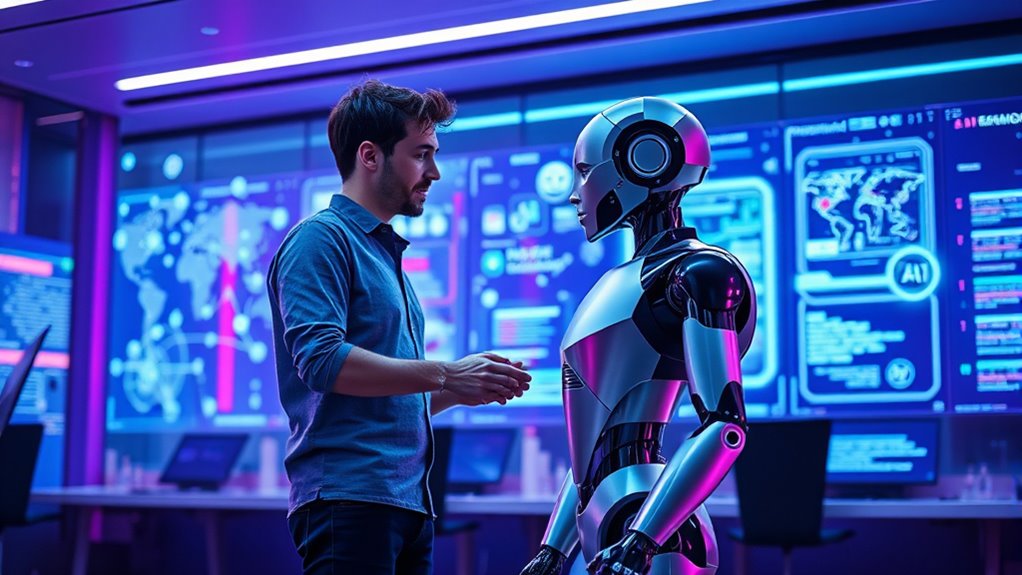
You’ll find that advanced natural language processing enables AI agents to understand and generate more accurate, nuanced responses. Multiagent system collaboration allows these agents to work together seamlessly, tackling complex tasks more efficiently. Together, these breakthroughs are transforming how AI agents operate across various industries.
Advanced Natural Language Processing
Have you ever wondered what drives the impressive capabilities of modern AI agents? Advanced Natural Language Processing (NLP) is at the core. Here’s how it powers these systems:
- Transformer architectures like GPT-4 handle complex language tasks with sophistication.
- Pre-training on massive datasets makes models scalable and adaptable across industries.
- Bidirectional models like BERT provide accurate contextual understanding, crucial for sentiment analysis.
- Real-time translation and processing facilitate instant responses and cross-language communication.
These breakthroughs enable AI agents to understand, generate, and respond naturally. They support real-time communication, enhance global accessibility, and drive innovation across sectors. As NLP evolves, it’s transforming how AI interacts with humans, making conversations more seamless and intelligent.
Multiagent System Collaboration
Ever wondered how multiple AI agents work together seamlessly to accomplish complex tasks? Multiagent Systems (MAS) consist of autonomous agents that sense, learn, and act within a shared environment. These agents communicate through protocols like message passing and shared memory, coordinating to achieve common goals. No central controller is needed; instead, agents collaborate through decentralized decision-making, task division, and conflict resolution. Specialization allows each agent to focus on specific functions, increasing efficiency. Thanks to distributed intelligence and emergent behaviors, MAS can handle complex problems like traffic management, supply chain logistics, and disaster response. As more agents join, the system scales effortlessly, offering improved robustness and resource allocation. This technological breakthrough powers smarter, more adaptable AI ecosystems across industries.
Multiagent Systems: Collaboration and Coordination in the Workplace

Multiagent systems play a crucial role in enhancing workplace collaboration and coordination by enabling multiple autonomous entities to work together toward shared objectives. They facilitate:
- Information Sharing: Agents exchange data, maintaining collective awareness and supporting unified goals.
- Role Specialization: Each agent develops expertise in specific areas, contributing to overall success.
- Joint Decision-Making: Agents build consensus, aligning actions for ideal results.
- Resource Pooling: Computing resources are distributed efficiently based on system needs.
These mechanisms improve efficiency, resilience, and adaptability in office environments. They automate workflows, solve complex problems collaboratively, and facilitate effective human-machine interaction. As a result, multiagent systems boost productivity and enable organizations to respond swiftly to changing work demands, driving innovation across industries.
AI Agents as Catalysts for Talent Development and Learning
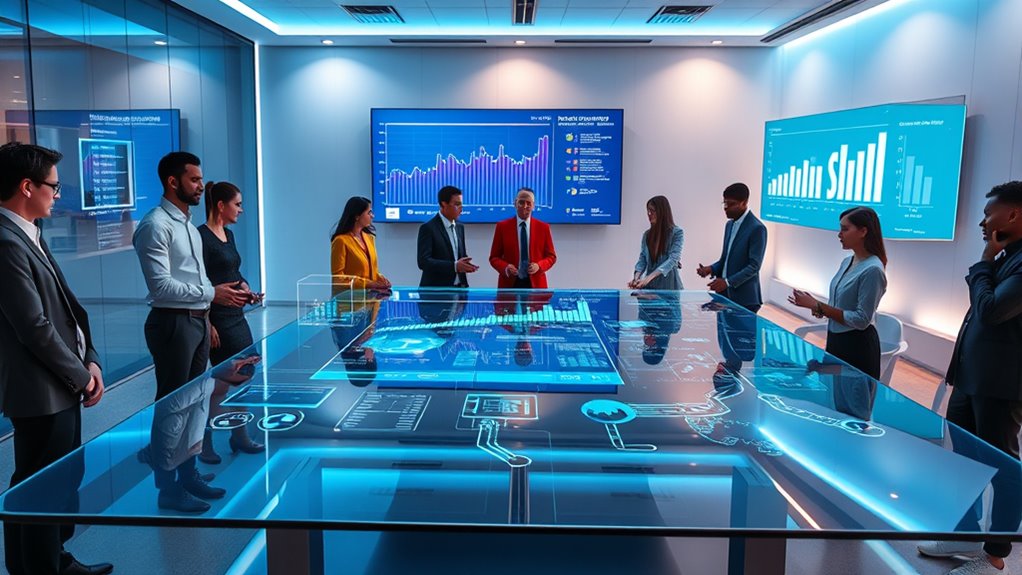
AI agents are transforming talent development and learning by acting as personalized guides and support systems. They adapt content to your skill level and learning pace, increasing engagement and knowledge retention. Real-time feedback helps you immediately identify strengths and areas for improvement, while multimedia modules support diverse learning styles. Customized learning plans promote continuous professional growth aligned with organizational goals. Additionally, AI agents automate routine tasks like scheduling, managing training sessions, and updating materials, reducing administrative burdens. They identify skill gaps by analyzing performance data, suggesting targeted training, and tracking progress to adjust content dynamically. In collaborative environments, AI agents facilitate peer collaboration, coordinate group activities, and optimize resource distribution. This integration accelerates skill development, enhances agility, and prepares you for evolving market demands.
Future Trends: Automation, Specialization, and the Evolution of Work
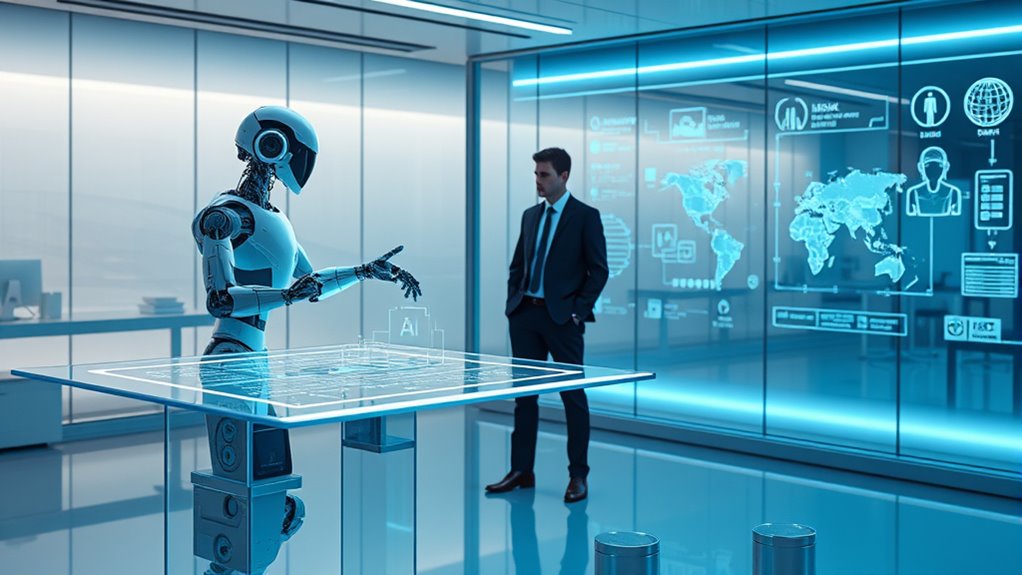
As automation continues to accelerate, organizations are investing heavily in AI technologies to streamline operations and boost productivity. You’ll see this reflected in several key trends:
- Increased AI investments, with 92% of companies planning to expand their AI budgets over three years.
- Job displacement, as AI could replace 300 million roles worldwide, especially repetitive tasks.
- Productivity gains, with 66% of knowledge workers experiencing improved efficiency due to automation.
- Sector growth, *particularly* in industrial automation, expected to increase from $147 billion in 2019 to over $264 billion by 2026.
This shift drives specialization, reshaping roles to focus on uniquely human skills, and transforms work processes to maximize technological benefits, signaling a major evolution in the future of work.
Frequently Asked Questions
How Do AI Agents Differ From Advanced Chatbots in Workplace Applications?
You’ll find that AI agents differ from advanced chatbots by their higher autonomy, ability to handle complex tasks, and adaptive learning. Unlike chatbots, which rely on scripts and predefined rules, AI agents make decisions independently, automate entire processes, and improve over time. They require less maintenance, adapt to changing environments, and can integrate with multiple systems, making them more versatile and effective in workplace applications.
What Are the Security Risks Associated With AI Agents in Business Environments?
You need to recognize that AI agents pose significant security risks in business. They can lack encryption, be tricked into storing false info, or escalate privileges, risking unauthorized access. Data privacy issues like overexposure and breaches are common, and their autonomous nature makes errors harder to detect. Implementing strict access controls, real-time detection, logging, and regular audits helps you mitigate these systemic vulnerabilities.
How Do Organizations Train and Implement AI Agents Effectively?
To train and implement AI agents effectively, you start by clearly defining your business goals and selecting tasks suited for automation. Use high-quality, diverse data and simulate real scenarios during training. Establish governance policies and involve stakeholders to align expectations. Integrate AI with existing systems, provide staff training, and continuously monitor performance. Regular updates, feedback loops, and adherence to compliance standards help guarantee your AI agents deliver reliable, valuable results over time.
Can AI Agents Fully Replace Human Decision-Making in Complex Tasks?
You might wonder if AI agents can fully replace human decision-making in complex tasks. While AI excels at processing data and automating routine work, it still lacks human judgment, intuition, and ethical understanding needed for nuanced decisions. So, in critical areas, your role remains essential. AI acts as a powerful tool, but it can’t entirely replicate the depth, empathy, and strategic thinking you bring to complex decisions.
What Ethical Considerations Arise From Deploying Autonomous AI Agents at Work?
When deploying autonomous AI agents at work, you must consider ethics carefully. You’re responsible for ensuring privacy, preventing bias, and maintaining transparency. It’s crucial to establish clear accountability for errors and ensure AI decisions align with human values. You also need to address societal impacts like job displacement and foster trust through ethical standards, regulation, and user education. Balancing innovation with ethical responsibilities helps create a fair and trustworthy AI-enabled workplace.
Conclusion
As you see, AI agents are reshaping your work environment, making tasks smoother and more efficient. Imagine a marketing team where AI-driven digital deputies handle data analysis, freeing you to focus on strategy. This shift boosts productivity and decision-making, helping you grow professionally. Embracing these advancements means you’re not just adapting but thriving in the future of work, where collaboration between humans and AI creates smarter, more agile workplaces.