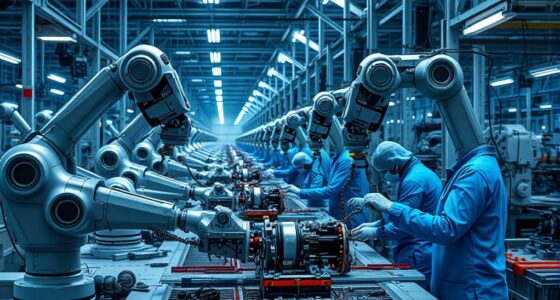
AI’s rapid growth is putting increasing pressure on America’s power grid. Data centers and AI hardware demand huge amounts of energy, with projections showing demand could reach 580 TWh annually by 2028. This surge strains existing infrastructure, especially in states like California and Texas, risking grid stability. Without expanded renewable energy and better management, the situation could worsen. Stay tuned to learn how experts are working to address these challenges and keep the grid resilient.
Listen free for 30 days with Audible
Thousands of audiobooks and originals — cancel anytime.
As an affiliate, we earn on qualifying purchases.
Key Takeaways
- AI hardware demand could use up to 20% of global data center electricity, significantly increasing pressure on U.S. power grids.
- Growing AI server energy use is projected to reach 40–580 TWh annually, stressing grid capacity and reliability.
- Increasing data center energy consumption, driven by AI, risks surpassing 945 TWh by 2030, mainly fueled by fossil fuels.
- Utilities in key states like California and Texas face challenges managing grid congestion amid rising AI energy demands.
- Large-scale investments in renewable energy by companies aim to offset AI’s growing energy consumption and mitigate grid strain.
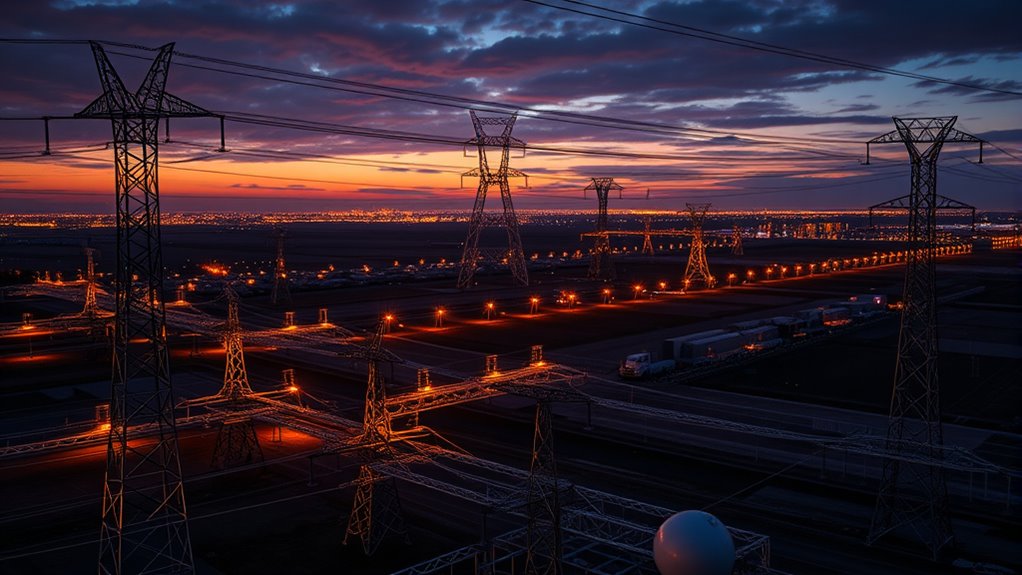
As artificial intelligence continues to expand, it’s placing increasing pressure on America’s power grid. The demand for AI hardware in 2025 is projected to reach between 5.3 and 9.4 gigawatts, which translates to 46–82 terawatt-hours of electricity annually. To put that into perspective, this is comparable to the total energy consumption of entire countries like Switzerland, Austria, or Finland. Specialized AI hardware could account for up to 20% of global data center electricity use, which is estimated at around 415 TWh in 2024. As AI’s energy needs grow rapidly, there’s little sign of hardware power consumption slowing down. US data centers alone are expected to consume about 88 TWh annually by 2030, roughly 1.6 times the electricity used by New York City. Specialized AI hardware may account for 11%–20% of total data center energy use, highlighting the sector’s significant contribution to overall energy consumption. The surge in AI-related server energy use is striking. It jumped from just 2 TWh in 2017 to 40 TWh in 2023. Looking ahead, AI workloads are forecasted to drive US data center electricity demand to between 325 and 580 TWh by 2028, making up around 7% to 12% of total US electricity consumption. Most of this increase comes from server and GPU energy use, while network, storage, and infrastructure demands stay relatively stable. Improving energy efficiency, especially through AI-specific hardware like GPUs, offers the best chance to curb overall consumption. Still, the growth in AI energy use plays a dual role: it is fueling demand, but also inspiring innovations in efficiency. The environmental impact is significant. Global data center energy demand is expected to more than double from 2024 to 2030, reaching nearly 945 TWh. About 60% of this increase is likely to be powered by fossil fuels, adding roughly 220 million tons of CO2 emissions. The emissions from this growth are comparable to driving a gas-powered car 1,000 billion miles. Without a rapid shift to renewables, AI’s energy expansion will deepen the global carbon footprint. Energy-intensive hardware and data processing demand are key drivers of this trend. This escalating demand strains power grids, especially in states with major data center hubs like California, Texas, and Virginia. Utilities face challenges in managing congestion, reliability, and integrating intermittent renewable sources. Although immediate crises aren’t imminent, the trend demands careful planning and regulation. Companies like Microsoft are investing heavily in renewable energy, committing to purchase over 10 GW by 2030, but broader efforts are essential to balance AI’s growth with a sustainable energy future.
energy-efficient GPU for data centers
As an affiliate, we earn on qualifying purchases.
As an affiliate, we earn on qualifying purchases.
Frequently Asked Questions
How Does AI Specifically Increase Energy Consumption?
AI increases energy consumption because it requires high-performance data centers with powerful GPUs and TPUs running continuously for training and updates. You’ll notice these processes demand massive electricity, especially for cooling and maintenance. As AI models grow larger and need retraining often, their energy needs multiply. This increased demand strains the power grid, especially since much of the energy still comes from fossil fuels, further boosting overall consumption and emissions.
What Regions Are Most Impacted by Grid Strain?
You should know that the Midwest, Texas, and the Northeast are most impacted by grid strain. The Midwest faces supply shortfalls during extreme weather, while Texas struggles with data center-driven demand and risk of blackouts. The Northeast experiences high demand from rapid data center growth and aging infrastructure. These regions face rising peak loads, infrastructure challenges, and the need for urgent upgrades to prevent outages during heat waves or extreme conditions.
Are There Any Current Solutions to Balance AI Demand?
Think of AI demand as a rising tide threatening to flood the grid. To balance it, you can harness AI itself—using smart scheduling to shift loads to off-peak hours, and optimize cooling and hardware efficiency. Partnerships with renewable energy providers act as freshwater sources to sustain the waves. Implementing smart grids and infrastructure upgrades serve as levees, protecting the system from overflow while supporting AI’s growth sustainably.
How Does AI Affect Renewable Energy Integration?
AI considerably improves renewable energy integration by optimizing grid operations, managing demand, and balancing supply from intermittent sources like wind and solar. It enables virtual power plants, predictive maintenance, and real-time responses to fluctuations, enhancing grid stability and efficiency. As you adopt AI, it helps reduce emissions and lowers costs. Just make certain that AI’s energy demands are met with clean sources to maximize environmental benefits and prevent grid stress.
What Role Do Policymakers Play in Managing These Demands?
Policymakers hold the key to managing AI’s growing energy demands. They craft regulations that promote energy efficiency, incentives for renewables, and grid modernization. They fund infrastructure upgrades and support smart technologies, making the grid resilient. By implementing demand response programs and fostering collaboration, they steer the system away from overloads. Your role involves understanding these policies and advocating for sustainable practices that keep your power reliable and eco-friendly.
renewable energy backup for data centers
As an affiliate, we earn on qualifying purchases.
As an affiliate, we earn on qualifying purchases.
Conclusion
If AI keeps demanding more energy, you’ll see the power grid buckle like a wild horse caught in a storm, sparks flying and lights flickering wildly. The strain will turn your everyday life into a blackout nightmare, with cities plunging into darkness and your devices dying in the blink of an eye. Without urgent action, the grid might crumble like a house of cards, leaving us all stranded in a future where power is just a distant memory.
uninterruptible power supply for servers
As an affiliate, we earn on qualifying purchases.
As an affiliate, we earn on qualifying purchases.
As an affiliate, we earn on qualifying purchases.
Flea & tick season Picks
flea and tick prevention
As an affiliate, we earn on qualifying purchases.