TL;DR

Get business pricing on tech for your team
- Business-only prices and quantity discounts
- Tax-exempt purchasing
- Multiple users, one account, clear invoices
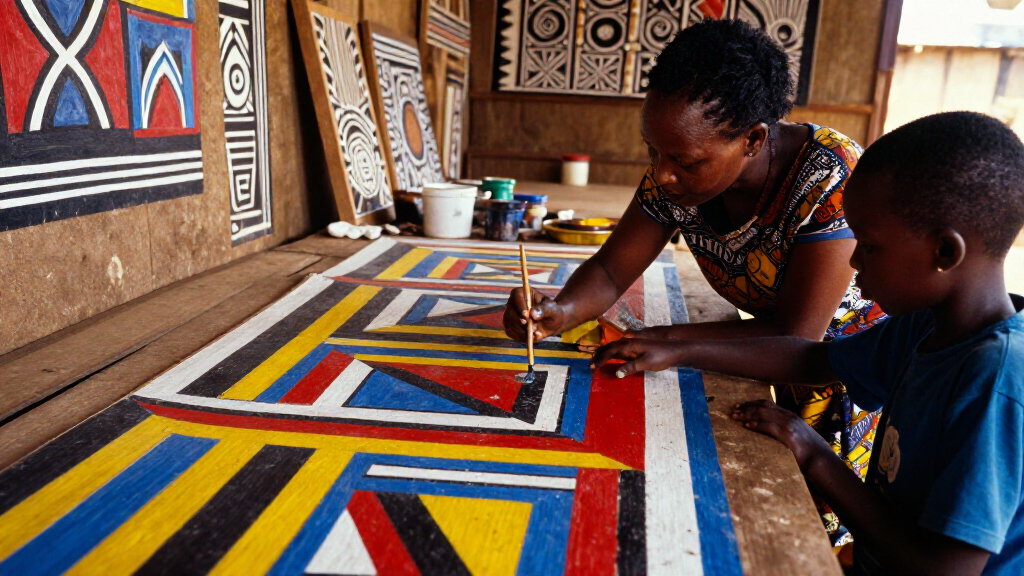
Google Arts & Culture has launched an online retrospective of South African artist Dr. Esther Mahlangu on her 91st birthday. The project includes more than 45 curated stories and AI-generated video visualizations based on memories from a period with little archival documentation.
Google Arts & Culture launched an online retrospective of South African artist Dr. Esther Mahlangu on November 11, 2026, her 91st birthday. The exhibition brings together more than 45 curated stories and an archive of her art and life, while using AI-generated images and video to represent memories from a period before her work was documented in 1980.
The retrospective, titled “Then I Knew I Was Good at Painting”: Esther Mahlangu, a Retrospective, was developed with curator and researcher Dr. Nontobeko Ntombela, a senior lecturer at the University of the Witwatersrand. Ntombela said the project grew from years of working with Mahlangu and her family, and from her research on South African women artists. The collection includes large-scale murals, smaller works and archival materials.
The archive had no material from Mahlangu’s life before 1980, leaving a gap in the record of her early development. Workshops and interviews with Mahlangu documented memories from when she began painting at age 10 through to the first documented works. One memory describes her using feathers instead of a brush. The team used archival material and Mahlangu’s recollections to generate still images, then used Google’s Veo video-generation model to animate them.
Google says the project was developed with Google DeepMind, Google Arts & Culture Lab and research and design studio Domestic Data Streamers, whose synthetic memories initiative informed the approach. The online collection also includes exhibitions made with Art of Contemporary Africa, Iziko Museums of South Africa, the British Museum, the Jean Pigozzi Collection, the National Museum of Women in the Arts and Serpentine. It incorporates archival material and Street View, according to the announcement.
Esther Mahlangu’s art and legacy online
Google Arts & Culture launched a retrospective on Dr. Esther Mahlangu’s 91st birthday, bringing her work and life to a global audience.
A wider digital record
The online collection brings together her art, life and archival materials for readers around the world.
Art and archives
Large-scale murals, smaller works and archival materials sit alongside stories about Mahlangu’s life.
Cultural institutions
The exhibition includes contributions from museums and collections, including Iziko Museums of South Africa and the British Museum.
How early memories become video
Workshops and interviews gathered recollections from Mahlangu’s early years, including her memory of using feathers instead of a brush.
Interviews and workshops documented recollections from when she began painting.
The team used archival material and Mahlangu’s memories to generate images.
Google’s video-generation model turned the still images into visualizations.
What the reconstructions mean
The project fills a gap in the assembled archive, while the early scenes remain interpretations of personal recollections.
- The first documented works date to 1980.
- The collection includes archival materials and historical photographs.
- Scenes draw on Mahlangu’s memories and archival material.
- They are not archival footage or independent verification.
A Wider Digital Record of Mahlangu’s Work
The exhibition makes material about Mahlangu’s career available to a global online audience and places her work alongside records from several cultural institutions. Its focus on the years before 1980 addresses a gap in the assembled archive by presenting memories and images related to the artist’s early life.
The early-life videos are AI visualizations based on remembered experiences, not archival footage of the events. They present visual interpretations of personal recollections and do not independently verify them. The exhibition’s presentation of these reconstructions alongside historical photographs and documented works is relevant to how viewers interpret the material.
Products Worth Considering

Apple Watch SE 3 GPS 40mm Smartwatch

Bose QuietComfort Headphones (2nd Gen), Wireless Over-Ear Noise-Cancelling Headphones, Black

DJI Mini 4 Pro Fly More Combo Drone with DJI RC 2
As an affiliate, we earn on qualifying purchases.
The Years Missing From the Archive
Mahlangu is a South African artist whose work and life are the subject of the new retrospective. The project announcement describes her first documented works as dating to 1980, while interviews and workshops covered memories reaching back to her start in painting at age 10. This creates a retrospective that combines established archival records with accounts of an earlier period.
Ntombela said her aim was to explore Mahlangu’s life and work as part of broader research on South African women artists. Google’s announcement presents the collaboration as a heritage-preservation project, combining curatorial and archival work with AI tools. The online exhibition is available through Google Arts & Culture.
How the Reconstructions Are Labeled
The announcement does not specify how each AI-generated image or video will be labeled within the exhibition, or how viewers can distinguish reconstructed scenes from archival photographs and other historical records. It also does not describe the review process used to check generated visuals against Mahlangu’s recollections and available materials.
The project documents memories through interviews and workshops, but the announcement does not provide interview transcripts or independent corroboration for individual episodes. The recollections are attributed to Mahlangu; the generated scenes are visual interpretations of those recollections. Further details about how the archive will be maintained or expanded were not provided.
The Exhibition Is Now Online
Google Arts & Culture has made the retrospective available online. Readers can explore its stories, works and archive through the exhibition page. The announcement gives no schedule for additional materials or future updates to the collection.
Where I land
Google Arts & Culture says its retrospective brings together material on Mahlangu’s work and life, including recollections from the period before her first documented works in 1980. The collection combines interviews and archival research with contributions from cultural institutions.
Some early-life scenes are AI-generated visualizations based on Mahlangu’s memories, not archival footage. The announcement does not explain how those scenes will be labeled or how the generated visuals were reviewed. It also does not provide independent corroboration for individual recollections.
Source: Google AI
Key Questions
What has Google Arts & Culture announced?
It launched an online retrospective of Dr. Esther Mahlangu on November 11, 2026, her 91st birthday. The exhibition includes more than 45 curated stories and material about her art, life and legacy.
What do the AI-generated videos show?
They visualize memories from Mahlangu’s early life, including her recollection of beginning to paint at age 10. Google says the team generated still images from memories and archival material, then used Veo to turn the images into video.
Are the videos archival footage?
No. They are AI-generated visualizations based on memories and archival material, not recordings of the events. The announcement does not explain how each reconstruction will be labeled in the exhibition.
Who worked on the retrospective?
The project involved curator Dr. Nontobeko Ntombela, Google DeepMind, Google Arts & Culture Lab and Domestic Data Streamers. The exhibition also draws on collaborations with several museums and cultural collections.
Source: Google AI