
TL;DR
SpaceXAI and Cursor have reportedly launched “Grok Bot,” described as autonomous AI teammates available across desktop and mobile. The headline announcement identifies the product and platforms, but provides no verifiable details about access, pricing, technical capabilities, safeguards or the precise relationship between the named companies.
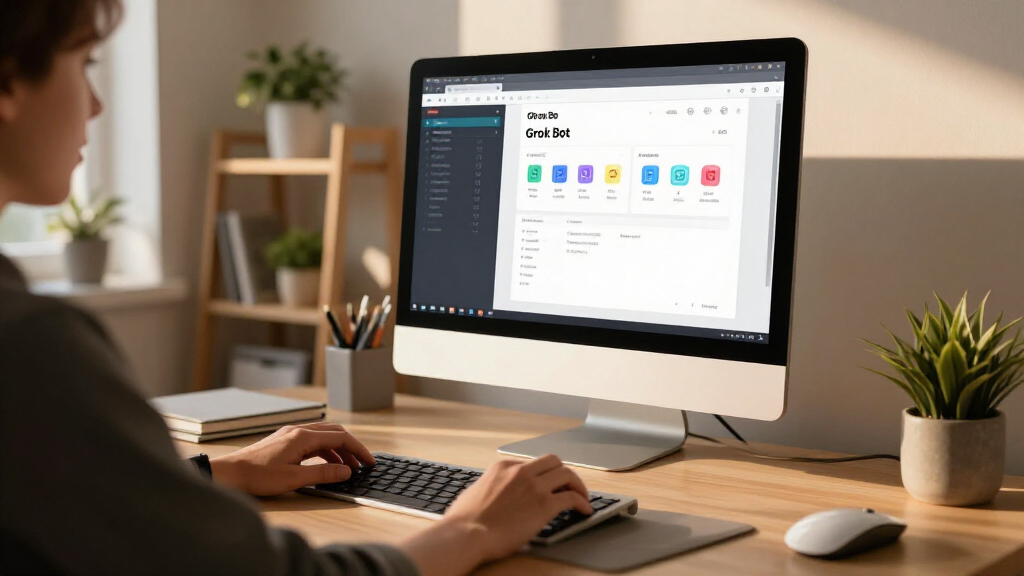
SpaceXAI and Cursor have reportedly launched “Grok Bot” autonomous AI teammates across desktop and mobile, extending the push to place task-performing AI agents inside everyday computing environments. The available announcement identifies the product and its intended platforms, but does not provide enough detail to independently establish its capabilities, availability or operating limits.
The product is described as a group of autonomous AI teammates, language that suggests software agents designed to carry out work with less continuous direction than a conventional chatbot. The announcement links Grok Bot with Cursor and says it spans desktop and mobile, but it does not specify which operating systems, Cursor products or account tiers are supported.
No extracted announcement text was available beyond the headline, leaving the reported launch without confirmed information about pricing, regional access, deployment dates or whether availability is broad, limited or invitation-only. There are also no published details in the provided material about what tasks the agents can complete, whether they can act outside Cursor, or how much human approval is required before an action is performed.
The description of the bots as “teammates” is a product characterization, not independently verified evidence of autonomous performance. No demonstrations, benchmark results, peer-reviewed findings or technical documentation were included with the available material. Claims about speed, accuracy or productivity cannot be evaluated from the announcement alone.
“Grok Bot” AI teammates move toward desktop + mobile
SpaceXAI and Cursor have reportedly launched an autonomous AI teammate experience across devices. The headline signals an ambitious product direction—but access, pricing, capabilities, safeguards and the relationship between the named companies remain undocumented in the supplied material.
Three signals, many missing specifics
The reported launch places agent-style automation inside everyday computing environments. Yet the supplied announcement establishes a direction more clearly than it establishes a fully documented product.
A named product
“Grok Bot” is described as a group of autonomous AI teammates associated with SpaceXAI and Cursor.
Cross-device access
The headline identifies desktop and mobile, potentially enabling users to assign work and review progress remotely.
True autonomy
No evidence shows how long tasks can run, which tools are available or when human approval is required.
Confirmed wording versus unanswered detail
Terms such as “launch,” “autonomous” and “teammate” can cover very different products. Practical meaning depends on documentation that was not included with the available material.
| Topic | What is stated | What remains unknown | Evidence status |
|---|---|---|---|
| Product identity | Named “Grok Bot” | Separate app, Cursor feature or integration | ✓ Named |
| Device reach | Desktop and mobile | Operating systems, devices and applications | ~ Partial |
| Availability | Described as launched | Regions, dates, tiers and invitation limits | ~ Unclear |
| Capabilities | “Autonomous AI teammates” | Tools, task limits, continuity and accuracy | ✗ Unverified |
| Safety controls | No details supplied | Approvals, logs, rollback and permission scopes | ✗ Missing |
| Company relationship | SpaceXAI, Cursor and xAI referenced | Commercial and technical arrangement | ✗ Undefined |
What an AI “teammate” would need to do
A genuine cross-device agent should manage more than single-turn responses. It would need to maintain context, perform controlled actions, surface its work and remain interruptible throughout the process.
Receive intent
Interpret a goal, constraints and the resources the user has authorized.
Plan actions
Break work into steps while identifying decisions that require approval.
Use tools
Inspect files, revise code or coordinate workflows within clear boundaries.
Return evidence
Show results, actions taken, errors encountered and options to reverse changes.
An agent may require approval at every sensitive step, operate only inside one application or continue in the background with broader tool access. No supplied documentation shows where Grok Bot sits on that spectrum.
Documentation is the missing layer
The chart reflects disclosure completeness in the supplied material—not a score for product quality. Low visibility prevents buyers and organizations from evaluating operational risk.
Autonomy spectrum
Suggests actions Agent
Executes workflows
The verification chain buyers still need
Five questions before granting access
Cross-device agents may touch sensitive repositories, credentials, documents and notifications. Official answers should precede access to consequential systems.
What can the bot actually change?
Confirm whether it can modify files, run commands, contact services or act outside Cursor-controlled workflows.
Which actions require approval?
Identify permission boundaries, sensitive-action prompts and organization-level policy controls.
Where does task data go?
Review retention, training use, encryption, regional storage and deletion procedures.
Can every action be audited?
Look for activity logs, source references, error reporting and a reliable record of tool use.
Can unwanted work be stopped?
Verify pause, cancellation, rollback and recovery controls across both desktop and mobile.
Who is providing the service?
Clarify the roles of Cursor, xAI and the entity identified as “SpaceXAI” before accepting terms.
The report points toward persistent, task-performing AI across devices. Until official product pages, release notes, safeguards and independent testing appear, it should be treated as an early announcement—not proof of broad availability or verified autonomous performance.
AI Agents Move Across Devices
A product that can continue work across desktop and mobile environments could change how developers and other users delegate routine tasks. Rather than responding only to individual prompts, an agent may be expected to manage a sequence of actions, retain task context and return completed work for review. Whether Grok Bot actually offers that level of continuity has not been established.
The reported collaboration also connects Grok-branded AI with Cursor’s coding environment, placing the announcement within a broader industry move toward agents that can inspect files, generate or revise code and coordinate workflows. For users and organizations, the practical value will depend on reliability, permissions, audit records and the ability to stop or reverse unwanted actions.
Mobile availability could widen access to agent-based work beyond a primary computer, allowing users to issue instructions or review progress remotely. It could also increase the need for clear controls because cross-device access may involve sensitive code, credentials, documents and notifications. The announcement does not explain how such data would be handled.
As an affiliate, we earn on qualifying purchases.
Cursor Meets Grok-Branded Automation
Cursor is associated with AI-assisted software development, while Grok is the AI brand connected with xAI. The reported product name suggests an effort to move from code suggestions and conversational assistance toward software that can perform longer sequences of work. The available headline, however, does not define the commercial or technical arrangement between Cursor, xAI and the entity identified as SpaceXAI.
The term “autonomous” can cover a wide range of products. Some agents operate only inside a restricted application and require approval at each sensitive step; others can use tools, modify files or continue tasks in the background. Without a product page, release notes or technical documentation, it is not possible to determine where Grok Bot falls on that spectrum.
As an affiliate, we earn on qualifying purchases.
Access and Safeguards Stay Unspecified
It is not yet clear whether Grok Bot is generally available, being tested with selected users or only newly announced. Supported countries, devices, subscription plans and launch dates were not included in the available material. The wording “across desktop and mobile” also does not identify specific applications or operating systems.
Core operational questions remain unanswered, including which models power the bots, what tools they can access, how user data is retained and whether tasks continue when an application is closed. There is no confirmed information about security controls, human approvals, activity logs, error recovery or protections against an agent taking unintended actions.
The name “SpaceXAI” also needs clarification. The available headline uses that wording, while the supplied attribution points to xAI. No supporting text explains whether SpaceXAI is a separate product label, a combined reference, or an error in the headline. Treating SpaceX, xAI and SpaceXAI as interchangeable would go beyond the confirmed information.
As an affiliate, we earn on qualifying purchases.
Documentation Will Define the Rollout
The next meaningful development will be the publication of official product documentation covering availability, supported platforms, pricing and the exact tasks Grok Bot can perform. Release notes or demonstrations could also show whether agents operate independently, require frequent approval or remain confined to Cursor-controlled workflows.
Users evaluating the product will need details about permissions and data handling before allowing an agent to access code repositories, local files or connected services. Independent testing may then establish how reliably the bots complete multi-step tasks and how often people must correct their output. Until those details appear, the announcement confirms a reported product direction more clearly than a fully documented launch.
Source: xAI
AI productivity assistants for Windows and Mac
As an affiliate, we earn on qualifying purchases.
As an affiliate, we earn on qualifying purchases.
Key Questions
What is Grok Bot?
Grok Bot is described in the announcement as a set of autonomous AI teammates. No detailed feature list was provided, so its exact tasks, operating boundaries and level of independence remain unconfirmed.
Is Grok Bot available now?
The material describes a launch, but general availability has not been established. There is no confirmed rollout schedule, account requirement, regional list or indication of whether access is limited or invitation-only.
Which desktop and mobile platforms are supported?
The headline says the product operates across desktop and mobile, but it does not identify supported operating systems, applications or devices.
Is Grok Bot part of Cursor?
Cursor is named alongside SpaceXAI in the reported launch, but the available information does not explain whether Grok Bot is built into Cursor, offered through an integration or distributed as a separate application.
What security protections does Grok Bot use?
No confirmed details were provided about permissions, encryption, data retention or approval requirements. Users would need official documentation before determining whether the product is suitable for sensitive code or organizational data.
Source: xAI