Balancing automation with human values in the workplace is vital as AI rapidly integrates into daily tasks, boosting productivity but raising concerns about trust and collaboration. You’ll need transparent processes, ongoing training, and inclusive decision-making to foster trust and guarantee AI complements human roles. Managing these cultural shifts involves respecting human dignity and accountability. To discover how you can create a sustainable, values-driven work environment amid this technological shift, keep exploring these themes further.
Key Takeaways
- Promote transparency in AI decision-making and communicate its role to foster trust and understanding among employees.
- Implement regular bias and fairness audits to ensure AI aligns with ethical standards and respects human dignity.
- Involve employees in AI development and decision processes to enhance inclusivity and acceptance of automation.
- Design workflows that augment human work, balancing automation with opportunities for meaningful human contribution.
- Establish clear accountability for AI errors and decisions to uphold responsibility and maintain ethical work practices.
AI decision-making transparency tools
As an affiliate, we earn on qualifying purchases.
As an affiliate, we earn on qualifying purchases.
The Rapid Rise of AI Adoption in Organizations

The adoption of AI in organizations has accelerated rapidly, reaching 78% in 2024 compared to just 55% in 2023. This sharp increase shows how quickly businesses are integrating AI tools into daily operations. You might notice that AI is now embedded in many workflows, automating routine tasks and supporting decision-making. Despite this rapid rollout, most companies haven’t experienced significant changes in workforce size yet. Instead, AI adoption is reshaping how work is done, with over 30% of employees now using AI for more than a third of their daily tasks. Leaders recognize the potential but are cautious about the pace. Overall, this rapid adoption marks a pivotal shift in organizational technology, signaling a new era of AI-driven work environments. Additionally, concerns about AI vulnerabilities and biases highlight the importance of AI safety measures as organizations expand their reliance on these technologies.
workplace bias and fairness audit software
As an affiliate, we earn on qualifying purchases.
As an affiliate, we earn on qualifying purchases.
Current Impact of AI on Workforce Size and Tasks

Despite widespread AI adoption, most organizations haven’t seen significant changes in their workforce size. You may notice that AI tools are integrated into daily routines, with over 30% of tasks handled by AI for some employees. However, overall headcount remains steady, as surveys show little variation in workforce numbers from 2022 to 2023. Instead of shrinking or expanding, roles are shifting—more employees are working alongside AI to enhance productivity. Certain repetitive jobs are more vulnerable, but the impact on employment levels remains limited. You might also observe that AI frees up time for more complex or creative work, though the full potential of task transformation is still unfolding. Overall, AI is changing how work is done without drastically reducing employment figures so far. Additionally, the integration of AI tools often relies on advanced projector technology to facilitate effective visual communication in training and collaboration sessions.
employee training on AI integration
As an affiliate, we earn on qualifying purchases.
As an affiliate, we earn on qualifying purchases.
Economic and Productivity Effects of Generative AI

Generative AI has the potential to boost labor productivity by around 15% in developed markets, which could substantially enhance economic growth. However, this rapid adoption also brings risks of temporary unemployment and market disruption during the shift. Balancing these gains and risks will be vital as you navigate the evolving economic landscape shaped by AI. Additionally, the integration of AI into work culture can influence employee engagement and organizational dynamics, making thoughtful implementation essential.
Productivity Gains Potential
As organizations increasingly adopt AI, the potential to boost labor productivity becomes more tangible, with estimates suggesting gains of around 15% in developed markets. You could experience faster workflows, streamlined processes, and reduced manual effort, leading to more output per worker. These improvements may translate into higher profitability and competitive advantage. However, realizing these gains depends on effective integration, training, and a culture open to innovation. While productivity rises, it’s important to recognize that the shift may cause temporary disruptions, such as short-term unemployment or shifts in job roles. Still, history shows that technological advances often lead to long-term benefits, including better resource utilization and new opportunities for workers and businesses alike. Incorporating comfort and support solutions into workplace wellness initiatives can also help mitigate some transitional challenges for employees.
Economic Disruption Risks
While productivity gains from AI adoption are promising, there are notable risks of economic disruption that organizations and policymakers need to contemplate. Rapid AI integration could cause temporary unemployment spikes, especially during shift periods. Full adoption might boost labor productivity by around 15%, but uneven effects could lead to sector-specific disruptions. Here’s how the risks break down:
| Risk Area | Impact |
|---|---|
| Short-term unemployment | Temporary rise, especially with rapid rollout |
| Job displacement | 6–7% of US jobs at risk; new jobs may emerge |
| Wage pressure | Potential wage stagnation in vulnerable roles |
| Sector imbalance | Certain industries face more disruption |
| Long-term effects | Uncertain; could reshape work and economic stability |
Monitoring and proactive policies are vital to balance growth with stability. A calming, natural elements inspired environment can help ease transitional stresses during these shifts.
AI collaboration and communication tools
As an affiliate, we earn on qualifying purchases.
As an affiliate, we earn on qualifying purchases.
Job Displacement Risks and New Opportunities

Although concerns about job displacement dominate headlines, the actual risks from AI adoption appear more measured than initially feared. You’re likely to see some job shifts, especially in low-skill, repetitive roles, but widespread displacement isn’t inevitable. AI can free you from mundane tasks, creating opportunities in new or evolving fields. For example:
AI may shift some jobs, but widespread displacement is unlikely; new opportunities will also emerge.
- A projected 6–7% of US jobs could be displaced with widespread AI use, but new roles are expected to emerge.
- Rapid shifts in occupational mix are happening, but at a gradual pace compared to past tech revolutions.
- Software developers are expected to grow nearly 18% by 2033, outpacing other sectors.
- Workers in manual and creative roles are less vulnerable to automation.
- Many organizations see AI as augmenting human work rather than replacing it completely.
- Automation’s role in business intelligence is helping organizations make faster, more accurate decisions, supporting the evolution of the workforce.
Strategies for Workforce Upskilling and Reskilling
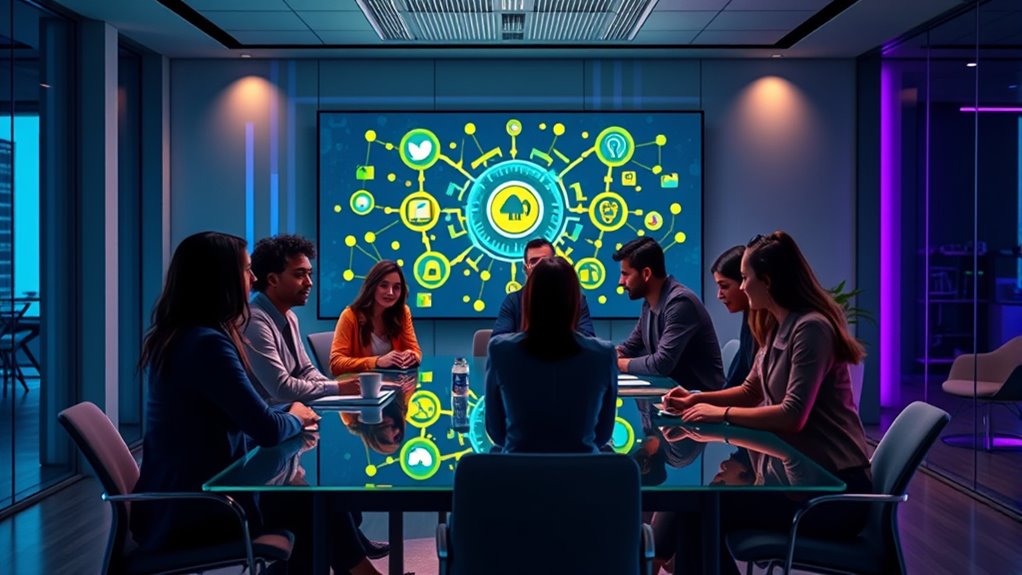
With AI gradually reshaping the workplace, investing in workforce upskilling and reskilling becomes more important than ever. You need targeted training programs that focus on new tech competencies, problem-solving, and adaptability. Leadership support is essential to foster a culture of continuous learning. Collaborate with educational institutions and online platforms to provide accessible, flexible learning options. Regularly assess progress through metrics like productivity, employee satisfaction, and skill acquisition. Use real-world projects and simulations to reinforce learning. Here’s a quick overview of key strategies:
| Strategy | Focus Area | Outcome |
|---|---|---|
| Customized Training | Technical skills, soft skills | Better job fit, engagement |
| Partnerships | Educational institutions | Access to cutting-edge resources |
| Incentives | Rewards, career growth | Motivation to upskill |
| Feedback & Assessment | Continuous improvement | Skill relevance, adaptability |
Additionally, aligning upskilling initiatives with industry trends, such as WWE Raw’s financial impact and the growing influence of entertainment revenue streams, can help motivate employees by demonstrating the tangible benefits of continuous learning and adaptability in a competitive market.
Challenges to Collaboration and Team Dynamics

AI-generated work, especially when of low quality, can considerably disrupt team collaboration and dynamics. When colleagues receive inconsistent or confusing outputs, trust erodes, and frustration grows. This can lead to miscommunication, reduced morale, and decreased productivity. You may notice colleagues hesitating to rely on AI tools or questioning each other’s competence. The following challenges often surface:
Low-quality AI work can damage trust and hinder team collaboration.
- Increased misunderstandings from unclear AI outputs
- Reduced trust in colleagues’ contributions
- Friction caused by inconsistent or inaccurate AI-generated information
- Doubts about team members’ creativity and reliability
- Difficulty integrating AI seamlessly into existing workflows
- Supporting emotional well-being becomes crucial as team members navigate frustration and uncertainty.
These issues can hinder open communication and teamwork, making it harder to achieve shared goals. Addressing these challenges requires clear standards, ongoing training, and a focus on maintaining human collaboration as AI tools evolve.
Cultural Shifts and Trust in Human-AI Interactions
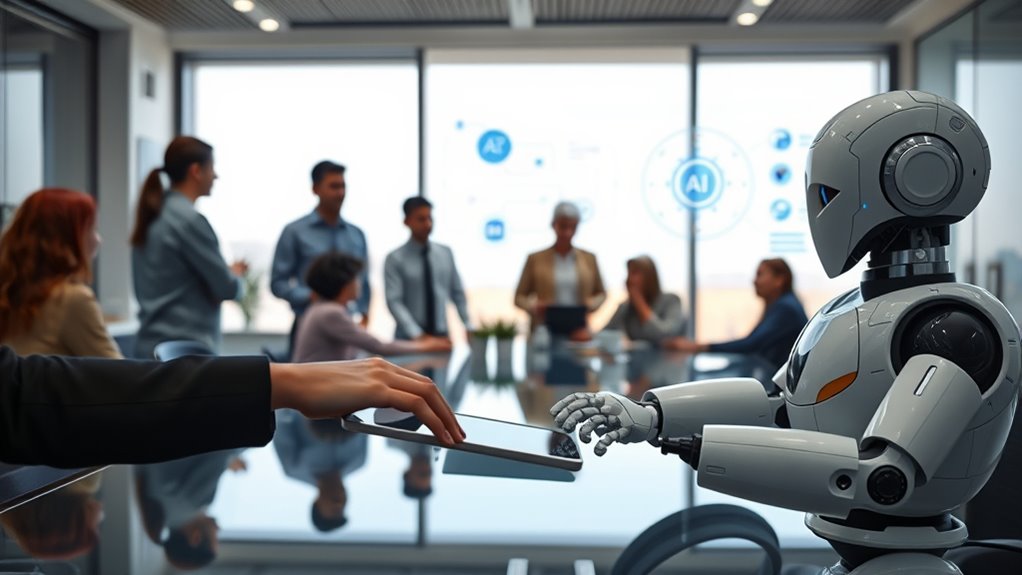
As AI becomes more integrated into your workplace, building trust in these systems is essential. You might notice that collaboration challenges arise when AI-generated work is inconsistent or unreliable. Managing these shifts requires redefining roles and establishing clear standards for effective human-AI teamwork.
Building Trust in AI
How can organizations foster trust in AI systems amid rapid adoption and cultural shifts? First, prioritize transparency—explain how AI makes decisions and its limitations. Second, involve employees in AI development to boost familiarity and buy-in. Third, implement rigorous testing to ensure reliability and fairness, reducing errors that erode confidence. Fourth, provide ongoing training so staff understand AI tools and build competence. Fifth, create feedback channels that allow employees to report issues and suggest improvements, fostering collaboration. Building trust depends on consistent, honest communication and demonstrating AI’s benefits without hiding mistakes. When people see AI as a reliable partner rather than a threat, they become more receptive and confident in working alongside these systems. Trust is earned through clarity, participation, and accountability.
Navigating Collaboration Challenges
Managing collaboration challenges in the era of human-AI interaction requires organizations to address shifting cultural norms and build trust between employees and technology. When AI-generated work diminishes quality, it hampers teamwork and confidence. To navigate this, you need clear workflows and open communication channels. Understanding the following factors can help:
| Cultural Shift | Trust Building |
|---|---|
| Resistance to change from staff | Transparent AI performance metrics |
| Perception of AI as a crutch | Consistent feedback and support |
| Fear of job loss or reduced roles | Inclusive decision-making |
Additionally, recognizing the importance of anime culture and storytelling can foster a more innovative and adaptable organizational environment.

While the rapid adoption of AI suggests a transformative shift in the workplace, the long-term effects remain uncertain. You may see AI becoming more integrated, but its full impact on jobs and culture isn’t clear yet. Experts predict diverse outcomes, with some emphasizing augmentation over replacement. The pace of change could accelerate or slow, depending on societal, economic, and regulatory factors. You should stay adaptable, as the workforce landscape may evolve unpredictably. Here are some key points to ponder:
AI’s long-term workplace impact remains uncertain; adaptability and ongoing monitoring are essential.
- Long-term labor market shifts could take decades to unfold
- Public concern about job security may persist despite limited disruption
- AI’s role as an augmentative tool might become more prominent
- Workforce adaptation through upskilling remains vital
- Continuous monitoring will be necessary to understand ongoing effects
- The evolving technological landscape will influence how automation and human values coexist over time
Balancing Automation With Core Human Values

As organizations increasingly adopt AI to automate tasks and enhance productivity, it becomes essential to guarantee that these technologies align with core human values. You must prioritize transparency, fairness, and respect in AI deployment. Consider how AI impacts trust and collaboration, ensuring it supports human dignity rather than undermines it. To illustrate, review this table highlighting key principles:
| Principle | Focus Area | Action Example |
|---|---|---|
| Transparency | Clear AI decision-making | Explain AI outputs to teams |
| Fairness | Avoid bias and discrimination | Regular bias audits |
| Respect | Preserve human dignity | Limit intrusive automation |
| Collaboration | Enhance human-AI teamwork | Design workflows with humans |
| Accountability | Assign responsibility | Track AI decisions and errors |
Balancing automation with human values safeguards your workplace’s integrity and promotes sustainable growth.
Frequently Asked Questions
How Can Organizations Ensure Ethical AI Use in the Workplace?
To guarantee ethical AI use, you should establish clear policies that prioritize transparency, fairness, and accountability. Regularly train your team on ethical standards and monitor AI outputs for bias or inaccuracies. Engage diverse stakeholders in decision-making, and foster open communication about AI’s role. By embedding ethics into your AI strategies, you create a trustworthy environment that respects human values and minimizes potential harm.
What Measures Can Prevent AI From Reinforcing Workplace Bias?
Think of AI as a mirror—if it’s clean, it reflects fairness; if dirty, it amplifies bias. To prevent bias reinforcement, you need to regularly polish this mirror through diverse data, transparent algorithms, and ongoing audits. You should also foster a culture of accountability, encourage employee feedback, and train your team on bias awareness. By doing so, you guarantee AI remains a true reflection of fairness, not prejudice.
How Do Employees Perceive Ai’s Impact on Their Job Security?
You likely feel concerned about AI’s impact on your job security, especially as many worry about displacement. While some fear losing tasks or roles, others see AI as an opportunity for upskilling and growth. Most employees recognize that AI could transform jobs, but there’s still uncertainty about how it will affect individual security. Staying adaptable and embracing continuous learning can help you navigate these changes confidently.
What Are Best Practices for Integrating AI Into Team Workflows?
To integrate AI into your team workflows effectively, start by clearly defining its role and setting expectations. Encourage open communication, involve team members in decision-making, and provide training to upskill your staff. Focus on fostering collaboration between AI tools and human expertise, emphasizing quality and trust. Regularly evaluate AI’s impact, gather feedback, and adjust processes to guarantee AI enhances productivity without disrupting team cohesion.
How Can Companies Foster Trust in Ai-Driven Decision-Making?
To foster trust in AI-driven decision-making, you should be transparent about how AI systems work and their limitations. Involve your team in the implementation process, encouraging feedback and collaboration. Regularly review AI outputs to guarantee accuracy, and provide training to boost understanding. By demonstrating commitment to ethical use and maintaining open communication, you build confidence and promote a culture where AI tools are seen as valuable allies rather than threats.
Conclusion
As you navigate this evolving landscape, remember that technology and human values often collide in surprising ways—like finding a lost sock in the laundry. Embracing AI’s potential while staying true to your core principles can lead to a workplace where innovation and empathy coexist. By balancing automation with genuine human connection, you’ll not only adapt but thrive in a future that’s as unpredictable as your morning coffee spill.