TL;DR

Get tech for your team delivered free — and shop member deals
- Fast, free delivery on millions of items
- Access to Prime Big Deal Days deals on October 6–7
- Prime Video, Amazon Music and more included
Anthropic says Claude designed protein binders for 14 of 15 tested targets and processed raw chemistry data with results close to a contract laboratory’s findings. The results suggest AI agents could shorten parts of early-stage research, but they do not amount to drug discovery and have not been identified as peer-reviewed findings.
Anthropic reported on August 18, 2026, that versions of Claude designed protein binders that worked against 14 of 15 tested targets and that Claude Opus 5 processed raw analytical chemistry files in under 25 minutes. The company’s technical reports point to a possible reduction in the time and specialist labor required for parts of early-stage biological and chemical research, although the protein results do not represent finished drugs.
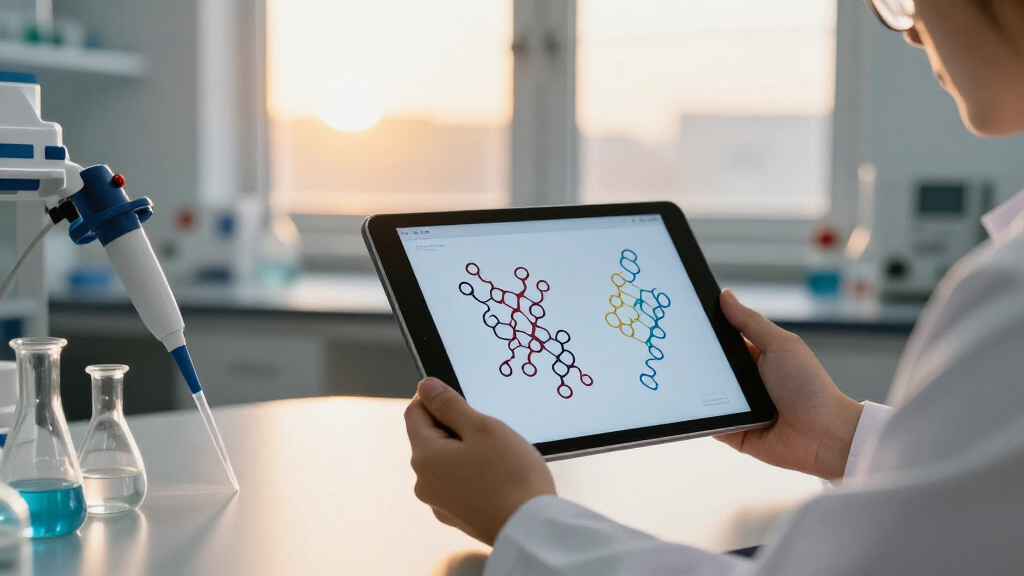
In the protein experiment, Claude Mythos Preview and Opus 4.8 generated candidate minibinders by operating publicly available specialist tools for protein structure, sequence design, folding and computational screening. Anthropic said the models worked with minimal human involvement after receiving a roughly 30,000-token expert prompt, internet access, scientific resources and substantial GPU capacity.
Adaptyv Bio and Twist Bioscience produced and tested the candidates in laboratories, according to Anthropic. The campaign yielded 354 confirmed binders from 1,320 designs, covering 14 targets. Reported overall hit rates were 22.6% for Opus 4.8 and 26.7% for Mythos Preview in a 48-hour multi-target run. Mythos reached 35.1% when targets were handled separately, compared with Anthropic’s estimate of a 10% to 15% typical campaign rate.
In a separate analytical chemistry test, the generally available Claude Opus 5 received raw nuclear magnetic resonance and liquid chromatography–mass spectrometry files from a contract laboratory. Claude returned the NMR work in 23 minutes and the LC-MS work in 19 minutes. Its hydrogen counts were within 0.08 hydrogen atoms of the laboratory’s values, while its purity estimate of 96.4% closely matched the laboratory’s 96.33% result.
How the Results Change Research
The experiments address two labor-intensive stages of research. Protein engineers often spend days or weeks coordinating specialized computational tools before candidates reach physical testing. Chemists repeatedly process proprietary instrument files to determine what compound was made and how pure it is. An agent able to coordinate those workflows could let laboratories test more candidates and reduce delays between experiments.
The protein campaign also shows a broader role for general AI models: Claude did not replace specialist design systems but selected, combined and operated them. That distinction matters because the reported performance reflects an agentic workflow supported by expert instructions, open-source models and up to 12,500 NVIDIA H100 hours in the multi-target setup, rather than protein knowledge contained solely within Claude.
NMR spectrometer for laboratory use
As an affiliate, we earn on qualifying purchases.
As an affiliate, we earn on qualifying purchases.
From Scientific Assistant to Agent
Anthropic has been expanding Claude from tasks such as literature review and coding into multi-step scientific workflows. In the protein campaign, Claude selected binding sites, generated structures and sequences, ran optimization cycles and ranked candidates for laboratory testing. Humans still approved access requests, maintained infrastructure and ordered the physical designs.
The chemistry experiment followed earlier Anthropic work comparing Claude with established NMR software. This test moved closer to a routine laboratory workflow by supplying raw proprietary files and short prompts. Claude decoded an undocumented LC-MS format, checked the totals for 2,664 instrument scans and produced figures, tables, spectra and reusable code.
“Claude successfully designed binders against 14 of them.”
— Anthropic
liquid chromatography mass spectrometry (LC-MS) system
As an affiliate, we earn on qualifying purchases.
As an affiliate, we earn on qualifying purchases.
Validation and Access Gaps Persist
The findings appear in Anthropic publications and technical reports; Anthropic does not identify them as peer-reviewed studies. The company plans more extensive characterization to confirm its affinity measurements and hit rates. Performance may also vary on less-studied targets, under smaller computing budgets or without the extensive expert prompt used in this campaign.
Claude failed to confirm a binder among 90 designs for maltose-binding protein, and results for another target were excluded because aggregation made the data inconclusive. Anthropic also said it does not know why Opus 4.8 succeeded on TNFα while the more capable Mythos Preview did not. The chemistry result was based on one routine quality-control sample, leaving broader reliability across instruments, compounds and difficult spectra unresolved.
As an affiliate, we earn on qualifying purchases.
Expanded Testing Comes Next
Anthropic said it will conduct more extensive laboratory characterization and has released protein-design prompts and experimental data for examination. Independent replication, larger chemistry datasets and direct comparisons under equal computing and staffing conditions will help determine whether the reported gains hold across laboratories.
The company also plans a scientist access program for its most capable models, though it has not provided a launch date or eligibility rules. Opus 5 remains its most capable generally available model for life-science work, while some advanced biological capabilities remain restricted because of dual-use safety concerns.
automated chemical analysis instrument
As an affiliate, we earn on qualifying purchases.
As an affiliate, we earn on qualifying purchases.
Key Questions
Did Claude discover a new drug?
No. Claude produced protein minibinders that attached to selected targets in laboratory tests. A successful binder is only an early research result; safety, efficacy, stability, manufacturing and clinical testing would still be required for a medicine.
Did Claude design the proteins without other software?
No. Claude acted as an orchestrator of specialist tools, using public protein-design, folding and sequence models. Its role included choosing methods, running iterative workflows and ranking candidates with limited human direction after launch.
How strong were the reported protein results?
Anthropic reported overall hit rates of 22.6% to 35.1%, depending on the model and setup, compared with its estimate of 10% to 15% for typical campaigns. Laboratory evaluators confirmed 354 binders across 14 targets.
What did Claude do with the chemistry data?
Claude processed raw NMR and LC-MS files, identified peaks, calculated hydrogen counts and estimated sample purity. Its 96.4% purity result was close to the contract laboratory’s 96.33% finding.
Can scientists use the same protein-design system now?
Not in full. Anthropic says Opus 5 is generally available, but some higher-level biological research capabilities remain restricted. The company says a controlled access program for scientists is planned, with details still pending.
Source: Anthropic
Source: Anthropic
Halloween Picks
halloween
As an affiliate, we earn on qualifying purchases.